A toy builder, a puzzle maker, and an architect all use the same big idea: small shapes can work together. A square by itself is one shape, but when it joins other shapes, it can become part of a house, a robot, or a tower. Shapes are like building words in a sentence. When we put them together carefully, they make something new.
To compose shapes means to put shapes together to make a new shape. The new shape is called a composite shape. We can join shapes side by side, above and below, or around each other. When we make a composite shape, the pieces should fit together. They should not leave spaces, and they should not overlap.
Sometimes a composite shape looks like a real object, such as a boat or a tree. Sometimes it looks like another math shape. For example, two small triangles can join to make a bigger shape. A square and a rectangle can join to make a longer rectangle.
Compose means to put shapes together. A composite shape is a new shape made from two or more smaller shapes.
We can also do the opposite. We can look at one big shape and notice the smaller parts inside it. Then we can move those parts and make a different shape. This is called making new shapes from a composite shape.
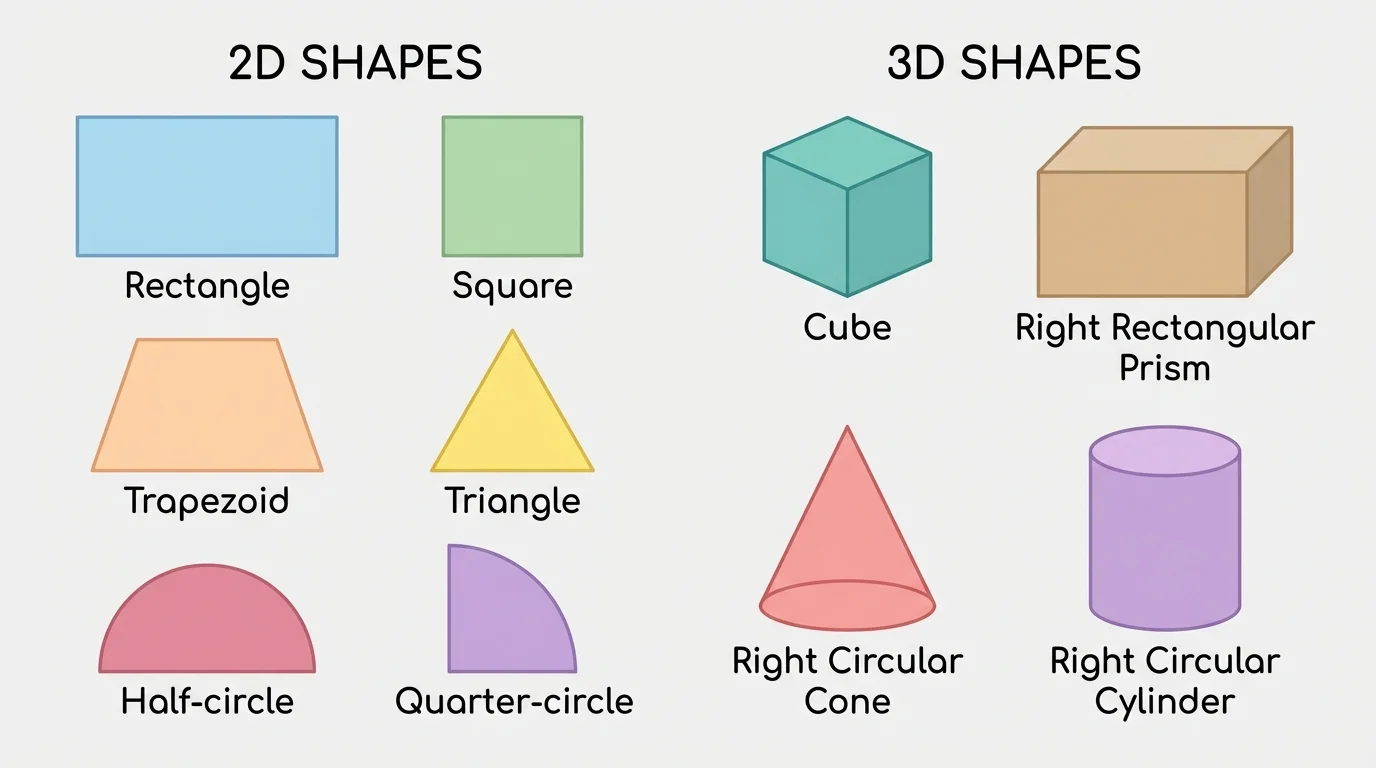
We will use a family of flat and solid shapes, as [Figure 1] shows. Some shapes are two-dimensional shapes, or flat shapes. Some are three-dimensional shapes, or solid shapes.
Flat shapes include a rectangle, a square, a trapezoid, a triangle, a half-circle, and a quarter-circle. A rectangle has 4 sides, and opposite sides match. A square is a special rectangle with 4 equal sides. A triangle has 3 sides. A half-circle is one half of a circle. A quarter-circle is one fourth of a circle.
Solid shapes include a cube, a right rectangular prism, a right circular cone, and a right circular cylinder. A cube looks like a box with equal edges. A right rectangular prism is a box shape. A cone has a round base and a point. A cylinder has two round flat ends and one curved side.
Some shapes have straight sides. Some have curved parts. A half-circle and a quarter-circle are especially helpful when we want to make shapes with rounded parts, such as wheels, arches, or flower petals.
You already know that shapes can be named by what they look like. Now you are learning that shapes can also be parts of bigger shapes.
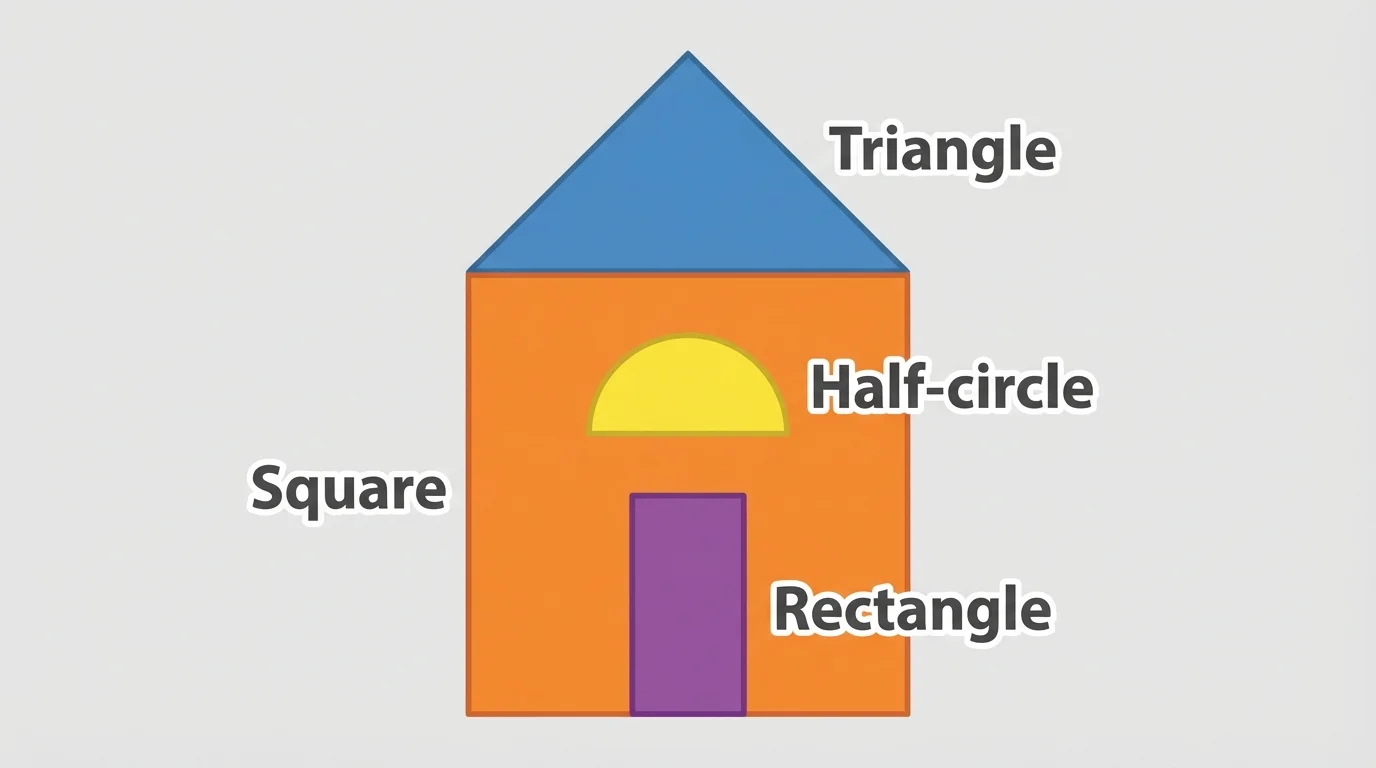
A picture can be made from smaller flat shapes, as [Figure 2] illustrates. If we put a square under a triangle, we can make a simple house shape. If we add a rectangle, we can make a door. If we add a half-circle, we can make a rounded window.
When flat shapes join edge to edge, they make one new outline. That outline is the composite shape. We can name the small parts, and we can also talk about the whole shape they make together.
For example, take 2 triangles. If they fit together along one side, they may make a square or a larger triangle, depending on the triangles. A rectangle and a square can join to make a longer rectangle. A quarter-circle can join another quarter-circle to make a half-circle.
Sometimes many different shape sets can make the same new shape. That is an important idea. There is often more than one right way to build a composite shape.
Same whole, different parts
A composite shape can be made in different ways. One child may use 2 rectangles to make a long shape. Another child may use 1 rectangle and 2 squares to make the same long shape. The outside can match even when the inside parts are different.
Later, when you look again at [Figure 2], notice that each small shape keeps its own name even while helping make the larger picture.
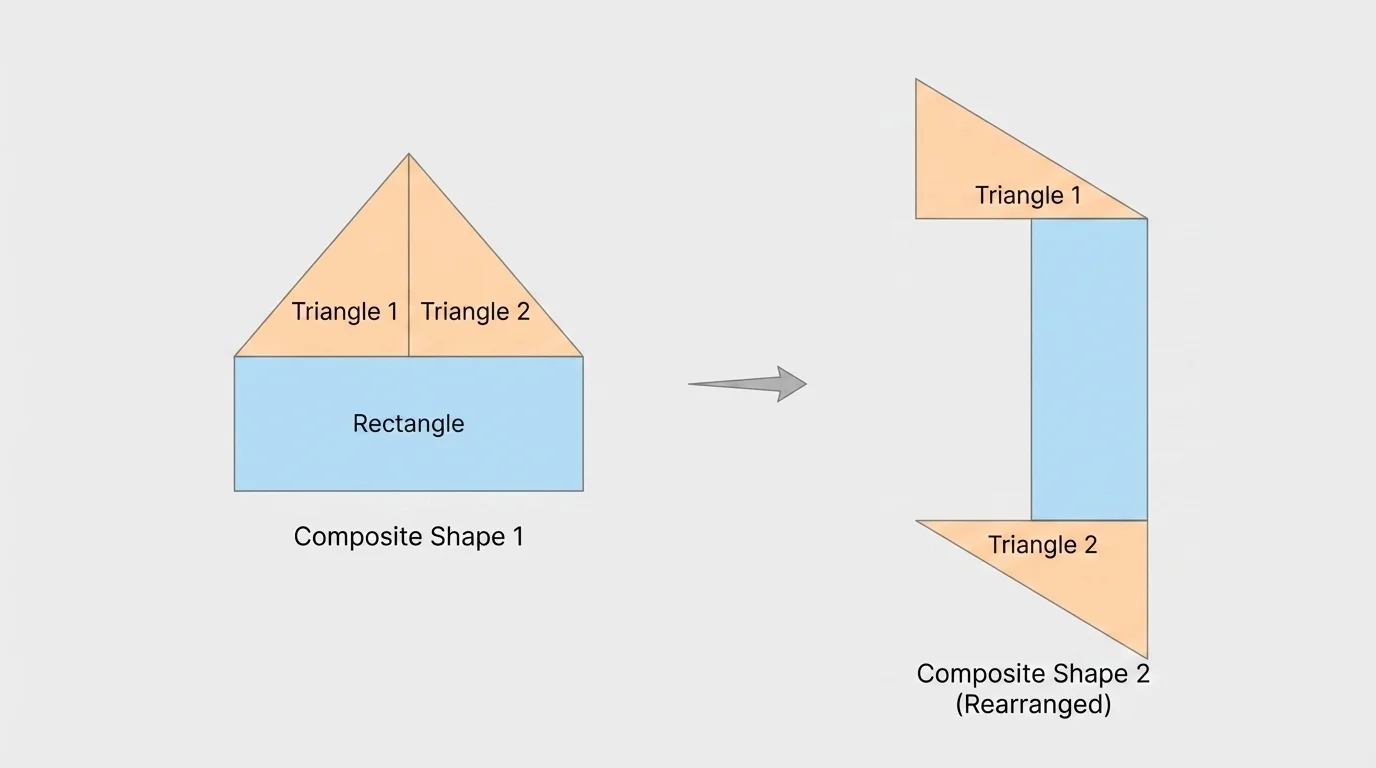
The same pieces can make more than one shape, as [Figure 3] shows. This is called taking apart and recomposing. We begin with one composite shape, notice its parts, and then move the parts to make a new whole.
Suppose a shape is made from 2 triangles and 1 rectangle. First, the pieces might look like a boat. Then the same 3 pieces can be moved to look like an arrow or a long block shape. The pieces stay the same, but the whole changes.
This helps our brains see shapes inside other shapes. That is an important geometry skill. It helps with puzzles, art, and building.
When you look at a large shape, ask: "What smaller shapes do I see?" A big shape may hide 2 rectangles, or 3 triangles, or a rectangle and 2 quarter-circles.
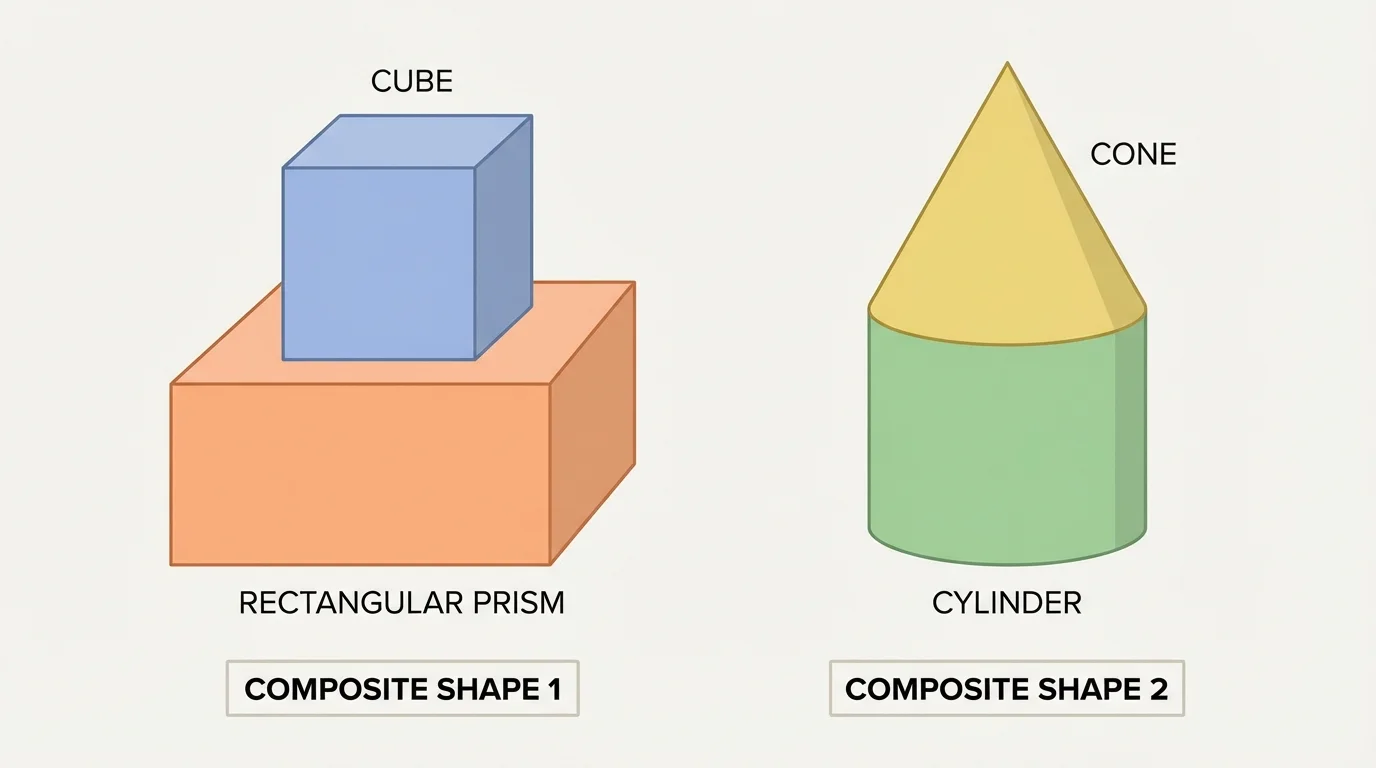
[Figure 4] shows that solid shapes can also be joined to make bigger solid objects. We can stack a cube on a right rectangular prism to make a tower. We can put a cone on top of a cylinder to make a shape like a rocket or a party hat on a can.
These are not flat pictures. They are solid objects that take up space. You can often see them in blocks, cans, boxes, and toys.
A cube and another cube can join to make a longer block shape. Several right rectangular prisms can make stairs. A cylinder and a cone can make a sign that looks like an ice cream cone. Composing solid shapes helps us understand how larger objects are built from smaller parts.
Many buildings are designed by combining simple solid shapes first. Designers often sketch with cubes, prisms, cylinders, and cones before adding small details.
When we think about toys or buildings, we can see that a complicated solid object can start as just a few simple solids put together.
Now let's look at some shape-building examples step by step.
Example 1
A square and a triangle are put together to make a picture of a house. What is the composite shape?
Step 1: Name the small shapes.
The small shapes are a square and a triangle.
Step 2: Join them.
Put the triangle on top of the square.
Step 3: Describe the whole.
The whole is a composite shape that looks like a house.
The answer is: the shapes compose a new picture shape.
In this example, the new shape is not a single named math shape. It is still important because it is made from smaller shapes that fit together.
Example 2
2 quarter-circles are joined. What new shape can they make?
Step 1: Think about the size of each part.
Each quarter-circle is 1 part out of 4 equal parts of a circle.
Step 2: Put the parts together.
2 quarter-circles make 2 out of 4 parts.
Step 3: Name the new shape.
Since 2 out of 4 parts is half, the new shape is a half-circle.
The result is: 2 quarter-circles make 1 half-circle.
This example shows that curved shapes can compose new curved shapes, just like straight-sided shapes can compose larger straight-sided shapes.
Example 3
A cube is placed on top of a right rectangular prism. What does this make?
Step 1: Identify the solids.
The solids are a cube and a right rectangular prism.
Step 2: Join the solids.
Place the cube on the flat top of the prism.
Step 3: Describe the new solid.
The new object is a composite solid shape. It may look like a tower.
The answer is: the solids compose a bigger solid object.
This is like stacking blocks. Each block keeps its shape, but together they make a new form.
Example 4
A composite shape is made from 2 triangles. Then the triangles are moved. What new shape might they make?
Step 1: Start with the same pieces.
The pieces stay as 2 triangles.
Step 2: Rearrange them.
Move the triangles so different sides touch.
Step 3: Look at the new whole.
The 2 triangles might make a square, a larger triangle, or another composite shape, depending on the triangles.
The answer is: the same pieces can make a different new shape.
As we saw earlier in [Figure 3], recomposing means the pieces do not change, but the way they are arranged does change.
People use shape composing every day. Builders put solid parts together to make houses and bridges. Toy makers design sets of blocks that can be stacked and joined. Artists use simple flat shapes to make pictures, patterns, and signs.
A window may look like a rectangle with a half-circle on top. A truck may be drawn with rectangles for the body and circles for the wheels. A castle made of blocks may use cubes, prisms, and cylinders. When you notice these parts, you are doing geometry.
Even letters and logos can be seen as shapes put together. Seeing parts inside a whole helps with drawing, building, and solving puzzles.
