Have you ever picked up a big teddy bear and a small block and known right away that they do not feel the same? Some things are long. Some things are heavy. Some things are tall. Measuring helps us describe objects carefully and clearly.
Objects have attributes, or features we can talk about. Some attributes can be measured, as [Figure 1] shows with familiar classroom objects. We can talk about how long something is, how tall it is, how heavy it feels, or how much it can hold.
A pencil can be long. A box can be tall. A rock can be heavy. A cup can hold a lot or a little. These are all measurable attributes. We use our eyes, our hands, and sometimes tools to notice them.
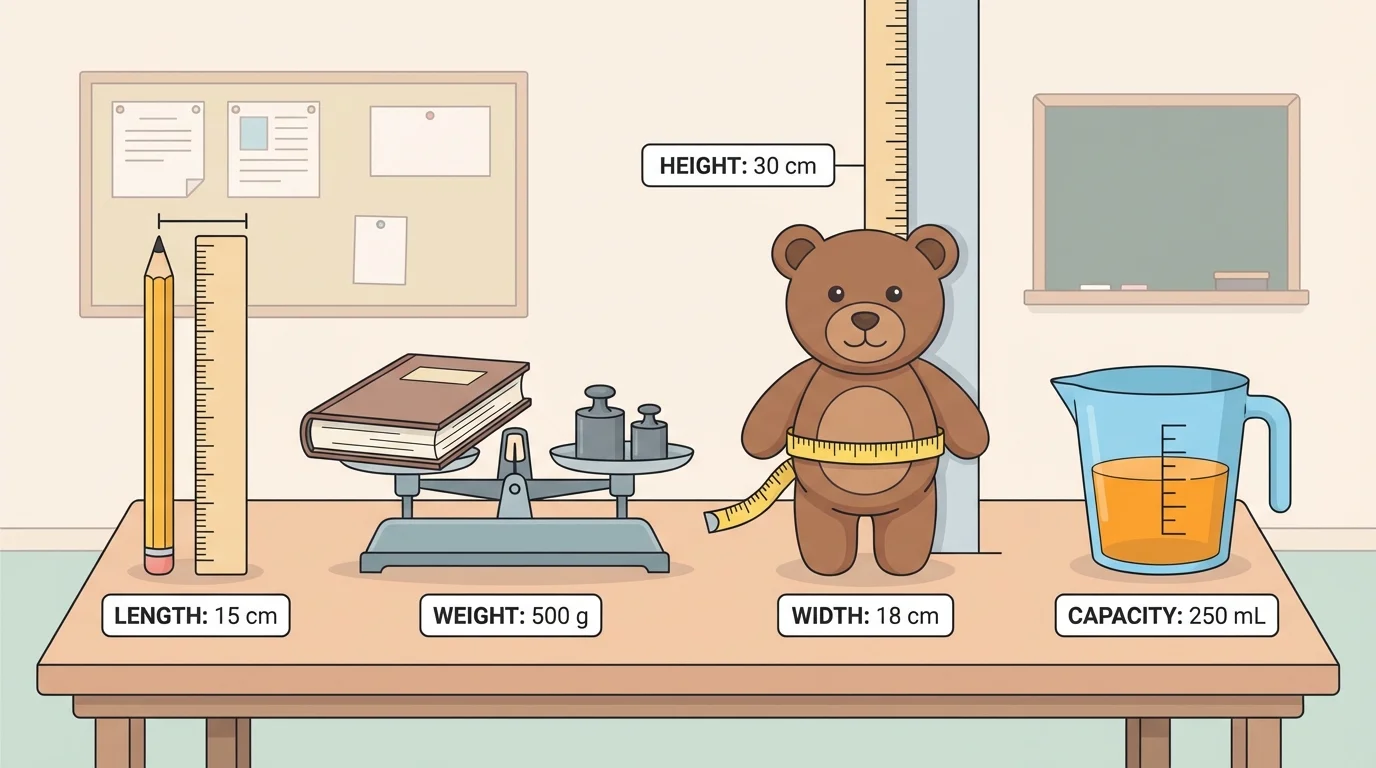
Length tells how long something is. Height tells how tall something is. Weight tells how heavy or light something is. Capacity tells how much something can hold.
When we talk about measurement, we are describing objects in ways we can compare. A ribbon may have greater length than a toy car. A lunchbox may feel heavier than an empty paper bag.
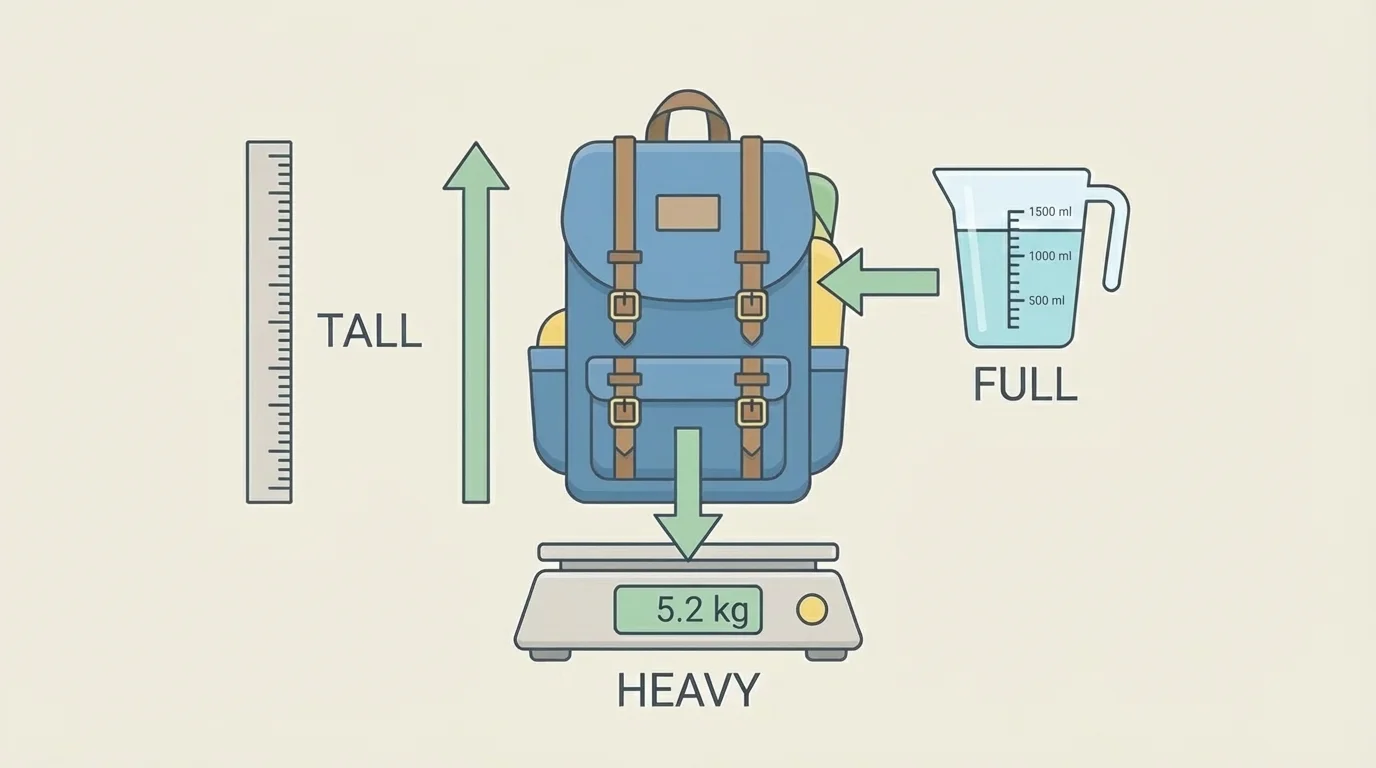
One object can have more than one measurable attribute, as [Figure 2] illustrates. A single object is not just one thing to measure. We can describe it in several ways.
Think about a backpack. A backpack can be tall, wide, and heavy. It can also hold many books, which means it has a large capacity. One object can be described in many measurement-related ways.
A book can be long from side to side, short from top to bottom, and heavy if it has many pages. A cup can be short but still hold a lot. This is why it is important to think about which attribute we are describing.
More than one way to describe an object
When we measure, we do not ask only one question. We can ask, "How long is it?" "How tall is it?" "How heavy is it?" or "How much can it hold?" The same object may have different answers for each question.
We can even compare the same object in different ways. A toy bin may be shorter than a chair, but heavier than a pillow. The object stays the same, but the attribute we talk about changes.
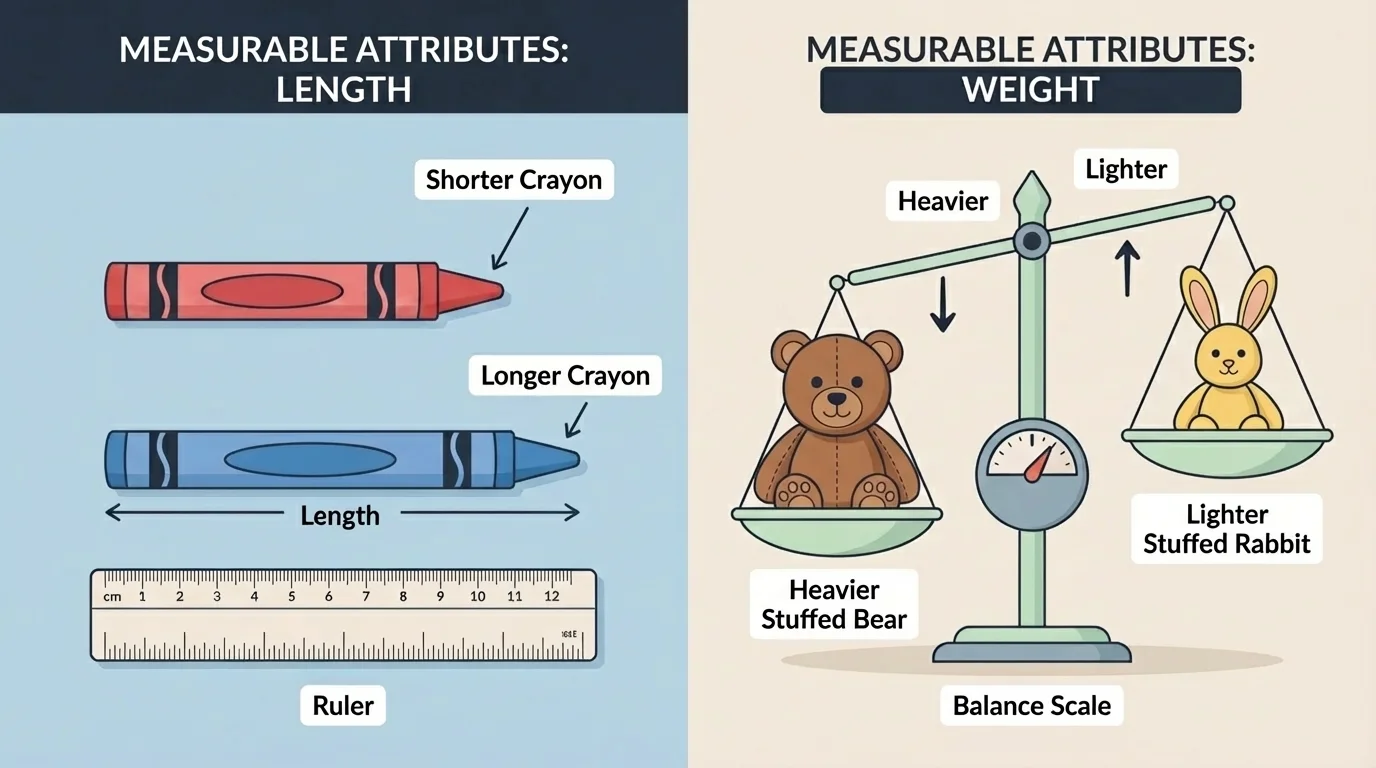
We use comparing words to tell how two objects are alike or different. As [Figure 3] shows, we can place things side by side or lift them to compare them. Some useful words are longer, shorter, taller, heavier, and lighter.
If one crayon reaches farther than another crayon, it is longer. If one stuffed animal feels harder to lift, it is heavier. We compare the same attribute each time. We compare length with length, and weight with weight.
It is not correct to say a block is "longer" than a rock if we are really noticing weight. We must use the right describing word. Careful words help us explain what we mean.
| Attribute | Words We Use | Example |
|---|---|---|
| Length | longer, shorter | The blue ribbon is longer than the red ribbon. |
| Height | taller, shorter | The plant is taller than the shoe. |
| Weight | heavier, lighter | The pumpkin is heavier than the leaf. |
| Capacity | holds more, holds less | The bucket holds more than the cup. |
Table 1. Comparison words used for different measurable attributes.
Now let's look at a few simple examples of describing and comparing measurable attributes.
Example 1
A snake toy is next to a block. Which object has greater length?
Step 1: Look at the attribute.
We are comparing length.
Step 2: Compare the objects.
The snake toy stretches farther than the block.
Step 3: Say the answer clearly.
The snake toy is longer than the block.
The measurable attribute is length.
When we compare length, we focus on how long something is from one end to the other.
Example 2
A full backpack and an empty backpack are lifted. Which one has greater weight?
Step 1: Look at the attribute.
We are comparing weight.
Step 2: Compare the objects.
The full backpack feels harder to lift.
Step 3: Say the answer clearly.
The full backpack is heavier than the empty backpack.
The measurable attribute is weight.
Just as we saw earlier with one object having many attributes, the backpack in [Figure 2] can be described by weight and by height too.
Example 3
Describe two measurable attributes of one cup.
Step 1: Choose one object.
The object is one cup.
Step 2: Name one measurable attribute.
The cup can be short or tall. This is about height.
Step 3: Name another measurable attribute.
The cup can hold a lot or a little. This is about capacity.
One good answer is: "The cup is short, and it holds a lot."
This example shows that one object can be described in more than one way.
Some very small things can still be heavy, and some big things can be light. A tiny rock may be heavier than a large feather.
That is why we do not guess the attribute from size alone. A tall object is not always heavy, and a short object is not always light.
People use measurement every day. At school, we notice whether a marker is longer than a crayon. At home, we may pick the heavier grocery bag with two hands. In the kitchen, a bowl may hold more than a cup.
On the playground, one child may be taller than another child. In a garden, one sunflower may be taller than a small plant. The comparison ideas from [Figure 3] help us describe these real things clearly.
Measurement words help us talk, think, and solve problems. When we say an object is longer, shorter, heavier, lighter, taller, or able to hold more, we are describing the world with care.
You already know how to notice when things are big or small. Measurement helps you be even more exact by telling how they are different.
As you look around, remember that the same object can be measured in more than one way. A toy can be long and light. A book can be short and heavy. A container can be small but hold a surprising amount, just like the cup in [Figure 1] reminds us when we think about different attributes.
