Have you ever stood next to a friend and noticed that one of you reaches higher? Or picked up two toys and felt that one was easier to lift? We can learn a lot by comparing things. When two objects share something we can measure, we can look carefully and decide which has more of that attribute and which has less.
A measurable attribute is something about an object that we can compare. We can compare height, length, weight, and how much something can hold.
For example, two children both have height. Two pencils both have length. Two books both have weight. Two cups both can hold an amount of water.
Directly compare means to look at two objects together to see which has more or less of the same attribute.
Difference means how one object is not the same as the other.
We must compare the same kind of thing. We compare height with height, not height with weight. A tall child and a heavy rock do not show the same attribute.
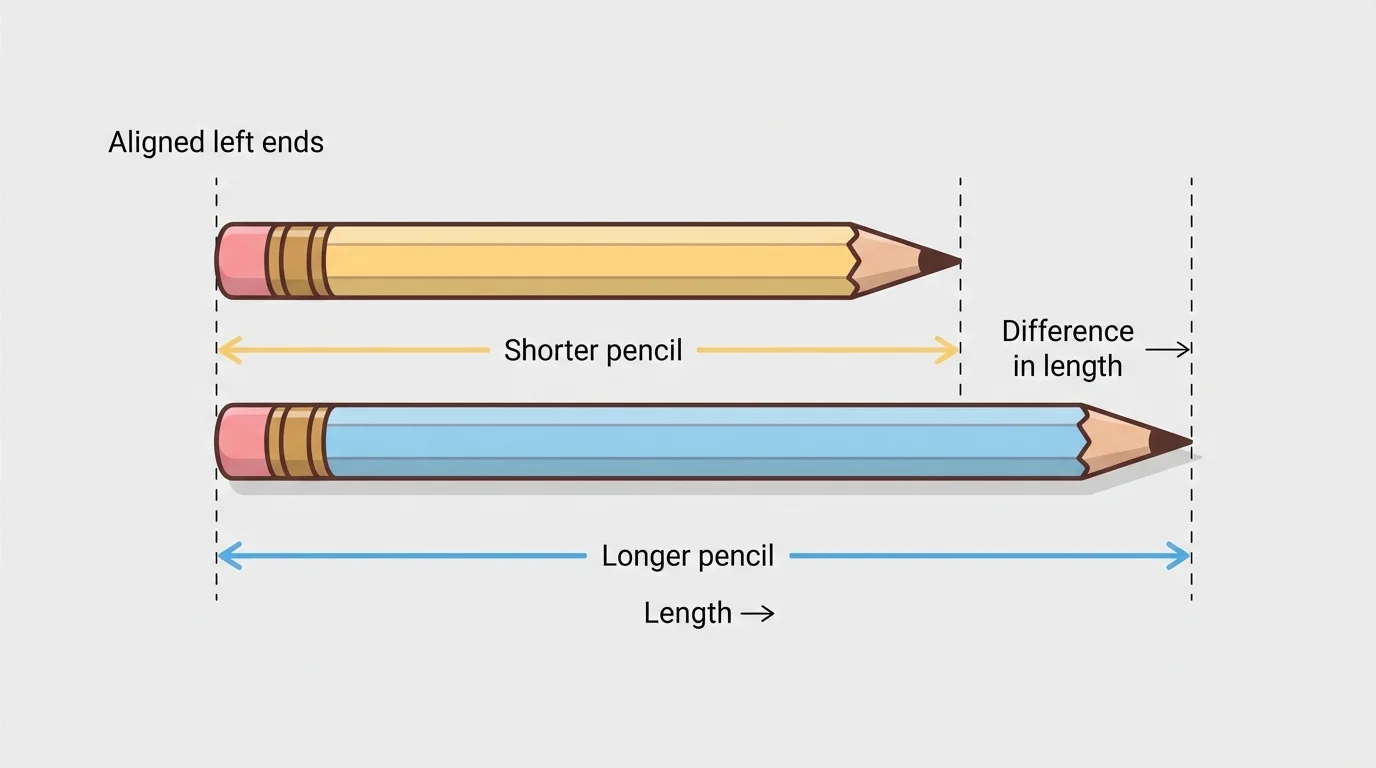
To directly compare objects, we put them together in a careful way. As [Figure 1] shows, if we want to compare two pencils, we line them up at the same starting point. Then we can see which pencil reaches farther.
If one pencil reaches farther, that pencil is longer. The other pencil is shorter. We can say, "The red pencil is longer than the blue pencil."
We can compare children by asking them to stand on the same floor. We can compare books by putting them side by side. We can compare toy animals by holding one in each hand to feel which is heavier.
When we compare, the starting point matters. If one pencil starts farther forward, the comparison is not fair. If one child stands on a step and another stands on the floor, the comparison is not fair either.
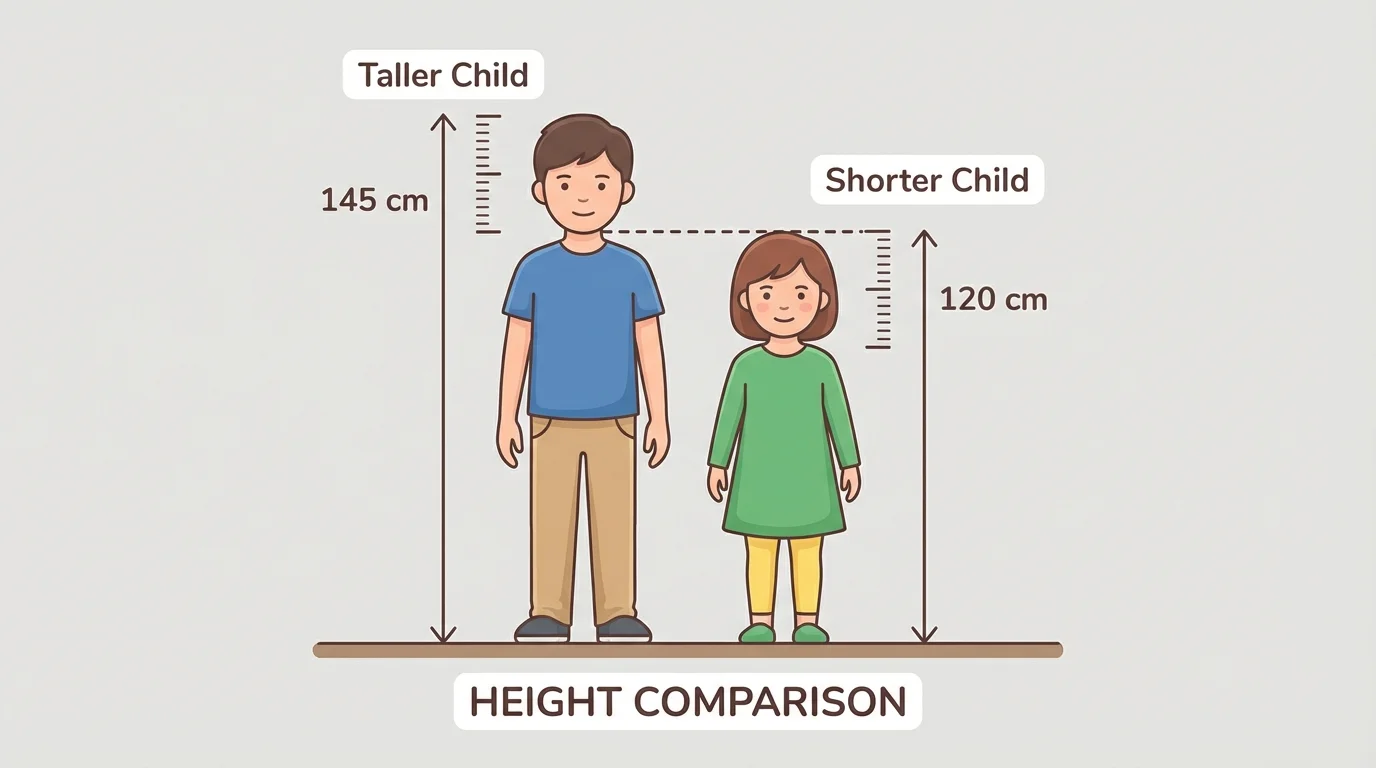
[Figure 2] When we compare height, we use the words taller and shorter. If Mia's head is higher than Sam's head when they stand on the same floor, Mia is taller and Sam is shorter.
When we compare length, we use longer and shorter. When we compare weight, we use heavier and lighter. When we compare how much a container can hold, we can say more or less.
We can also describe the difference with a sentence. For example: "The big teddy bear is heavier than the small teddy bear." Or: "The blue tower is taller than the red tower."
| Things Compared | Words We Can Use |
|---|---|
| Pencils, ribbons, sticks | longer, shorter |
| Children, plants, towers | taller, shorter |
| Books, rocks, toys | heavier, lighter |
| Cups, bowls, buckets | more, less |
Table 1. Words used to compare different measurable attributes.
Now let's look at some direct comparisons step by step.
Example 1: Comparing height
Ben and Ava stand on the same floor. Ben's head reaches higher.
Step 1: Look at the same attribute.
We compare height.
Step 2: See which one has more height.
Ben reaches higher, so Ben has more height.
Step 3: Describe the difference.
Ben is taller. Ava is shorter.
Answer: Ben is taller than Ava.
We use comparison words to tell exactly how the objects are different.
Example 2: Comparing length
A green ribbon and a yellow ribbon are placed with one end lined up. The green ribbon reaches farther.
Step 1: Make the comparison fair.
Line up one end of each ribbon.
Step 2: Check which ribbon reaches farther.
The green ribbon reaches farther.
Step 3: Say the difference.
The green ribbon is longer. The yellow ribbon is shorter.
Answer: The green ribbon is longer than the yellow ribbon.
The same idea works for many classroom objects, and we saw this kind of careful lining up earlier in [Figure 1].
Example 3: Comparing how much two containers hold
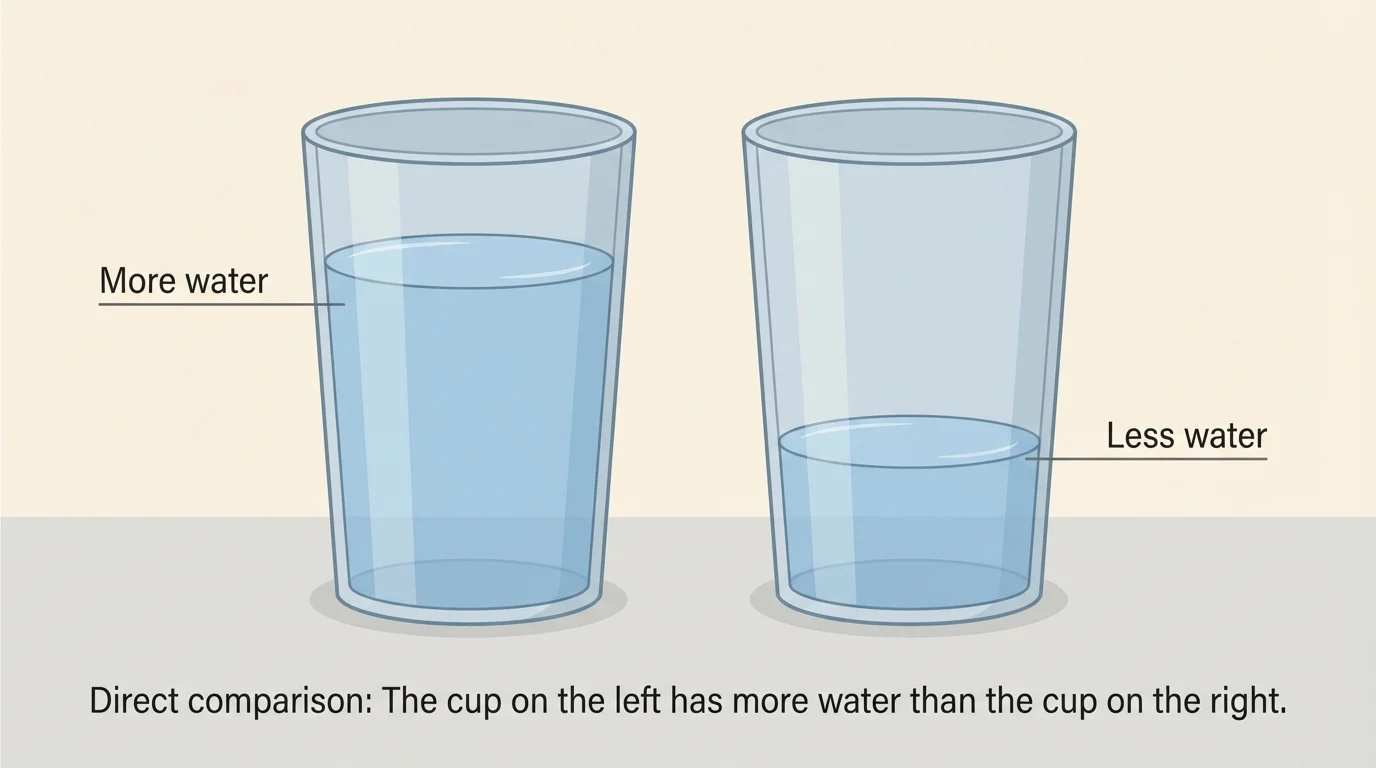
A small cup holds less water than a big cup.
Step 1: Look at the same attribute.
We compare how much each cup can hold.
Step 2: Find which has more.
The big cup can hold more water.
Step 3: Describe the difference.
The big cup holds more water. The small cup holds less water.
Answer: The big cup holds more than the small cup.
People compare objects every day. In the kitchen, a grown-up may choose the cup that holds more. In the classroom, students compare crayons to find the longest one. At the playground, children notice who is taller. [Figure 3] Two clear cups can help us see which container holds more and which holds less.
Comparing helps us make choices. A longer scarf can wrap around you more easily. A lighter backpack is easier to carry. A taller block tower reaches higher.
Some comparisons can be made just by looking, but others are easier when we place objects together. That is why direct comparison is so helpful.
Later, children learn to measure with tools, but first it is important to understand what it means for one object to have more or less of an attribute.
A fair comparison means we compare the same attribute and set the objects up carefully. If we compare two children's height, both should stand straight on the same floor. If we compare two pencils' length, one end should start in the same place.
We should also use the right words. We do not say one cup is taller if we are really talking about how much it holds. We say it holds more or less.
When we compare two children standing together, the idea from [Figure 2] stays important: same floor, same attribute, clear comparison words.
You already know how to notice whether things are big or small. Now you are being even more careful by saying how they are different: taller, shorter, longer, heavier, more, or less.
Comparing helps us describe the world clearly. Two objects may both be good, useful, or fun, but one can still be taller, shorter, longer, heavier, have more, or have less.
