Which is taller: a small toy animal or a big teddy bear? Young mathematicians learn a lot by looking closely at objects and noticing how they are the same and different. We can compare things we see and touch. We can tell which one is taller, which one is shorter, which one feels heavier, and which one feels lighter.
Objects have attributes. An attribute is something we can notice about an object. A chair can be tall. A pencil can be long. A ball can be heavy or light. When we compare objects, we look at one attribute at a time.
Height tells how tall or short something is. Length tells how long or short something is. Weight tells how heavy or light something feels.
If we are looking at height, we ask, "Which is taller?" If we are looking at weight, we ask, "Which is heavier?" It is important to compare the same kind of attribute. We do not compare a long ribbon to a heavy rock in the same way, because one is about length and one is about weight.
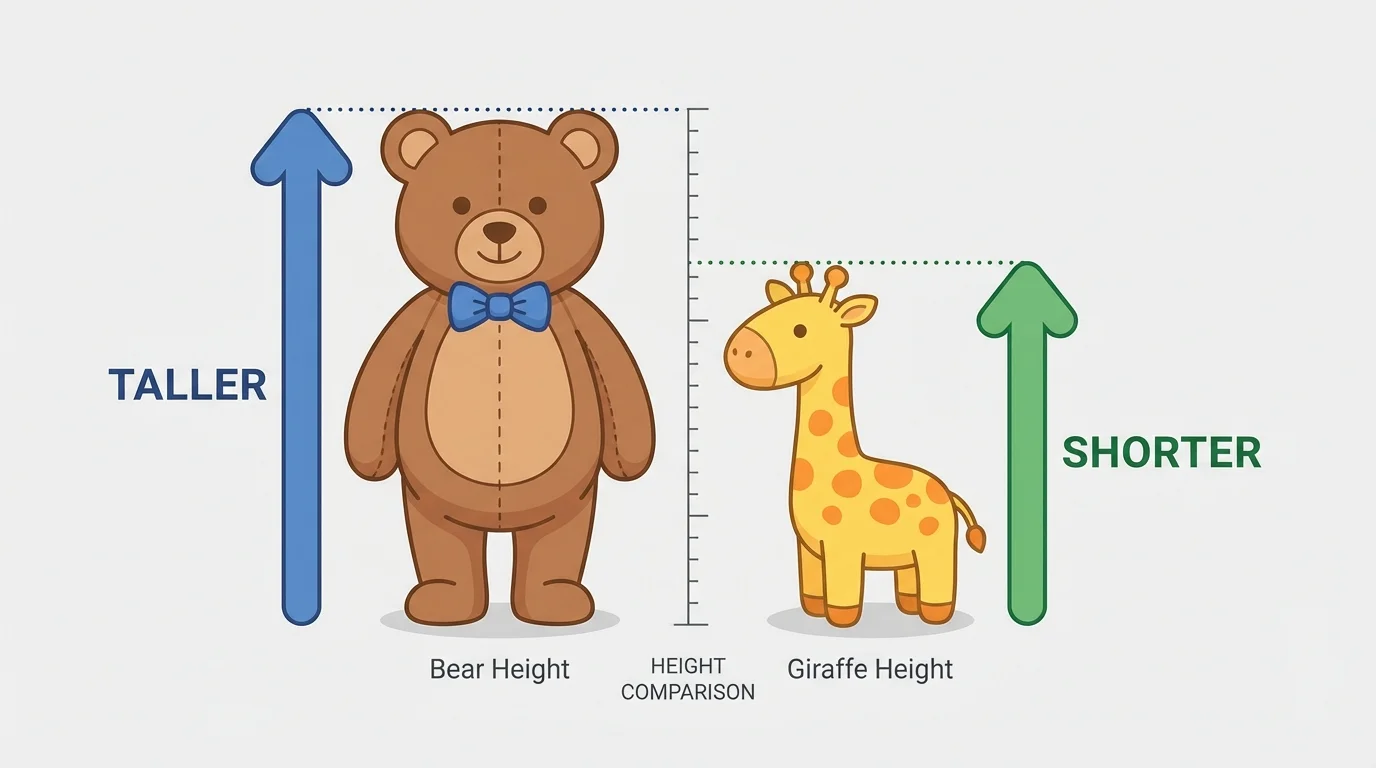
To compare two objects, we can put them side by side. To compare means to look at objects and see how they are alike or different. As [Figure 1] shows, when two toys stand next to each other, it is easier to tell which one is taller and which one is shorter.
If one doll reaches higher than another doll, the first doll is taller. The other doll is shorter. If one block feels harder to lift, it is heavier. The other block is lighter.
Sometimes we can compare by holding objects. A pillow may feel light. A big book may feel heavy. We are still comparing one attribute: weight.
One attribute at a time
Good comparing means focusing on just one idea. A box may be shorter than a bag, but it may also be heavier. Both can be true. Mathematicians say what attribute they are comparing so their answer is clear.
Words that help us compare are taller, shorter, longer, heavier, and lighter. These words tell how one object is different from another object.
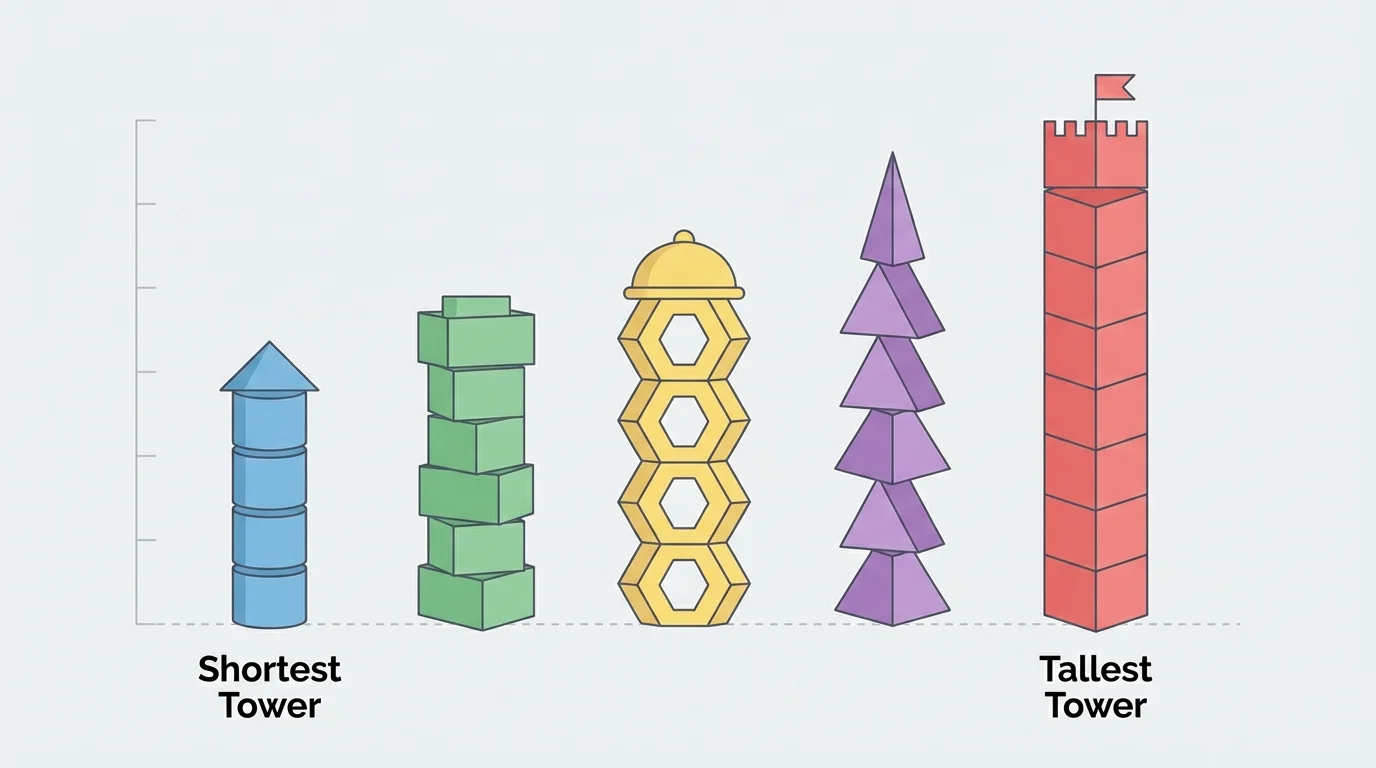
We can also put more than two objects in order. To order objects means to place them from one end to the other, such as from shortest to tallest. As [Figure 2] illustrates, lining objects up helps us see the order clearly.
When we order by height, we might start with the shortest object and end with the tallest object. When we order by weight, we might start with the lightest object and end with the heaviest object.
We can order as many as five objects. First, find the one that is the smallest for that attribute. Next, find the one that comes after it. Keep going until all the objects are in place. For height, we may describe the order from shortest to tallest.
Ordering works best when all the objects are compared in the same way. If we order crayons by length, all the crayons should be laid flat and start at the same place. If we order toy animals by height, they should stand up the same way.
| Attribute | Questions to Ask | Words to Use |
|---|---|---|
| Height | Which is taller? | tall, taller, short, shorter |
| Length | Which is longer? | long, longer, short, shorter |
| Weight | Which is heavier? | heavy, heavier, light, lighter |
Table 1. Common attributes and comparison words used when measuring and ordering objects.
Sometimes two objects may have the same attribute. Two cups may be the same height. Two toy cars may feel the same weight. When that happens, we say they are the same for that attribute.
We should look carefully before deciding. A shoe may look bigger, but another shoe may be heavier. Careful comparing helps us make good math choices.
Some very small things can be surprisingly heavy, and some big things can be very light. A large empty box may be lighter than a small rock.
That is why we always say what we are comparing. Size and weight are not always the same.
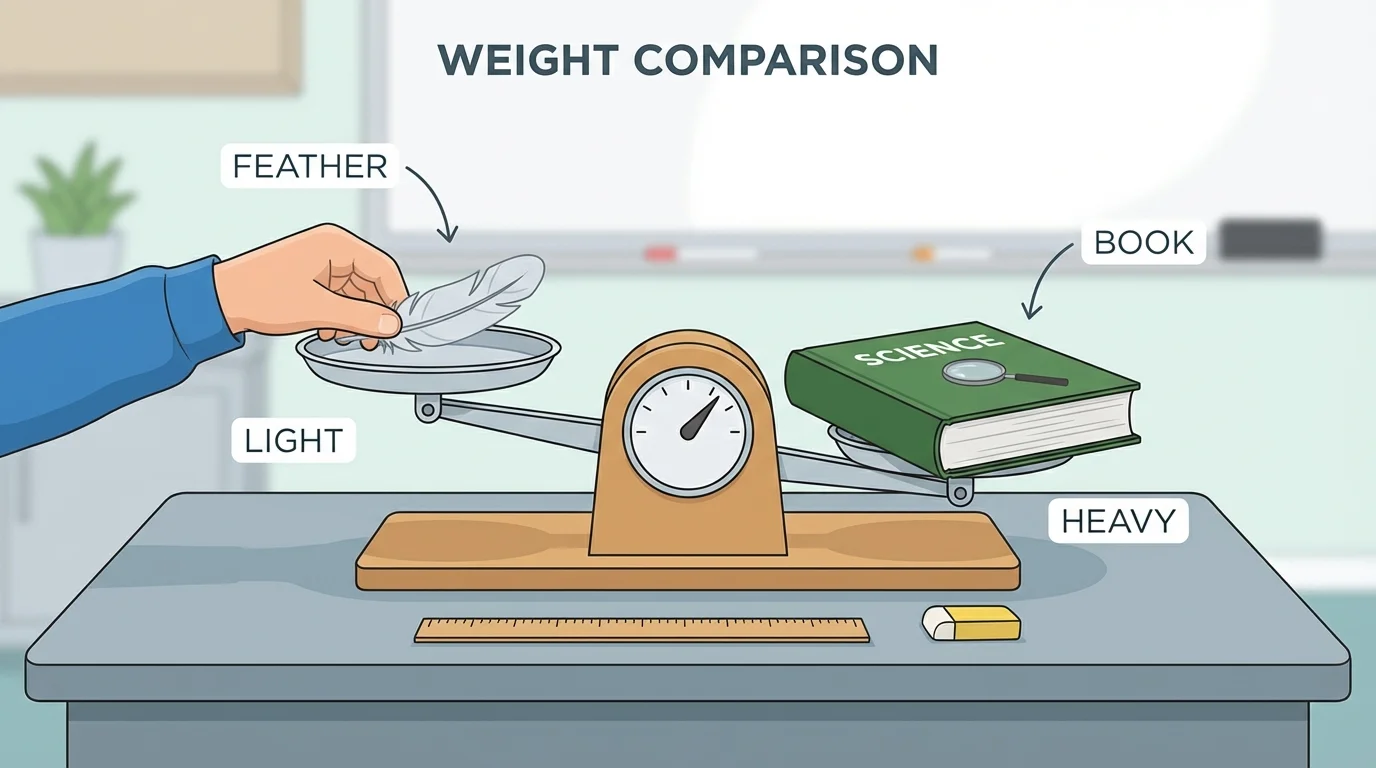
As [Figure 3] shows, we use comparing words all the time. At snack time, one banana can be longer than another. At cleanup time, one basket can be heavier than another. Our hands and simple tools can help us notice heavy and light objects.
At home, you might see that a spoon is lighter than a pot. In the classroom, a marker may be shorter than a ruler. Later, when we compare many objects, we can remember the height order from [Figure 2] and make a line from shortest to tallest.
When we compare carefully, we learn more about the world. We notice patterns. We use math words. We become better observers.
Here are some simple examples of comparing and ordering objects.
Example 1: Comparing height
A toy giraffe and a toy duck stand side by side. The giraffe reaches higher.
Step 1: Look at both toys at the same time.
Step 2: Ask which toy reaches higher.
Step 3: Say the comparison.
The giraffe is taller. The duck is shorter.
This kind of direct comparison is easy to see when the objects are next to each other, like the stuffed animals in [Figure 1].
Example 2: Ordering by length
There are three ribbons: red, blue, and yellow. The red ribbon is the shortest. The blue ribbon is longer than the red ribbon. The yellow ribbon is the longest.
Step 1: Find the shortest ribbon.
The red ribbon is shortest.
Step 2: Find the longest ribbon.
The yellow ribbon is longest.
Step 3: Put the middle ribbon in place.
The blue ribbon goes between them.
The order is: red, blue, yellow.
We can order more objects the same way, one at a time, until every object has a place.
Example 3: Ordering by weight
There are four objects: a feather, a spoon, a shoe, and a book. The feather is the lightest. The book is the heaviest. The spoon is lighter than the shoe.
Step 1: Put the lightest object first.
The feather comes first.
Step 2: Put the heaviest object last.
The book comes last.
Step 3: Compare the two middle objects.
The spoon is lighter than the shoe, so the spoon comes before the shoe.
The order is: feather, spoon, shoe, book.
Heavy and light comparisons happen every day, just like the objects shown in [Figure 3].
When you compare or order, keep the objects in the same position and look at only one attribute at a time.
Whether we compare two objects or order five objects, we are using measurement ideas. We are learning to describe the world with clear math words.
