Look at a line of toy blocks: red, blue, red, blue, red, blue. Something special is happening. The colors are playing a little game and doing the same thing again and again. When we can find the tiny part that keeps coming back, we understand the whole pattern.
A pattern is something that repeats in the same order. A color pattern might be red, blue, red, blue. A sound pattern might be clap, tap, clap, tap. A movement pattern might be jump, stomp, jump, stomp.
When a pattern repeats, we can often guess what comes next. If we see red, blue, red, blue, then the next color is red. The order stays the same.
Repeating pattern means a pattern that comes back the same way again and again. The core unit is the smallest part that repeats.
Sometimes the repeating part is very short. Sometimes it is a little longer. We want to find the smallest piece that makes the whole pattern.
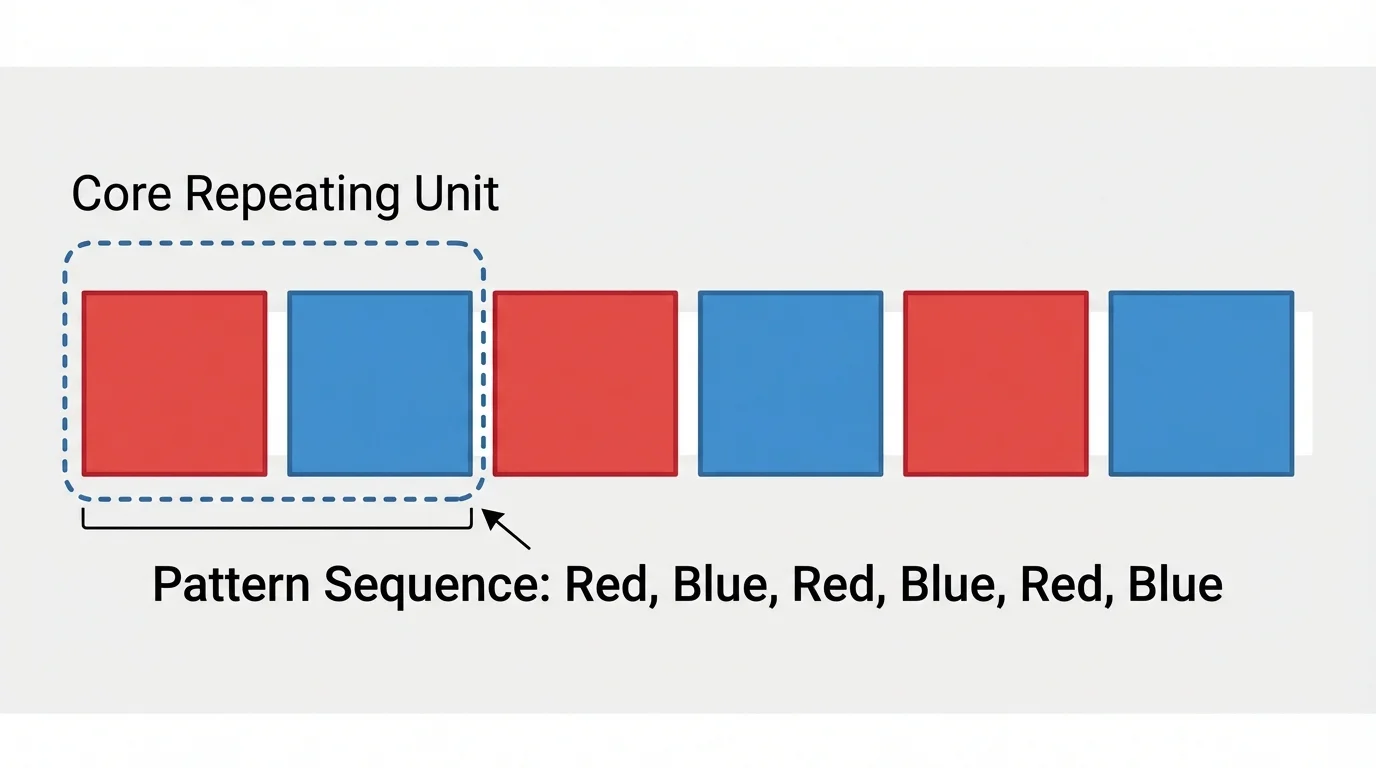
[Figure 1] In a pattern, we look for the little part that repeats over and over. This little part is called the core unit. If the pattern is red, blue, red, blue, red, blue, the little repeating part is red, blue.
We can say it like this: red, blue | red, blue | red, blue. The line keeps using the same small piece. The smallest repeating part is not red, blue, red, blue. That is too big. The smallest part is just red, blue.
If a pattern is yellow, green, yellow, green, yellow, green, then the core unit is yellow, green. If a pattern is clap, stomp, clap, stomp, clap, stomp, then the core unit is clap, stomp.
The smallest repeating piece matters. We always try to find the tiniest part that can build the whole pattern. If a smaller piece works, that is the core unit. This helps us see how patterns are made.
Knowing the core unit helps us continue a pattern and check whether something really repeats.
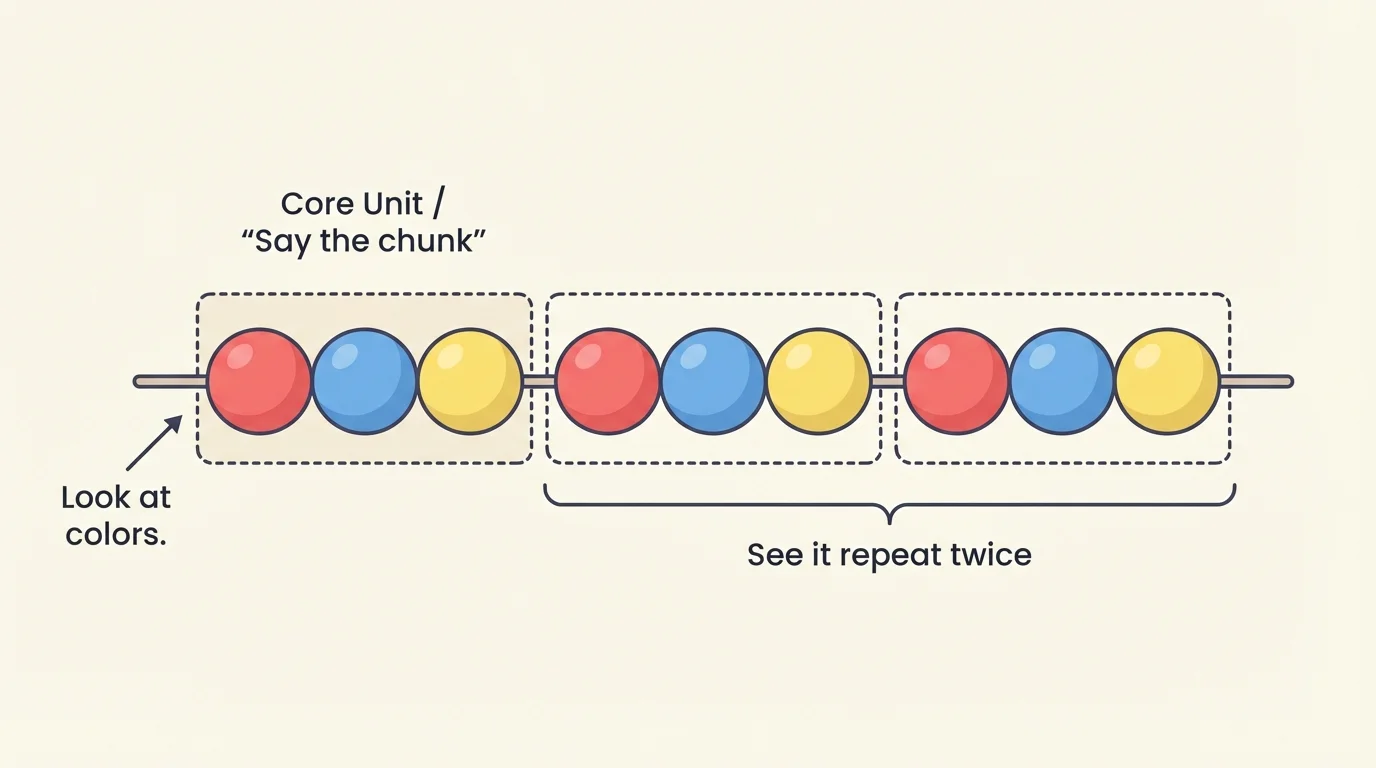
[Figure 2] You can find the repeating part by using a simple sequence of steps. First, look carefully. Next, say the colors or objects in order. Then, find the smallest group that repeats again.
For red, blue, red, blue, red, blue, we say the colors slowly: red, blue, red, blue, red, blue. Then we notice that red, blue happens again and again. So the core unit is red, blue.
For red, red, blue, red, red, blue, we say: red, red, blue, red, red, blue. This time the repeating part is longer. The core unit is red, red, blue.
If a group does not repeat the same way, then it is not a repeating pattern. We have to check that the order stays the same each time.
Let's find the repeating parts together.
Example 1
Pattern: red, blue, red, blue, red, blue
Step 1: Say the pattern in order.
We say: red, blue, red, blue, red, blue.
Step 2: Look for the smallest part that repeats.
Red, blue repeats, then red, blue repeats again.
Step 3: Name the core unit.
The core unit is red, blue.
The pattern can be grouped as red, blue | red, blue | red, blue.
This is an alternating color pattern. The colors take turns: one red, one blue, one red, one blue.
Example 2
Pattern: circle, square, circle, square, circle, square
Step 1: Say the shapes in order.
Circle, square, circle, square, circle, square.
Step 2: Find what repeats.
Circle, square happens again and again.
Step 3: Name the core unit.
The core unit is circle, square.
The same idea works for shapes, not just colors.
Patterns can be made with many things: blocks, beads, stickers, sounds, or steps.
Example 3
Pattern: red, red, blue, red, red, blue
Step 1: Say the colors in order.
Red, red, blue, red, red, blue.
Step 2: Check the small groups.
Red, blue does not work, because there are two reds before the blue.
Step 3: Find the repeating part.
Red, red, blue repeats two times.
Step 4: Name the core unit.
The core unit is red, red, blue.
This pattern repeats a group of 3 colors.
We can also use sounds. If we hear clap, clap, tap, clap, clap, tap, the core unit is clap, clap, tap.
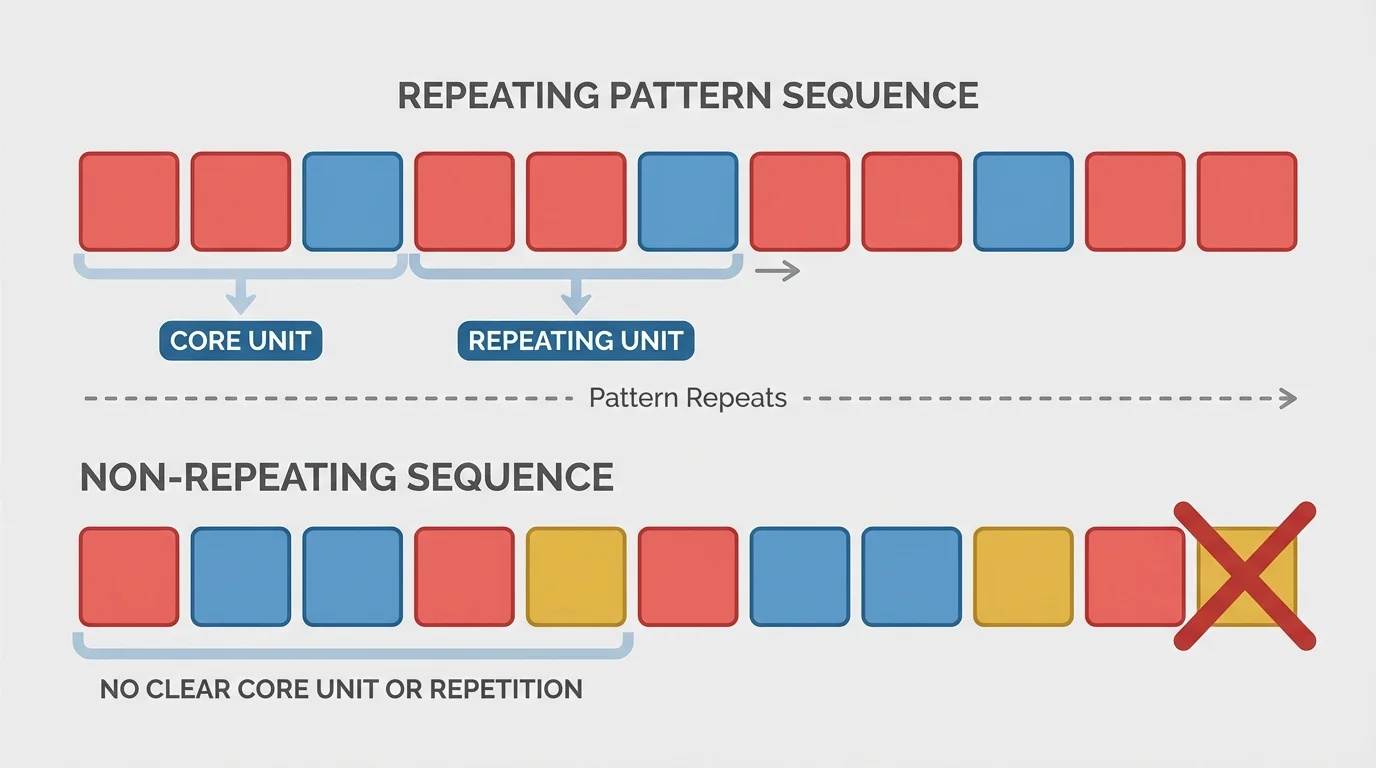
[Figure 3] Some lines of objects are easy to sort into repeating groups, and some are not. We must check carefully to see if the same part comes back in the same order.
Look at red, red, blue, red, red, blue. This repeats. The core unit is red, red, blue. But look at red, blue, blue, red, yellow. That does not repeat in one steady way, so it is not a repeating pattern.
Sometimes children pick a piece that is too big. For red, blue, red, blue, someone might say the core unit is red, blue, red, blue. That piece does repeat, but it is not the smallest repeating piece. We always look for the smallest one.
We can remember [Figure 1] here: the red-blue pattern keeps returning in pairs, so the smallest repeating part stays red, blue.
Patterns are everywhere. Songs repeat beats, clothes repeat stripes, and floor tiles often repeat colors or shapes.
Longer repeating units are patterns too. For example, star, heart, circle, star, heart, circle has the core unit star, heart, circle.
Patterns help us notice order in the world. Beads on a necklace may go blue, pink, blue, pink. A scarf may have stripes that repeat. A song may have a beat pattern. A train of blocks may use the same colors again and again.
When we know the core unit, we can tell what should come next. If the pattern is red, blue, red, blue, then after blue comes red. If the pattern is red, red, blue, red, red, blue, then after blue comes red.
This is why finding the repeating part matters. It helps us describe patterns, continue them, and see whether they are the same each time. The simple method from [Figure 2] helps us look, say, and check the repeating part. And when we compare repeating and non-repeating lines, like the ones in [Figure 3], we become better pattern detectives.
