Look around a room and you can find shape surprises everywhere. A window may look like one big shape, but it can be made from smaller parts. A picture made using toys, a puzzle, or a block design can start with smaller pieces and become something new. That is what composing shapes means: small shapes work together to make a larger shape.
When we put shapes together, we look at how they touch. They can match along a side, sit next to each other, or fit together like puzzle pieces. Then our eyes can see one new, bigger shape.
We compose a larger shape when we join simple shapes together. We can use shapes such as triangles, squares, and rectangles. One shape by itself is small, but two or more shapes together can make a larger shape.
Sometimes the new shape looks like a shape we already know. For example, two small squares can make one long rectangle. Two triangles can fit together and make a square. The small parts remain visible, but together they make something larger.
Simple shapes are easy shapes like a triangle, square, rectangle, and circle. A larger shape is a new shape made when smaller shapes join together.
It helps to look carefully at the edges. If sides match, the shapes can fit neatly. If they do not match, the shapes may still touch, but they may not make the larger shape we want.
Some basic shapes are easy to spot, as [Figure 1] shows. A triangle has corners and straight sides. A square has four equal sides. A rectangle has four sides, with opposite sides equal in length. A circle is round.
These simple shapes are like building pieces. We can move them, turn them, and place them together. Even when a shape turns, it is still the same shape.
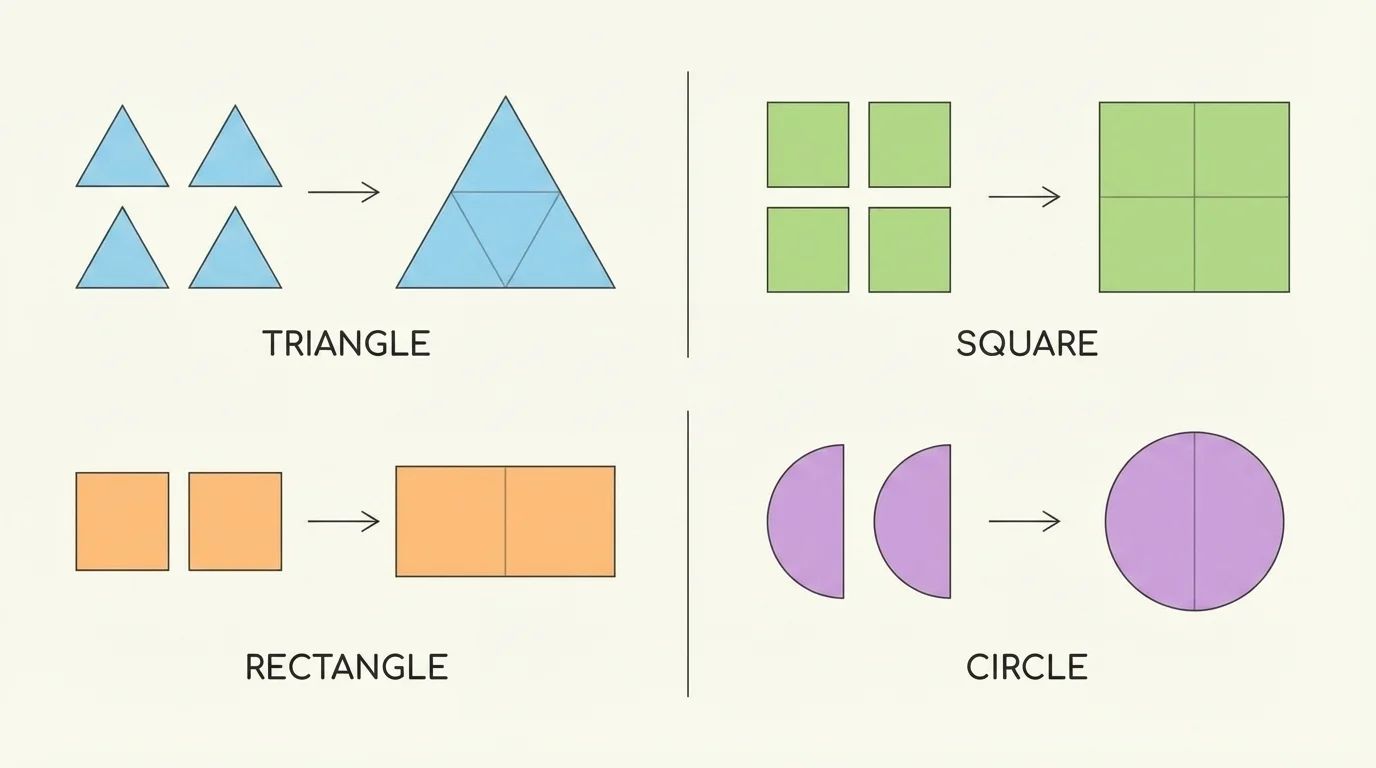
When we compose shapes, we often use straight-sided shapes first because they fit together easily. Triangles, squares, and rectangles are especially helpful for making new designs.
A big picture can be made from just a few little shapes. Many puzzles and block patterns work this way.
A circle can be part of a picture too, like a wheel or a ball, but today we focus most on shapes with straight sides because they join edge to edge very easily.
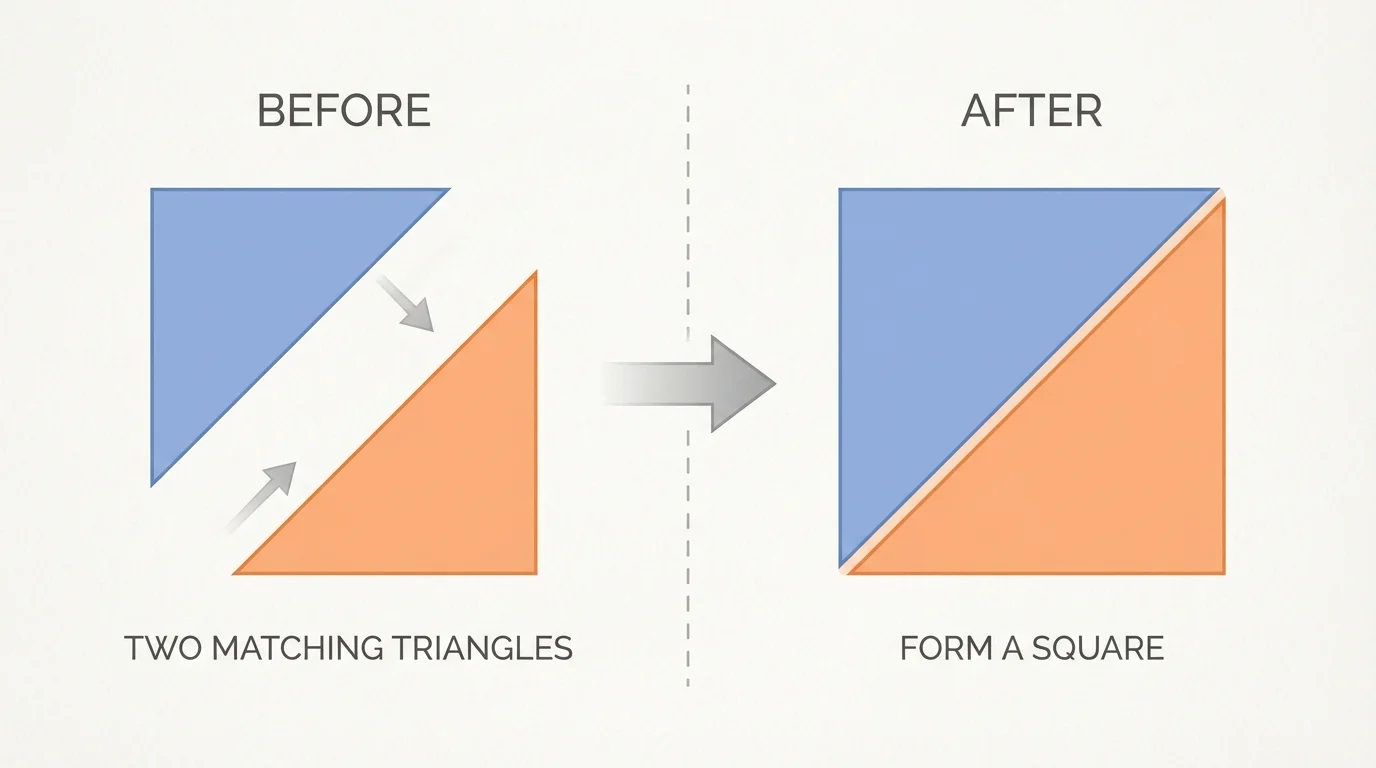
[Figure 2] shows one way shapes can join. When shapes join, they touch along sides or parts of their sides. Two matching triangles can fit together to make one square. The two small pieces become one larger shape.
If we place shapes carefully, there are no gaps in the middle. A gap means empty space. When the pieces fit with no gaps, the larger shape is complete.
Another way to join shapes is side by side. If two equal squares sit next to each other, they can make one rectangle. If one square sits under a triangle, the new picture might look like a house.
Parts and whole
When you compose shapes, you can think about parts and whole. The small shapes are the parts. The new, bigger shape is the whole. Both ideas matter: you can see the little pieces, and you can also name the big shape they make.
Turning a shape does not change what it is. A triangle is still a triangle if it points up, down, or sideways. That helps us fit pieces together in different ways.
[Figure 3] helps us ask an important question after shapes join: what larger shape do we see now? Two small squares can sit together and make one rectangle. We can see the little squares and the larger rectangle at the same time.
This is an important idea in geometry. One picture can have more than one shape in it. We can name the parts, and we can also name the whole.
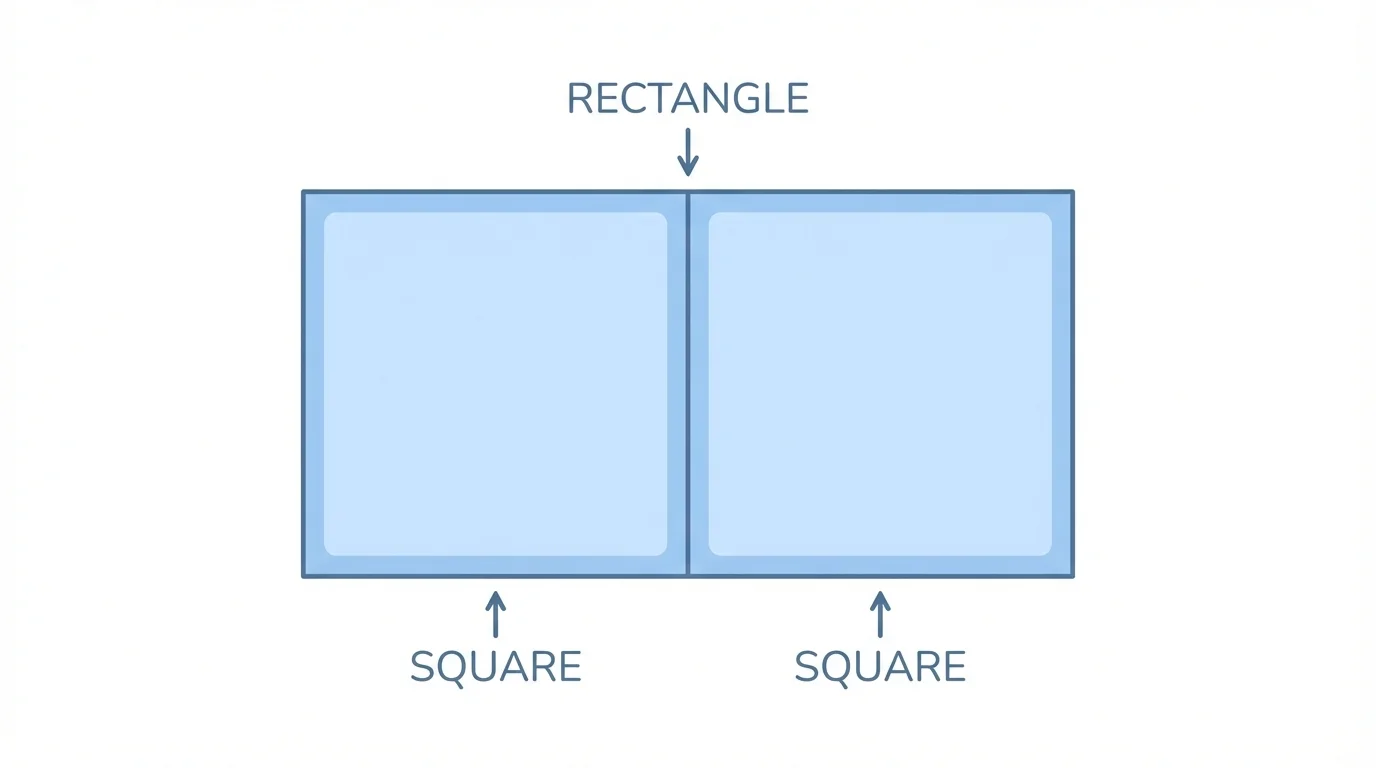
Sometimes children first name only the small pieces. Sometimes they name only the big shape. Good geometric thinking involves noticing both. For example, you might say, "I see two squares. Together they make one rectangle."
Later, when you build with blocks or solve puzzles, this same idea helps you see how pieces fit. As we saw in [Figure 2], different small shapes can sometimes make the same larger shape.
These examples use simple shape situations. We count the pieces with numbers such as \(1\), \(2\), and \(3\).
Worked example 1
Two small squares are placed side by side. What larger shape do they make?
Step 1: Look at the parts.
There are \(2\) squares.
Step 2: See how they join.
The squares touch side to side with no gap.
Step 3: Name the larger shape.
Together, the \(2\) squares make \(1\) rectangle.
Answer: The larger shape is a rectangle.
Notice that the two squares do not disappear. They are still inside the larger rectangle, just like the picture in [Figure 3].
Worked example 2
Two matching triangles are put together. What larger shape do they make?
Step 1: Count the parts.
There are \(2\) triangles.
Step 2: Check the fit.
The triangles match along a side.
Step 3: Name the whole.
The \(2\) triangles make \(1\) square.
Answer: The larger shape is a square.
This shows that small pieces can make a new shape that looks different from each piece by itself.
Worked example 3
One square is under one triangle. What picture can they make?
Step 1: Look at the shapes.
There is \(1\) square and \(1\) triangle.
Step 2: Put them together.
The triangle sits on top of the square.
Step 3: Describe the larger figure.
The shapes make a simple house picture.
Answer: The pieces make a larger picture.
Sometimes the larger figure is a named shape, such as a rectangle. Sometimes it is a picture or design, such as a house, rocket, or robot.
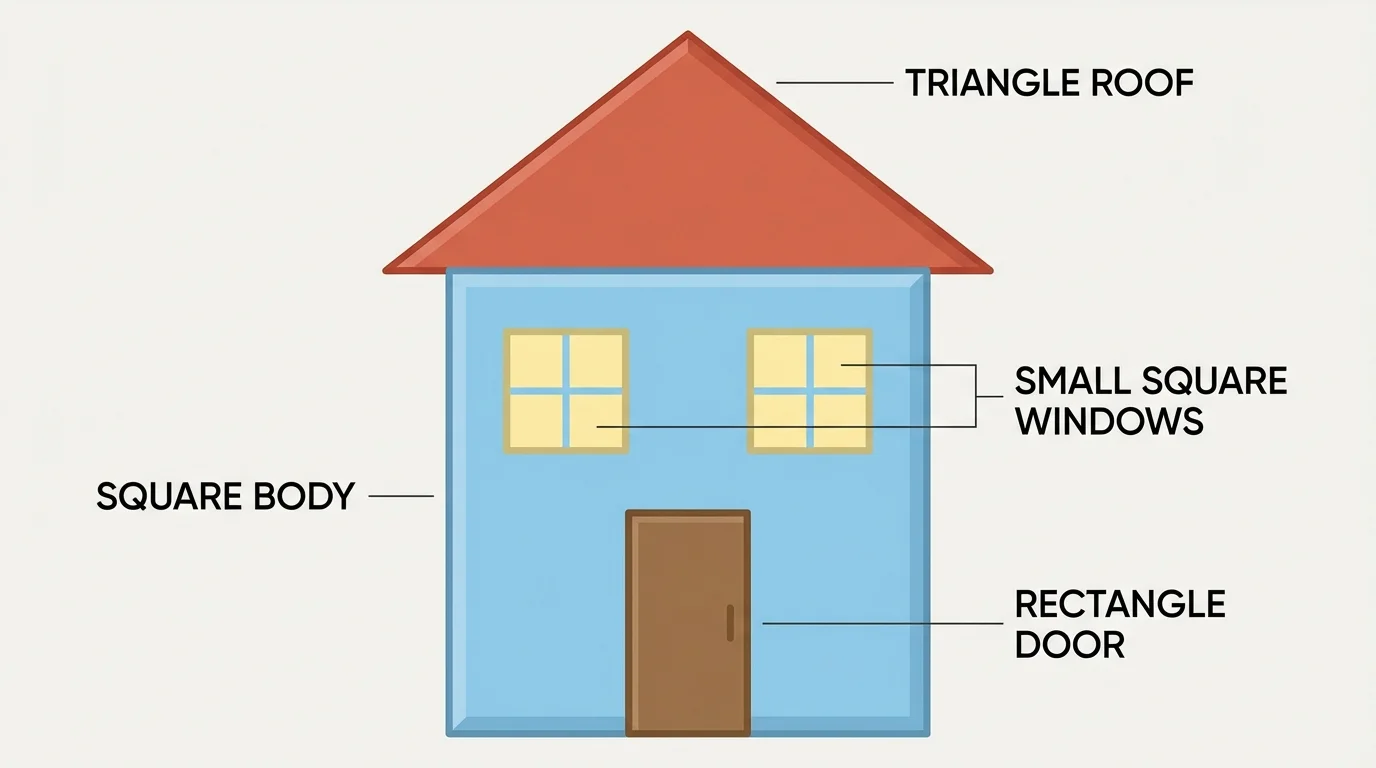
[Figure 4] shows that shape composing happens in everyday life. A simple house picture can be made from a square body, a triangle roof, a rectangle door, and small square windows. Artists, builders, and children with blocks all use parts to make a whole.
Blocks, floor tiles, quilts, and puzzles all use shapes that fit together. When you build with pieces, you are doing geometry. You are deciding which shapes belong where.
A toy train picture might use circles for wheels and rectangles for cars. A face might use a circle for the head and small shapes for eyes and mouth. A castle made from blocks may use many rectangles and squares.
When children notice these patterns, they begin to understand how shapes are put together. They see that a big object can be made from many smaller parts. That same idea appears in puzzles, art, and building games.
You already know how to name shapes by how they look. Now you are using that shape knowledge in a new way: you are joining shapes to make something larger.
If you can say, "I see the parts, and I see the whole," then you are thinking like a geometer.
