Have you ever read a book and found a word that felt like a tiny mystery? Good readers do not give up when that happens. They ask questions, look for clues, and think carefully. That is how readers learn new words and understand a text better.
When you read, you may see a word you do not know. You may also see a group of words that sounds confusing. A reader can say, "What does that mean?" That question is powerful. It helps you slow down, look closely, and learn.
Informational texts, such as books about animals, weather, or plants, often teach new words. Those new words help us learn new ideas. If we understand the words, we understand the text better.
Meaning is what a word or phrase tells us. Clarify means to make something clear. When readers clarify a word, they figure out what it means.
A word is one part of language, like feather or storm. A phrase is two or more words together, like look up or in the shade. Readers can ask questions about both words and phrases.
Strong readers talk back to the text in their minds. They may ask: "What does this word mean?" "What is happening here?" "What clue is near the word?" "Does the picture help?" "Can I read the sentence again?" These questions help the reader think.
Sometimes a reader asks about a hard word. Sometimes the reader asks about an easy word that has a new meaning in the sentence. For example, the word text can mean the words in a passage, a book, or on a page. Readers use the sentence to know what kind of meaning fits.
You already know that good readers reread when something does not make sense. Asking a question and rereading work together. First you notice confusion, then you go back and search for clues.
Questions can be short and simple. A first-grade reader might ask, "What is a den?" or "Who is shivering?" or "What does 'big storm' tell me?" Simple questions can lead to smart answers.
[Figure 1] Readers use context clues to figure out word meanings. A context clue is a hint in the sentence, in the paragraph, or in the picture.
Look at this sentence: "The birds sat in the nest. The nest was made of twigs." If you do not know nest, the sentence gives clues. Birds sit in it. It is made of twigs. Now you can think, "A nest is a bird's home."
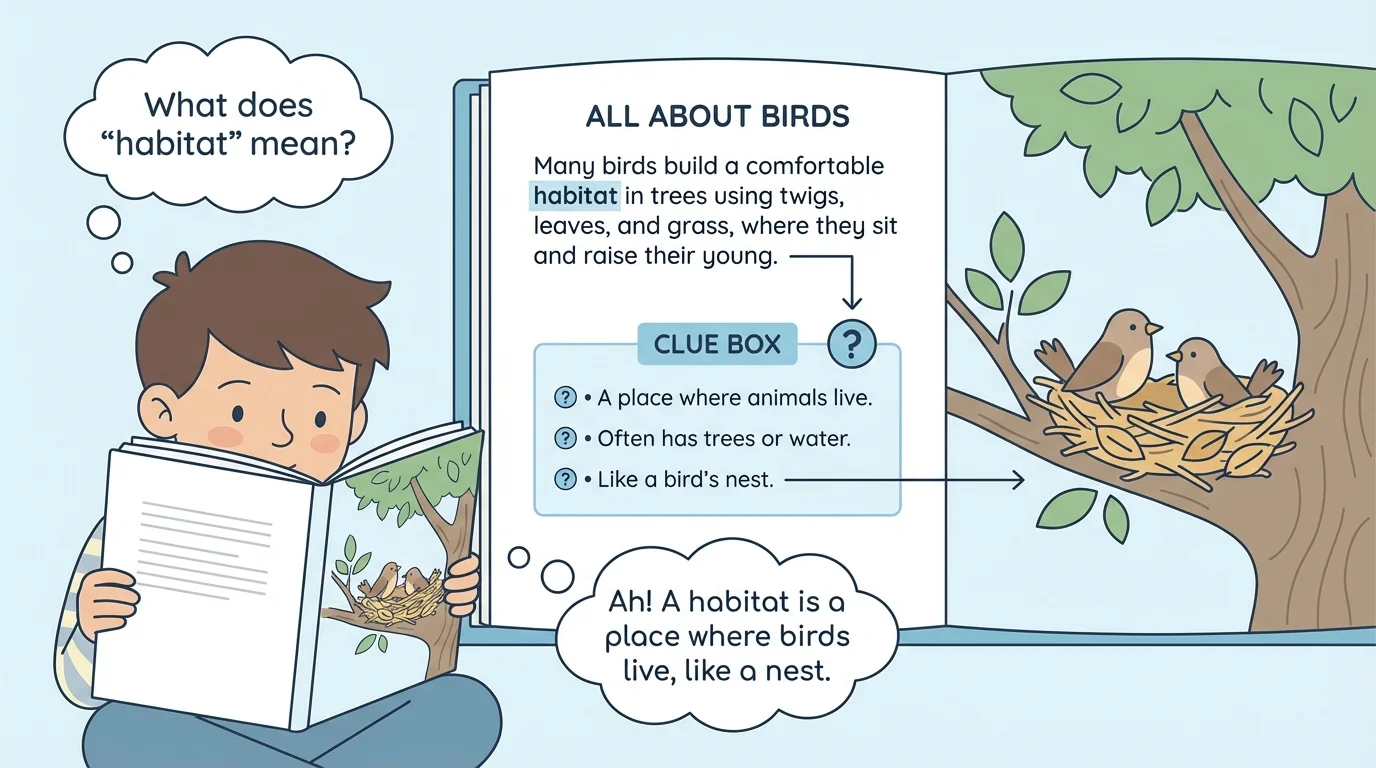
Pictures can help too. In an informational book about bears, a picture of a bear sleeping in a cave can help with the word den. The words around it may say, "The bear rests in its den during winter." Now the meaning becomes clearer.
Sometimes action words give clues. Read this sentence: "The boy tugged the wagon. He pulled it over the grass." The second sentence helps explain tugged. Tugged means pulled.
Many new words can be understood without a dictionary when readers pay close attention to the words around them, the topic, and the picture.
Readers can also use the whole topic as a clue. In a book about rain, the word drizzle is probably about weather. If the sentence says, "A light drizzle fell from the clouds," the clue light helps us know drizzle means a small, gentle rain.
Later, when you meet a new animal word or weather word, think back to the clue hunt in [Figure 1]. Good readers gather hints from more than one place.
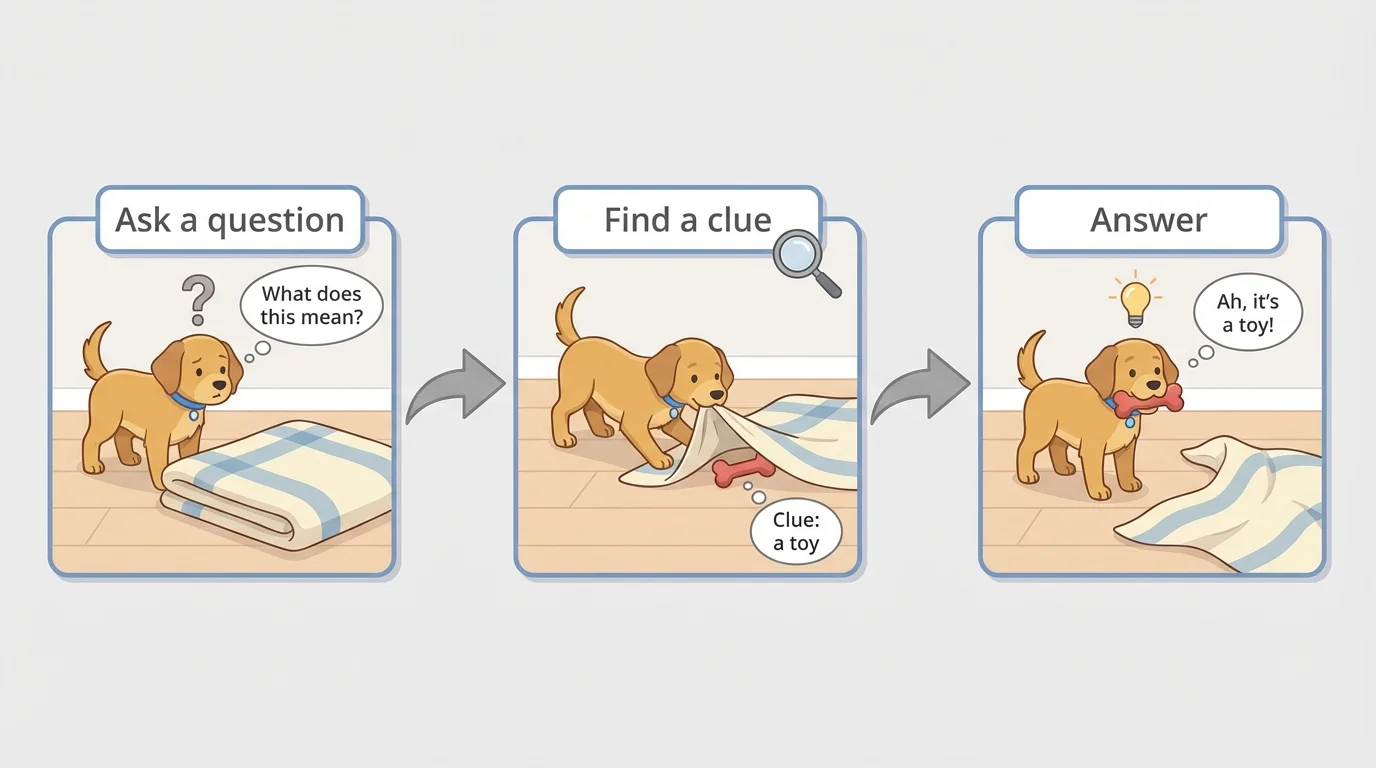
When a word is tricky, readers can follow a simple process: ask a question, find a clue, and answer the question. This keeps reading active and thoughtful.
[Figure 2] Try this sentence: "The puppy dragged the blanket across the floor." You might ask, "What does dragged mean?" Then you think about what is happening. The puppy moves the blanket across the floor. So the answer can be, "Dragged means pulled along."
Example: figuring out a word
Sentence: "The turtle hid in its shell when it felt unsafe."
Step 1: Ask a question.
"What does shell mean?"
Step 2: Find clues.
The turtle hides in it. It is part of the turtle.
Step 3: Answer.
A shell is a hard outer covering on a turtle's body.
This kind of thinking helps readers become more confident and clear. One good question can unlock a whole sentence.
If a first answer does not make sense, the reader can try again. That is not a mistake. That is smart reading.
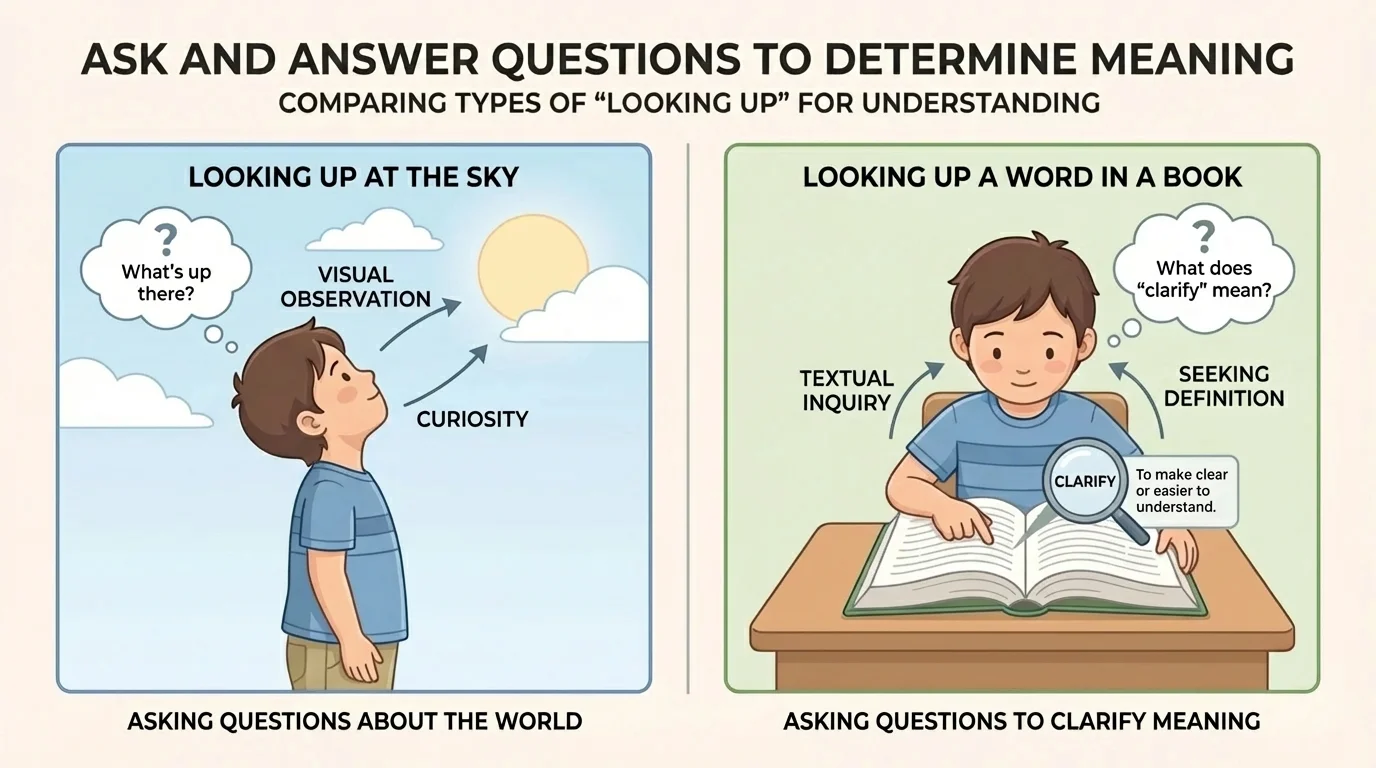
[Figure 3] Sometimes a phrase has a meaning that comes from the words together. Readers should ask questions about the whole phrase, not only one word at a time.
Read these two sentences: "Mia looked up at the moon." "Mia looked up the word in her book." In the first sentence, looked up means she raised her eyes. In the second sentence, looked up means she searched for information. The same words can mean different things.
Here is another example: "The plant grew in the shade." If a reader asks, "What does in the shade mean?" the answer is not just one word. It means a place with less sunlight, often under a tree or beside something that blocks the sun.
Words can change meaning in different sentences. Readers must look at the whole sentence and the whole topic. A guessed meaning should fit what the text is mostly about.
That is why reading carefully matters. A word may seem familiar, but the sentence can give it a new job.
After readers guess a meaning, they should check it. They can put the new meaning back into the sentence and see if it makes sense. This is called checking whether it makes sense.
For example, if you read, "The fox crept through the grass," and you think crept means ran fast, that does not fit very well. Foxes creeping through grass move slowly and quietly. So a better answer is that crept means moved carefully and quietly.
Readers may also ask, "Does my answer match the picture? Does it match the rest of the paragraph?" If the answer is yes, the meaning is probably right.
Checking a meaning
Sentence: "The seed began to sprout after the rain."
Step 1: Ask.
"What does sprout mean?"
Step 2: Use clues.
It happens to a seed. It happens after rain.
Step 3: Check.
If sprout means "begin to grow," the sentence makes sense.
Good readers do not just guess quickly. They think, test, and adjust.
Readers can ask questions and discuss answers with a partner, teacher, or family member. One person may notice a clue that another person missed. Talking helps meaning become clearer.
A child might say, "I think drift means move slowly." Another child might answer, "I see snow in the picture, so maybe it means snow blowing or piling up." Together they build a stronger understanding.
This also works with phrases. If a book says, "The sun came out," one reader may ask whether the sun walked outside like a person. Another reader can answer, "No, it means the sun appeared from behind clouds." Questions help fix confusion.
When you explain your answer, use the text. You can say, "I know because the sentence says..." or "I think this because the picture shows..." Those are strong reading habits.
Every time you ask about a word, you grow your reading power. You learn more vocabulary, and you understand more of the text. This is especially helpful in informational reading, where books teach facts and ideas.
When you read about insects, farms, the moon, or oceans, you will meet new words. Some words may be easy to figure out. Some may take more thinking. Keep asking, keep looking for clues, and keep checking your thinking.
When you return to the phrase examples in [Figure 3], you can see why careful readers think about the whole sentence, not just one word. And when you remember the simple flow in [Figure 2], you have a reading tool you can use again and again.
