Have you ever learned something from a picture before you even read all the words? A picture of a penguin standing on ice, a seed growing into a plant, or a fire truck spraying water can tell you a lot right away. Good readers use both the pictures and the words to understand a text.
An informational text is a book or article that teaches us about the world. It may teach about animals, weather, plants, jobs, or places. When we read informational texts, we do not only read the sentences. We also look carefully at the illustrations.
Illustrations can be drawings, photographs, labels, diagrams, or charts. They are not just decorations. They help teach important information. The words in the text also give us details. When we put the pictures and details together, we can explain the big idea of the text.
Key idea means the most important idea the text is teaching. Details are the small facts that tell more about the key idea. Illustrations are pictures or other visuals that help the reader understand.
Sometimes a page has only a few words, but the illustration gives a lot of meaning. Sometimes the picture is simple, and the words do most of the teaching. Strong readers pay attention to both.
A key idea is what the text is mostly teaching. If a book page says that bees visit flowers, carry pollen, and help new plants grow, the key idea might be that bees help plants. The little facts about flowers and pollen are the details.
Think of the key idea as the big box. The details fit inside the box. They support the big idea. If the page is about frogs, details might tell where frogs live, what they eat, and how they grow. All those details help us understand the key idea: the text is teaching us about frogs.
Some informational books teach a lot with very few words because the picture does part of the teaching. That is why looking carefully is such an important reading skill.
When you want to describe the key idea, ask, What is this page mostly teaching me? Then ask, Which details and pictures helped me know that?
[Figure 1] A illustration can show size, shape, color, action, and parts on a plant page. A picture can help a reader see that roots are under the ground and leaves are above the ground. The words may say the names, but the picture makes the meaning clearer.
Illustrations can also help when the text uses a new word. If the text says, "The duck has webbed feet," the picture helps the reader see what webbed feet look like. The picture gives a clue.
Sometimes the illustration helps us notice something the words do not say directly. A photo of polar bears standing on snow tells us the place is cold. A drawing of children wearing raincoats tells us the weather may be wet. These clues help us understand the key idea better.
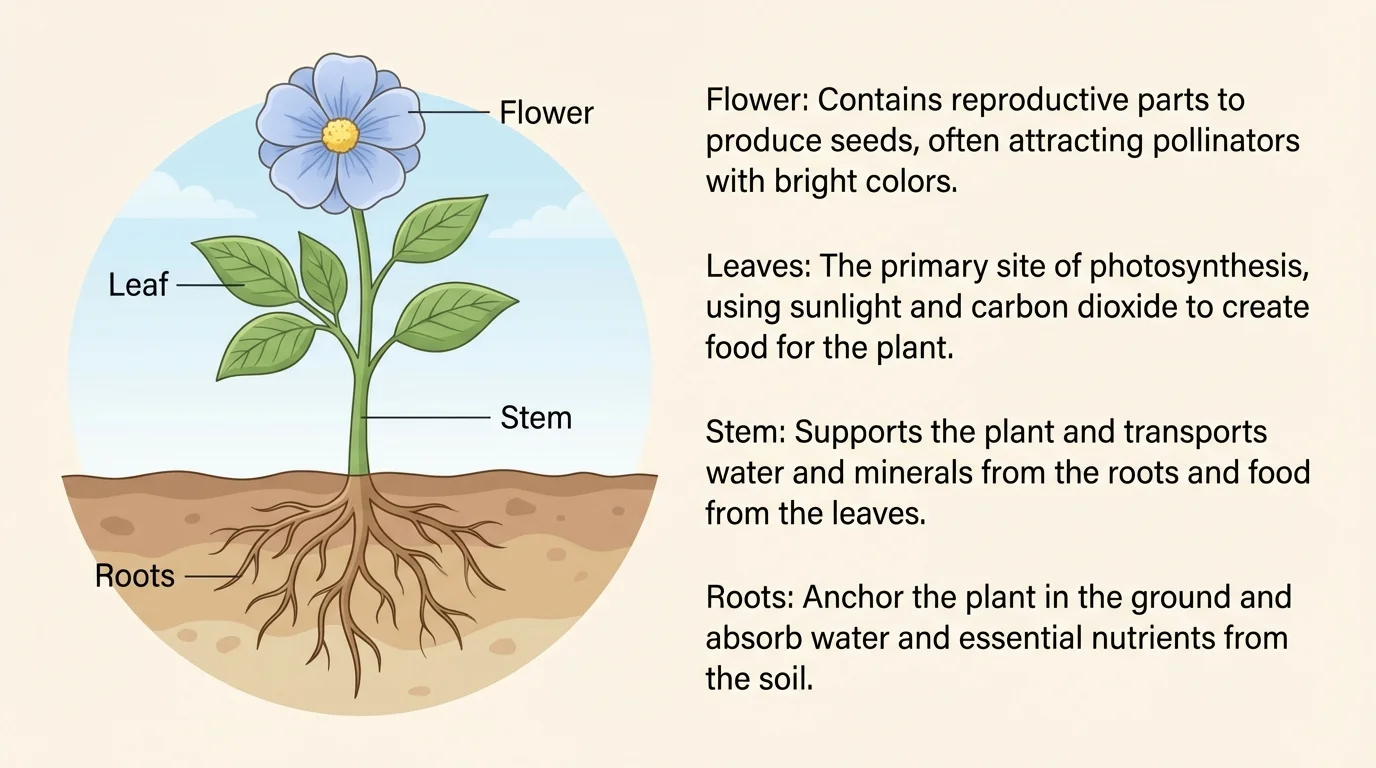
If a page has labels, arrows, or names, those parts matter too. Labels are part of the illustration. They point to important parts and help us match the picture to the words.
Details are the important facts in the sentences. A detail gives more information. If a text says, "Turtles have hard shells. Their shells help protect them," those are details. They help us understand the key idea that a turtle's shell keeps it safe.
Some details tell what something looks like. Some tell what it does. Some tell where it lives. Some tell how it changes. When several details fit together, they point to the key idea.
Example: finding details
Read these facts: "Birds have feathers. Feathers help birds stay warm. Feathers also help many birds fly."
Step 1: Notice repeated information.
The word feathers comes up again and again.
Step 2: Ask what the facts teach.
The details teach what feathers do.
Step 3: Say the key idea.
The key idea is that feathers help birds in important ways.
Important details are different from tiny, unimportant things. If a picture shows a red wagon in the corner of a farm page, but the text is teaching about cows, the wagon is probably not the key idea. Good readers focus on what matters most.
[Figure 2] Readers understand more when they use both the picture and the words. The text might say, "Penguins huddle together in the cold." The picture may show many penguins standing close together on ice. The words and picture work as a team.
When the words and illustration match, they help us feel sure about the key idea. If the text says, "Seeds need water to grow," and the picture shows a child watering a small sprout, both tell the same idea: water helps plants grow.
Sometimes one gives extra information. A text about bats may say, "Bats sleep in dark places." The illustration may show bats hanging upside down in a cave. Now we know not only that bats sleep in dark places, but also how they rest.
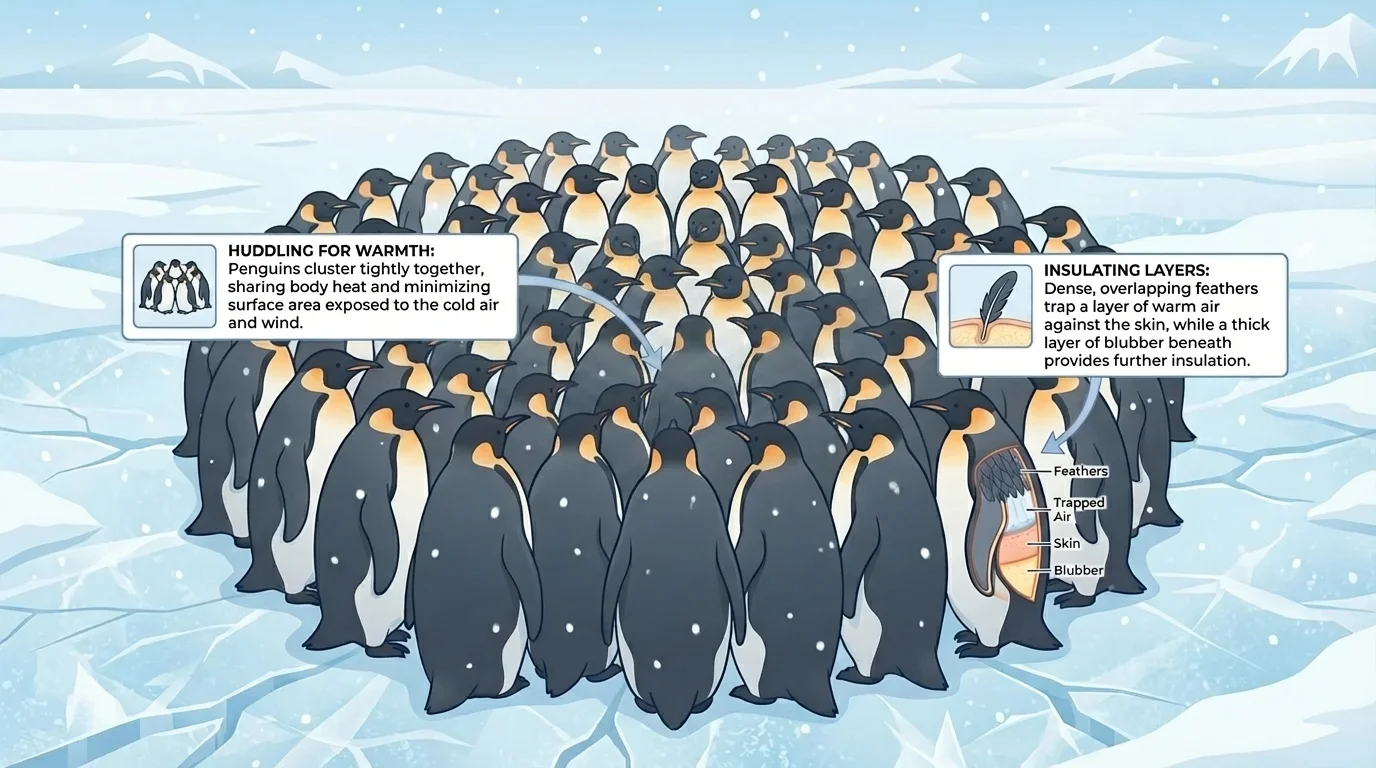
To describe the key idea, you can use both kinds of clues. You might say, "The page is mostly about how penguins stay warm. I know because the words say they huddle together, and the picture shows them standing close on the ice."
Words and pictures work together
Sometimes the words tell the fact and the picture shows it. Sometimes the picture gives a clue and the words explain it. When you use both, your understanding becomes stronger.
This is why careful readers do not rush. They stop, look, think, and connect what they see with what they read.
After reading, you can tell the key idea in a full sentence. You do not need to say every detail. You say the most important idea and then add one or two details that support it.
These sentence starters can help: "The text is mostly about ___." "The key idea is ___." "I know because the picture shows ___ and the words say ___."
For a page about firefighters, you might say, "The text is mostly about how firefighters help people. I know because the picture shows a firefighter using a hose, and the words tell that firefighters put out fires and keep people safe."
For a page about the moon, you might say, "The key idea is that the moon changes how it looks. I know because the pictures show different moon shapes, and the details name the shapes."
[Figure 3] Different illustrations help readers in different ways. A photo may show what something really looks like. A diagram may point to parts. A chart may help us compare information quickly.
A photograph of a butterfly can show real colors and patterns. A labeled diagram of a butterfly can name the wings, body, and antennae. A simple chart can show what butterflies eat at different stages. Each kind of illustration teaches in its own way.
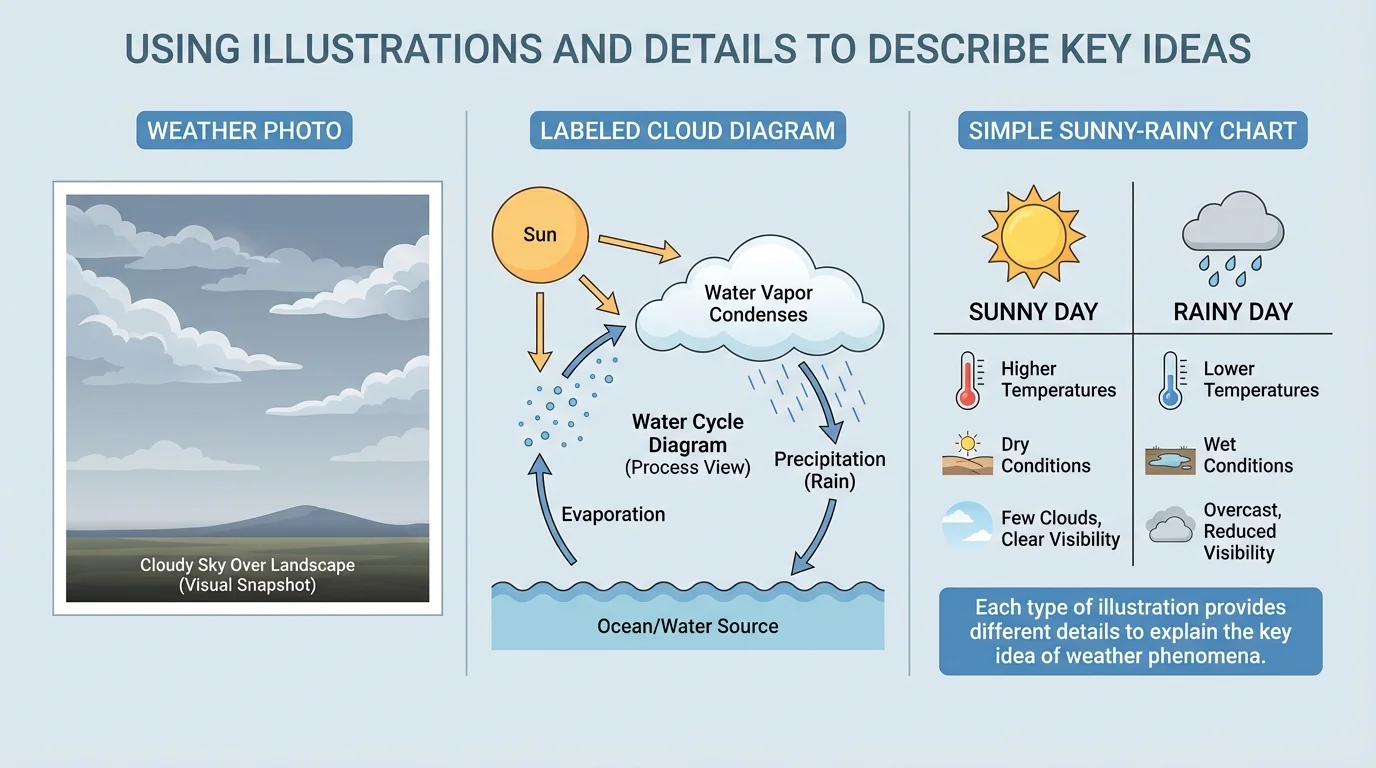
When you see a chart or simple diagram, do not skip it. It is part of the text. It may hold a key detail. As we saw with the plant picture in [Figure 1], labels can teach the names of parts. As we saw with the penguins in [Figure 2], an illustration can also show action and setting.
Readers become stronger when they ask, "What does this picture teach me?" and "How does this detail help explain the big idea?" Those questions help them talk about the text clearly and confidently.
When you read, you already know how to look for important words. Now add one more strong habit: study the illustrations too. The best understanding often comes from using both.
Every informational text contains clues. Some clues are in the words. Some clues are in the pictures. When you notice both, you can describe the key idea in a smart, careful way.
