Have you ever needed to learn how to do something new, like plant a seed, make a snack, or wash a pet bowl? Books can teach us, and when a whole class works together, learning becomes even richer and more meaningful. We can read, talk, remember, notice, and write as a team. That is called a shared project, and it helps everyone learn from one another.
When children work together to answer a question, they are doing research in a simple and important way. They may ask, "How do we grow a bean plant?" or "How do we make applesauce?" Then they listen, look at pictures, read books with the teacher, and gather facts. After that, they can write instructions together so another person can follow the steps.
Research means finding out more about something. In first grade, shared research means the class learns together. The teacher and students read books, study pictures, talk about what they notice, and collect ideas that help answer a question.
A shared writing project means the class makes one piece of writing together. Everyone helps think of the words, the facts, and the order. The teacher may do the writing while students help say each sentence. This lets children focus on the ideas and the steps.
Shared research is when a group works together to learn about a question or topic. Shared writing is when a group helps create one piece of writing together, such as a list, a report, or instructions.
Sometimes the class already knows a little about the topic. That matters too. Good researchers use what they remember and what they learn from books. They put these ideas together carefully.
Every project begins with a question. A good class question is clear and easy to answer with books, pictures, and careful thinking. Questions like "How do you brush your teeth?" or "How do you plant a seed?" are strong questions because they lead to steps.
Some questions ask for facts. Other questions ask how to do something. A how-to question is very helpful for shared writing because the class can turn the answer into directions. If the class asks, "How do we make a paper airplane?" the answer can become a set of instructions.
You already know that books can teach us many things. Pictures, labels, and words all help us understand. When we research, we use these reading skills to learn new information.
It is important to stay on one topic. If the question is about planting a bean seed, the class should look for information about seeds, soil, water, and sunlight, not about making a sandwich or building a kite.
Sometimes two books teach the same topic in slightly different ways, as [Figure 1] shows. One book may say to put in soil first. Another may begin by showing the cup and the seed. Readers look for the important ideas that appear again and again.
A how-to book teaches the steps for doing something. These books often have pictures, labels, and action words. They may use words like first, next, then, and last. These clues help readers understand the order.
When a class explores more than one book, students can compare them. They can ask, "What step do both books have?" "What materials do both books show?" "What is different?" This helps the class find the most important facts.
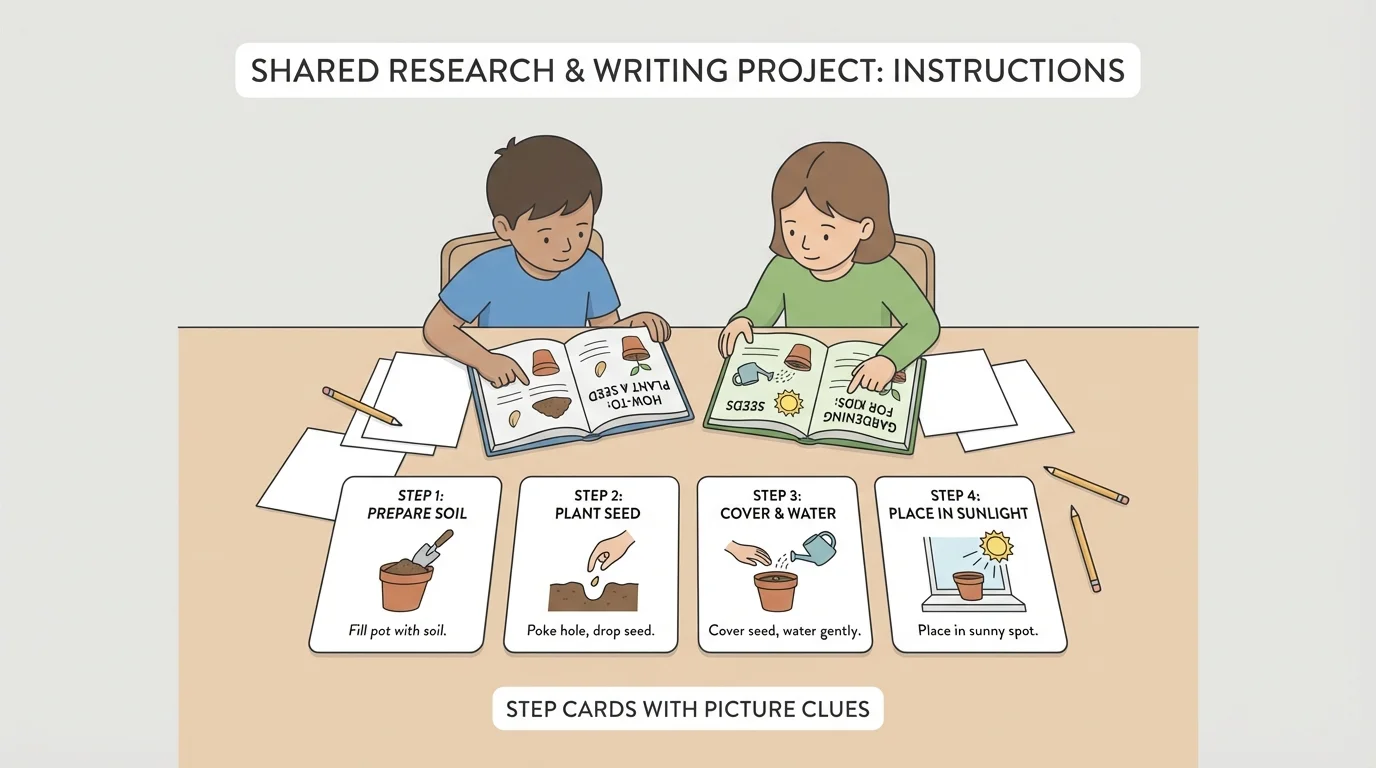
Pictures matter too. A photo of hands pouring water into a cup gives information. A drawing of a seed near a sunny window gives information. Readers use words and pictures together to learn.
Many informational books for young readers use the same sequence words again and again. That repetition helps children notice that steps must happen in a special order.
When the class talks about the books, children learn to listen closely. One student may notice a tool, such as a spoon. Another may notice an action, such as dig or pour. Sharing these ideas helps the whole class.
After reading, the class gathers what it has learned. To gather facts means to collect important information. Students may tell what they remember, point to a picture in a book, or repeat a sentence they heard the teacher read.
The class can sort ideas into groups. One group might be materials, such as cup, soil, seed, and water. Another group might be steps, such as fill, place, cover, and water. This makes the information easier to use in writing.
Using more than one source helps writers learn better. If two books both say a seed needs water and sunlight, that idea is probably very important. If one book adds an extra detail, the class can talk about whether that detail belongs in the instructions.
Sometimes children also recall information from real life. A student may say, "I planted flowers with my grandma." That memory can help, but the class still checks the books to make sure the writing is accurate and clear.
Instructions only work when the sequence is correct, as [Figure 2] illustrates with step cards in order. If steps get mixed up, the reader may become confused. You cannot water the seed before you put the seed in the soil.
Writers use sequence words to show order. Common sequence words are first, next, then, and last. These words help the reader know what to do from the beginning to the end.
Each step should tell one clear action. Instead of writing a long confusing sentence, writers can make short directions. "Put soil in the cup." "Place the seed in the soil." "Cover it." "Pour in water." Clear steps are easier to follow.
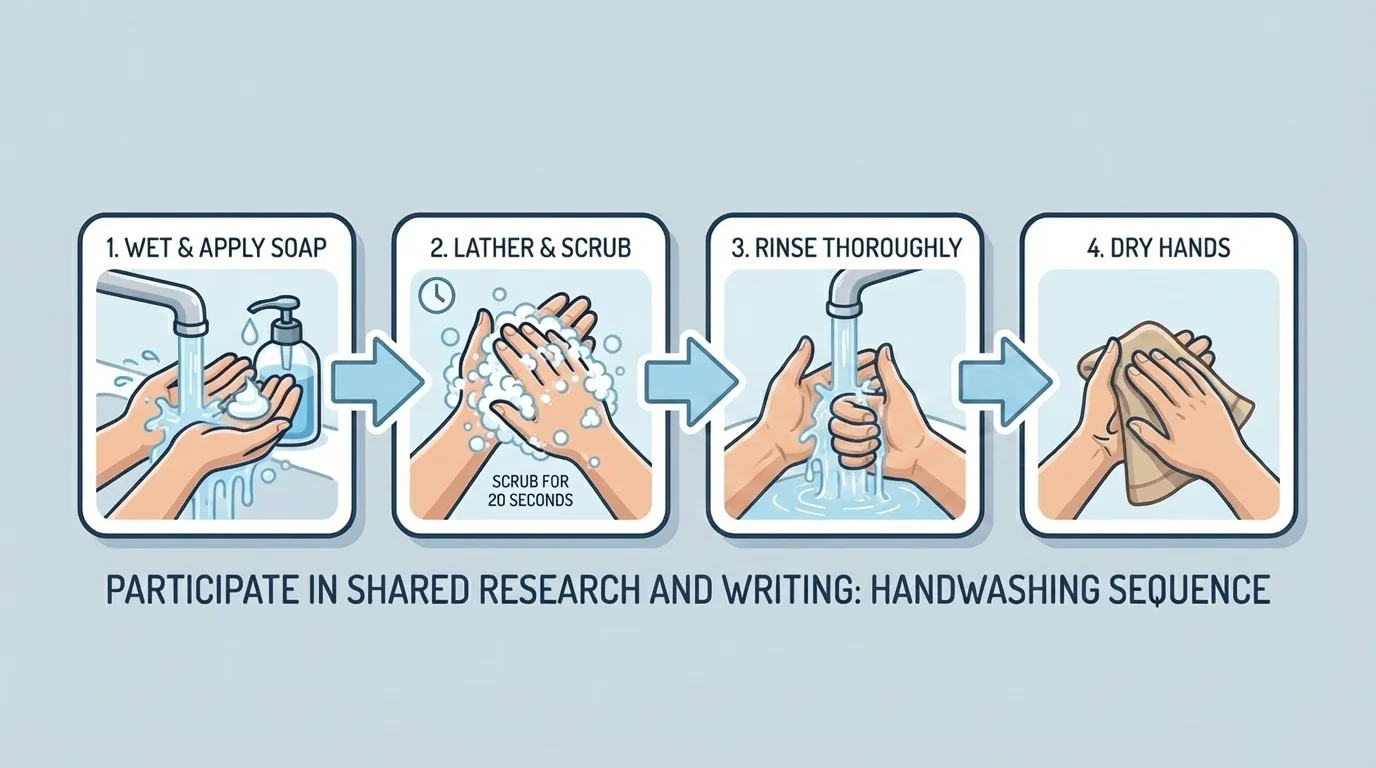
Later, when students write about another topic, they can remember the same idea from [Figure 2]: order matters. The steps in hand washing, seed planting, and paper folding all need the right sequence.
Now the class is ready to write. A set of instructions tells someone how to do something. The class chooses a title, such as How to Plant a Bean Seed. Then students help say each part aloud while the teacher writes.
Good shared instructions often include a materials list and a step list. The materials list tells what is needed. The step list tells what to do. This makes the writing easy to read and easy to use.
| Part of the writing | What it does |
|---|---|
| Title | Tells the topic |
| Materials | Names what is needed |
| Steps | Tells what to do in order |
| Picture | Helps the reader understand |
Table 1. The main parts of a shared how-to piece.
Writers choose strong action words. Words like put, pour, cut, mix, and press tell exactly what to do. Action words make instructions stronger.
Class writing example
Here is how a class might help write directions for making a fruit cup.
Step 1: Name the materials
The class says: bowl, spoon, banana slices, and apple pieces.
Step 2: Put the steps in order
The class decides: first put fruit in the bowl, next stir, then scoop, last eat.
Step 3: Say each sentence clearly
The class helps write: "First, put the fruit in the bowl. Next, stir the fruit. Then, scoop the fruit into a cup. Last, eat your snack."
The finished instructions are short, clear, and easy to follow.
Sometimes the class decides to add a picture or labels. These help readers who are still learning many words. A picture can show where to place the seed or what the finished project looks like.
Good writers check their work. They reread the title, the materials, and the steps. They ask, "Did we forget anything?" "Are the steps in order?" "Will another child understand what to do?"
This is called revision when writers make the writing better. They might add a missing step, fix the order, or replace a weak word with a better one. They might also check that the picture matches the words.
"Good writers think, check, and make their writing stronger."
Sometimes the class can even pretend to follow the directions. If the directions are easy to follow, the writing is working well. If someone gets stuck, the class knows it should fix the instructions.
A class project about planting a bean seed brings all the parts together, as [Figure 3] shows in a classroom chart. The class asks a question: "How do we plant a bean seed?" Then students read how-to books, look at pictures, and talk about what they learn.
The class may gather these materials: cup, soil, bean seed, and water. Then students decide on the steps in order. They use short sentences and sequence words so the instructions are easy to understand.
One shared piece of writing might say: "First, put soil in the cup. Next, make a small hole. Then, place the bean seed in the hole. Next, cover the seed with soil. Last, pour in a little water." These directions answer the research question.
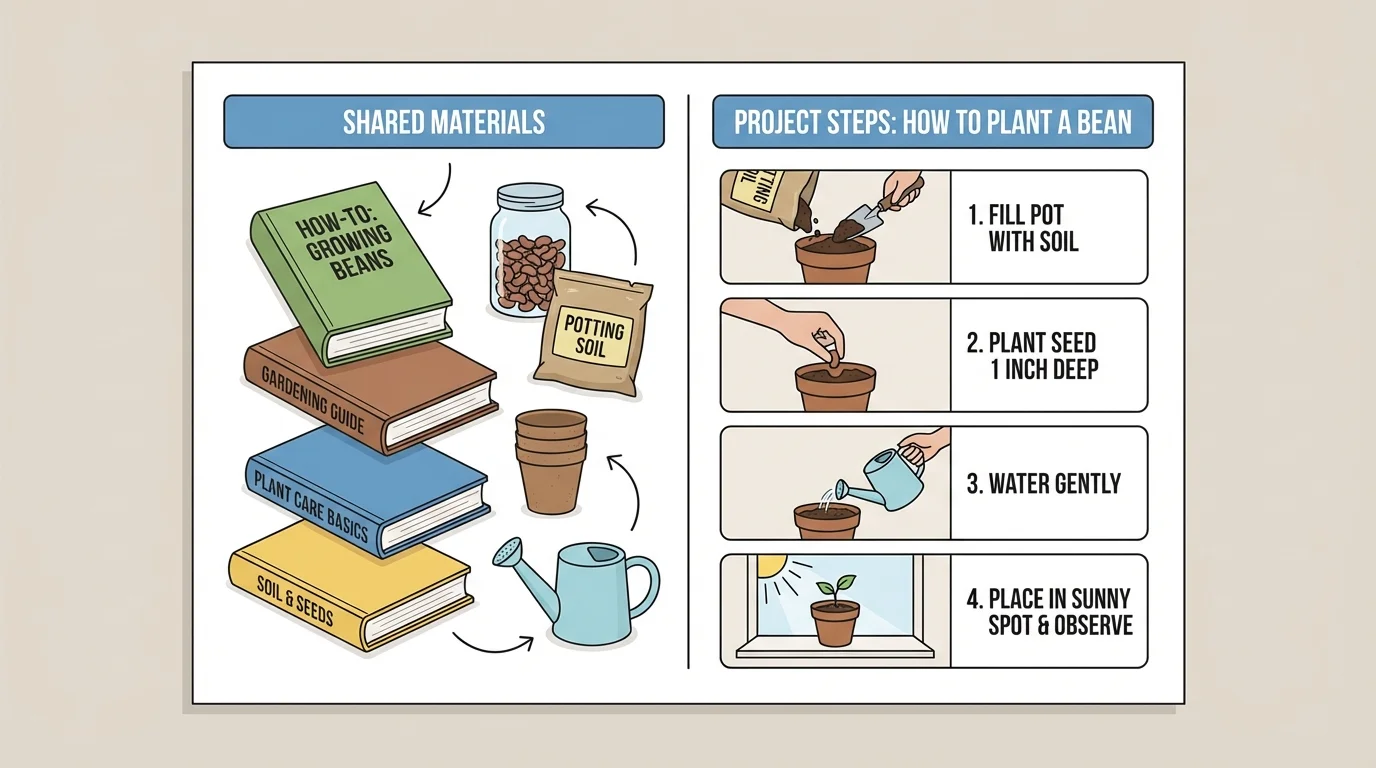
Later, students can look back at [Figure 1] and remember that more than one book helped build the final directions. They can also use the idea from [Figure 3] to make new class instructions for another topic.
What the class learns from the bean seed project
Step 1: Ask the question
How do we plant a bean seed?
Step 2: Read and gather facts
The class finds important materials and actions in books and pictures.
Step 3: Write the directions
The class creates one clear how-to text with steps in order.
This kind of project joins reading, talking, thinking, and writing.
Shared projects also build confidence. Each child can notice something useful. One child may remember a fact. Another may point out a missing step. Another may help choose a better word. The whole class becomes stronger by working together.
When children participate in shared research and writing projects, they learn how books answer questions. They learn to listen for facts, study pictures, compare ideas, and turn information into writing. These are powerful reading and writing habits.
They also learn that writing has a real job to do. Instructions help someone make, build, grow, or do something. That means the writing must be useful, clear, and ordered. Research helps make the writing correct. Teamwork helps make the writing richer.
From one project to the next, students become better at asking questions, finding information, and explaining steps. Today it may be a bean seed. Next time it may be how to make a paper hat, how to care for a class pet, or how to wash paintbrushes. The same careful process can be used again and again.
