Have you ever read a page about rain, and then the next sentence tells how plants grow because of the rain? That is a connection. Good readers do more than read one sentence at a time. They think, "How does this part go with that part?" When we notice how things fit together, the text makes more sense to us.
A connection is how two things in a text are linked. They may happen together, one may cause the other, or they may be alike or different. When readers describe a connection, they explain how one person, event, idea, or piece of information goes with another one.
Describe a connection means to tell how two parts of a text are related. You may tell who works together, what happens first and next, what causes something, or how two facts match.
Informational texts teach us about the world. They may be about animals, weather, families, farms, space, or school rules. In these texts, the author gives facts. Readers need to notice how the facts fit together.
Readers can find different kinds of links in a text. [Figure 1] shows four simple kinds: two people can work together, two events can happen in order, two ideas can match, and two facts can go together to teach something bigger. Seeing these kinds helps us know what to look for as we read.
Sometimes the connection is between two people. For example, in a text about firefighters, one sentence may tell that firefighters wear heavy coats. Another sentence may tell that firefighters help people stay safe. The connection is that both sentences are about firefighters and the work they do to protect people.
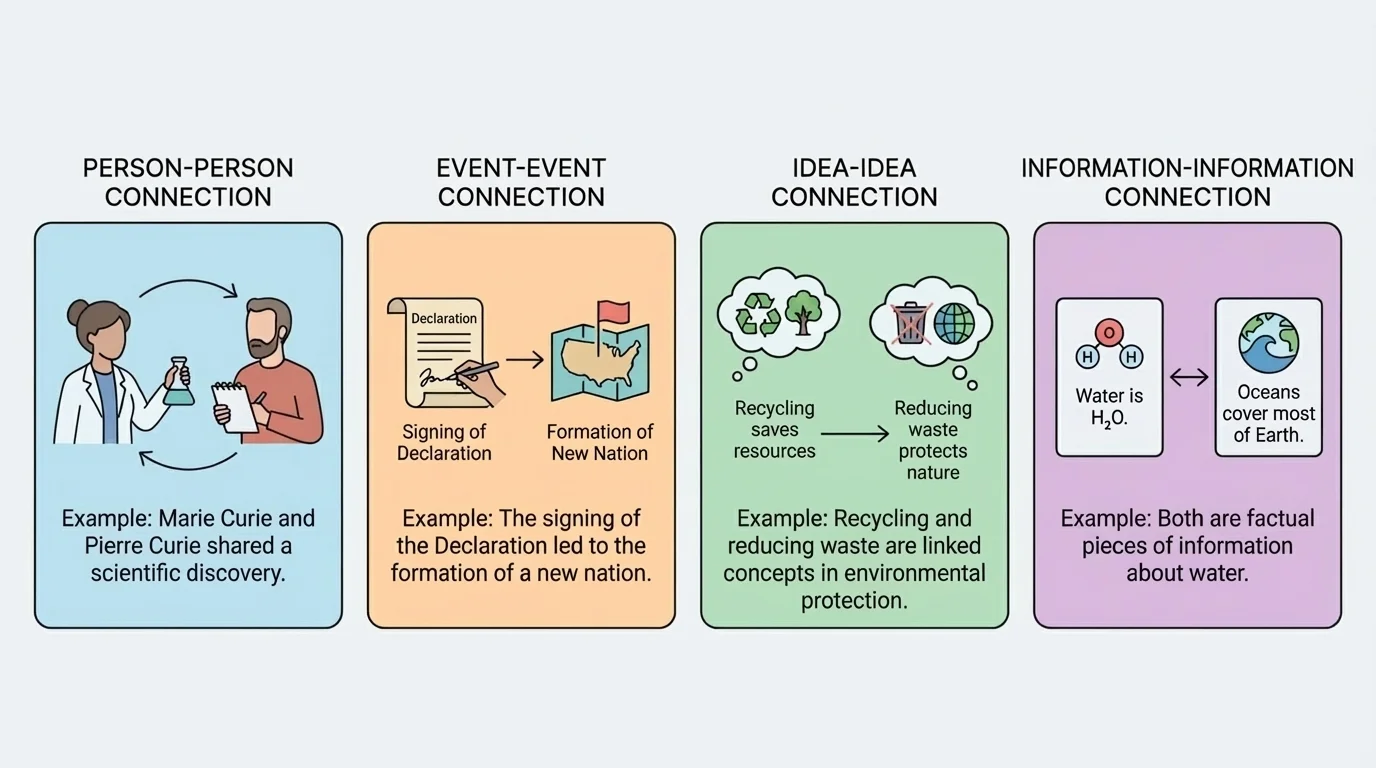
Sometimes the connection is between two events. A text might say, "Dark clouds gathered. Then rain began to fall." These events are connected because one happened first and the other happened next.
Sometimes the connection is between two ideas. A text about birds may say, "Birds have wings. Wings help birds fly." The ideas are connected because the second idea explains the first one.
Sometimes the connection is between two facts, or pieces of information. A text may say, "Cows give milk. Milk can be made into cheese." Those two facts connect because one fact helps explain the other.
[Figure 2] Authors often leave clue words in the text. Words such as because, so, after, before, same, and different can show a relationship. These words help readers see how one part of the text connects to another part.
If a sentence says, "The ground was wet because it rained," the word because shows a cause-and-effect connection. Rain happened, and the ground got wet. If a text says, "First the caterpillar eats. Next it makes a chrysalis," the words first and next show order.
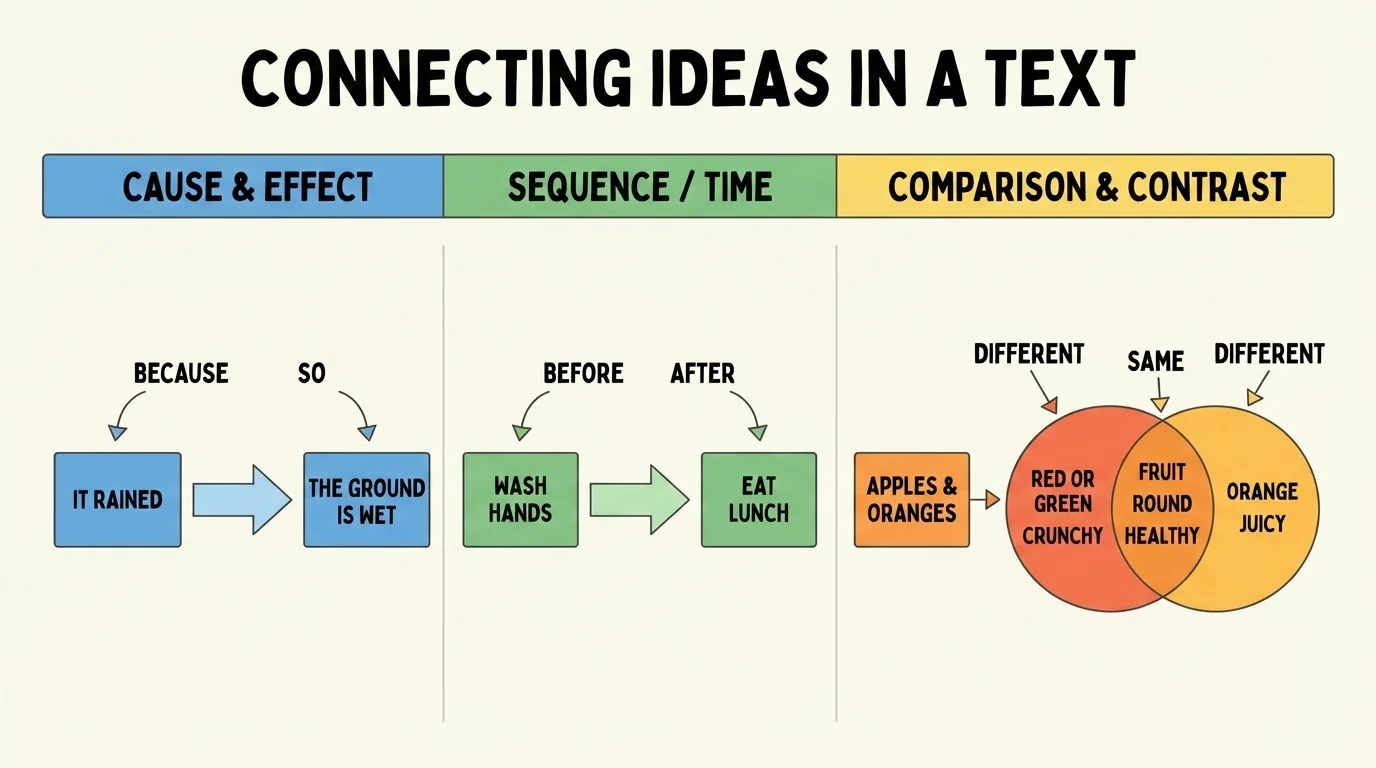
Some clue words help us compare. If a text says, "A bus is big, but a car is smaller," the word but shows a difference. If a text says, "Both ducks and geese have feathers," the word both shows what is the same.
When you ask yourself "What happened?" and "Why did it happen?" you are already doing important reading work. Now you can add one more question: "How do these two parts go together?"
Not every connection uses a special clue word. Sometimes readers have to think carefully. If a text says, "The sun came up. The rooster crowed," you can connect the events by understanding morning time, even if no clue word tells you directly.
[Figure 3] In informational books, the words are not the only helpers. A heading, a picture, and a caption can work together with the sentences. These text features give readers more information, and they often make the connection easier to see.
A page might have the heading Bees Help Flowers. The picture may show a bee on a flower, and the caption may say the bee carries pollen. Now the reader can connect the idea of bees moving from flower to flower with the fact that flowers can grow seeds. The picture supports the words.
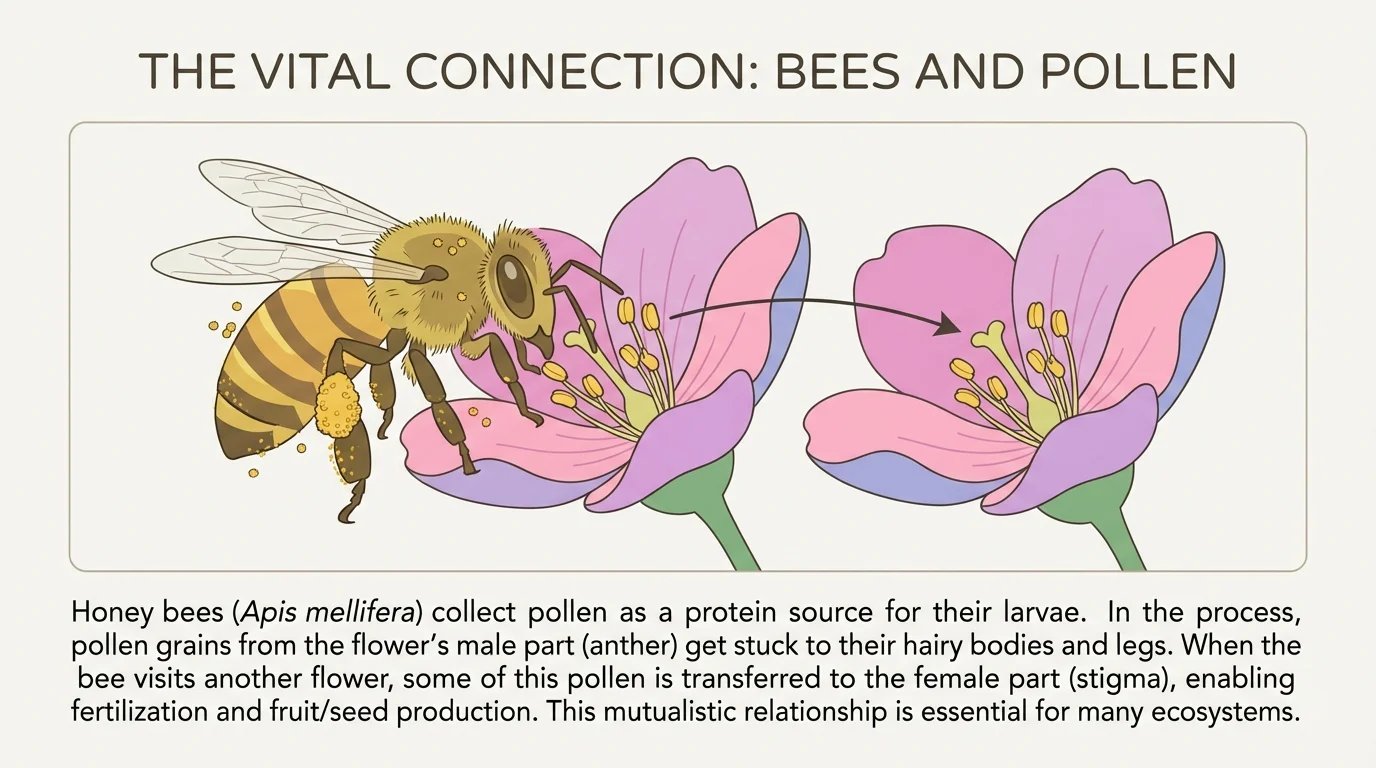
If you read about penguins and see a picture of penguins huddling together, that picture helps you connect the information that penguins stay warm by standing close. Later, when you explain the text, you can use both the words and the picture to tell the connection.
Some nonfiction books teach a big idea with just a few sentences and one strong picture. A careful reader uses every part of the page to understand how the information fits together.
As we saw in [Figure 1], connections can happen in different ways. Pictures and captions do not replace the words, but they help readers notice whether the text is showing sequence, cause, or a helpful match between ideas.
After you find a connection, say it clearly. You can start with a frame like these: These two parts go together because... This event happens after... This idea helps explain... Both facts show... A complete sentence helps others understand your explanation.
For example, if a text says, "Squirrels gather nuts. In winter they eat the nuts," you can say, "The two parts connect because squirrels gather food first, and later they eat it in winter." That answer tells the relationship, not just one fact.
Strong readers explain, not just point. It is not enough to say, "They are connected." A reader should tell how they are connected: by order, by cause, by helping, by being alike, or by showing more information about the same topic.
If the text says, "A seed needs water. Water helps the seed begin to grow," you might say, "The idea of water connects to the seed because water helps the seed grow." That is a clear explanation.
Here are some short examples from informational reading. Notice how the connection is told in words.
Example 1
Text: "The teacher rings the bell. The children line up."
Step 1: Find the two parts.
The two parts are the bell ringing and the children lining up.
Step 2: Think about the relationship.
The first event leads to the second event.
Step 3: Say the connection.
The children line up after the teacher rings the bell.
This example shows events in order. The first event helps us understand why the second event happens.
The clue words in [Figure 2] are useful here because words like after and then help readers tell that one event follows another.
Example 2
Text: "The sun warms the sidewalk. The snow melts."
Step 1: Find the facts.
The sun warms the sidewalk, and the snow melts.
Step 2: Look for cause.
Warmth from the sun makes the snow melt.
Step 3: Say the connection.
The snow melts because the sun warms the sidewalk.
This is a cause and effect connection. One thing happens, and it makes another thing happen.
Example 3
Text: "Fish live in water. Gills help fish breathe in water."
Step 1: Find the ideas.
The text tells where fish live and what body part helps them.
Step 2: Explain how they fit.
The second idea explains how fish can live in water.
Step 3: Say the connection.
Fish live in water, and gills help them breathe there.
This is a connection between ideas and information. One fact helps explain another fact.
Pictures can help with this too. In the nonfiction page shown in [Figure 3], the image and caption make it easier to connect what an animal does with why it can live in its habitat.
When readers notice connections, they understand the whole text better. Instead of remembering small bits, they understand the big idea. For example, if you read that plants need sunlight, water, and soil, you can connect those facts and understand what helps plants grow.
This skill also helps when you talk about a book, answer questions, or learn science and social studies. Many school texts are full of connected facts. When you can explain how the facts fit together, you show real understanding.
Good readers keep asking simple questions: Who is connected? What happened first? What caused it? What idea explains another idea? Those questions help turn reading into thinking.
