Have you ever heard a word in a story and then wanted to use it right away? That is how language develops. Every time you talk with someone, read a book, or listen to a book, your brain picks up new words and phrases. Soon, those words become part of the way you speak and write.
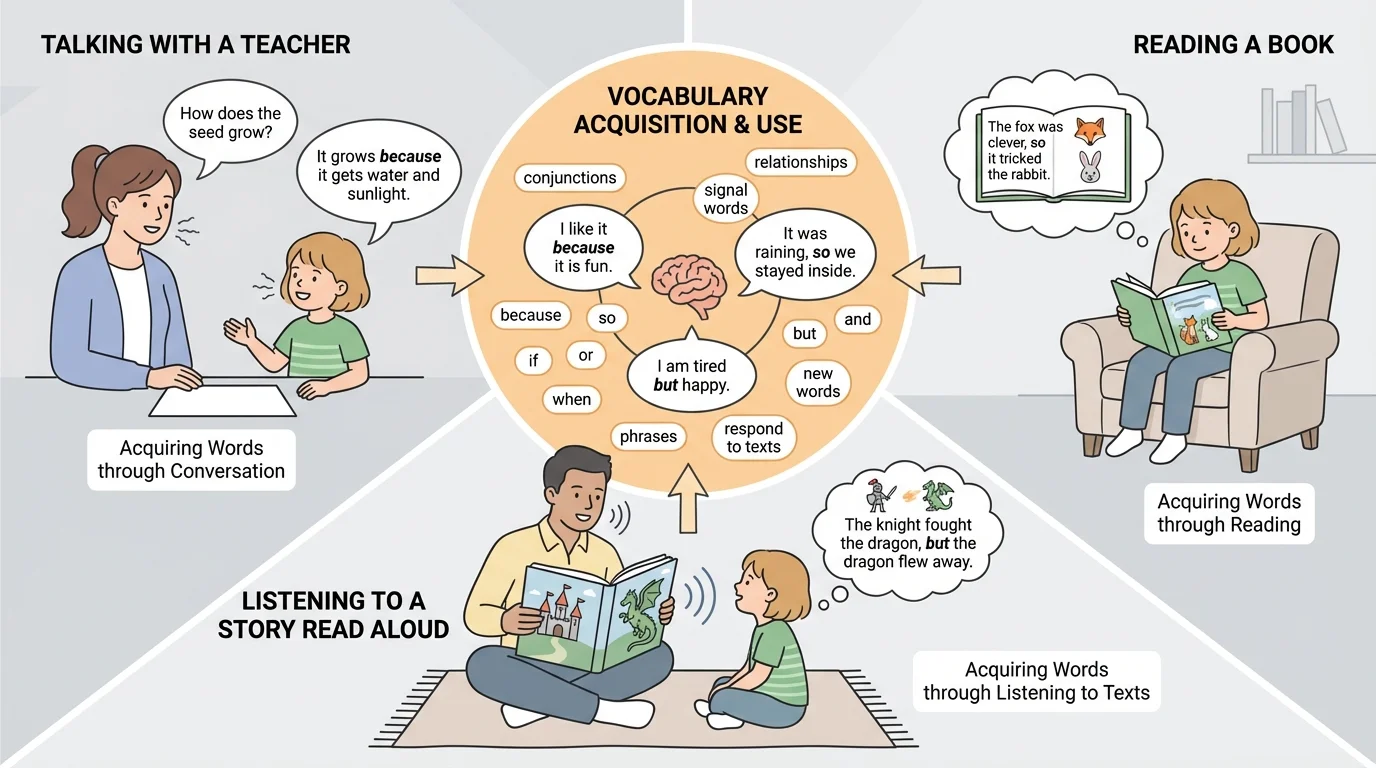
[Figure 1] We learn words in more than one way. New words can come from a conversation with a friend, from a teacher reading aloud, or from a book you read yourself. A child who hears, reads, and uses words often becomes a stronger reader and speaker.
Sometimes you hear a word first. For example, your teacher might say, "Please observe the clouds." Later, you may read that word in a book about weather. Then you can use it yourself: "I observe the sky before recess." The word has moved from listening to reading to speaking.
Words also come in phrases. A phrase is a group of words that goes together, such as "once upon a time," "at the end," or "for example." When children hear these phrases many times, they begin to use them naturally in their own responses.
Conversation means talking and listening with other people. Text means words we read or hear in books, stories, poems, and informational passages. A response is what you say, write, draw, or do to show your thinking about a text.
When an adult reads aloud, you can hear rich words that may not come up in everyday talk. A story might use words like character, setting, or problem. An informational book might use words like habitat, details, or comparison. Listening carefully helps you collect these words.
When you respond to a text, you show what you understood. You might answer a question, tell your favorite part, explain what happened first, or say why something happened. Strong responses often use words from the text itself.
Suppose a story says, "The tiny mouse was brave." A simple response is "I liked the mouse." A stronger response uses the text word: "I liked the mouse because he was brave." The new word brave makes the response clearer.
Using words from the text helps your ideas sound clear and connected. If a book says a bird is enormous, your response can say, "The bird was enormous because it was bigger than the other birds." Using the same important word shows that you understood the text.
You can respond by speaking or by writing. In both cases, your words should match the text. If the text is about rain, your response should use rain words such as clouds, wet, storm, or puddles. If the story is about friendship, your response may use words like kind, help, share, or lonely.
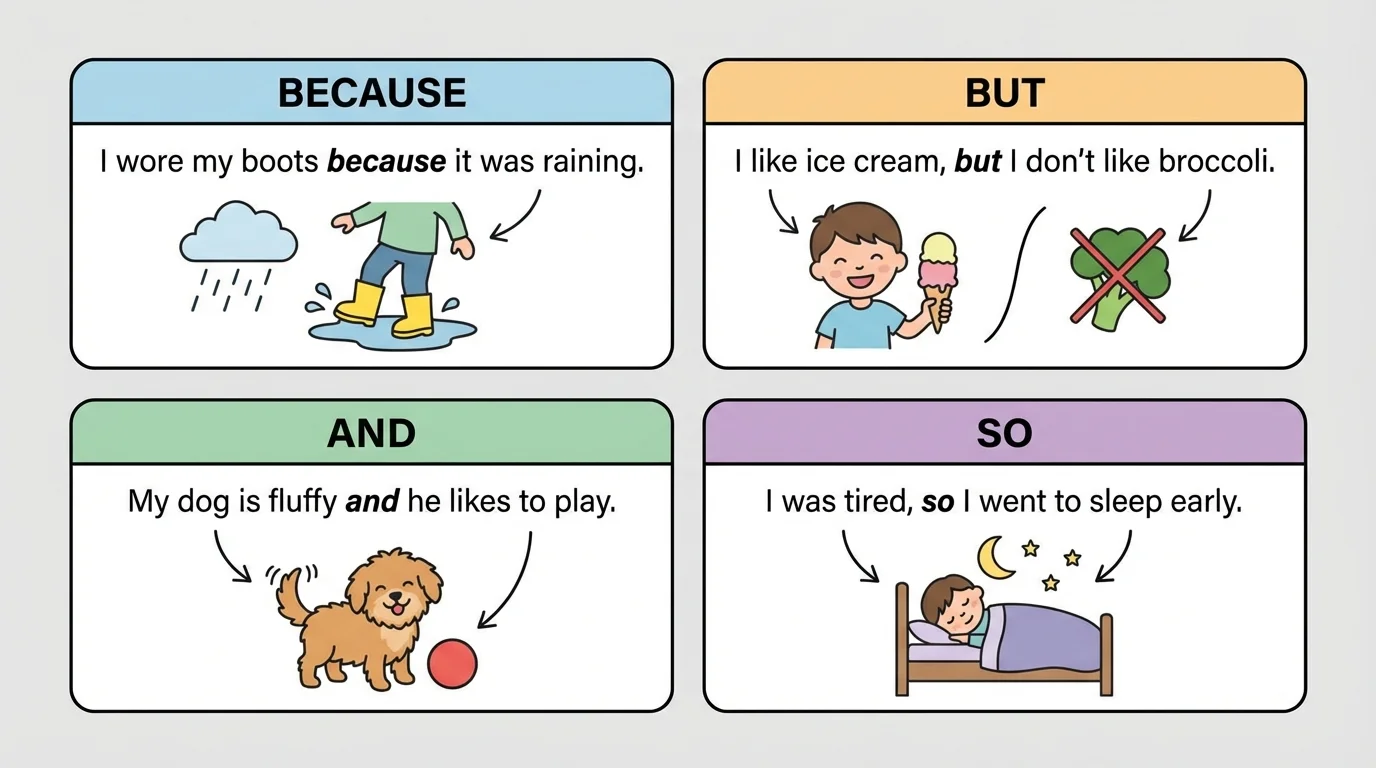
[Figure 2] Sometimes one idea is not enough. We need to connect ideas. A conjunction is a joining word. Conjunctions help show simple relationships between ideas. Some common conjunctions are and, but, so, and because.
And joins two ideas together. "I read the story and I talked about it." But shows a difference. "The dog was small, but it was loud." So can show what happened next. "It started to rain, so we went inside." So can show a result. Because tells a reason. "I liked the book because it was funny."
The word because is especially helpful when you answer questions about reading. It helps you give a reason. Instead of saying, "I liked the ending," you can say, "I liked the ending because the family was happy." Instead of saying, "The bear went home," you can say, "The bear went home because it was getting dark."
| Joining word | What it does | Example |
|---|---|---|
| because | tells why | I was excited because the trip was today. |
| and | adds another idea | We read and we drew. |
| but | shows a difference | The path was long, but it was safe. |
| so | shows a result | I finished my page, so I shared it. |
These words make sentences longer in a good way. They help your listener or reader understand how ideas fit together. Later, when you explain your thinking, the same joining words help you sound organized. That is why the connecting words in [Figure 2] matter so much.
Text response example
Book sentence: "Lena carried an umbrella."
Step 1: Start with the idea from the text.
Lena carried an umbrella.
Step 2: Add a reason with because.
Lena carried an umbrella because it was raining.
Step 3: Say the whole response clearly.
I know Lena carried an umbrella because it was raining.
Notice how the conjunction makes the answer stronger. It connects the action and the reason.
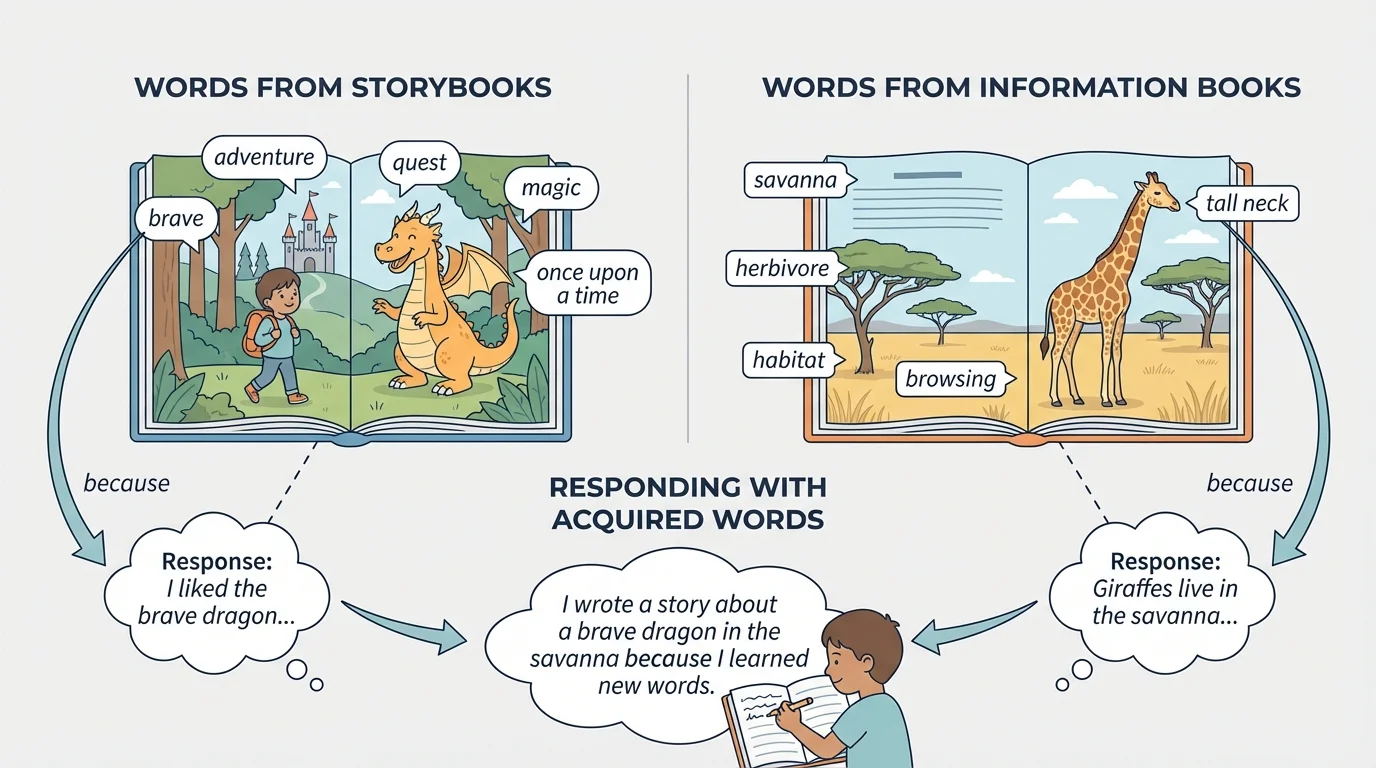
[Figure 3] Different texts give us different kinds of words. Stories may teach us words about feelings, actions, and characters. Informational texts may teach us words about topics, facts, and categories.
In a story, you may learn words like whisper, shouted, surprised, adventure, or gentle. Then you can use those words in a response: "The adventure was exciting because the children crossed the river." In an information book about frogs, you may learn words like life cycle, pond, tadpole, or insect. Then you can respond: "The tadpole lives in water and changes as it grows."
Good readers notice special words in a text and try them out in speaking and writing. This does not mean copying every sentence. It means choosing helpful words that fit your own idea.
Children who hear many read-aloud books often learn words they do not hear in everyday talk. Books can introduce exciting words like enormous, peeked, curious, and discover.
The difference between story words and information words helps you choose the right language. The split view in [Figure 3] reminds us that a fairy tale and a book about animals may teach different kinds of vocabulary, but both help us grow as readers and speakers.
Sometimes children use words like good, nice, or stuff because they are easy. Those words are not incorrect, but they are not always the clearest. Words from reading can make your meaning stronger. Instead of "The story was good," you might say, "The story was funny," "The story was exciting," or "The story was interesting because I learned about space."
Clear words help other people understand exactly what you mean. If a text says the wind was fierce, your response can use fierce instead of just big or strong. If a character is worried, your response can use worried instead of just sad.
You already know how to answer who, what, where, when, and why questions. Using new words from a text and joining ideas with words like because helps make those answers more complete.
As you build language, you also learn to choose words that match the situation. A response to a story might say, "The fox was clever because it found a way to escape." A response to an information book might say, "Bears hibernate because food is hard to find in winter." Both sentences use text words and a clear reason.
These language parts help one another. You listen to words in a conversation. You hear more words in a read-aloud. You see words in print when you read. Then you use them when you talk or write. The more often you do this, the more words you can use.
A classroom is full of chances to grow vocabulary. During morning meeting, you may learn a new phrase from a friend. During story time, you may hear a powerful describing word. During science reading, you may learn a topic word. Later, you can use all of these when you answer questions and share ideas.
When you explain your thinking, try to use a word or phrase you learned from the text. Try to connect your ideas with a conjunction, especially because. That simple step can turn a short answer into a thoughtful response.
For example, after hearing a story, a child might say, "My favorite character was Mia because she helped her brother." After reading an information text, the same child might say, "I learned that seeds need water and sunlight." In both cases, the child is using language learned through listening and reading.
