Have you ever known exactly what you wanted to say, but the person listening looked confused? That can happen when we use only a word or two instead of a full thought. Complete sentences are like whole packages: they carry the whole idea from your mouth to another person's ears.
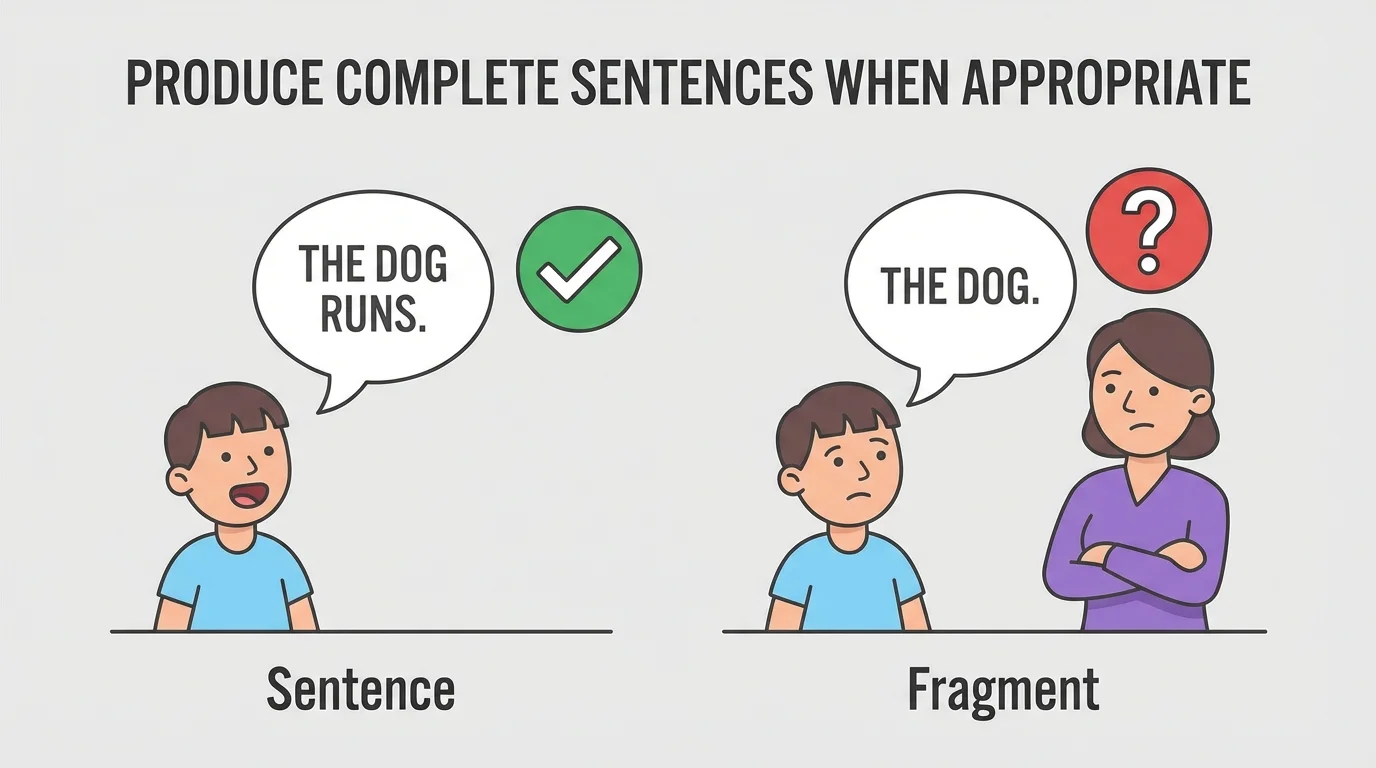
[Figure 1] A complete sentence tells a whole idea. A complete sentence helps the listener know who or what and what is happening. When you say, "The cat sleeps," your listener understands the whole message.
Complete sentence means a group of words that expresses a complete thought. It usually tells who or what, and it tells what happens.
Incomplete sentence means a group of words that does not express a complete thought. The listener is left wondering.
Listen to the difference. "My friend" is not a complete sentence. It names someone, but it does not tell what the friend does. "My friend waves" is a complete sentence. Now the idea is finished.
Some complete sentences tell something: "I see a butterfly." Some ask something: "May I have a turn?" Some show feeling: "What a big pumpkin!" They all share a full thought.
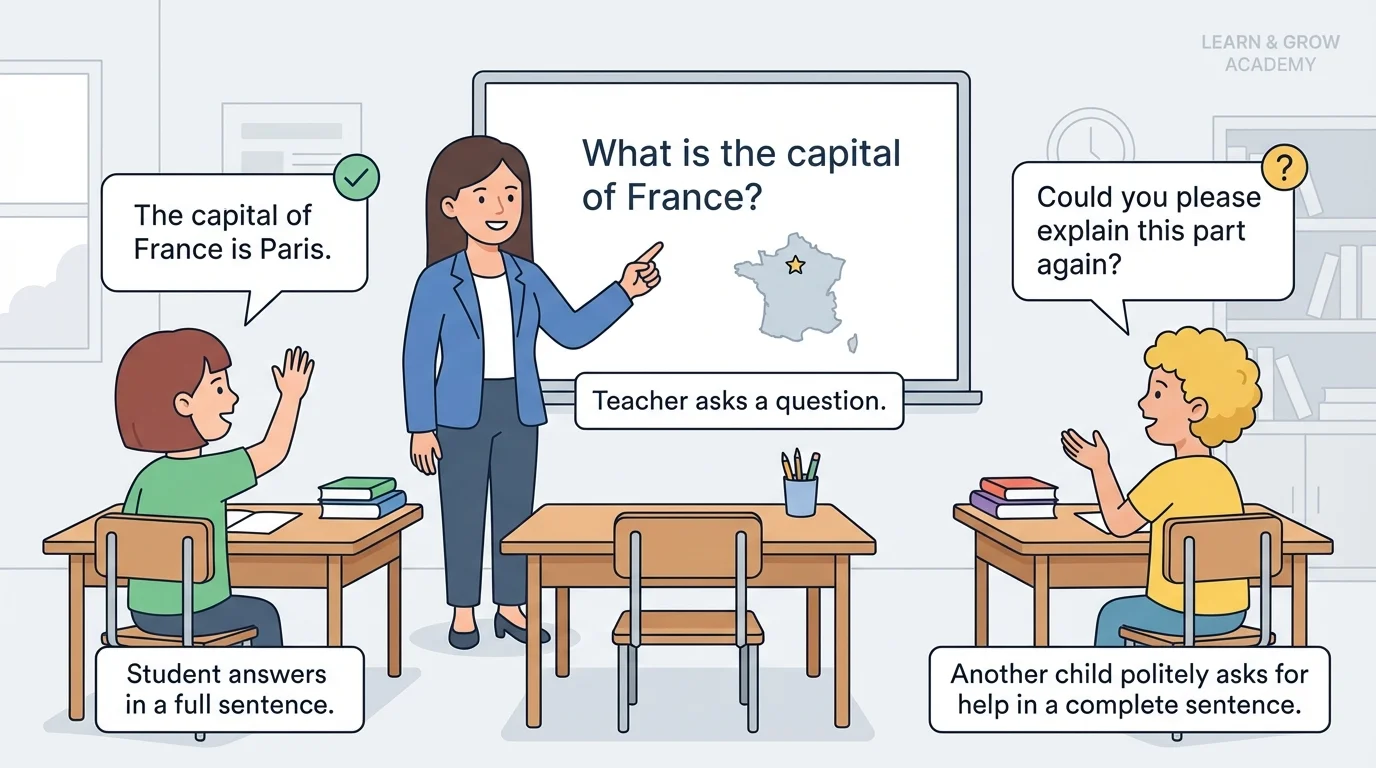
[Figure 2] At school, complete sentences are important in classroom conversations. When a teacher asks, "What did you build?" the answer "A tower" is very short. The answer "I built a tower" is clearer and stronger.
We often use complete sentences when we answer questions, tell about our day, share an idea, explain our thinking, ask for help, or speak to a group. If you say, "Help," people know you need something, but "Please help me tie my shoe" tells exactly what you need.
Complete sentences also help during oral communication. That means speaking so other people can understand you. Good oral communication is not only about talking. It is also about helping the listener follow your meaning.
When you tell a story, complete sentences keep the story smooth. "We went to the park. I saw ducks. My brother fed them." These sentences are easy to follow because each one shares a whole thought.
Sometimes short answers are okay. If someone says, "Do you want juice or water?" you might say, "Water, please." That makes sense in that moment. The listener already knows the rest of the idea.
But many times, a complete sentence is better. If the teacher asks, "Which book did you choose?" saying only "The red one" may work, but "I chose the red book" is clearer. The task and the situation help you decide.
Think about this rule: when a listener needs more information, use a complete sentence. When you are sharing learning, asking for help, speaking politely, or answering in class, full sentences are usually the best choice.
Task and situation change the way we speak. A task is what you are doing, such as answering, explaining, or telling a story. A situation is where you are and who is listening. In class, during presentations, and in careful conversations, complete sentences help your words match the job you are doing.
This does not mean that everything you say must be long. Good speakers choose the kind of answer that fits the moment. They know when to be brief and when to be complete.
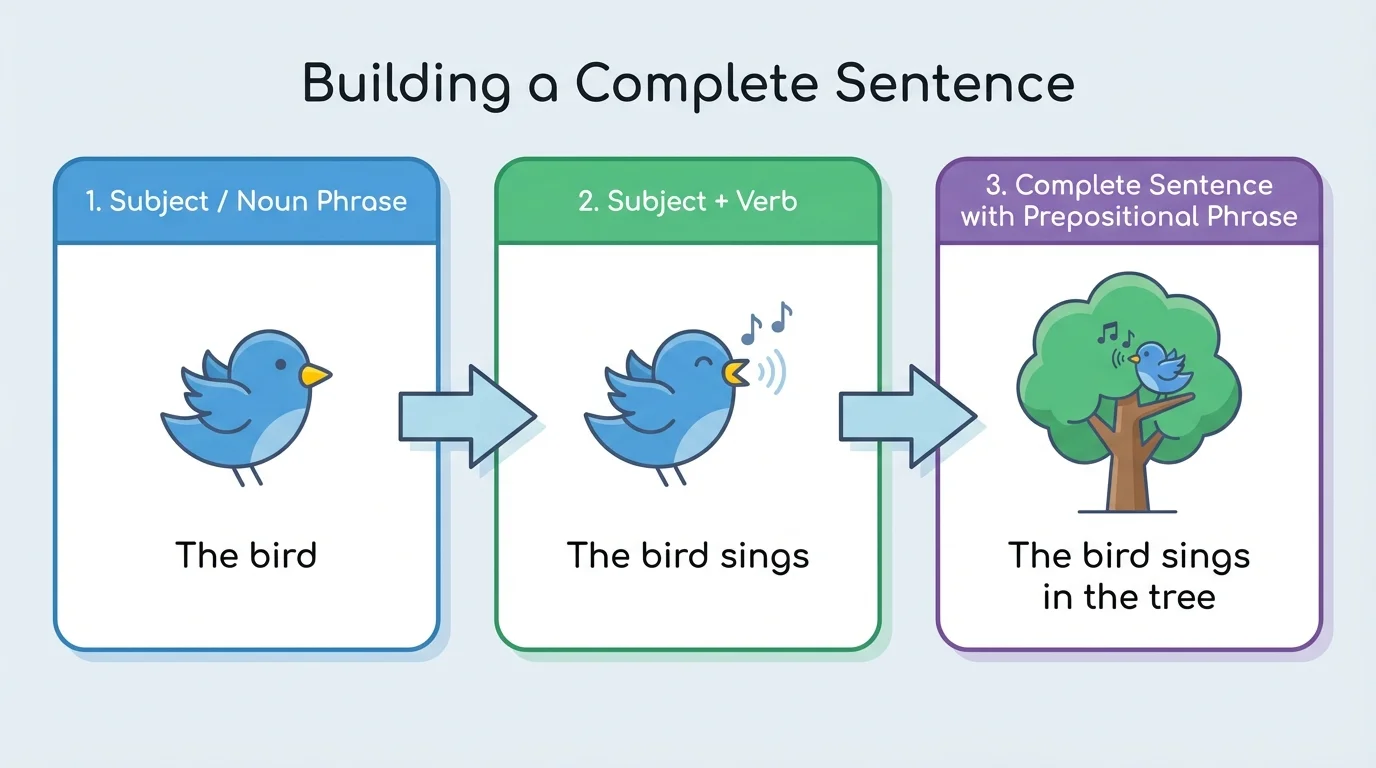
[Figure 3] You can build a sentence step by step. First, think about who or what. Next, add what that person, animal, or thing does. Then you can add details.
Start with a simple pattern: who or what + action. "Birds sing." "I read." "The baby laughs." These are complete because each one tells a whole idea.
Then you can grow the sentence. "Birds sing in the morning." "I read with my dad." "The baby laughs at the puppy." The extra words add detail, but the sentence was already complete before the details were added.
A good speaker often thinks before speaking. What is my idea? Who is it about? What is happening? This quick thinking helps turn short pieces into complete sentences.
Changing short answers into complete sentences
Step 1: Short answer: "Blue."
This answer is missing the full idea.
Step 2: Ask, "What is blue?"
Maybe the speaker means a backpack.
Step 3: Say the whole thought.
"My backpack is blue."
The complete sentence is much clearer.
You can do the same with many answers. "At recess" becomes "I played at recess." "My mom" becomes "My mom picked me up." "On the rug" becomes "The book is on the rug."
Complete sentences work best when we also use good listener and speaker habits. Face the person you are speaking to. Use a clear voice. Stay on the topic. Take turns. These habits help your message travel clearly.
Listening matters too. When you listen carefully, you can answer in a way that matches the question. If someone asks, "What did you draw?" your answer should fit that question: "I drew a rainbow." Careful listening helps you give a complete and helpful answer.
If your listener looks puzzled, you can say more. If you first say, "The game," you can fix it by adding, "I liked the game because it was fast and fun." Strong speakers notice when they need to explain more.
Your brain works quickly while you talk. It helps you choose words, remember the topic, and put ideas in order so another person can understand.
The classroom scene in [Figure 2] reminds us that complete sentences are helpful not only for teachers. Friends, family members, and classmates also understand us better when our words share a full idea.
An incomplete sentence is sometimes called a fragment. It is only a piece of the thought. For young speakers, this is very common, and that is okay. Learning to fix it makes speaking stronger.
Here are some pieces that are not complete: "In the box." "My little sister." "Running fast." Each one needs more words to become a full sentence.
Now listen to them fixed: "The toy is in the box." "My little sister is singing." "The dog is running fast." Each new sentence tells the whole idea.
Fixing speaking fragments
Step 1: Listen for missing parts.
"On the table" tells a place, but not the whole idea.
Step 2: Add who or what.
"The crayons..."
Step 3: Add what is happening.
"The crayons are on the table."
Now the sentence is complete.
When you are unsure, ask yourself, "Did I tell the whole thought?" If the answer is no, add more words until the idea is complete.
Complete sentences can also sound polite. "Bathroom?" is very short. "May I please use the bathroom?" is respectful and clear. "Need help" becomes "I need help, please."
Strong speaking does not mean using difficult words. It means using clear words. The sentence-building steps from [Figure 3] help speakers say just enough so the listener understands.
As you grow as a speaker, you will use complete sentences to explain ideas, share stories, answer questions, and work with others. Clear speaking helps people learn from you and with you.
