Have you ever noticed that a tiny word can hold several little sounds inside it? When you say the word dog, you do not say it all at once. Your mouth moves through three small sounds: /d/ /o/ /g/. Good readers and writers learn to segment words by hearing every sound in the right order.
A spoken word is something we can say and hear. A phoneme is one small sound in a word. When we segment a word, we take the whole word apart into its complete sequence of sounds. In the word sun, we hear /s/ /u/ /n/. We must say all the sounds, not just the first one or the last one.
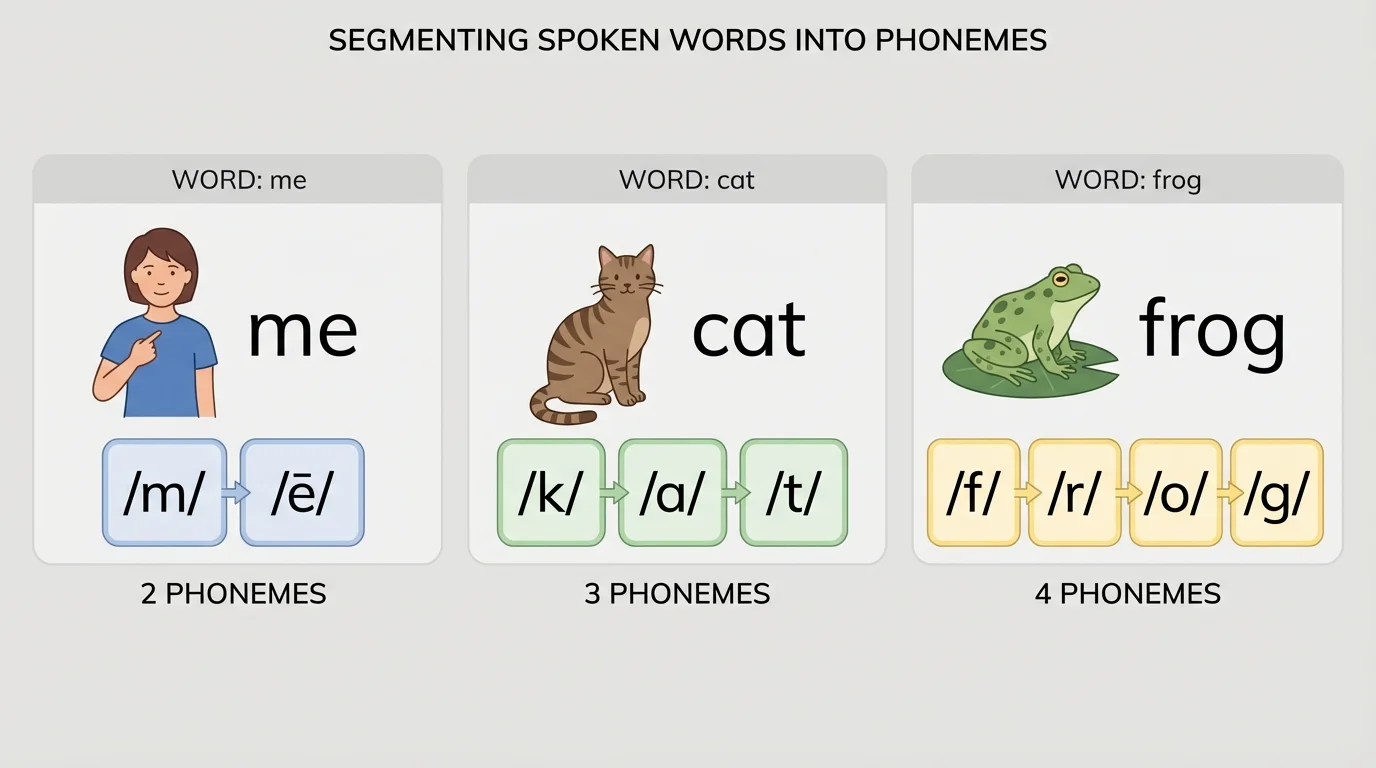
Some one-syllable words are short, but they can still have more than one sound. [Figure 1] The word me has two sounds: /m/ /ē/. The word cat has three sounds: /k/ /a/ /t/. The word frog has four sounds: /f/ /r/ /o/ /g/.
Single-syllable word means a word with one beat when we say it, such as map, fish, or play.
Segment means to break a spoken word into its separate sounds in order.
When we segment, we listen carefully from the beginning of the word to the end. The order matters. If we change the order of sounds, we change the word. For example, /t/ /a/ /p/ makes tap, but /p/ /a/ /t/ makes pat.
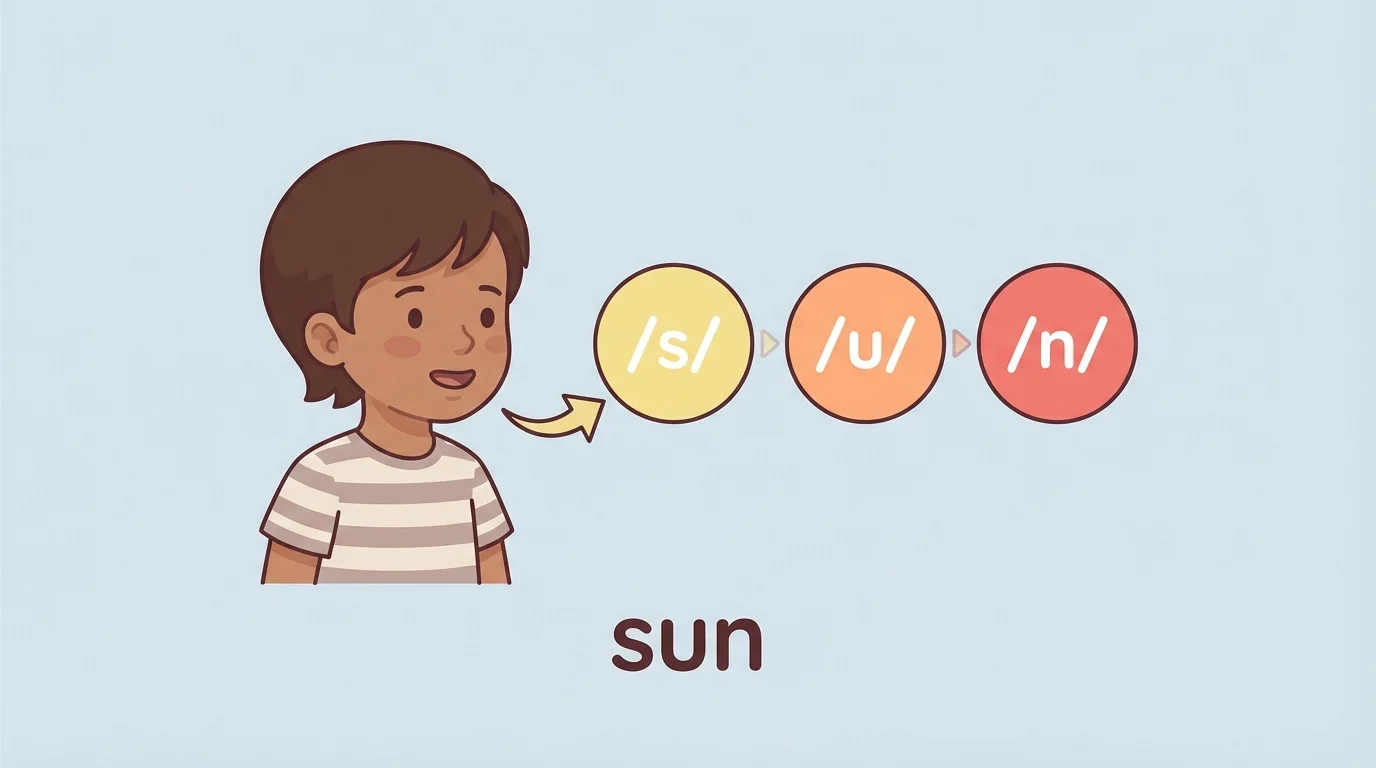
There is a simple way to do it. First, say the whole word. Next, stretch it slowly. Then listen for each sound your mouth makes. Last, say the sounds one by one in order.
For the word map, say the whole word: map. Stretch it: mmm-aaa-p. Now listen: /m/ is the beginning sound, /a/ is the middle sound, and /p/ is the ending sound. Put them together in a line: /m/ /a/ /p/.
Listening in order is very important. Segmenting is not just hearing sounds; it is hearing the sequence of sounds from first to last. Readers use this order to match sounds to letters when they read and write words.
You can segment words with a quick voice stretch. Try hearing the sounds in sit: /s/ /i/ /t/. In bed: /b/ /e/ /d/. In lip: /l/ /i/ /p/. Each word has one syllable, but each one has three phonemes.
Some one-syllable words have two sounds, some have three, and some have four. This is why careful listening matters with words of different lengths in sounds. We do not guess. We listen to the whole word and name every phoneme.
[Figure 2] Here are some examples:
| Word | Number of sounds | Sounds in order |
|---|---|---|
| me | 2 | /m/ /ē/ |
| go | 2 | /g/ /ō/ |
| cat | 3 | /k/ /a/ /t/ |
| fish | 3 | /f/ /i/ /sh/ |
| frog | 4 | /f/ /r/ /o/ /g/ |
| stop | 4 | /s/ /t/ /o/ /p/ |
Some words begin with a blend. A blend happens when two consonant sounds are next to each other and we can still hear both sounds. In frog, we hear /f/ and /r/. In stop, we hear /s/ and /t/ at the beginning.
Some words include a digraph. A digraph is two letters that work together to make one sound. In fish, the end sound is /sh/. Even though there are two letters, they make one phoneme.
That means a word can have more letters than sounds, or the same number of letters and sounds. We must use our ears to hear the spoken word clearly.
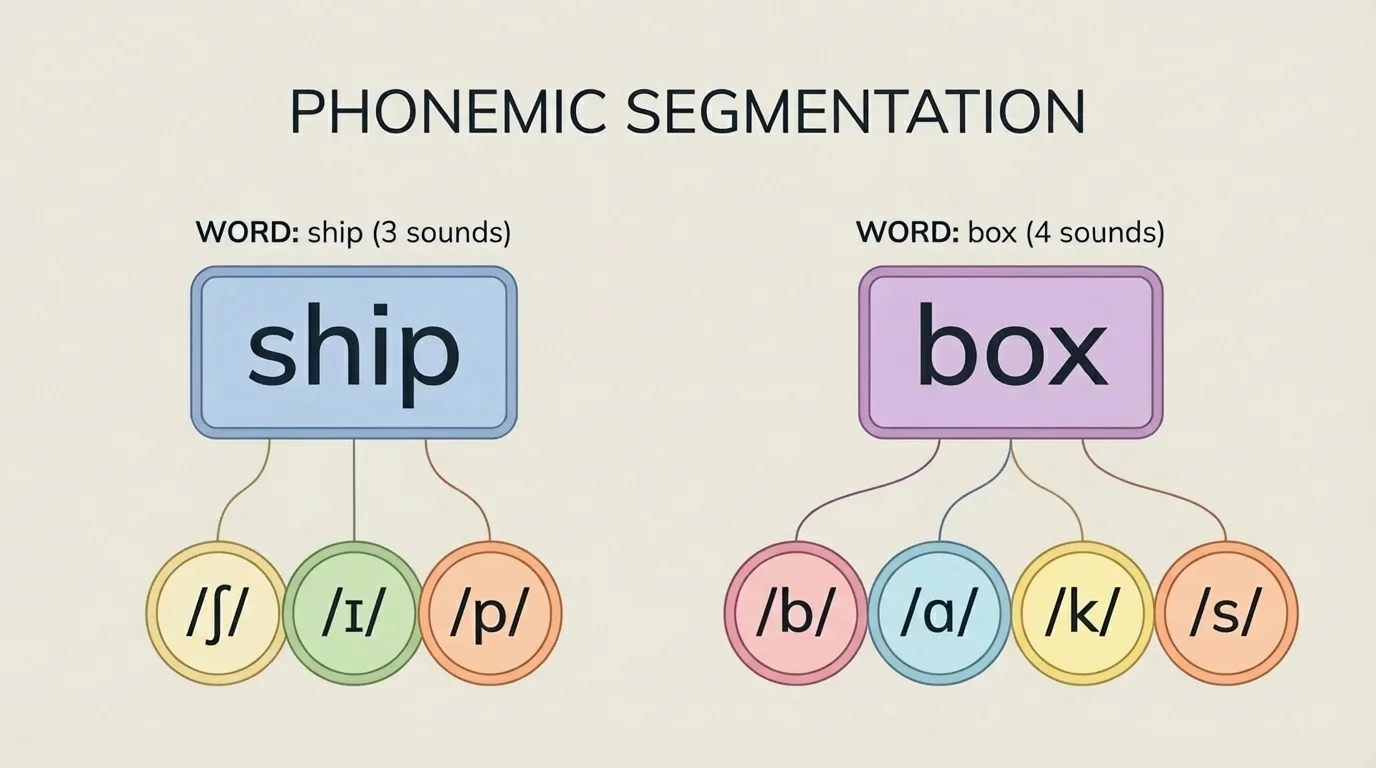
[Figure 3] When we segment words, we are listening for sounds we hear, not only counting letters we see. This idea matters because words can have a different number of letters and sounds. Reading and spelling work best when we pay attention to both, but segmenting starts with hearing.
Look at ship. It has four letters, but it has three sounds: /sh/ /i/ /p/. The letters s and h work together for one sound, /sh/. Now look at box. It has three letters, but when we say it, we hear four sounds: /b/ /o/ /k/ /s/.
A word can be short on paper and still have many sounds, or it can have more letters than sounds. Your ears help you hear the phonemes, and your eyes help you see the letters.
This is why segmenting is a sound job first. After we hear the phonemes, we can connect them to letters when we read and write.
When children can segment spoken words, reading becomes easier. If you hear /m/ /a/ /t/, you can blend those sounds to read mat. If you want to spell mat, hearing the three phonemes helps you know which letters to write.
Segmenting also helps with new words. A reader who can hear every sound in slam as /s/ /l/ /a/ /m/ is better able to match sounds to letters. This is like building a word one sound at a time.
Examples of segmenting spoken words
Step 1: Word: dog
Say the whole word: dog. Stretch it slowly and listen: /d/ /o/ /g/.
Step 2: Word: plane
Say the whole word: plane. Listen in order: /p/ /l/ /ā/ /n/. This word has one syllable and four phonemes.
Step 3: Word: shop
Say the whole word: shop. Listen in order: /sh/ /o/ /p/. The first sound is one phoneme even though it uses two letters when written.
As we saw earlier in [Figure 1], saying sounds from left to right helps us keep the order straight. That same careful order helps us with many words, from simple words like sun to longer one-syllable words like plant.
Many one-syllable words can be described by their beginning, middle, and ending sounds. In pen, the beginning sound is /p/, the middle sound is /e/, and the ending sound is /n/. In ship, the beginning sound is /sh/, the middle sound is /i/, and the ending sound is /p/.
Sometimes there is more than one sound at the beginning or end. In flag, the beginning has /f/ and /l/, then the middle vowel sound /a/, and then the ending sound is /g/. In milk, we hear /m/ /i/ /l/ /k/. We must say every sound all the way to the end.
You already know that words can rhyme and that words can start with the same sound. Segmenting goes a step farther: it asks you to hear all the sounds in the whole word.
Words with blends can be tricky because the sounds are close together. Words with digraphs can be tricky because two letters may make one sound. But careful listening solves both problems. That is why the letter-and-sound comparison in [Figure 3] is helpful when you want to check whether you are hearing phonemes instead of just counting letters.
Strong segmenting helps children become stronger readers, spellers, and writers. Every time you hear a whole word and pull it apart into its phonemes, you are training your ears and brain to notice how words are built.
