Have you ever wanted to write a word you knew how to say, but you were not sure how to spell it? Good writers do not stop. They listen closely, think about the sounds, and write the letters that match. That is a smart way to spell a new word. Even when a word has not been taught yet, you can still write it in a way that shows what you hear.
[Figure 1] Words are made of sounds. A good speller can stretch a word and listen for each sound. When you say sun slowly, you can hear three parts: /s/ /u/ /n/. Those sounds help you choose letters.
The first sound is the beginning sound. The sound in the middle is the middle sound. The last sound is the ending sound. In the word cat, you hear /k/ at the beginning, /a/ in the middle, and /t/ at the end.
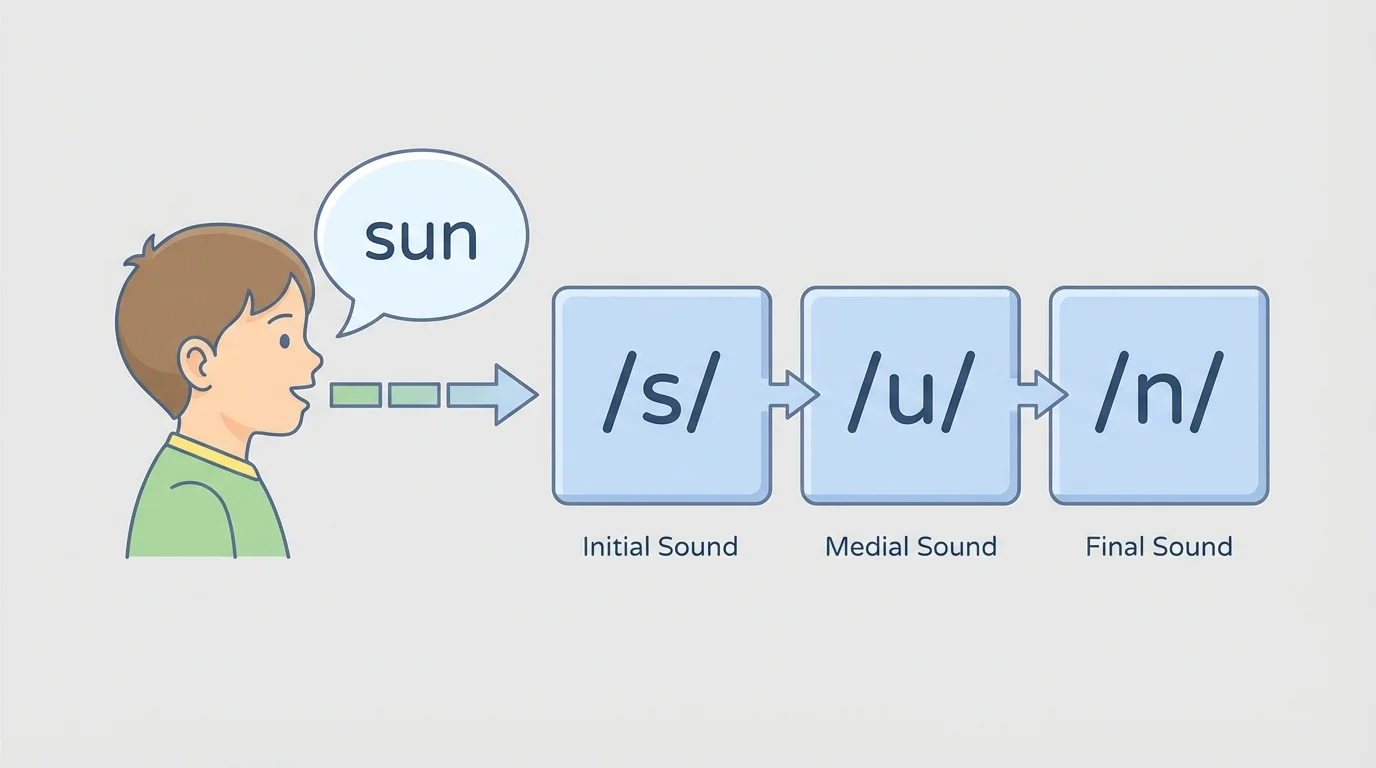
Some words are short and easy to stretch, like map, sit, and dog. Some words are longer, like rabbit or sunset. You can still say them slowly and listen for the sounds you hear.
Phonemic awareness means hearing and noticing the small sounds in spoken words. Phonetic spelling means writing a word by using letters that match the sounds you hear.
When you use your ears to hear sounds and your brain to match those sounds to letters, you are doing something real writers do every day.
Phoneme is a big word for one small sound in a word. The word fish has three sounds: /f/ /i/ /sh/. The word has four letters, but the last two letters work together to make one sound.
This is why listening matters so much. You are not just counting letters. You are listening for sounds. If you can hear the sounds clearly, you can make a good try at spelling a word you have never written before.
You already know that letters stand for sounds. When you read words, you use letters to say sounds. When you spell words, you do the opposite: you hear sounds and choose letters.
A good phonetic spelling may not always be the dictionary spelling, but it should show the sounds in the word. If a child writes jumpt for jumped, that spelling shows strong listening because the ending sound is heard.
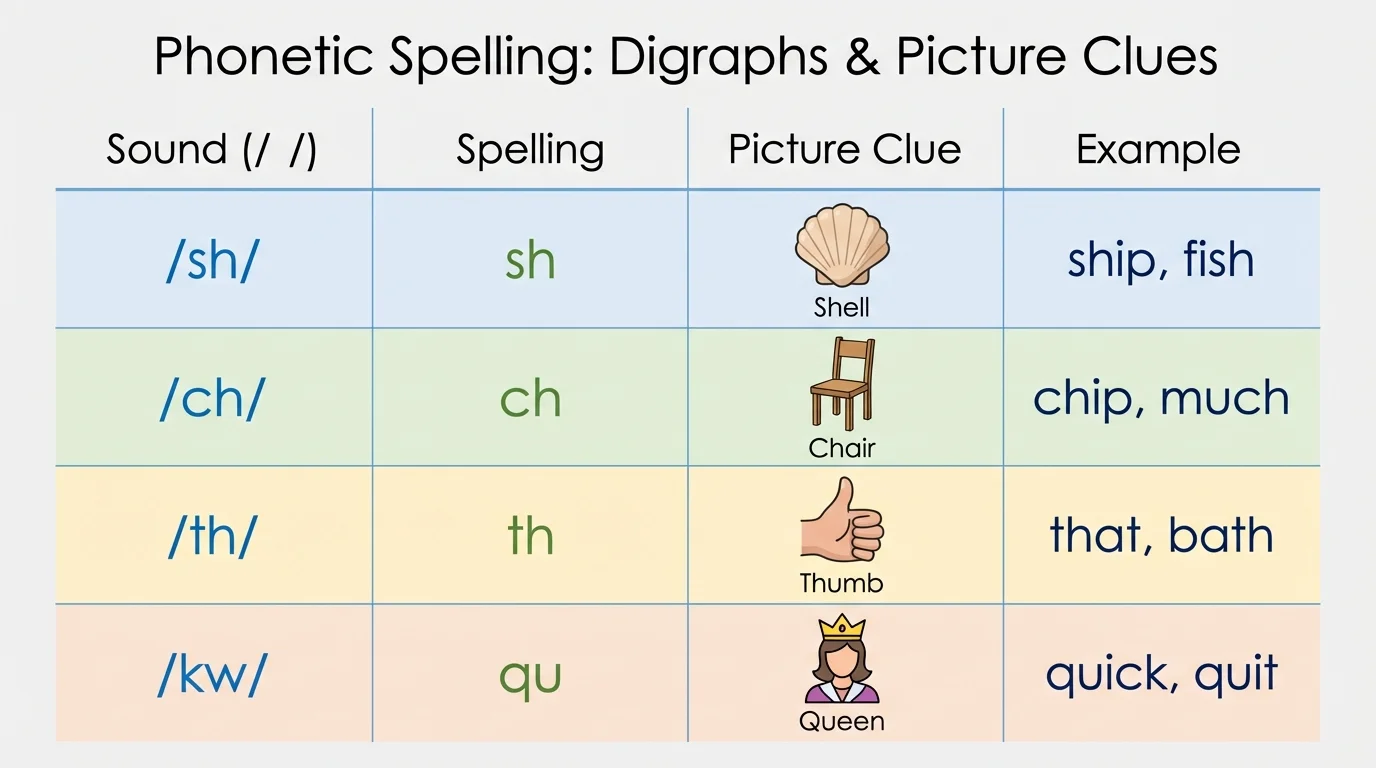
[Figure 2] Most of the time, one sound can be written with one letter. The sound /m/ can be written with m. The sound /t/ can be written with t. Sometimes, though, two letters work together.
These letter teams are called digraphs. A digraph is two letters that make one sound. Common digraphs in first-grade writing are sh in ship, ch in chin, th in this or thin, and qu in quit.
Vowels help, too. The letters a, e, i, o, and u can make different sounds. In grade 1, it helps to try the vowel sound you hear best. In bed, you hear short e. In hop, you hear short o.
Sometimes the same sound can be spelled in more than one way. That is normal in English. When you are spelling an untaught word, choose the letters that make the most sense from what you know.
Writers also use simple spelling conventions. These are spelling patterns that help words look right and sound right. Learning these patterns helps you make stronger guesses when you spell a new word.
Here are some helpful patterns:
| Sound or Pattern | Often Used | Example |
|---|---|---|
| /k/ before a, o, u | c | cat, cop, cup |
| /k/ before e, i | k | kept, kit |
| short vowel at the end of a short word | ck | duck, sock |
| one sound made by two letters | sh, ch, th, qu | shop, chop, thin, quiz |
Table 1. Helpful spelling patterns for sounding out untaught words.
For example, if you want to spell kick, you might hear /k/ /i/ /k/. The standard spelling uses k at the beginning and ck at the end. If you write kik, it still shows the sounds well. That is a reasonable phonetic spelling.
English words do not always use just one perfect spelling for a sound. That is why listening carefully and using patterns you know is such a powerful writing tool.
Another helpful idea is that words need to be readable. If another person can look at your spelling and figure out the word you meant, your phonetic spelling is doing its job.
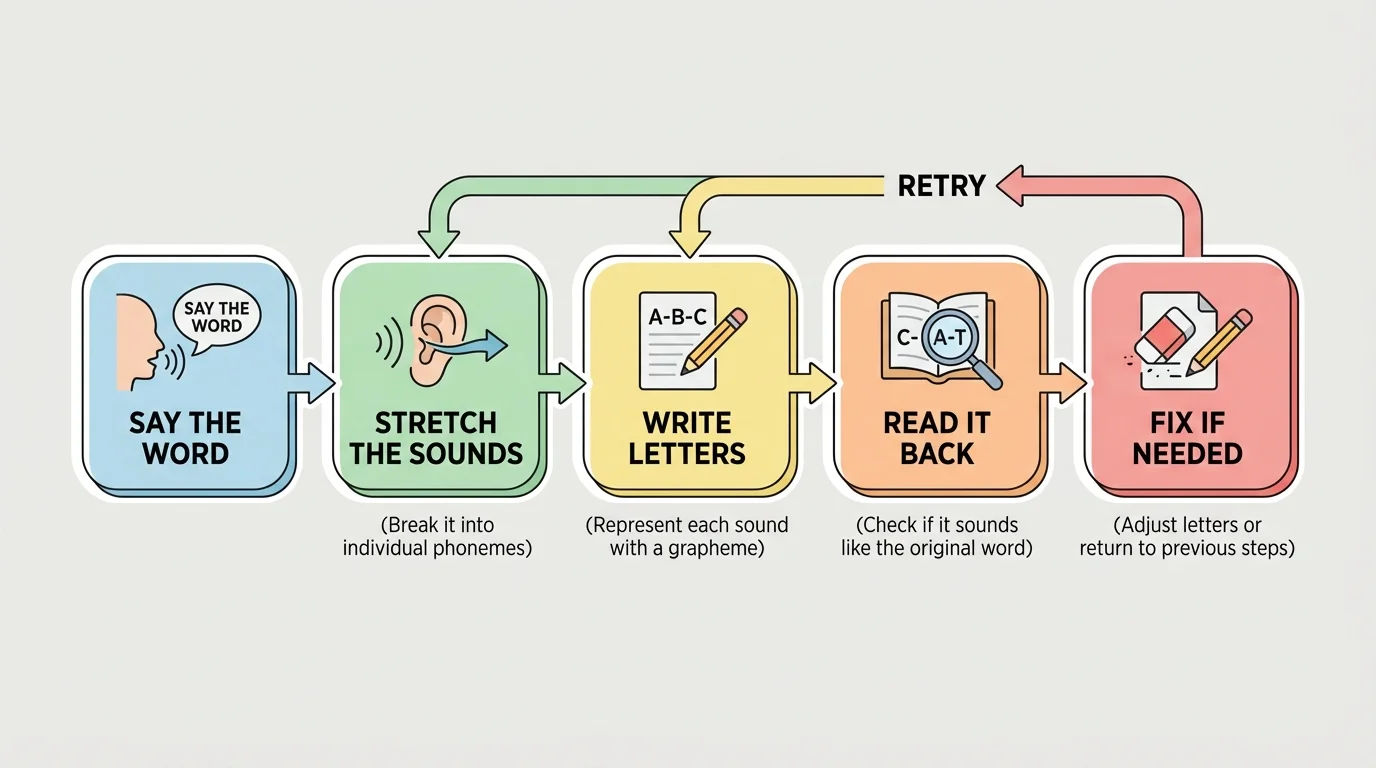
[Figure 3] When you do not know how to spell a word, use a simple plan. Say the word, stretch the word, write the sounds, then read it back. This helps you keep writing without getting stuck.
Suppose you want to write the word frog. Say it slowly: /f/ /r/ /o/ /g/. Then write the letters that match those sounds: f r o g. Now read it back to check that it says frog.
Example: spelling a new word
You want to write: I see a truck. You know I, see, and a, but you are not sure about truck.
Step 1: Say the word slowly.
Listen for the sounds: /t/ /r/ /u/ /k/.
Step 2: Write letters for the sounds.
You might write truk.
Step 3: Think about a spelling pattern you know.
At the end of a short word after a short vowel, ck is often used, so truck is a strong spelling.
Step 4: Read the whole sentence.
I see a truck. Make sure it sounds right.
The first try, truk, is a good phonetic spelling because it matches the sounds. The pattern ck helps make it even stronger.
This same strategy works for many new words, such as shop, crab, flag, and brush. The more you practice hearing sounds, the easier it becomes.
Sometimes you hear a sound and more than one spelling could work. The /k/ sound can be c, k, or ck. The /j/ sound might be written with j or sometimes g. That can feel tricky, but you can still make a smart choice.
Think about words you already know. If you know cat, that can help with cap. If you know kite, that can help with kit. Known words are like helpers for new words.
A reasonable spelling is a spelling that matches the sounds in a word and uses patterns a writer knows. It may not always be the exact standard spelling, but it shows careful listening and smart letter choices.
For instance, if a child writes ship correctly, that child knows that /sh/ is usually written with sh. If the child writes chair as char, the beginning sound is still represented well.
Later, as you learn more words, you will learn the standard spellings. Phonetic spelling helps you write now, while you are still learning.
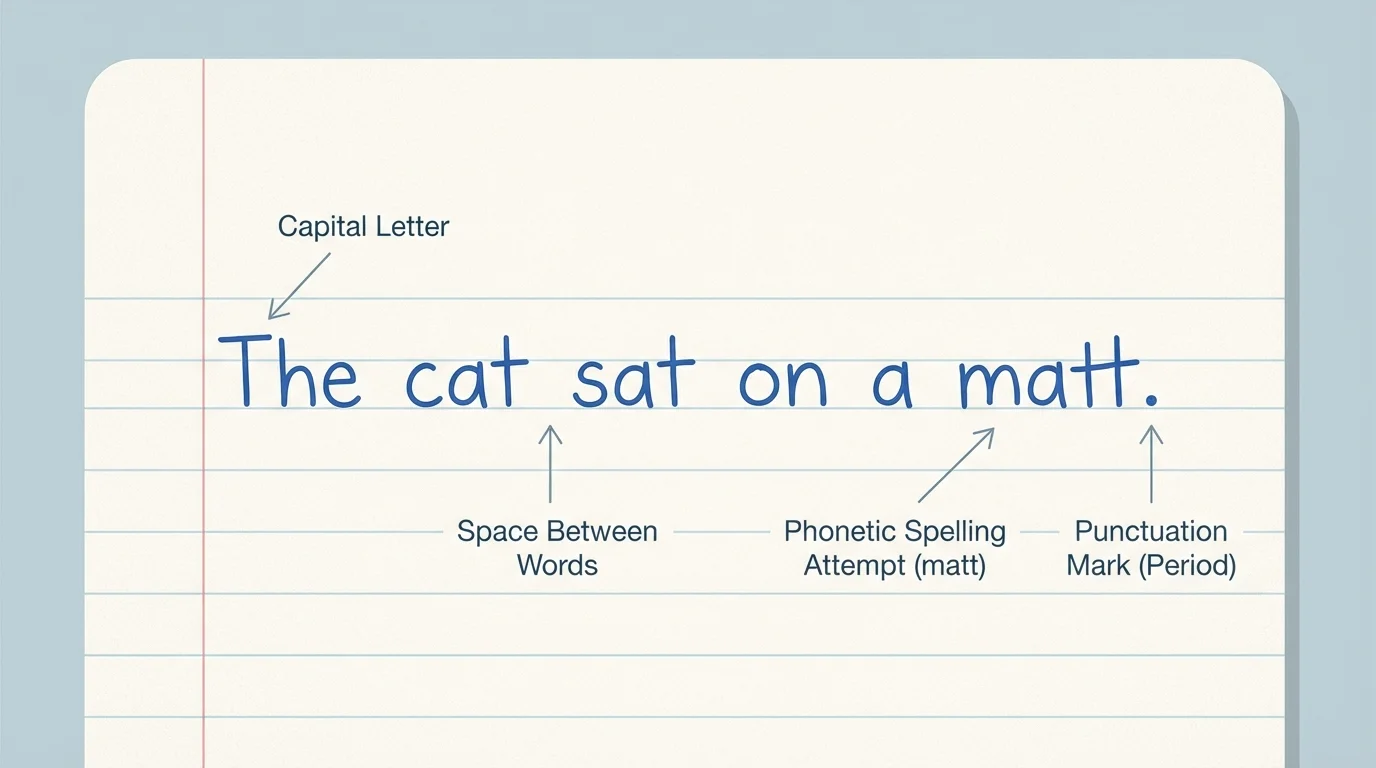
[Figure 4] Writers use this skill during real writing, not just when looking at one word. When you write a sentence, you need to think about the sounds in unknown words and also the rules for a sentence.
A sentence begins with a capital letter. Words have spaces between them. A sentence ends with punctuation, such as a period, a question mark, or an exclamation mark. Good spelling work belongs inside clear sentence writing.
Look at these examples:
The fish is big.
I like my truk.
Can the frog jump?
In the second sentence, truk is not the usual spelling of truck, but it clearly shows the sounds in the word. The sentence still begins with a capital letter and ends with a period.
When you go back to reread, you can improve spellings. This is like using [Figure 3] again: say it, read it, and fix what you can. You may change truk to truck, or you may leave your good phonetic spelling and keep your ideas flowing.
Listening closely also helps with endings. In jumped, you may hear the ending sound /t/. In running, you hear the ending /ing/. Writers listen for these parts and add them to the word.
As you keep writing, your spellings get stronger. The sound boxes from [Figure 1] still help because every bigger word is made of smaller sounds. The letter teams in [Figure 2] also help because many new words use the same patterns again and again.
"Say it slowly. Hear the sounds. Write what you hear."
— A strong spelling habit
That habit helps you become confident and independent when you write. You do not have to wait for someone to spell every word for you. You can listen, think, and make a smart spelling choice.
