Have you ever said, "Chocolate ice cream is the best!" and then someone asked, "Why?" That little word why is important. When we share what we think, we can also tell why we think it. That helps other people understand our ideas.
An opinion is what a person thinks, likes, or feels. An opinion is not the same as something everyone can check and prove. For example, "I like rainy days" is an opinion. "Rain is wet" is a fact. This idea is easy to see in [Figure 1], where one statement shares a favorite and another shares something true for everyone.
People can have different opinions. One child may think cats are the best pets. Another child may think dogs are the best pets. Both are opinions because they tell what someone thinks.
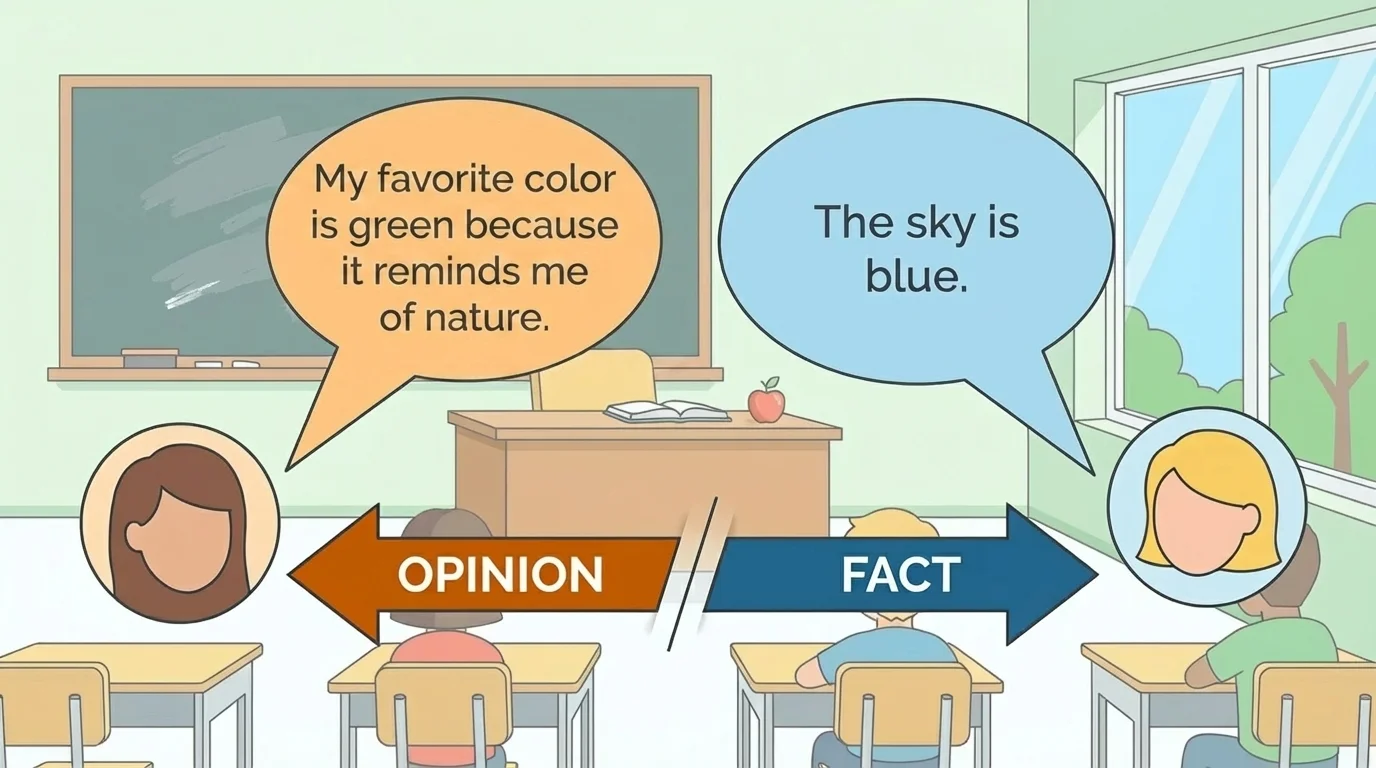
Opinion means what someone thinks or feels. Fact means something true that can be checked. Reason means why someone thinks something.
When we write, it is helpful to know if we are sharing a fact or an opinion. If you say, "Pizza is yummy," you are sharing an opinion. If you say, "Pizza has crust," you are sharing a fact.
A reason tells why you have an opinion. It gives support to your idea. If you say, "Reading is fun," someone may ask, "Why?" You can answer, "Reading is fun because stories take me on adventures." That second part is the reason.
A reason helps your listener or reader understand your thinking. Without a reason, your opinion can sound unfinished. With a reason, your idea becomes stronger and clearer.
Listen to how these sound:
"I like apples."
"I like apples because they are sweet and crunchy."
The second one tells more. It gives a reason.
An opinion and a reason fit together like two puzzle pieces. The reason supports the opinion. A helpful word is because. The word because tells that a reason is coming.
You can use this sentence pattern: I think ___ because ___.
[Figure 2] Here are some examples:
"I think bedtime stories are special because they help me feel calm."
"I think summer is the best season because I can swim."
"I think our class plant needs sunlight because plants grow with light."
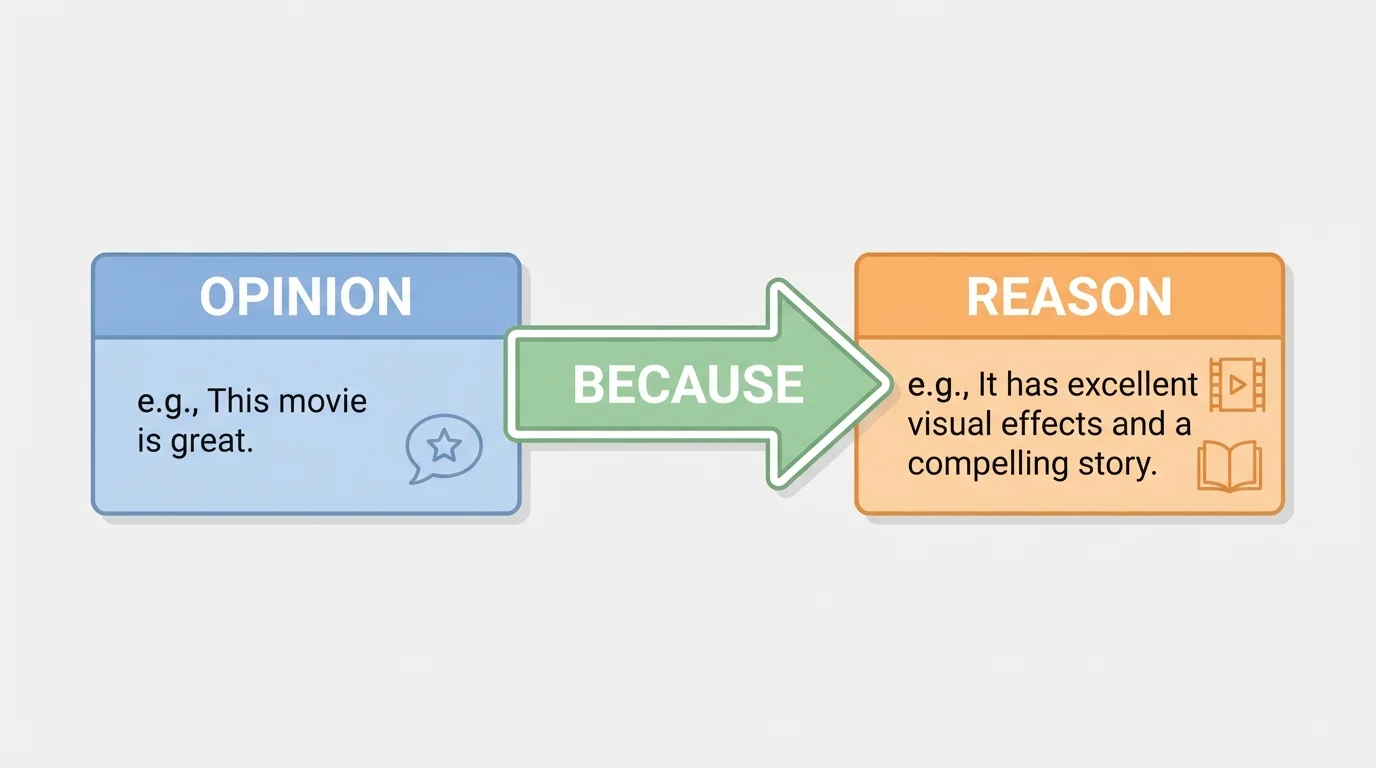
Examples of opinions with reasons
Step 1: Say the opinion.
"I think sandwiches make a good lunch."
Step 2: Add the reason.
"because they are easy to eat."
Step 3: Put them together.
"I think sandwiches make a good lunch because they are easy to eat."
When the reason matches the opinion, the sentence makes sense. If the reason does not match, the writing can feel confusing.
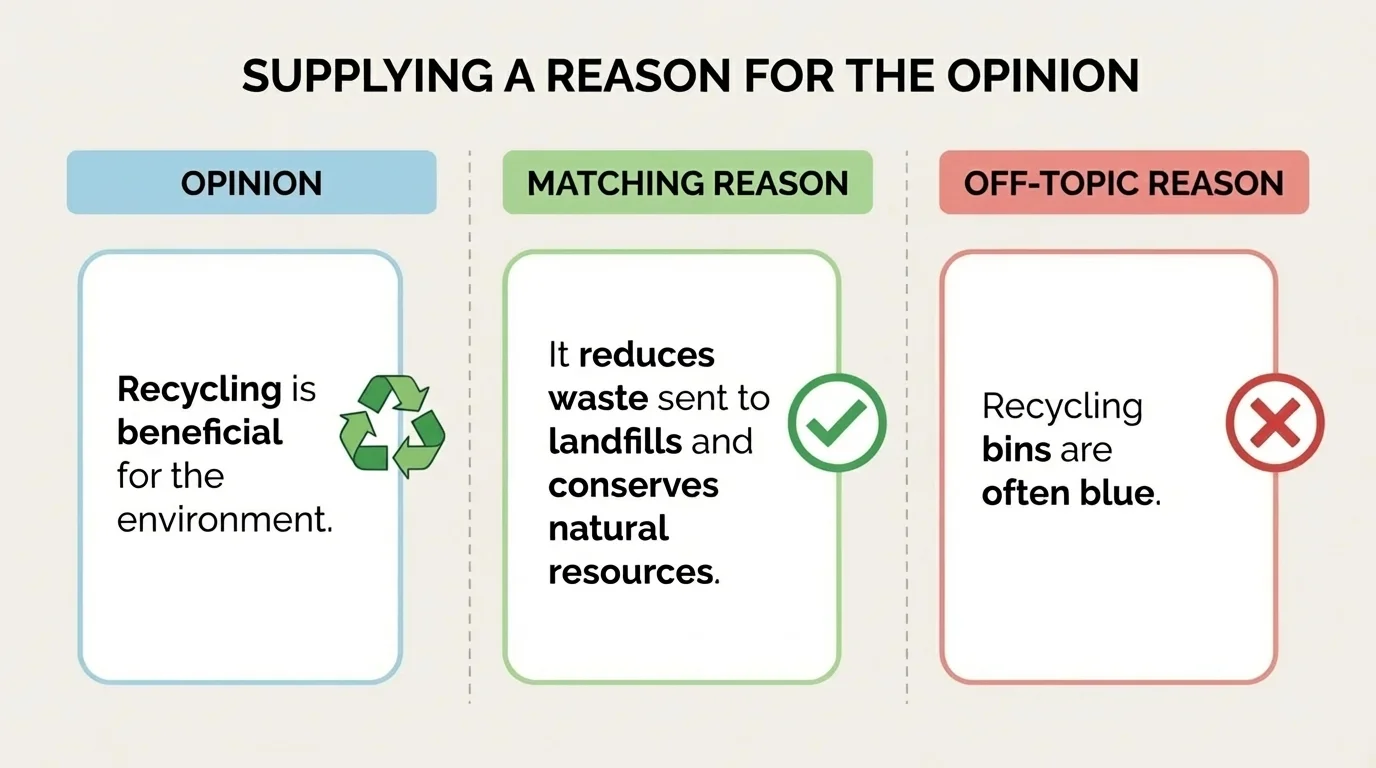
A strong reason is clear and stays on the same topic. One reason matches the opinion and one does not. Good writers choose reasons that really support what they think.
[Figure 3] Look at this opinion: "I think crayons are better than markers." A strong reason could be, "because crayons do not dry out." That reason tells why the writer thinks crayons are better.
A weak reason might be, "because my shoes are red." That does not match the opinion about crayons. It is off-topic.
Strong reasons can be about what you notice, what you know, or what you have experienced. For example, "I think the playground is fun because I can climb and slide." That reason is about the playground, so it fits.
Writers of all ages use reasons. Even adults give reasons when they choose a food, a book, or a place to visit.
Sometimes one opinion can have more than one reason. "I think my library is a great place because it is quiet, it has many books, and the chairs are cozy." Each reason supports the same opinion.
Two people can have different opinions, and both can give reasons. One child may say, "I think soccer is the best game because I like to run." Another child may say, "I think tag is the best game because everyone can join quickly." Both children are sharing opinions with reasons.
When we hear someone else's opinion, we can listen for the reason. The reason helps us understand their thinking, even if we do not agree.
How reasons help
Reasons make writing clearer. They help the reader know more than just what the writer likes or thinks. They also make speaking stronger because the speaker explains an idea instead of only naming it.
It is also important to be kind. We can say, "I like grapes better because they are juicy," instead of saying someone else is wrong. Opinions are personal, and reasons help us share them respectfully.
Earlier, [Figure 1] shows that an opinion is different from a fact. When we give a reason, we are building on that opinion by explaining our own thinking.
Now put it all together. A full opinion sentence tells what you think and gives a reason. A child can choose a snack and explain that choice in one clear sentence.
[Figure 4] Here are easy sentence starters:
"I think ___ because ___."
"My favorite ___ is ___ because ___."
"___ is best because ___."
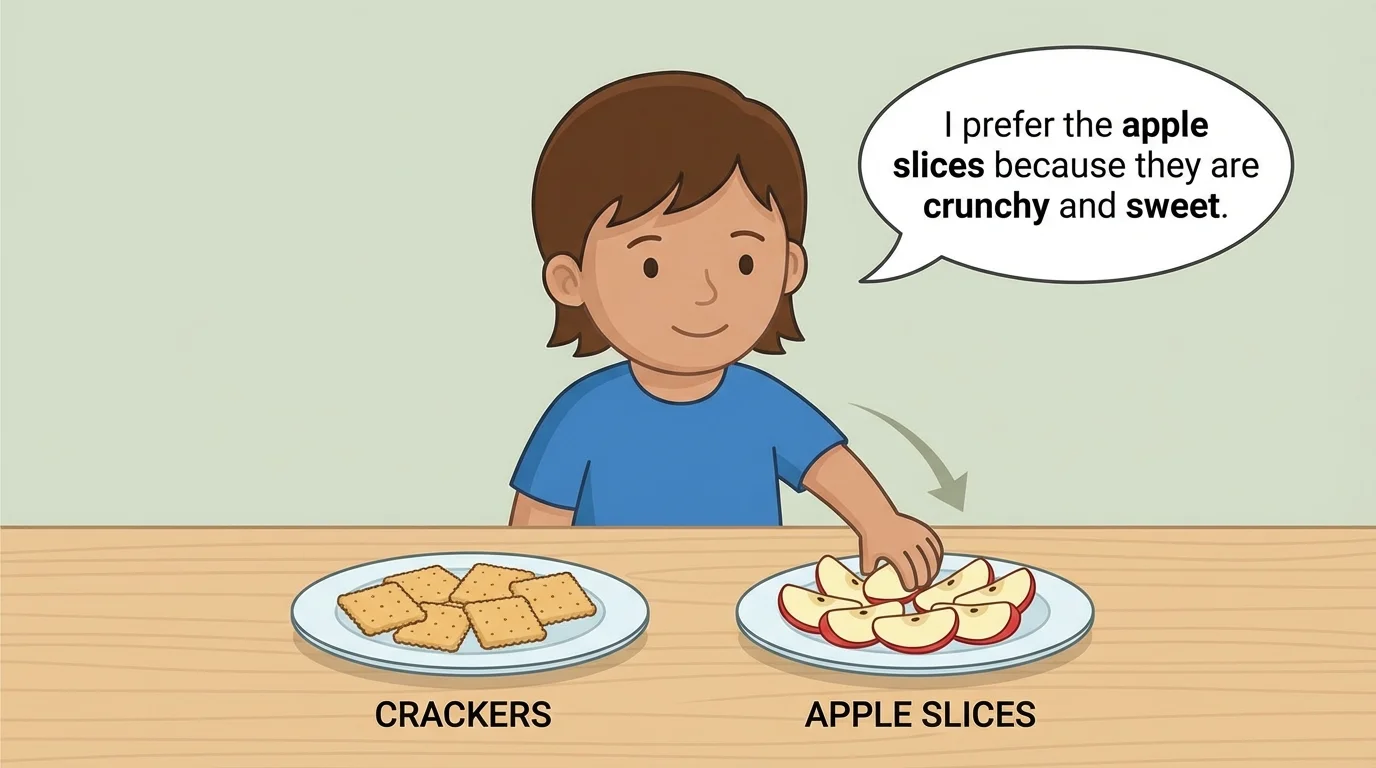
Read these model sentences:
"My favorite book is The Very Hungry Caterpillar because the pictures are bright."
"Blue is the best color because it reminds me of the sky."
"I think recess is important because our bodies need movement."
Notice that each sentence has two parts: the opinion and the reason. The reason answers the question, "Why?"
From short thought to strong sentence
Step 1: Start with the opinion.
"Art is fun."
Step 2: Ask, "Why?"
Why is art fun?
Step 3: Add the reason.
"because I can make colorful pictures."
Step 4: Say the whole sentence.
"Art is fun because I can make colorful pictures."
When you speak or write this way, your ideas are easier to understand. A reason makes your opinion stronger. It helps your words feel complete.
We can also return to [Figure 3] and remember that the best reasons stay on topic. If your opinion is about lunch, your reason should be about lunch. If your opinion is about a game, your reason should be about the game.
Good opinion writing does not need to be long. Even one sentence can be strong when it has an opinion and a reason. "I think rain boots are useful because they keep feet dry" is short, clear, and complete.
