Have you ever shown someone something you know well, like how a kite flies or what a cat likes to do? When we teach with writing, we start with one clear idea and then share true facts about it. That helps the reader learn something new.
As [Figure 1] shows, a topic is what your writing is about. If you write about apples, then apples are your topic. If you write about frogs, then frogs are your topic. One topic can have many matching facts.
Good informative writing stays on one main topic. That means all the details match. One idea can stay in the center while related details connect around it. If your topic is dogs, you might say that dogs have fur, dogs can bark, and dogs need food and water. Those details all belong together.
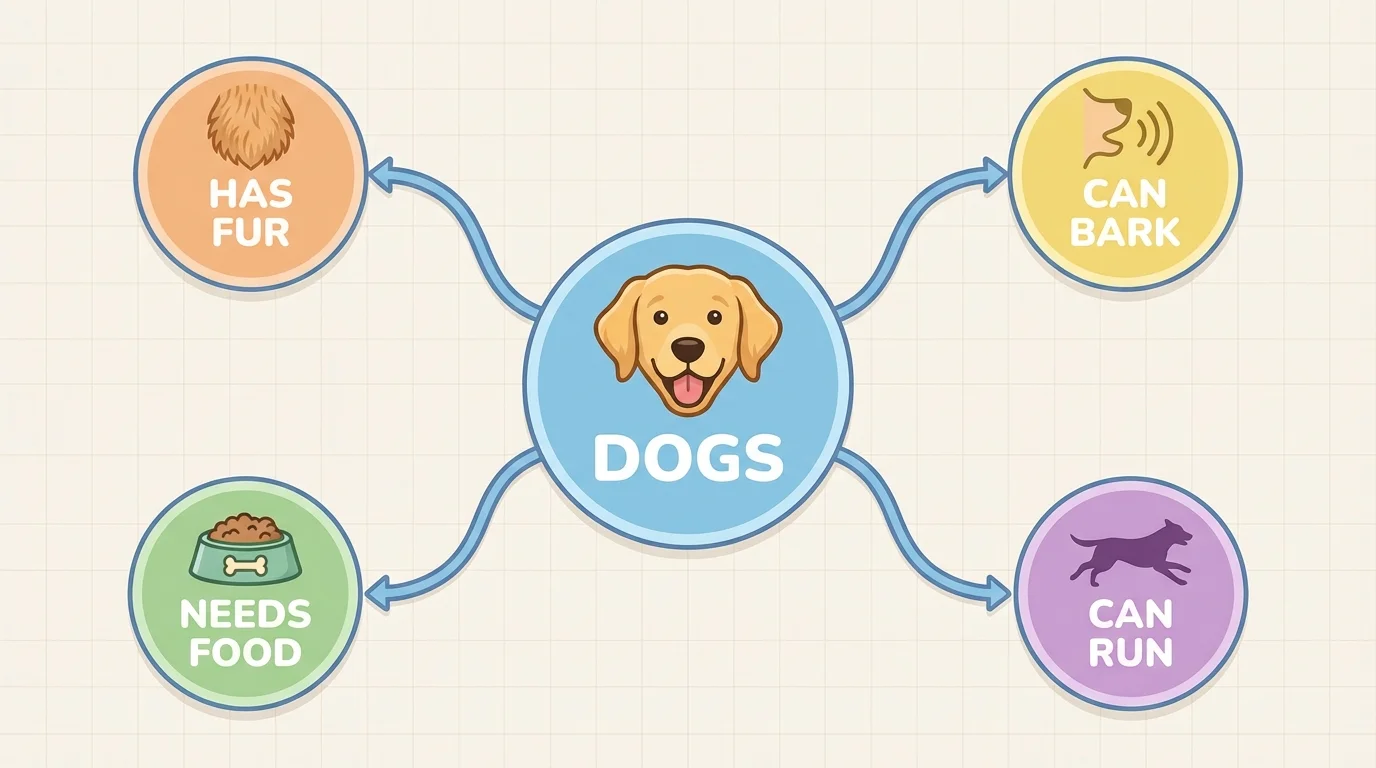
Sometimes writers have many ideas at once. It is okay to have many ideas, but in one short piece of writing, it helps to pick one topic. That makes your writing easy to understand.
Topic means the main thing you are writing about. Fact means something true that can be known or checked.
You can name your topic right at the start. A sentence like Birds are animals with feathers tells the reader what the writing will be about.
A fact is something true. For example, The sun is hot is a fact. Ice is cold is a fact. Fish live in water is a fact.
Some sentences are not facts. If someone says, Bananas are the best fruit, that is an opinion. An opinion tells what someone thinks or feels. A fact tells what is true.
Facts help readers learn. When you write facts, you are giving real information. That is what informative writing does.
Some frogs can jump many times their own body length. That is a fun fact to share if your topic is frogs.
Facts can tell about color, size, shape, sound, home, food, or actions. If your topic is bees, you might write that bees can fly, bees visit flowers, and bees make honey.
After you choose a topic, think of details that fit it. If your topic is pumpkins, matching facts might be: pumpkins grow on vines, pumpkins can be orange, and pumpkins have seeds inside.
If a detail does not match, leave it out. For example, if your topic is pumpkins, the sentence My shoes are blue does not belong. It may be true, but it is not about pumpkins.
This is how writers stay focused. Focus means keeping your mind and your writing on the same idea.
Matching details make writing strong. When every sentence connects to the topic, the reader can follow your ideas easily. A named topic, a few related facts, and a closing sentence work together like puzzle pieces.
You can ask yourself, Does this fact teach something about my topic? If the answer is yes, it probably belongs in your writing.
As [Figure 2] shows, writing is easier to follow when facts are in order. First, tell the topic. Next, tell a few facts. Last, end with a closing sentence.
One way to order your writing is with a simple beginning, middle, and end. The beginning names the topic. The middle gives details. The end gives the reader a sense of closure, or a feeling that the writing is finished.
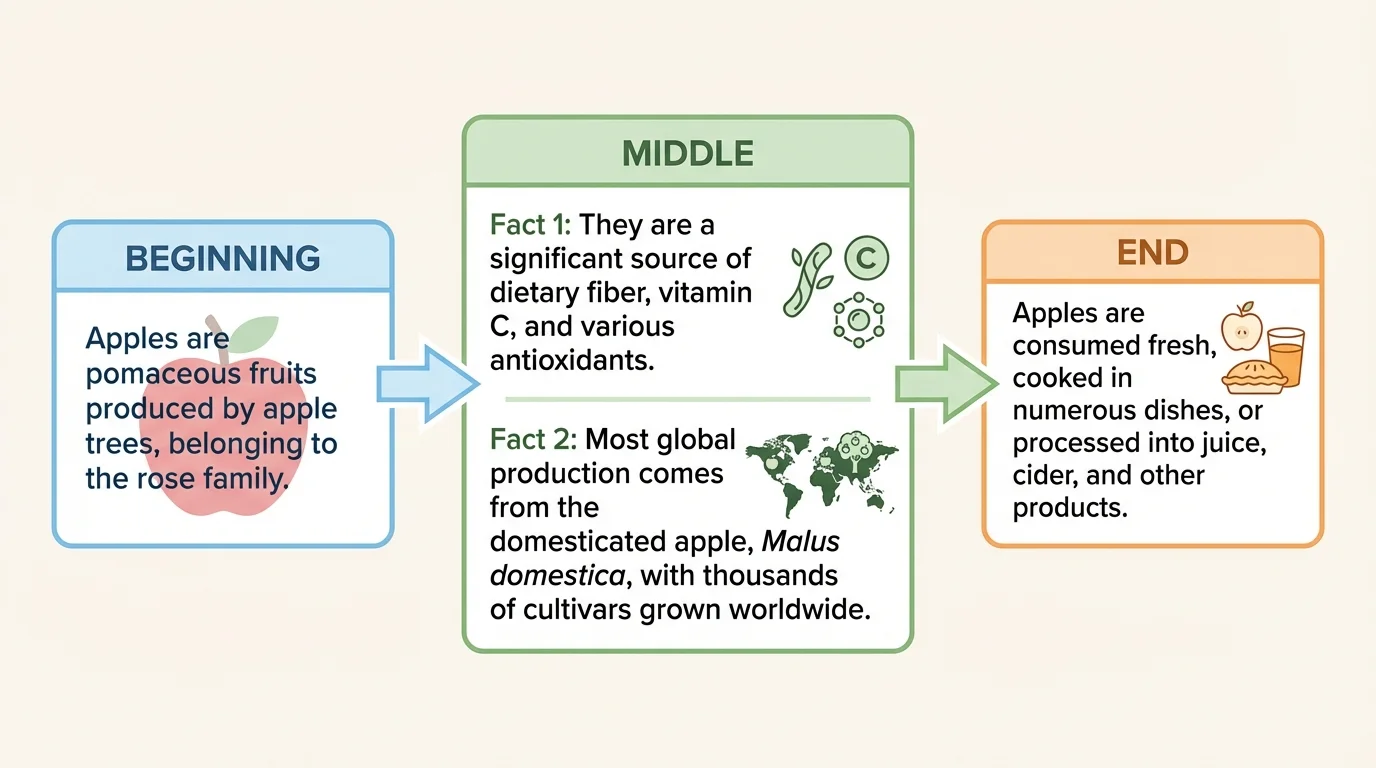
If your topic is rain, you might begin with Rain is water that falls from clouds. In the middle, you might add Rain helps plants grow. Then you might end with Rain is important in nature.
Order helps the reader move from idea to idea. The reader does not have to guess what you mean.
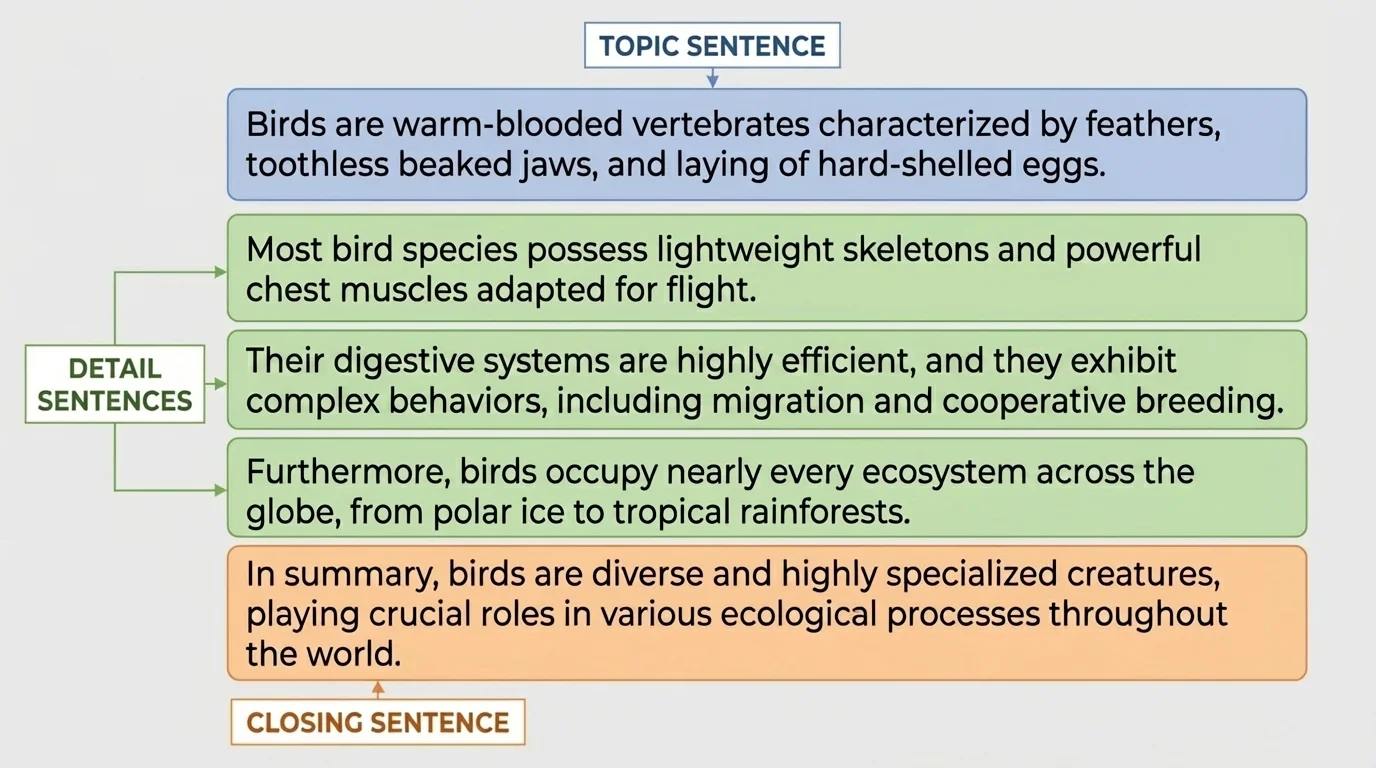
As [Figure 3] shows, a short informative piece has clear parts. Let us look at a model about turtles.
Example paragraph
Turtles are animals with hard shells. They can live on land or in water. Turtles move slowly. Their shells help protect them. Turtles are interesting animals.
The first sentence names the topic: turtles. The middle sentences give facts: turtles have hard shells, some live on land or in water, and turtles move slowly. The last sentence closes the writing.
You can write about many familiar topics in this way: trees, stars, buses, ants, ducks, or clouds. The job is the same each time. Name the topic, add related details, and finish clearly.
When we look back at the idea map in [Figure 1], we can see why brainstorming helps. One center topic can lead to several true facts, and those facts can become the middle of your writing.
A closing sentence gives your reader a sense of closure. Closure means the writing feels complete. It is like tying a bow on a present.
A closing sentence does not have to be long. It can be simple. If your topic is snow, you could end with Snow is an important part of winter. If your topic is birds, you could end with Birds are amazing animals to learn about.
When writers forget the ending, the writing can feel sudden or unfinished. A clear ending helps the reader know the piece is done.
Good sentences begin with a capital letter and end with the right punctuation mark. Clear sentences help your facts shine.
The order in [Figure 2] helps with endings too. After the topic and details come the final words that gently close the piece.
Here are more examples of topics with matching facts.
| Topic | Facts |
|---|---|
| Birds | Birds have feathers. Many birds can fly. Birds build nests. |
| Apples | Apples grow on trees. Apples can be red, green, or yellow. Apples have seeds. |
| Fire trucks | Fire trucks are large vehicles. They carry hoses. Firefighters ride in them. |
| The moon | The moon is in the sky. It shines at night. It goes around Earth. |
Table 1. Examples of simple topics and true facts that match each topic.
When you write, you do not need many facts. Even two or three good facts can teach the reader something. What matters most is that the facts are true and fit the topic.
The model in [Figure 3] reminds us that even a small paragraph can do a big job. It can teach a reader one clear idea with true details and a strong ending.
