Have you ever heard a story stop so fast that it felt like the speaker just walked away? Writing can feel that way too. A strong ending helps your reader feel, "Yes, this is complete." When you write an opinion, your ending should give your reader a calm, clear finish.
In writing, closure means the ending feels complete. It does not feel sudden. It does not feel missing. It feels finished.
When you write an opinion, you tell what you think. Then you give reasons. At the end, you add a closing sentence. That closing sentence helps your reader remember your big idea.
Closing sentence is the last sentence in a piece of writing. It helps the writing feel finished. Opinion is what you think or believe about something.
A closing sentence is like tying a bow on a present. The writing is already there, but the ending makes it feel neat and complete.
Your reader reads your first words, your reasons, and your last words. The last words are important because they stay in the reader's mind. A good ending reminds the reader of your opinion in a simple way.
If you write, "Dogs are the best pets because they are playful and kind," your ending should match that idea. You want your reader to feel that your thought has reached the end.
Writers often spend extra time on their last sentence because a strong ending helps the whole piece sound better.
An ending does not need to be long. In early elementary writing, one good sentence can do the job very well.
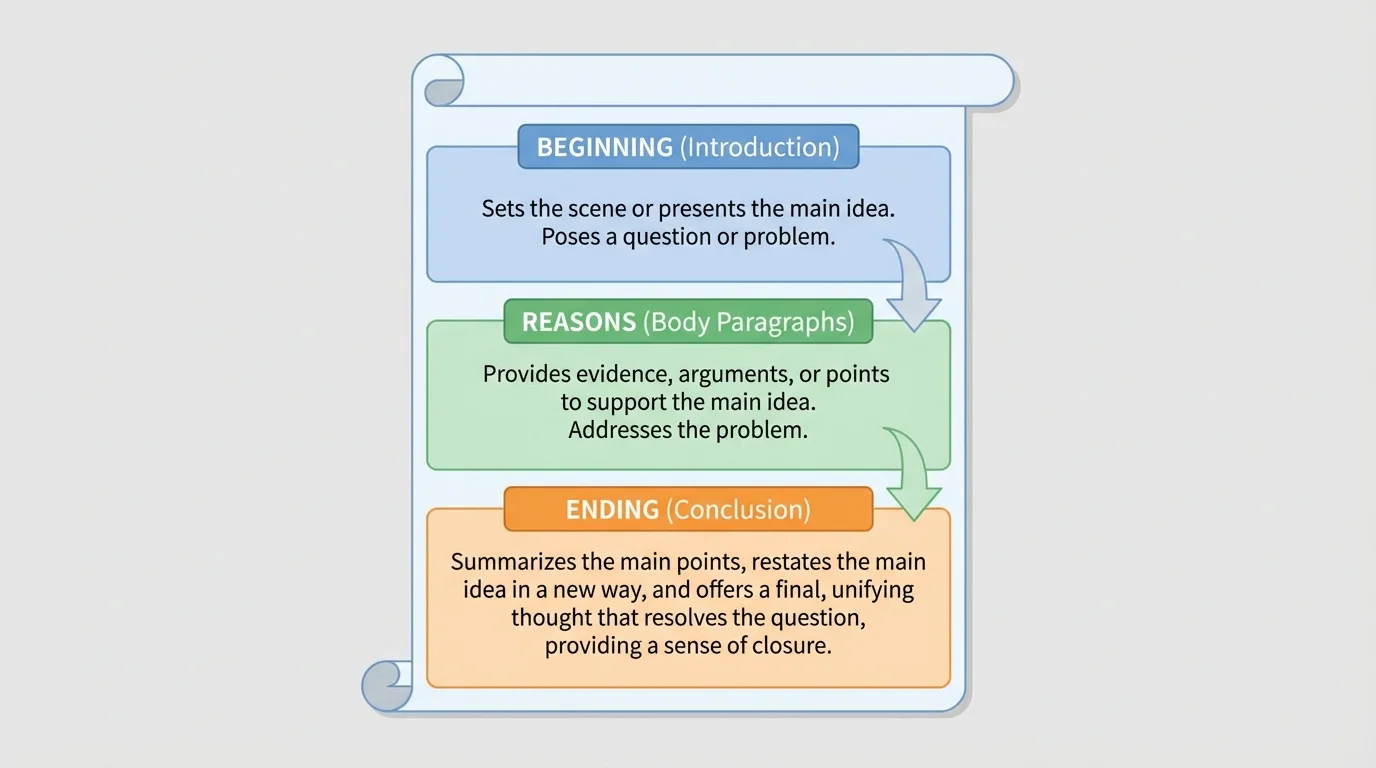
[Figure 1] A opinion piece has a beginning, reasons in the middle, and an ending. The ending is the part that signals to the reader that the writing is complete.
There are a few easy ways to create closure. One way is to say your opinion again in a new way. Another way is to share a final feeling. A third way is to tell what you hope, want, or think should happen.
You can restate your opinion. That means you say it again, but not in exactly the same words. If your opinion is "Recess is the best part of school," your ending could be, "That is why recess is so great."
You can also add a final feeling. For example: "I love field trips, so I think every class should take more of them." The ending shares the opinion and leaves the reader with a clear thought.
Sometimes writers add a hope or wish. For example: "We should plant more trees so our playground can have cool shade." This feels finished because it gives one last strong idea.
A strong ending matches the whole piece. If your writing is about why cats are quiet pets, your ending should still be about cats and quiet pets. The ending should fit the same topic and opinion.
As you saw in [Figure 1], the ending is not a brand-new topic. It belongs to the same writing piece and connects back to the opinion and reasons.
Some endings do not give good closure. This comparison, shown in [Figure 2], helps us notice the difference between an ending that feels weak and one that feels strong.
One weak ending is no ending at all. A writer might stop after the reasons and forget the last sentence. Then the piece can feel unfinished.
Another weak ending is saying the exact same sentence again and again. Repeating can sound boring. A closing sentence should sound a little fresh.
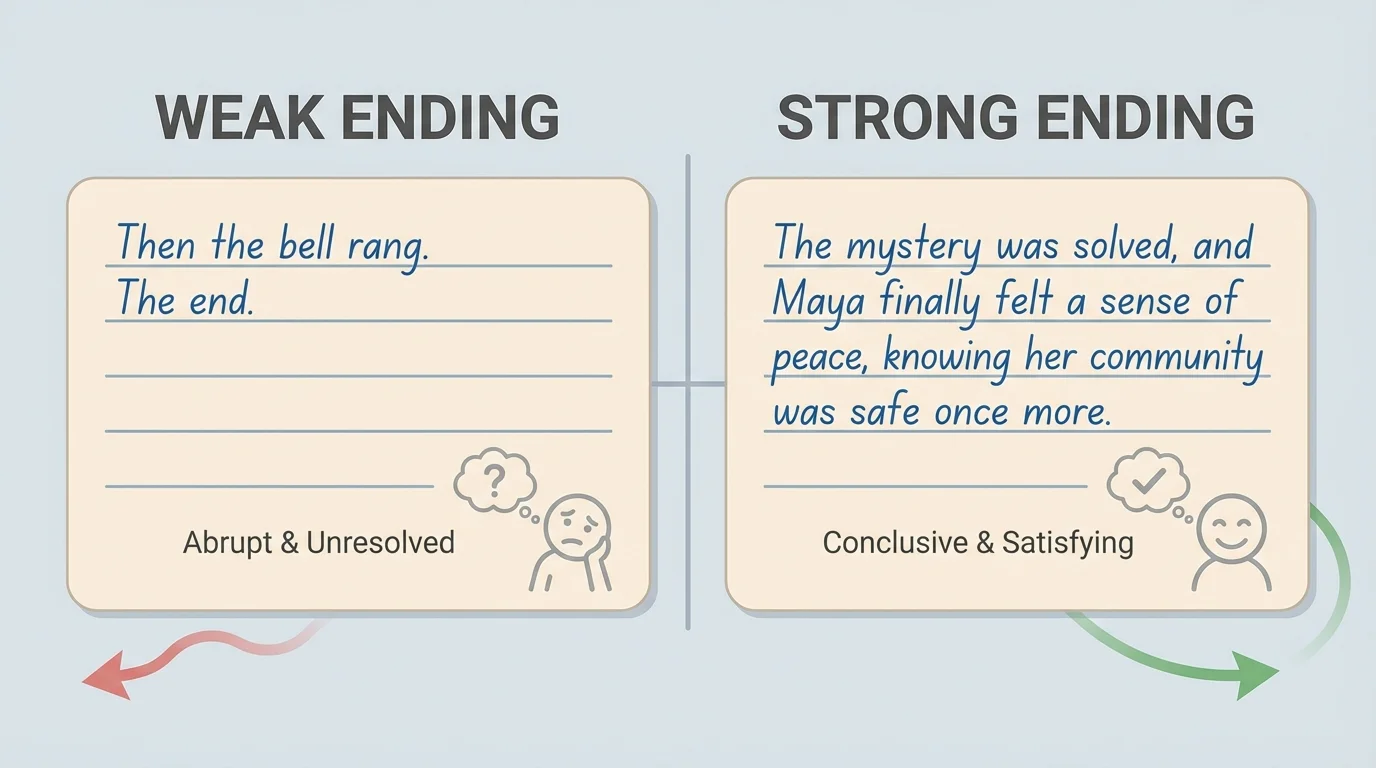
A weak ending can also jump to a different idea. If the writing is about why apples are healthy, the ending should not suddenly talk about pizza. The ending must stay on topic.
Very short endings like "The end" may finish the piece, but they do not really make opinion writing sound strong. Instead, use a real sentence that connects to your opinion.
Strong and weak ending examples
Step 1: Opinion: "Rainy days are fun."
Weak ending: "The end."
Step 2: Better ending: "That is why I think rainy days can be the best days to play inside."
Step 3: Notice what changed.
The stronger ending repeats the opinion in a new way and makes the writing feel complete.
Later, when you compare your own endings, remember the idea from [Figure 2]: a strong ending sounds connected, clear, and finished.
Here are some simple opinion ideas with strong endings.
Opinion: "Ice cream is the best dessert because it is cold and sweet." Closing sentence: "That is why ice cream is my favorite treat."
Opinion: "Books are fun because they tell exciting stories." Closing sentence: "For all these reasons, reading books is wonderful."
Opinion: "We should have more art time because drawing helps us be creative." Closing sentence: "I think more art time would make school even better."
Your opinion writing has three important parts: tell your opinion, give reasons, and end with a closing sentence. The ending works best when it connects back to the opinion and reasons.
Notice that each closing sentence sounds a little different. One says the opinion again. One gives a final thought. One shares a hope or suggestion. All of them give closure.
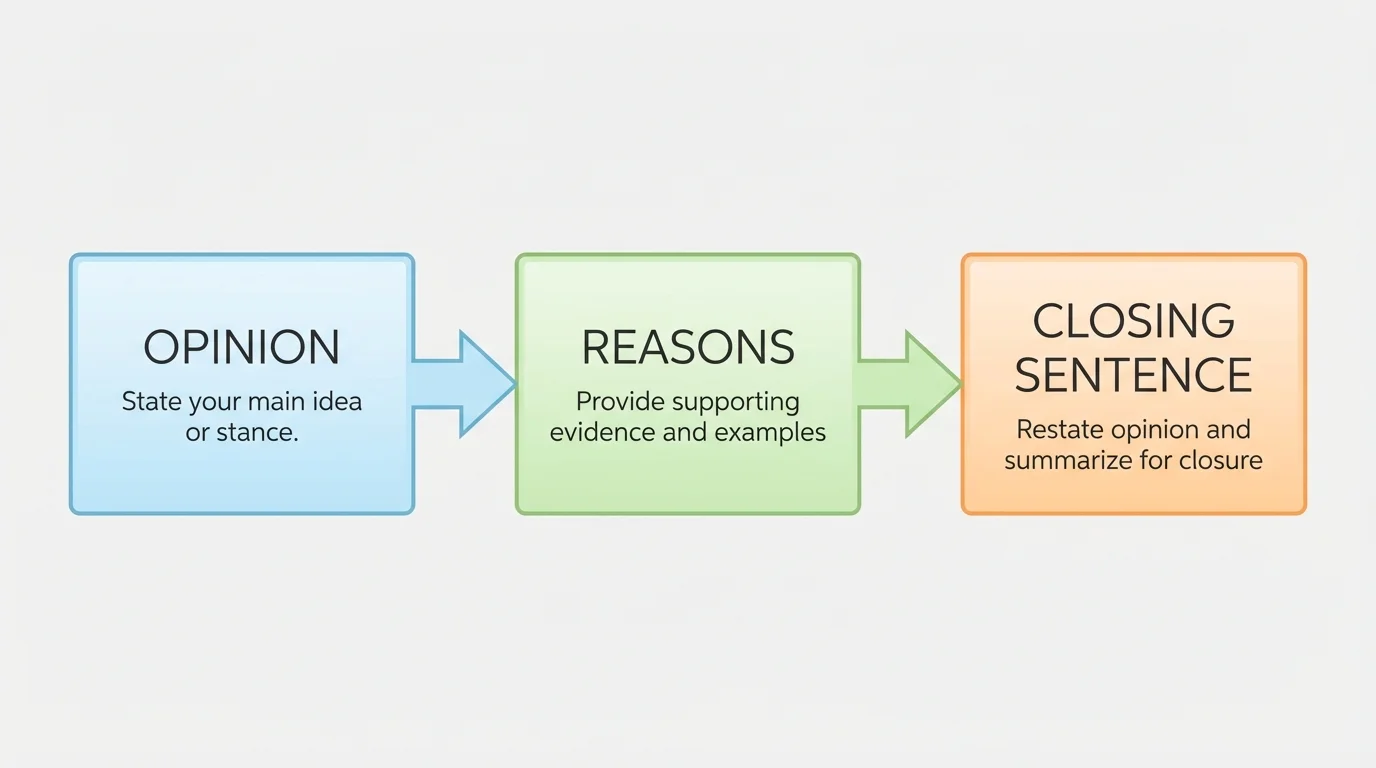
[Figure 3] All the parts of opinion writing work together. First comes the opinion. Next come the reasons. Last comes the closing sentence.
When these parts are in order, your reader can follow your thinking from start to finish. The ending is important because it closes the door gently instead of slamming it shut.
Here is a short opinion piece: "I think school gardens are great. They help kids learn about plants. They also make the school look pretty. That is why every school should have a garden." The last sentence gives closure because it fits the opinion and wraps up the reasons.
Writers sometimes read their last sentence aloud. If it sounds finished and matches the writing, it is probably a good ending. If it sounds sudden, repeated, or off-topic, it may need to change.
Looking back at [Figure 3], you can see that the closing sentence is the last step in the flow of ideas. It helps your reader leave with your opinion still in mind.
"A good ending helps your reader know your thinking is complete."
When you write your own opinion pieces, think of the ending as your final chance to speak clearly. One strong sentence can make the whole piece feel complete, thoughtful, and ready to share.
