Have you ever told someone about your day and they said, "What happened first?" That is because stories and true events make more sense when we tell them in order. When we write about something that happened, we want our reader to follow along from the beginning to the end.
A recount is writing that tells about something that already happened. It can be about a real event, like losing a tooth, or an imagined event, like meeting a friendly dragon. A recount tells events in order so the reader knows what happened first and what happened after that.
Recount means to tell about events that happened. Sequence means the order of events. Closure means the ending feels finished and complete.
Good recount writing is easy to follow. It stays on one topic, uses clear sentences, and tells at least two events. Readers should not feel confused. They should be able to say, "I know what happened."
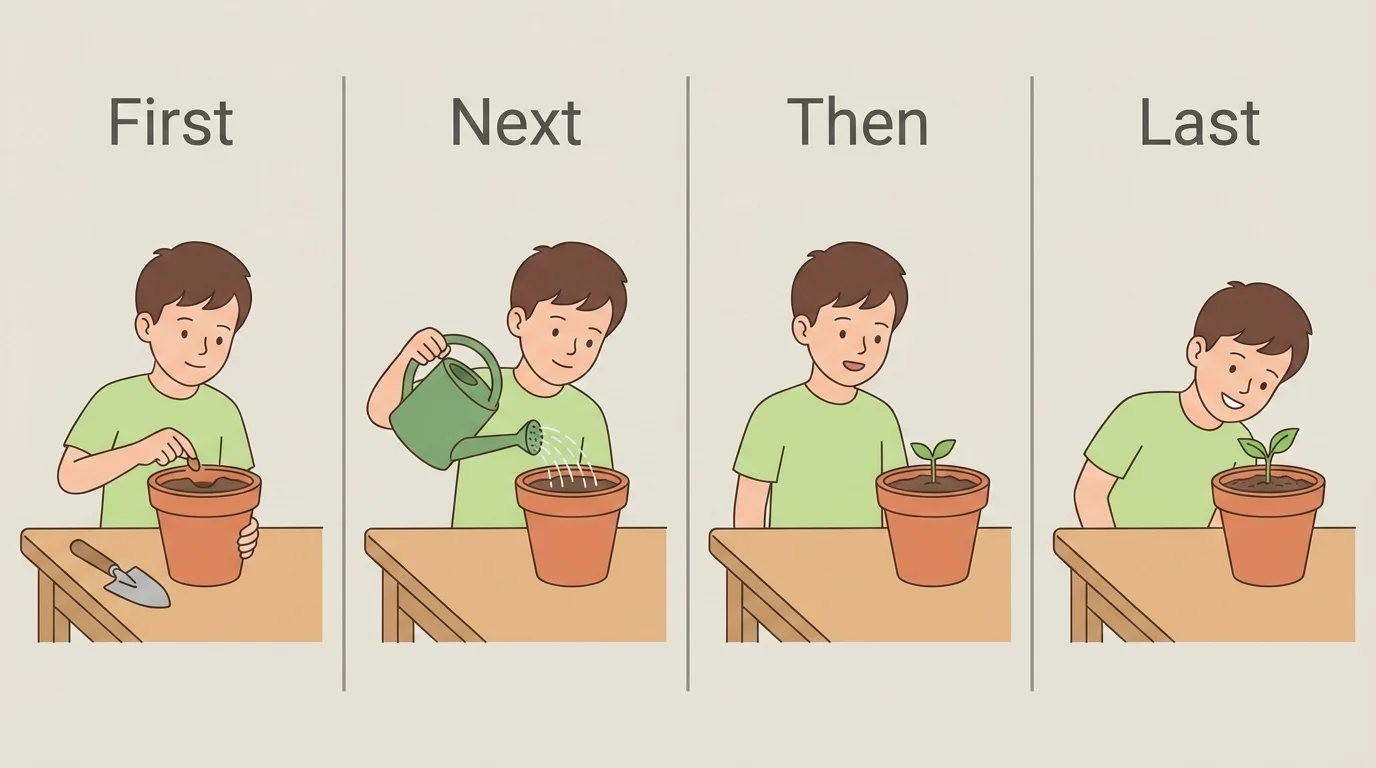
When we write events in sequence, we put them in the right order. Helpful words can show this order. We often use words like first, next, then, and last, as [Figure 1] shows with one event leading to the next.
Read this short recount: "First, I put soil in a pot. Next, I planted a seed. Then, I gave it water. Last, I put the pot by the window." These events are easy to follow because each one comes in order.
If the order is mixed up, the writing can sound strange. "Last, I planted a seed. First, the flower grew." That does not make sense because a flower cannot grow before the seed is planted. Order helps a reader understand time.
Why order matters
Events are connected. One thing happens, and then another thing happens because of it. When writers keep the order clear, readers can picture the action step by step.
You do not have to use the same order words every time, but they are very helpful. Other time words can help too, such as after, later, and finally. These words act like signs on a road. They show the way through the writing.
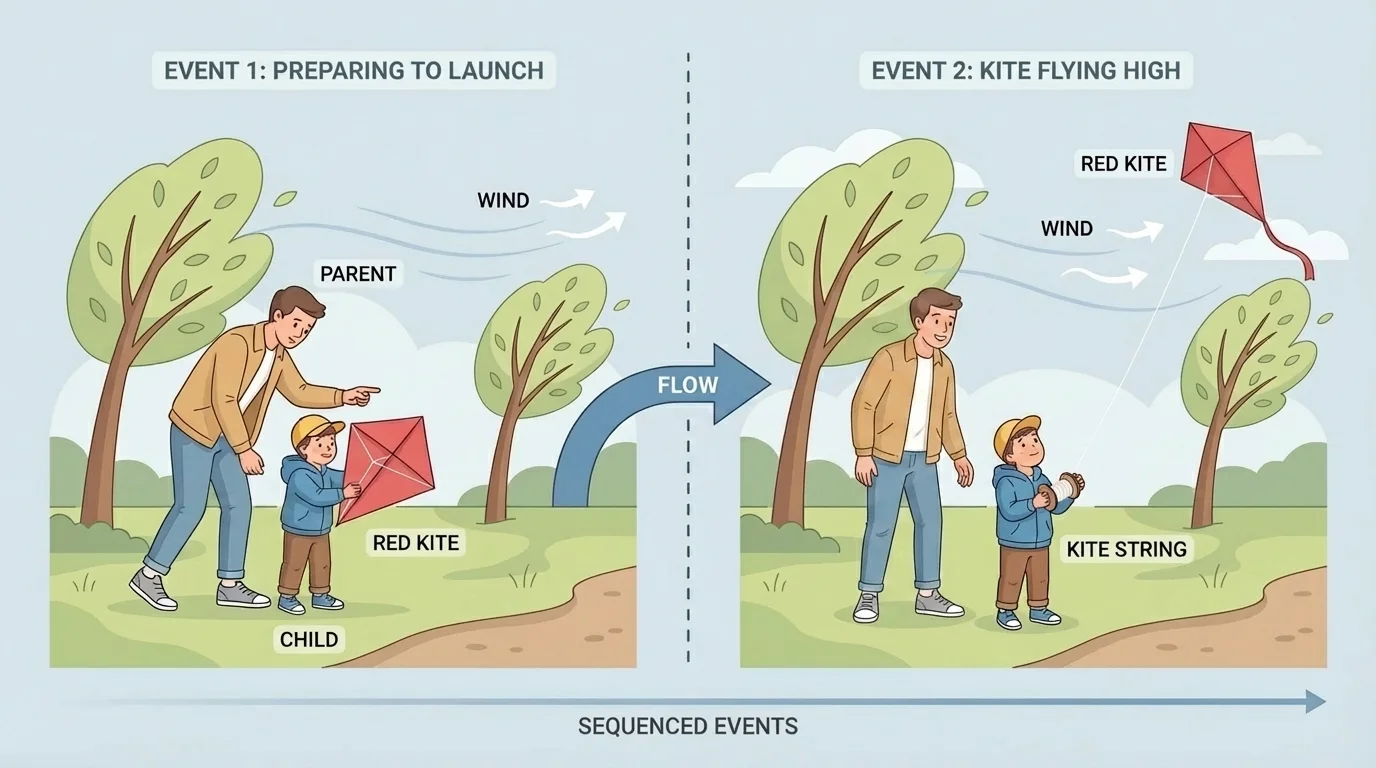
A recount is stronger when it has details. Details tell more about who was there, where it happened, what happened, and how it felt. In [Figure 2], the scene becomes clearer because the writer can name the place, the object, and the action.
Look at these two sentences. "I went outside." That is clear, but it is plain. Now read this: "I went outside to the park with my dad and flew my red kite." The second sentence gives more information. It helps the reader form a picture in their mind.
Details should match the event. If you are writing about feeding a puppy, you might add: "The puppy wagged its tail." If you are writing about baking, you might add: "The cookies smelled sweet." These details make the recount lively and clear.
Small details can make writing feel real. A word like "muddy," "cold," or "crunchy" helps a reader imagine the event much better.
Writers choose details that fit the topic. Too many random details can make the writing confusing. Good details help the reader understand the important events.
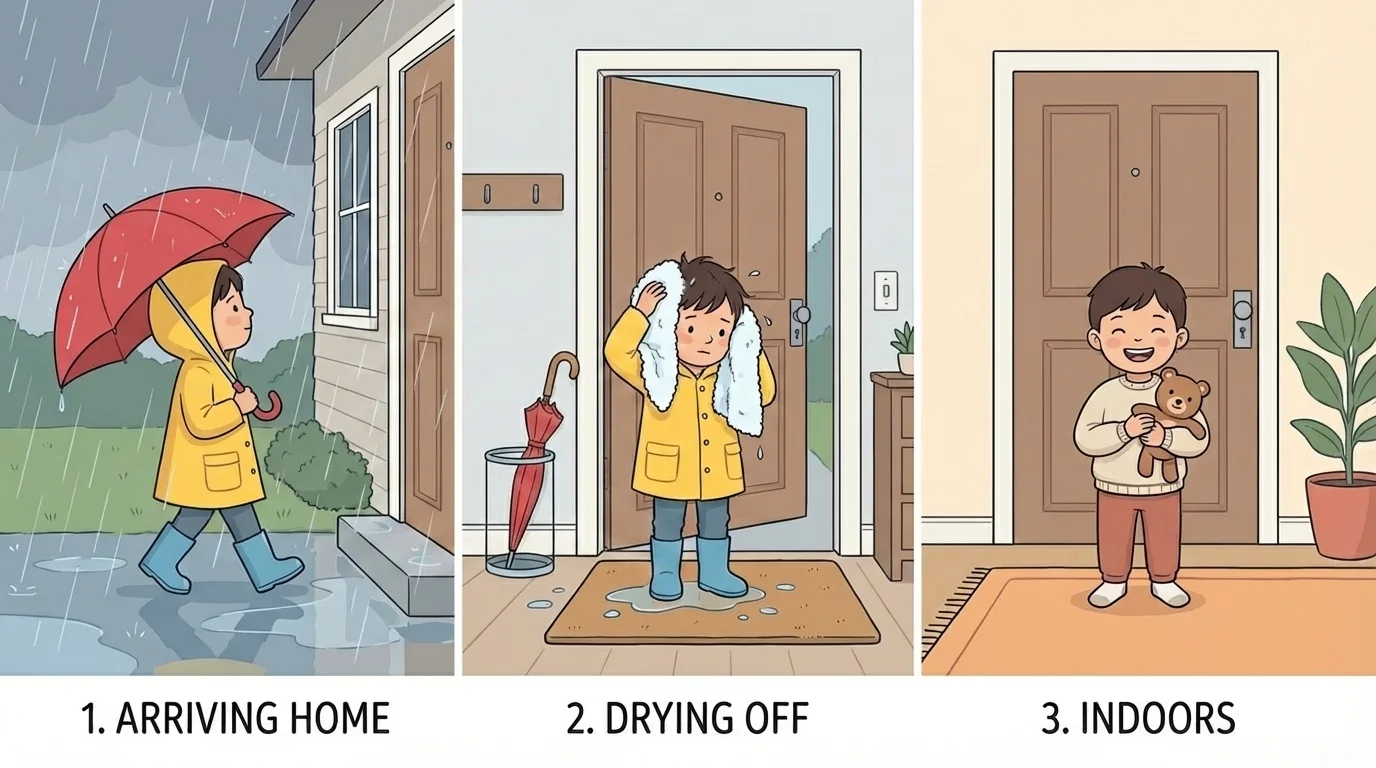
A good recount needs an ending. This ending gives closure, as [Figure 3] illustrates when the event feels finished. Closure tells the reader that the recount is done.
An ending can tell how the writer felt, what happened at the very end, or what was learned. For example: "I was proud of my picture." "Then I went home for dinner." "It was the best rainy walk ever." These endings help the reader feel complete.
Without an ending, the recount may sound unfinished. Listen to this: "First, we went to the pond. Next, we fed the ducks." The reader may wonder, "And then what?" A closing sentence fixes that. "Last, we went home and talked about the ducks."
Example recount
Step 1: Start with the first event.
"First, I found my rain boots by the door."
Step 2: Tell the next event.
"Next, I put them on and ran outside."
Step 3: Add another event and an ending.
"Then, I jumped in a puddle. Last, I came inside and laughed with my mom."
This recount has events in order and ends clearly.
Here is a recount about a real event: "First, I opened my lunch box. Next, I ate my sandwich. Then, I shared apple slices with my friend. Last, I packed up my things and went to recess." The events happen one after another in a way that makes sense.
Here is a recount about an imagined event: "First, I saw a tiny dragon in the garden. Next, it flapped its shiny wings. Then, it blew a small puff of warm smoke. Last, it flew away behind the tree." Even though this event is imagined, the order is still clear.
Notice that both recounts tell more than one event. They also stay focused on one small experience. That helps the reader follow along. The planting order in [Figure 1] works the same way: one action happens, and the next action follows it.
Start with what happened first. Then keep going in order. Add details that match the event. Finish with a sentence that feels complete. The clear scene from [Figure 2] reminds us that details help readers see the action, while the ending in [Figure 3] reminds us to finish the writing.
Remember to begin each sentence with a capital letter and end it with punctuation. A period is often best for recount writing. Read your writing again to make sure it makes sense from start to finish.
You already know how to tell about something that happened out loud. Writing a recount is like telling it on paper, but you make the order extra clear for your reader.
When writers recount events, they help readers travel through time. The reader can see what happened first, next, then, and last. That is how a short piece of writing becomes clear, interesting, and complete.
