Have you ever told someone about your day and they asked, "Then what happened?" That is because a good recount of something that happened needs more than one small sentence. It needs details so the listener or reader can see the event in their mind.
A recount is writing that tells about something real or imagined that happened. The writer tells the events in order. This helps the reader follow along from the start to the finish.
Recount means telling what happened in order. A recount can be about a real day, a made-up adventure, or something special that happened.
When you recount an event, you do not just say one thing. You tell the important parts. You might tell who was there, where it happened, what happened first, what happened next, and how it ended.
Details are the small parts that make writing clear. Without details, writing can sound too short or confusing. If a child writes, "I went outside," the reader knows one action, but not much more. If the child writes, "I went outside to the playground after lunch and slid down the tall blue slide," the reader understands a lot more.
Why details matter
Details help the reader form a picture in their mind. They can show who was there, where the event happened, what actions took place, and how the person felt.
Good details do not have to be long. Even a few extra words can make a big difference. A writer chooses details that help explain the event clearly.
Writers add different kinds of details, as shown in [Figure 1]. These details can give information about an event, such as who was there, where it happened, what happened, and how someone felt.
You can add details like these: who, where, when, action, and feeling. For example, instead of writing, "We played," a writer can say, "My friend Ava and I played tag on the grass at recess, and we laughed when I almost got caught."
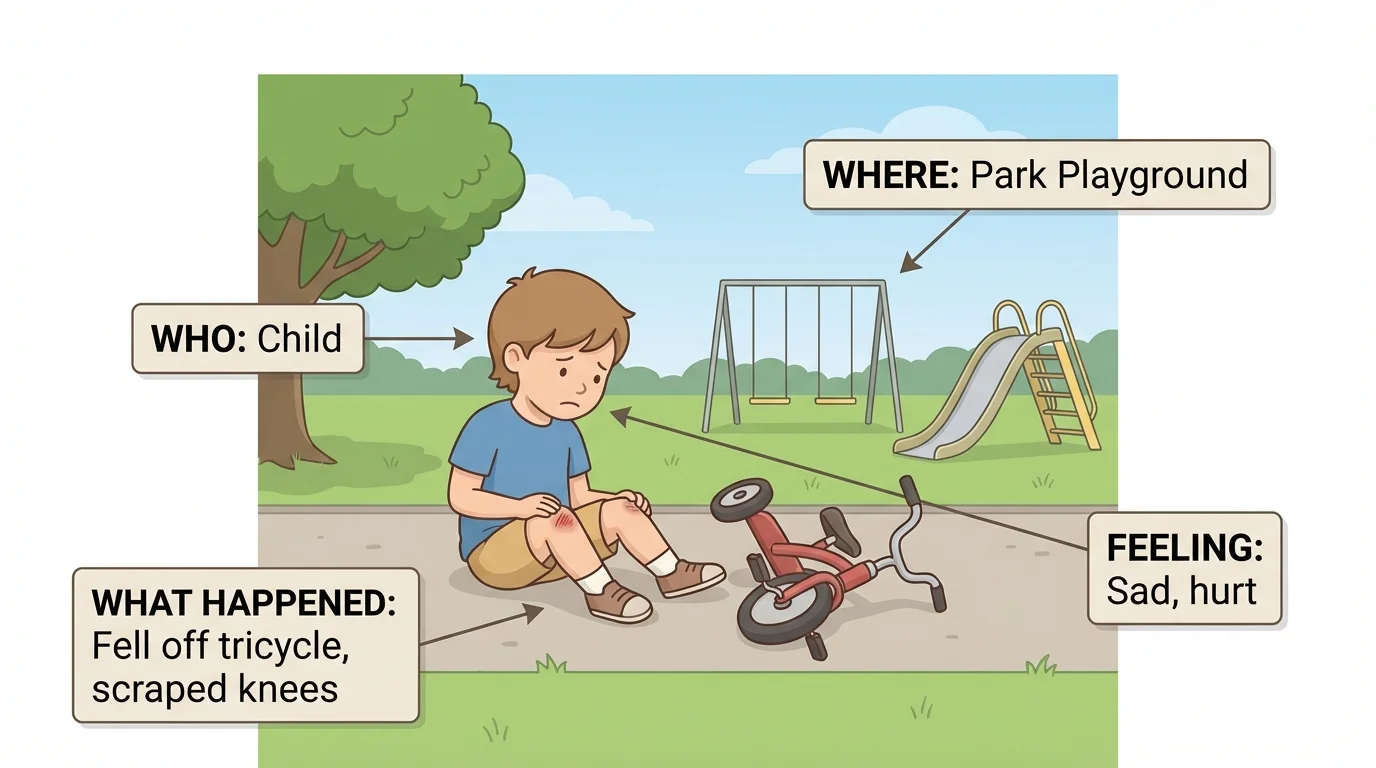
Here are some kinds of details you can use:
When you add these details, your writing becomes easier to understand. The reader knows more than just the action. The reader understands the full moment more clearly.
Events happen one after another, and [Figure 2] shows how a recount moves from the beginning to the middle to the end. This is called a sequence.
A good recount has a beginning, a middle, and an end. In the beginning, the writer tells how the event starts. In the middle, the writer tells what happens next. In the end, the writer tells what happened last.
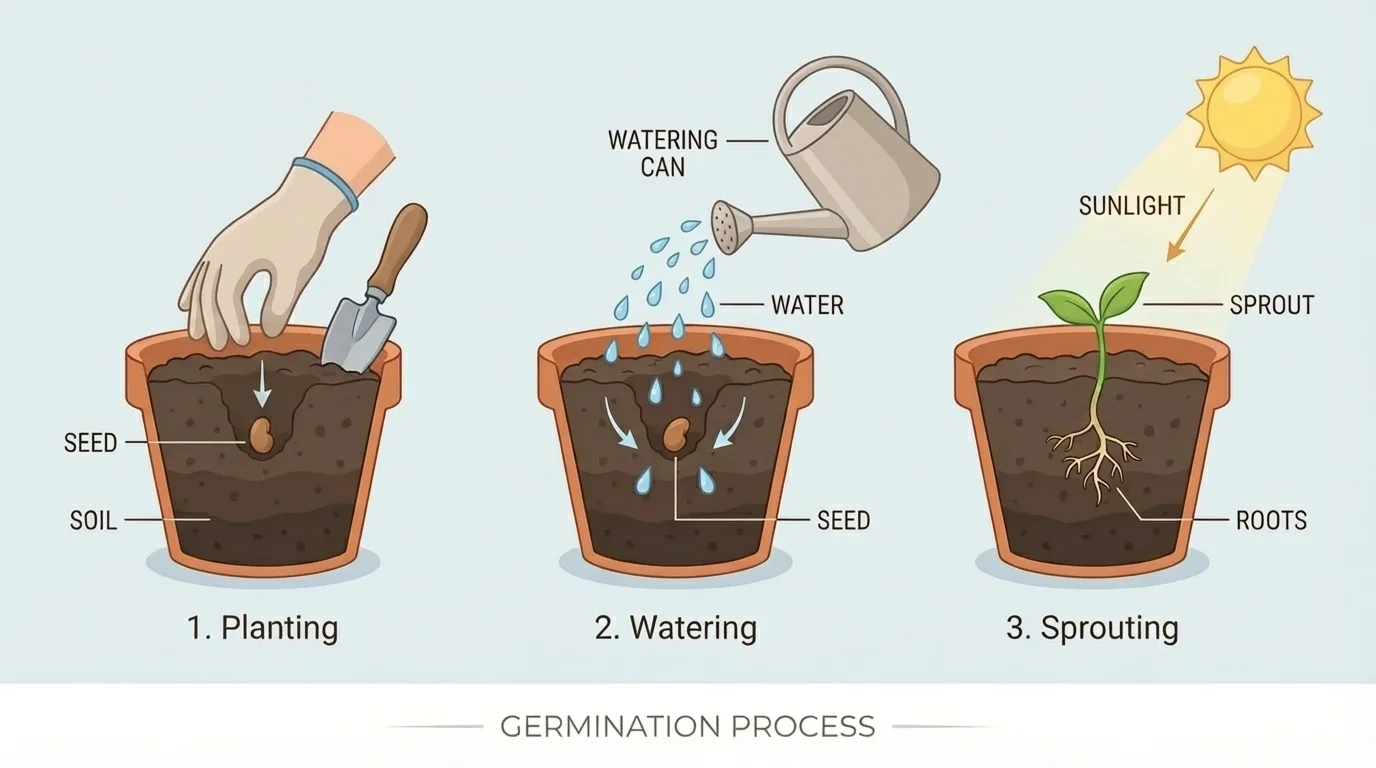
Words that help show order are called time-order words. Some helpful words are first, next, then, after that, and last.
Listen to how these words help: "First, I put on my boots. Next, I stepped into the puddle. Then, water splashed on my socks. Last, I went inside and changed." The order is easy to follow.
You already know that sentences tell ideas. In a recount, each sentence can tell one part of what happened, and the sentences work best when they are in the right order.
Your writing should move smoothly from one event to another, with each step leading clearly to the next.
A recount should not stop suddenly. It needs a closure, which is a way to finish the writing. Closure tells the reader that the recount is done.
A closing can tell how you felt, what happened at the very end, or what you thought about the event. For example, "I was tired but proud after the race." Another closing could be, "That was the best birthday party I ever had."
Even grown-up authors use endings to help readers feel complete. A strong ending can make a short piece of writing feel finished and satisfying.
Closure is important because it gives the reader a sense that the recount has reached its end. Without a closing, the writing can feel unfinished.
A sentence with details helps a reader picture the moment more clearly. Compare these simple and detailed examples.
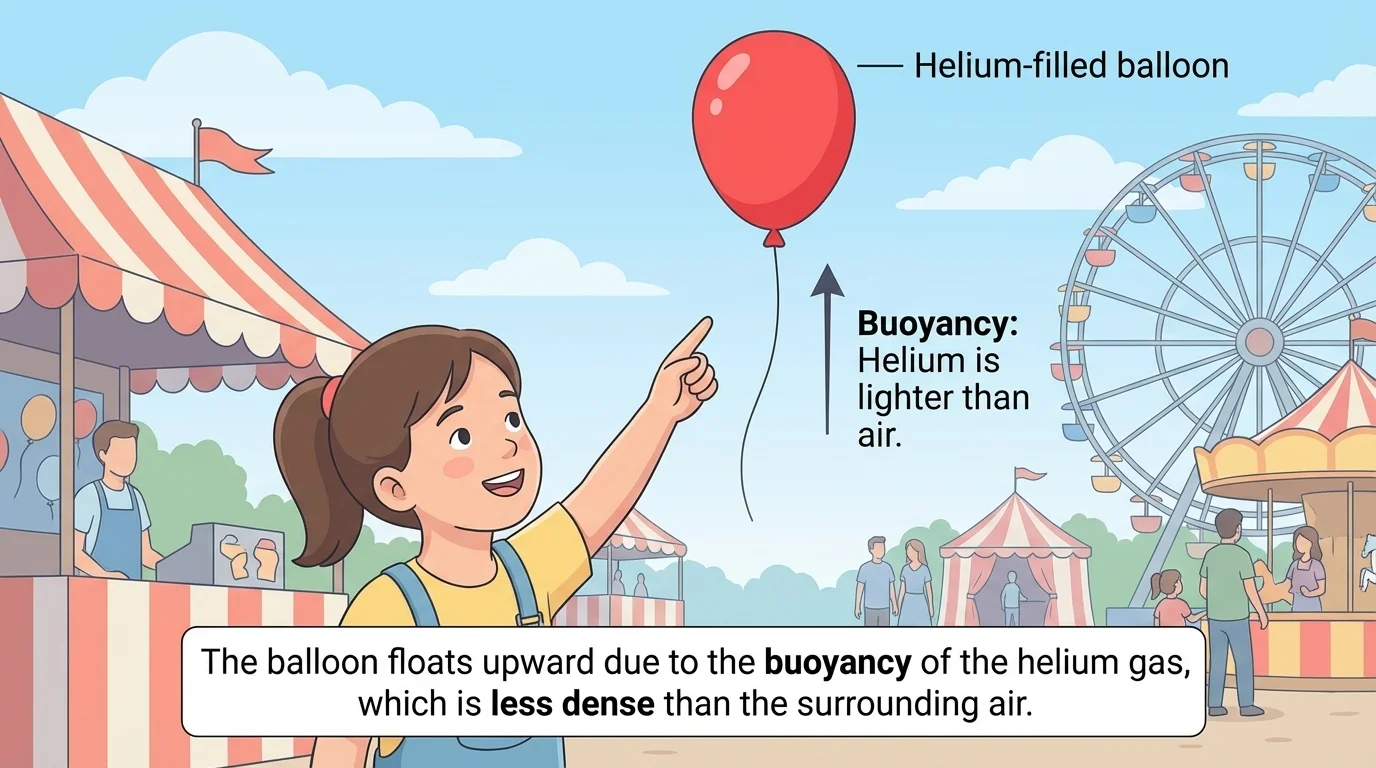
[Figure 3] Plain: "I saw a balloon."
With details: "I saw a bright red balloon floating above the fair, and I pointed at it with a big smile."
Plain: "We had lunch."
With details: "My class had lunch in the cafeteria, and I ate a cheese sandwich, apple slices, and cold milk."
Plain: "I was happy."
With details: "I was happy when my puppy ran to me and licked my hand."
Building one recount sentence
Start with a very short idea: "I went to the park."
Step 1: Add who.
"My dad and I went to the park."
Step 2: Add when and where.
"After school, my dad and I went to the park near our house."
Step 3: Add what happened and feeling.
"After school, my dad and I went to the park near our house, and I raced to the swings because I felt excited."
The last sentence gives the reader a much clearer picture.
When you look back at [Figure 3], you can notice how color, place, action, and feeling all work together as useful details.
Here is a full recount with details and closure:
"On Saturday morning, I went to my grandma's house. First, we mixed flour, eggs, and milk in a big bowl. Next, I helped stir the batter with a wooden spoon. Then, Grandma poured little circles on the hot pan, and I watched the pancakes bubble. Last, we ate the warm pancakes with strawberries. I felt happy because I helped make breakfast."
This recount tells when it happened, where it happened, what happened in order, and how the writer felt at the end. That makes it clear and complete.
"Small details can tell a big story."
When you write about what happened, think like a careful storyteller. Tell the events in order. Add details that matter. End with a closing that lets the reader know the recount is finished.
