Have you ever heard someone say, "Put your folder away and come to the carpet," and you knew exactly what to do? That is an important listening and speaking skill. Every day at school, at home, and on the playground, people give directions and follow directions. When we understand directions, we can stay safe, finish jobs, and work well with others.
Directions tell someone what to do. Good directions are clear and easy to understand. Good listening helps a person hear the directions, remember them, and do them in the right order.
When children learn to speak clearly and listen carefully, they become stronger communicators. A strong communicator can tell others what needs to happen and can also listen carefully when someone else is speaking.
Two-step directions are directions with two actions. A person does the first action, and then the person does the second action.
Order means the way steps go, such as what happens first and what happens next.
[Figure 1] A two-step direction includes two steps. The steps must be done in order. If the order changes, the direction may not work the same way. In school, someone might say, "Open your notebook, then draw a star." The first step is to open the notebook. The second step is to draw a star.
Some two-step directions use order words. These words help us know what to do first and what to do next. Common order words are first, next, then, and after. Order words help us understand which action happens before the next one. These words are small, but they do an important job.
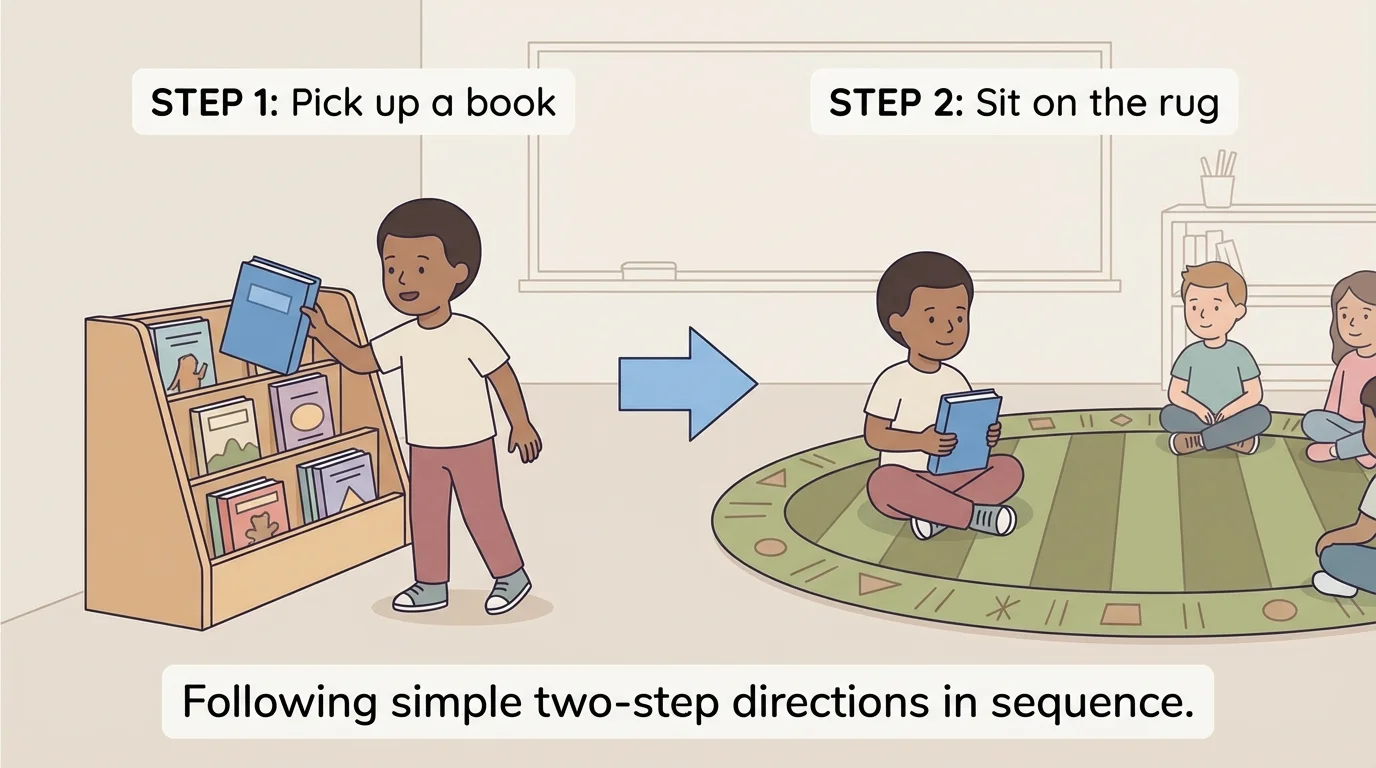
When you give directions, use a clear voice and simple words. Say one idea at a time. Choose strong action words, such as pick up, touch, walk, point, or draw. These words tell exactly what to do.
Clear directions are short. Instead of saying many extra words, say only what is needed. "Pick up your pencil and circle the picture" is easier to understand than a long, confusing sentence.
What makes directions easy to follow
Easy directions use simple action words, tell steps in the correct order, and name the object or place clearly. A listener should know what to do and where to do it.
A speaker should also make sure the listener can hear. That means facing the person, speaking at a good speed, and not rushing. If the speaker talks too fast, the listener may remember only one step instead of both steps.
Sometimes a speaker repeats the direction. Repeating is helpful, especially when the direction has two parts. For example: "Clap your hands and sit down. I'll say it again: clap your hands and sit down."
To follow directions well, listen with your ears, look at the speaker, and think about both steps. Good listeners do not start too quickly. They hear the whole direction first.
After listening, it helps to remember the steps in your mind. You might think, "First, touch the door. Next, walk to the line." That quiet self-talk can help you keep the order right.
If you do not understand, it is okay to ask a question. You can say, "Can you say that again, please?" or "Which do I do first?" Asking for help is a smart listening strategy.
Examples of following two-step directions
Step 1: Listen to the direction: "Pick up the red crayon and put it in the box."
Step 2: Do the first action: pick up the red crayon.
Step 3: Do the second action: put it in the box.
The direction is followed correctly because the actions happen in the right order.
Sometimes people remember the second step but forget the first one. That is why listening from the beginning is important. You cannot follow two-step directions well if you hear only the end.
Some directions use order words to show when each step happens. Other directions use place words to show where something goes. Place words include in, on, under, beside, and behind.
Listen to this direction: "Put your paper on the desk and stand beside your chair." The words on and beside tell where to put the paper and where to stand. Without those place words, the direction would be confusing.
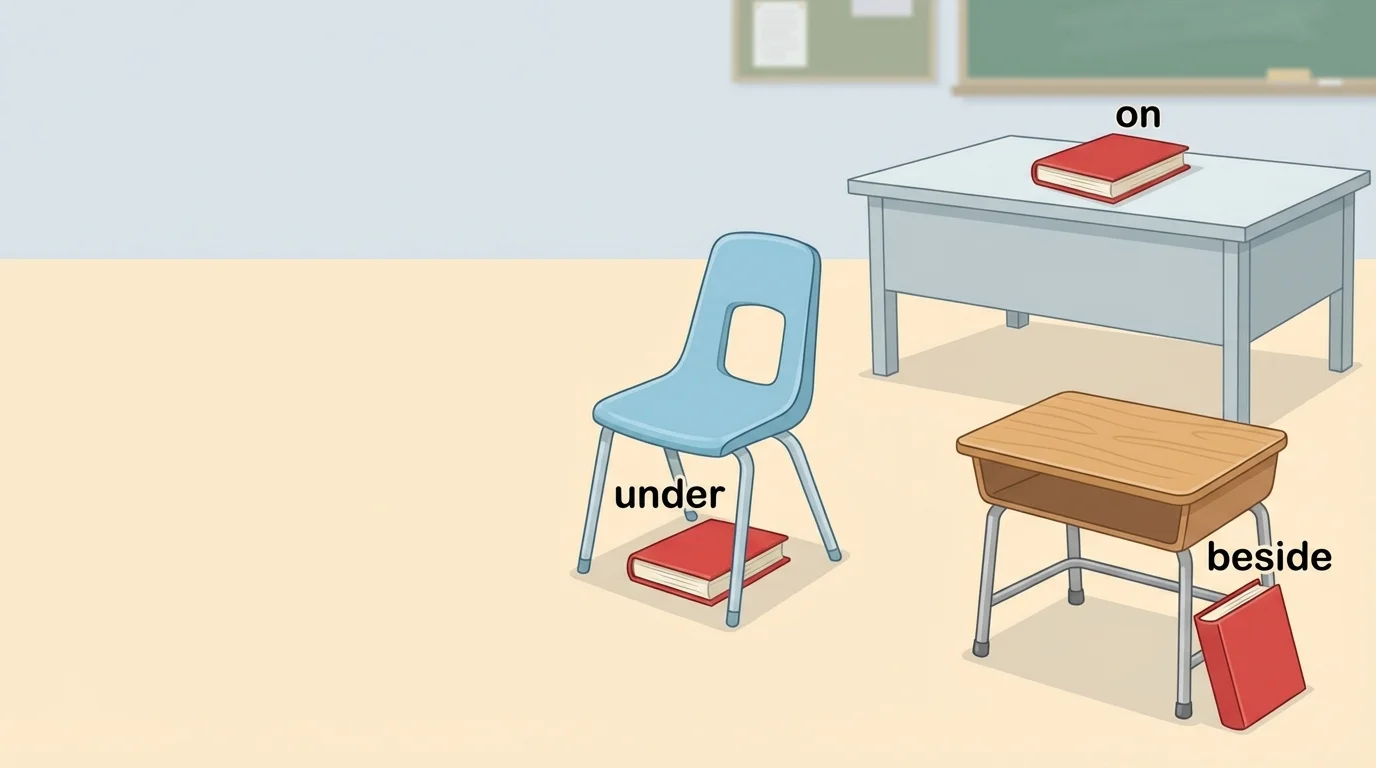
Order words and place words work together. "First put the block under the table, then stand behind the line" tells both when and where. As we saw earlier in [Figure 1], the order of the steps matters. Location words help make each step clear.
| Type of word | Examples | How it helps |
|---|---|---|
| Order words | first, next, then, after | Tells which step comes before another step |
| Place words | on, under, beside, behind | Tells where something should go or where to move |
Table 1. Examples of order words and place words used in two-step directions.
Two-step directions happen all around you. A teacher may say, "Write your name and color the circle." A family member may say, "Hang up your coat and wash your hands." A coach may say, "Grab a ball and stand on the line."
These directions are useful because they help people do tasks smoothly. When everyone listens and responds, the classroom feels calm and organized. When everyone gives clear directions, jobs get done faster.
Your brain works hard when you follow directions. It listens, remembers, and plans actions very quickly, often in just a few seconds.
Even games use two-step directions. A friend might say, "Hop to the cone and touch it." To play correctly, you must listen, remember, and act in order.
Sometimes directions are hard to follow. The speaker may be too far away, too quiet, or speaking too fast. The direction might also have words you do not know.
When that happens, stop and listen again. Ask the speaker to repeat the direction. You can also say the direction back in your own words. For example: "First I get my scissors, then I sit down. Is that right?" This helps check understanding.
You already know how to take turns when speaking and listening. That same skill helps with directions because one person speaks while the other person listens carefully.
Another helpful idea is to focus on one step at a time while still remembering the order. Do the first action, then the second action. If you switch them, the meaning may change.
Giving and following directions is not only about actions. It is also about respect. A respectful speaker uses polite words like please and speaks kindly. A respectful listener looks at the speaker and waits until the speaker is finished.
Safety matters, too. When a trusted adult gives a safety direction such as "Hold the rail and walk down the steps," it is important to follow both parts carefully. Listening closely can help keep everyone safe.
As children grow, they use oral communication in more ways. They explain ideas, ask questions, retell stories, and give directions. Learning to give and follow simple two-step directions builds strong speaking and listening skills for all of these jobs.
