Have you ever heard just one word like beach and suddenly thought of sand, waves, shells, and sunny days? Your brain is amazing. It can wake up ideas you already know and use them to help you understand something new. Readers do this all the time when they read books, articles, and other informational texts.
When we read, we do not start with an empty mind. We bring our own ideas, memories, and facts with us. This background of ideas is called schema. A schema is what you already know about something.
If you read a book about dogs, you may already know that dogs bark, wag tails, and need food and water. That helps you understand the book faster. If you read a book about snow, and you have played in snow before, your brain can connect the words in the book to what you already know.
Schema means the ideas and knowledge you already have in your mind. Background knowledge is what you have learned before about a topic. Readers use both to understand new information.
Background knowledge can come from many places. You may learn from your family, school, a walk outside, a video, a museum, or another book. Every time you learn something new, your brain has more to use later when you read.
[Figure 1] Before reading, strong readers get their brains ready. This is called previewing. A reader can look at the title, the cover picture, and the headings to get clues about the topic. These clues help wake up schema before the first sentence is even read.
Let's say the title is All About Frogs. You might think, "I know frogs jump," or "I know frogs live near water." Now your brain is ready to connect new facts to old facts. Maybe the book teaches that some frogs can climb trees. That new detail fits with the topic already in your mind.
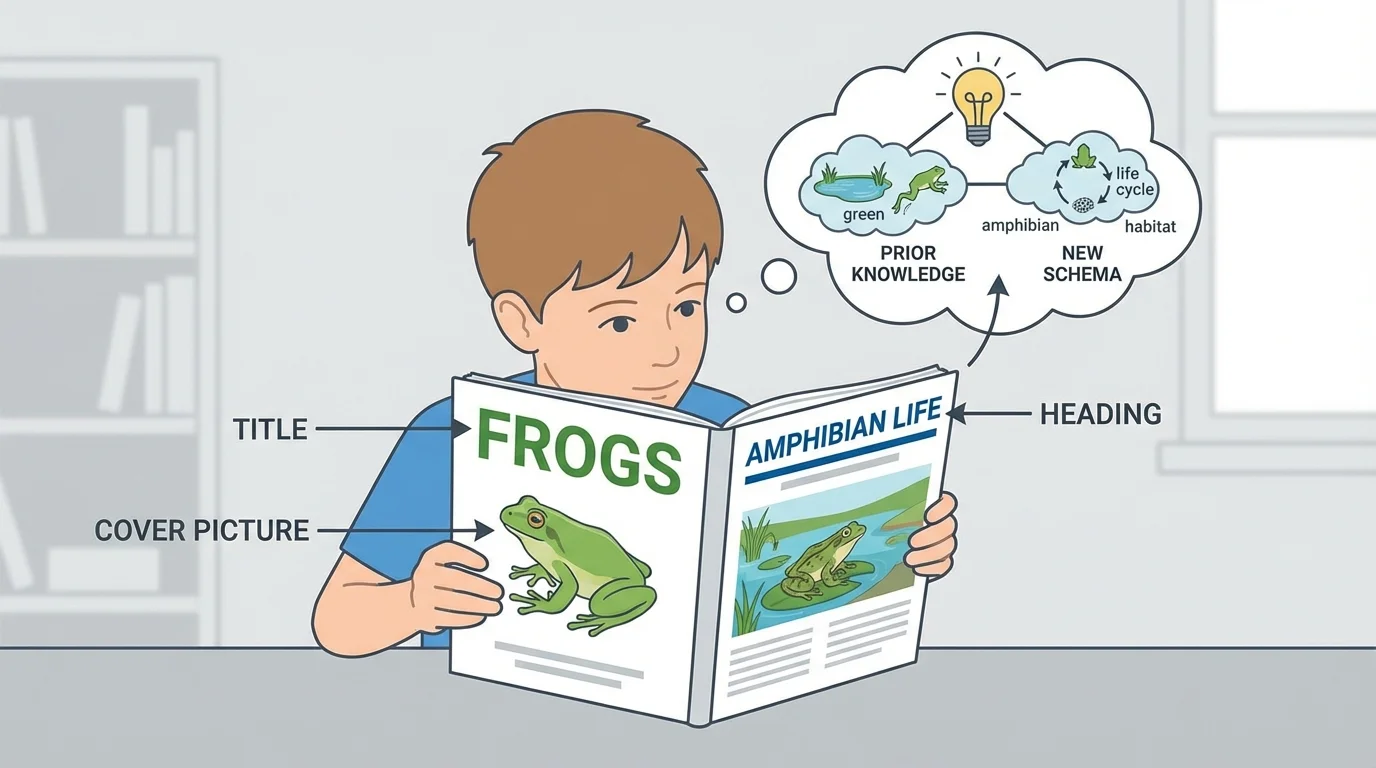
You can also ask yourself simple questions before reading: "What do I know about this topic?" "What do I think I might learn?" "Have I seen this before?" These questions help your thinking get started.
You already know that pictures and titles give clues. When you use those clues before reading, you understand the text better.
Sometimes you know a lot about a topic. Sometimes you know only a little. Both are okay. The important part is to stop and think before reading begins.
[Figure 2] Good readers keep thinking while they read. They do not just look at words. They connect new facts to what they already know. In this example, the reader learns about plants and connects the information in the text to a real garden. This kind of connection helps the text make sense.
For example, a book may say, "Plants need sunlight to grow." If you have seen a plant near a window, you can connect that detail to real life. You may think, "Yes, plants need sun." That makes the sentence easier to understand and remember.
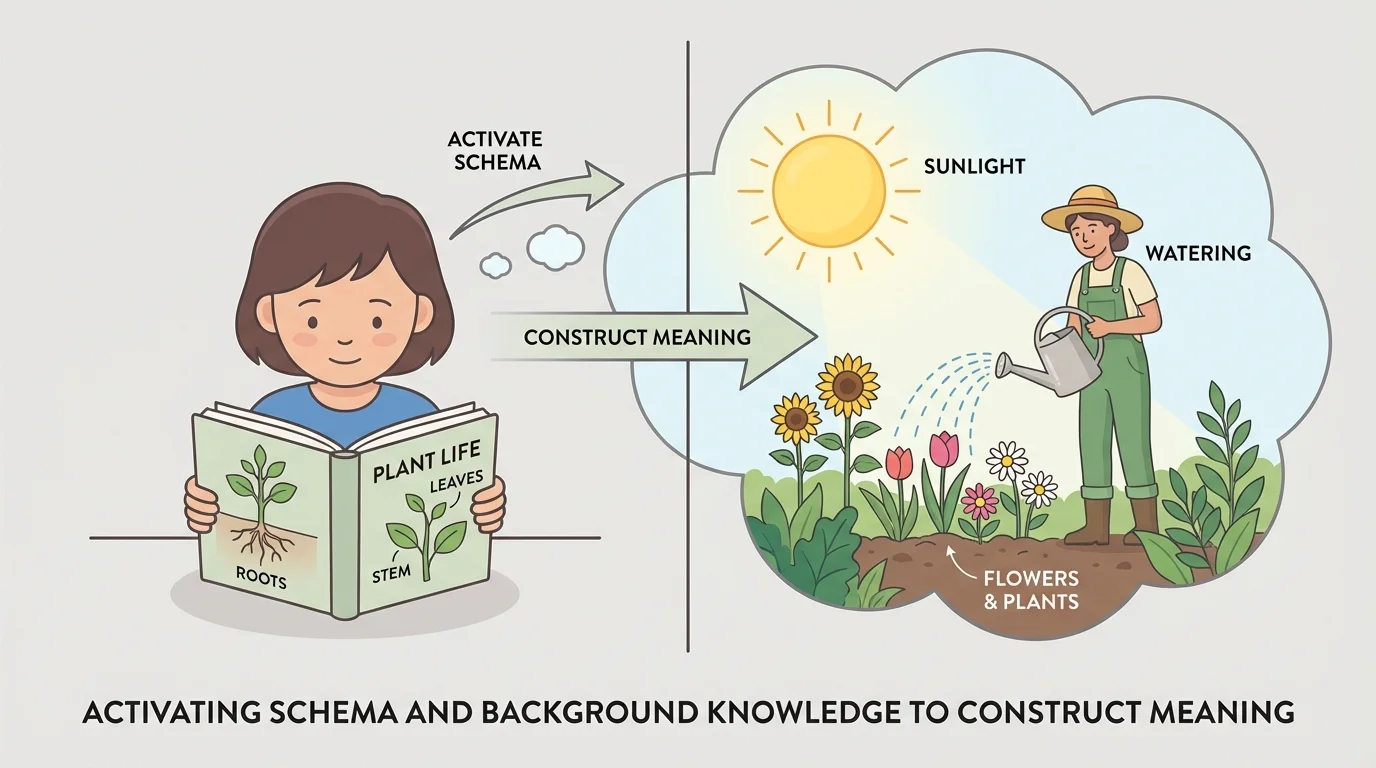
Sometimes the text teaches something new that changes your thinking. Maybe you thought all plants need lots of water, but then you read that cacti need only a little water. Now your schema grows. Reading is not only using old knowledge. It is also adding new knowledge.
Making connections while reading helps readers understand and remember. A reader may connect the text to something seen in real life, learned in class, or read in another book. Then the reader checks: "Does this new detail fit what I know, or do I need to change my thinking?"
When readers do this, they build meaning. Meaning is the understanding a reader makes from the text. Meaning grows when words, details, and background knowledge work together.
What if the topic is brand new? Maybe you are reading about penguins in Antarctica, and you have never learned much about that place. You can still start building meaning. Look for pictures, labels, headings, and important words. These help you gather clues.
You can also listen for facts you do know. If the book says Antarctica is very cold, and you know penguins live in cold places, that is a starting point. One small idea can help you understand the next idea.
Some readers think they must already know everything about a topic before they read. That is not true. Reading is one of the best ways to build new background knowledge.
If a text feels tricky, slow down. Reread a sentence. Look closely at a picture. Think about the topic. Ask, "What is this mostly teaching me?" These are smart ways to keep understanding.
[Figure 3] Informational texts teach with facts. Readers need to notice the key details that matter most. Key details fit together to teach something important about a topic. When readers connect these details to schema, the text becomes clearer.
Suppose a text is about bees. It may tell you that bees visit flowers, carry pollen, and live in hives. These details belong together. They help you understand what bees do. A tiny extra detail, like the color of one flower in one picture, may not be as important as the facts that teach the big idea.
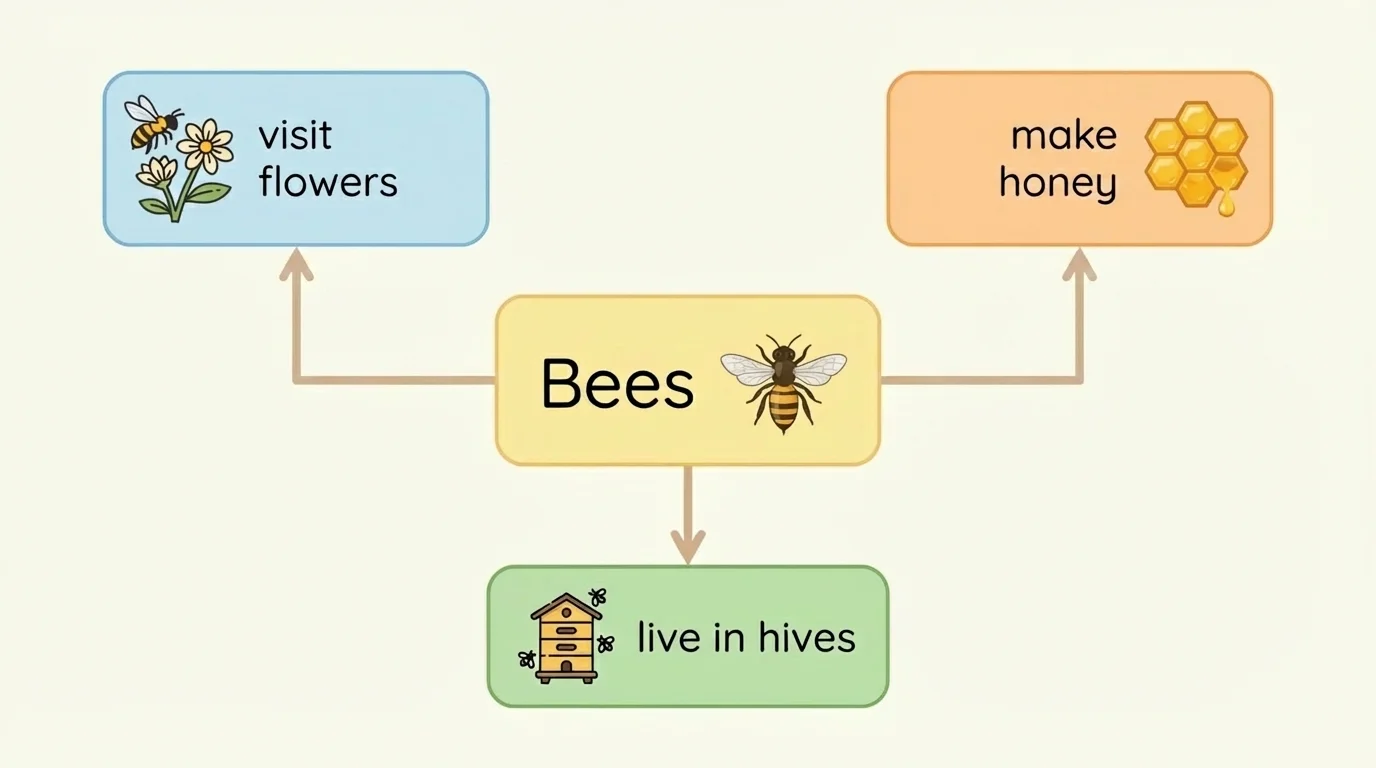
Readers use key details to figure out what a text is mostly about. They ask, "Which facts are teaching me the most?" If the text is about weather, important details might tell how rain forms, what clouds do, or how wind moves. Those details build understanding.
Earlier, [Figure 1] showed how previewing gets the brain ready before reading starts. Then, as seen in [Figure 2], background knowledge helps the reader connect new details to real life. Now the key details in [Figure 3] help the reader put the information together into one clear idea.
Example: Using schema with a nonfiction text
A child reads a short book about bears.
Step 1: Think before reading.
The child says, "I know bears are animals. I know some bears have fur and live outside."
Step 2: Read key details.
The book says bears can find food, sleep in dens, and some hibernate in winter.
Step 3: Build meaning.
The child thinks, "This book teaches how bears live and stay safe."
The child understands the text better because old knowledge and new details work together.
That is how readers move from separate facts to understanding. They do not collect details like loose puzzle pieces. They fit the pieces together.
Your schema keeps growing. Every new book, trip, conversation, and lesson adds more knowledge. Then the next time you read, you have more to help you.
If you read books about weather all week, you may learn about clouds, wind, rain, and storms. Soon, a new weather book will make more sense because your background knowledge is stronger. Reading helps knowledge grow, and knowledge helps reading grow. They work together again and again.
"The more you know, the more you can learn."
Strong readers are active thinkers. They look at clues before reading, connect ideas while reading, and use important details to understand what the text teaches. Even a brand-new topic can become easier when you stop, think, and use what you know.
