Have you ever started talking and your listener said, "What are you talking about?" Writers can guide readers right away. A good opinion piece begins by telling the reader the topic or the name of the book. Then the writer shares an opinion. This helps the reader know exactly what the writing is about.
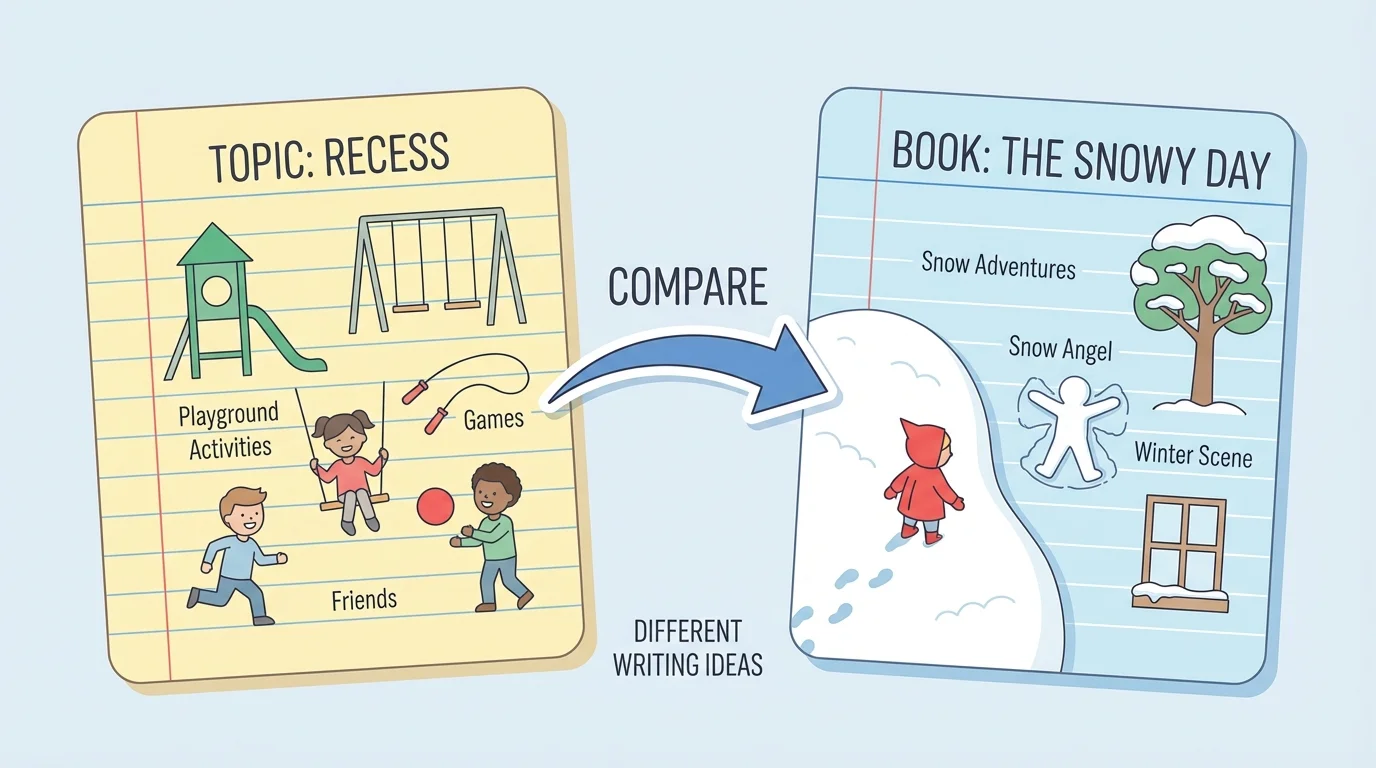
When you write an opinion, your first job is to introduce the reader to your idea. As [Figure 1] shows, a writer names the subject first. If you are writing about recess, say recess. If you are writing about a book, say the book's title.
This beginning is called an introduction. An introduction is the start of your writing. It lets the reader know, "This is what I am writing about."
Topic is the subject of your writing. A book title is the name of the book you are writing about. An opinion is what you think or feel.
You can introduce a topic in a few simple words. You can write, "I am writing about recess." You can also write, "My favorite lunch is pizza." In both sentences, the reader knows the subject right away.
You can introduce a book by naming it. You might write, "The Snowy Day is a good book." Now the reader knows which book you mean.
After you name the topic or book, tell your opinion in a clear sentence. Keep your words simple. Your reader should know what you think.
Here are some opinion words you can use: best, good, fun, favorite, and boring. These words help show how you feel.
A strong opinion beginning has two jobs. First, it tells the topic or names the book. Second, it tells what the writer thinks about it. When both parts are there, the reader is ready for the reasons that come next.
For example, "Recess is the best part of school." This sentence names the topic, recess, and gives an opinion, the best part. Another example is "Cats make great pets." This sentence names the topic, cats, and tells an opinion, make great pets.
When you write about a book, you can do the same thing: "The Snowy Day is my favorite book." The reader learns the book title and your opinion in one sentence.
Sometimes you write about a topic, not a book. A topic can be something from school, home, or the world around you. You might write about animals, food, games, or seasons.
Here are some simple openings for topic writing:
"Dogs are fun pets."
"Summer is the best season."
"Chocolate milk tastes better than plain milk."
Each sentence starts by naming the topic. Then it shares an opinion. This makes the writing easy to follow.
Examples of topic introductions
Step 1: Name the topic.
Topic: recess
Step 2: Add your opinion.
"Recess is fun."
Step 3: Add a reason.
"Recess is fun because I can run and play."
You can do this with many topics. First say what you are writing about. Next say what you think. Then tell why.
As you saw earlier in [Figure 1], naming the subject at the beginning helps the reader know whether you are talking about a topic like recess or a book like The Snowy Day.
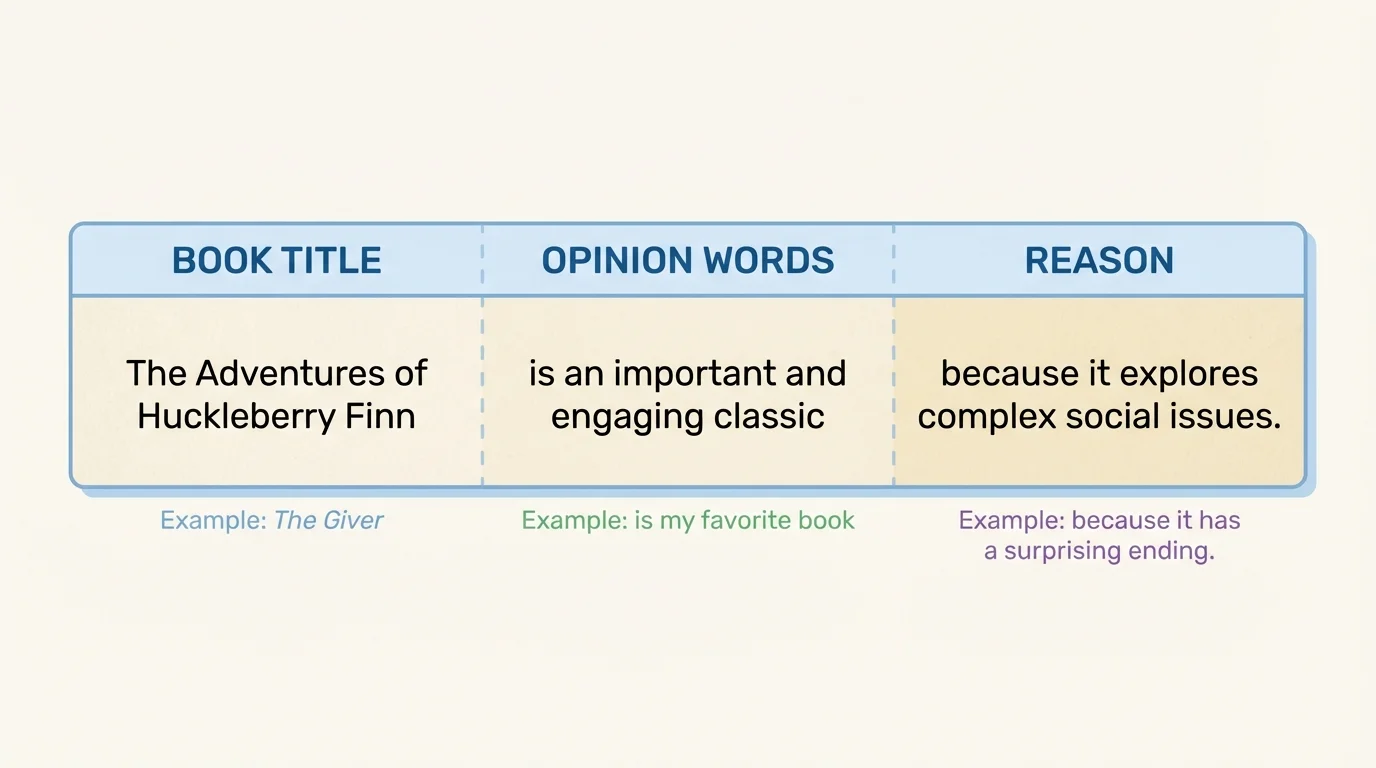
When you write about a book, start by saying the book's title. As [Figure 2] illustrates, a simple book opening includes the book title, your opinion, and a reason. Then say your opinion about it.
For example, you could write, "The Very Hungry Caterpillar is a great book because the pictures are bright and colorful." The title tells what book you mean. The words great book tell your opinion. The reason tells why you think that.
Another example is "I like Frog and Toad Are Friends because the stories are funny." This opening is clear and easy to understand.
When you name a book, be sure to use the correct title. That helps your reader know exactly which book you read.
Many book reviewers, even adult reviewers, begin by naming the book right away. That small writing move helps every reader stay on track from the very first sentence.
After you name the book and say your opinion, you can add details from the story. If you say a book is funny, you can tell which part made you laugh. If you say a book is good, you can tell what you liked best.
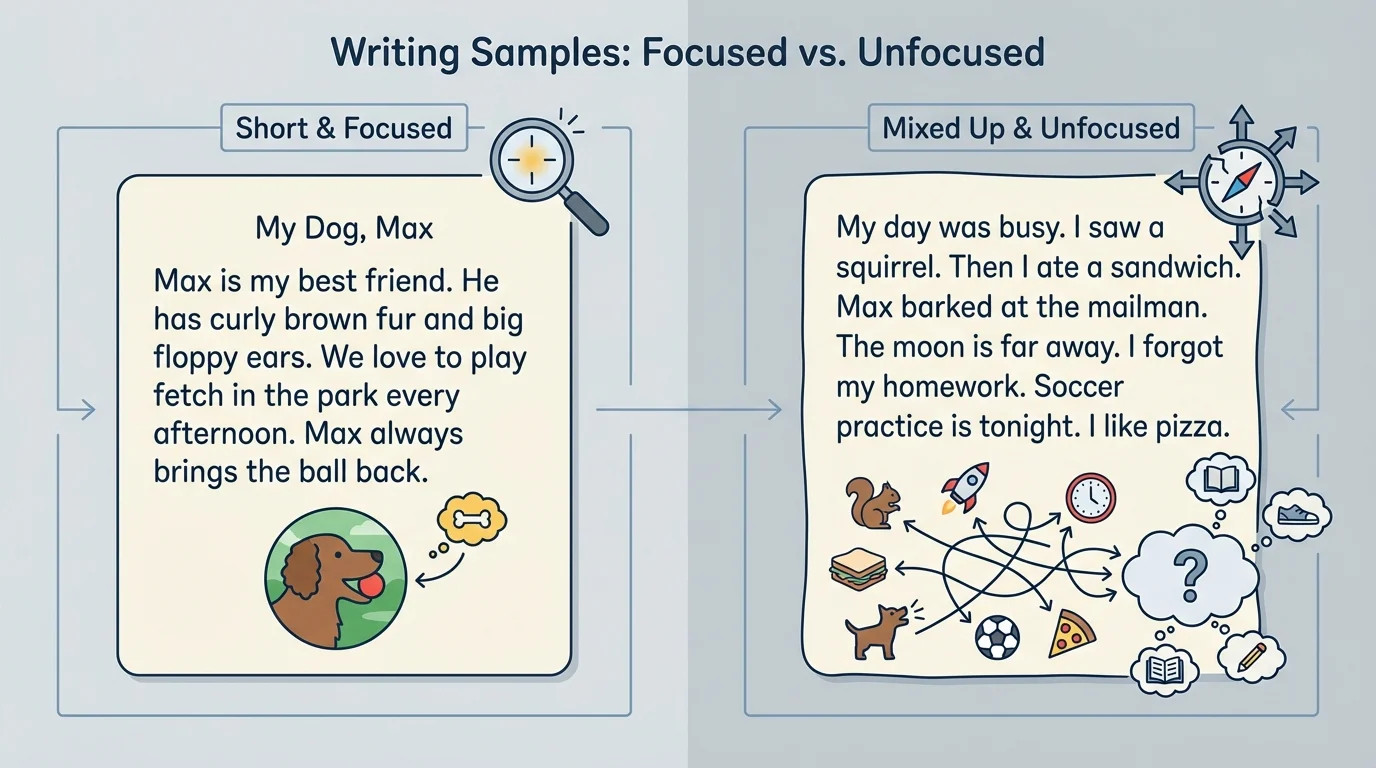
A good beginning is short, clear, and focused. One idea at a time works best in a clear opening. If you try to say too many things at once, your reader may get mixed up.
Look at these two examples. "Dogs are the best pets because they are playful." This is clear. Now look at this: "Dogs and lunch and recess are all good and I like books too." This is confusing because it jumps from one idea to another.
Stay on one topic. If you are writing about pizza, keep writing about pizza. If you are writing about a book, keep writing about that book.
Use simple sentences. Grade 1 writers do not need long, fancy words. Clear writing is strong writing.
Later, when you add reasons, the clear beginning still helps. The reader can connect each reason back to your opinion. That is why a strong start matters so much.
Here are some full opinion beginnings:
"Recess is the best part of school because I can play with my friends."
"Apples are a tasty snack because they are sweet and crunchy."
"The Snowy Day is a good book because the pictures are beautiful."
Each one begins by introducing the topic or naming the book. Then each one states an opinion and gives a reason.
Model openings
Step 1: Topic writing
"Ice cream is the best dessert because it is cold and sweet."
Step 2: Book writing
"Corduroy is a wonderful book because the bear is kind."
Step 3: Keep it clear
Each opening names the subject first and then gives the opinion.
When you write, think about your reader. The reader cannot see inside your mind. You must tell the reader your topic or your book at the start. Then your opinion writing will make sense from the very beginning.
The examples in [Figure 2] and [Figure 3] both remind us that strong opinion writing starts with a clear subject, a clear opinion, and a matching reason.
