Have you ever heard a story, looked at a plant, or watched a bug crawl by and suddenly thought, "Why?" That little wondering is powerful. It is the start of learning. In school, we can say our questions out loud or have someone help us write them down. When we ask good questions, we open a door to new ideas.
An inquiry question is a question that helps us learn more about something. It is not just any question. It is a question we ask because we want to find out, understand, or explore. An inquiry question helps us think, listen, look closely, and search for answers, as shown in [Figure 1] when a class notices something and turns that noticing into a question.
If the class is learning about weather, an inquiry question might be, "Why does it rain?" If the class is reading a story, an inquiry question might be, "Why did the character feel sad?" If the class is studying animals, an inquiry question might be, "How do birds build nests?" These questions help us keep learning.
Inquiry question means a question we ask to help us find out more. Dictate means to say words out loud so someone else can write them for you. Research means looking for information to answer a question.
Sometimes a student can write the question. Sometimes a student is still learning to write and can dictate the question to a teacher, family member, or class helper. What matters most is that the question gets shared.
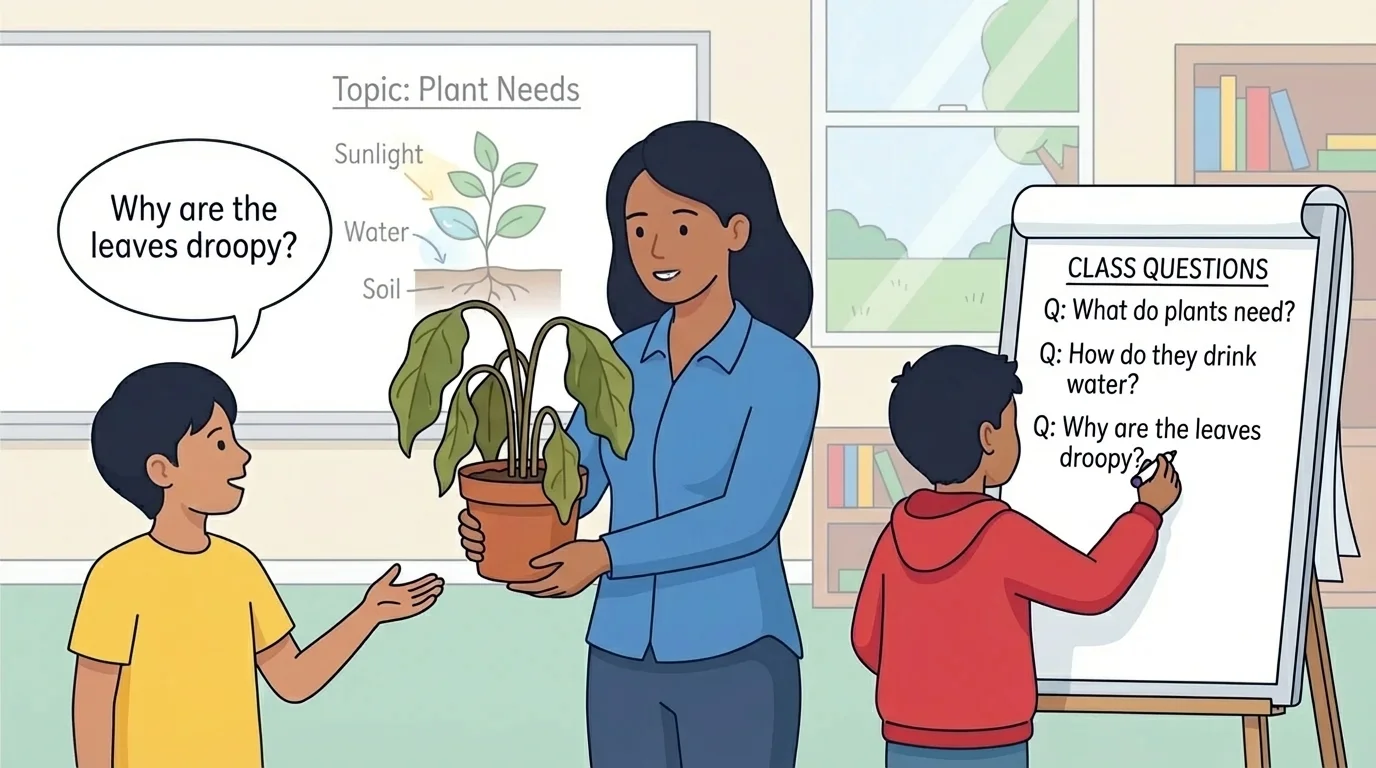
Questions can come at many times in the day. A question may pop up while the teacher is reading aloud, during science time, while looking at a picture, or when talking with classmates. Good learners notice these moments. They stop and think, "What do I want to know?"
For example, during a lesson about butterflies, a child may wonder, "How does a caterpillar change?" During a math talk, a child may ask, "Why did you count that way?" During art, a child may ask, "What happens if I mix these colors?" Each question grows out of the learning that is already happening.
Some questions ask for facts. Some ask for reasons. Some ask how to do something. Some ask to compare two things. Even simple questions matter if they help the class understand more clearly.
Young children often learn a great deal just by asking questions. One thoughtful question can help a whole class notice something important.
As we saw earlier in [Figure 1], one student's question can become a class question. That means everyone can listen, think, and help find an answer together.
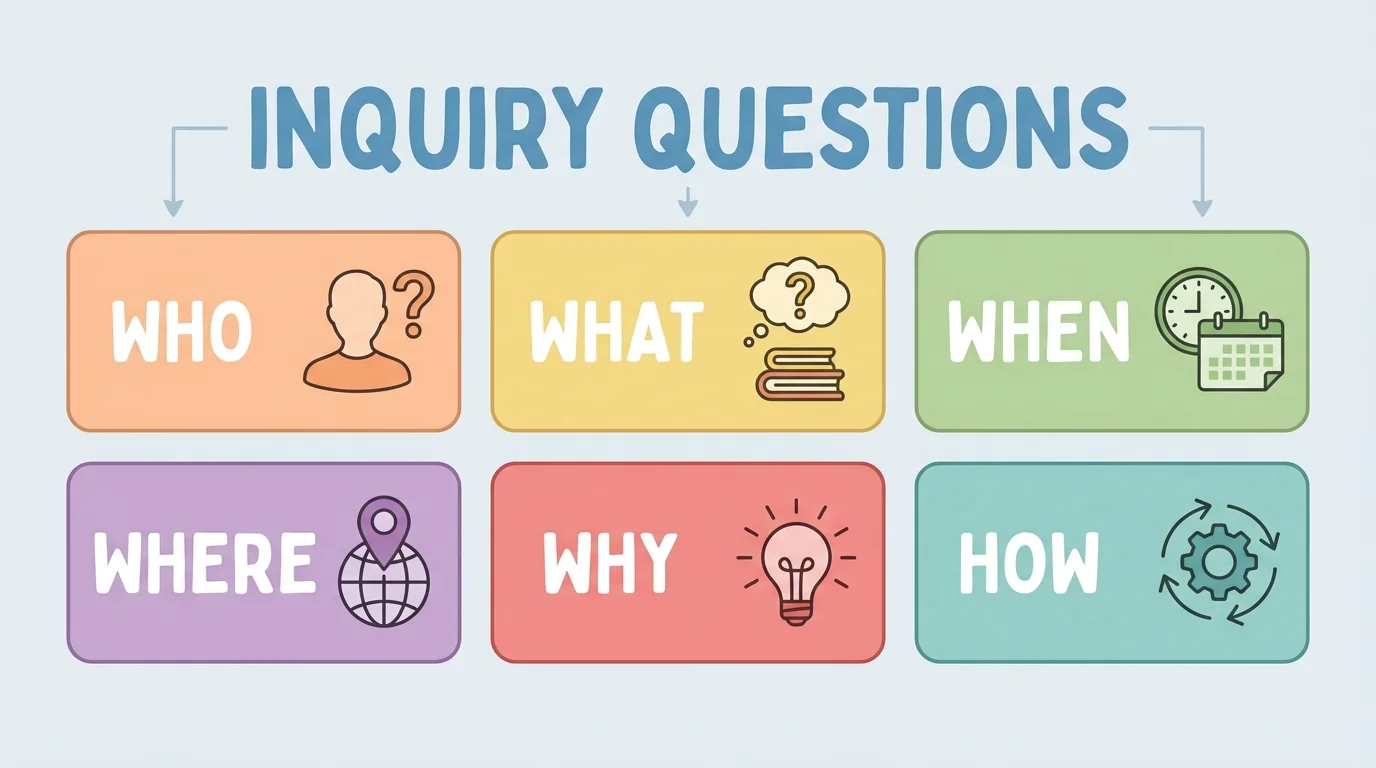
[Figure 2] A good question is clear and about the topic. One way to make a clear question is to use question words. These words help us know what kind of answer we are looking for. The question words chart shows common starters that help students build strong questions.
Here are some question words: who, what, when, where, why, and how. A question can begin with one of these words. "What do worms eat?" "Where do penguins live?" "Why do shadows change?" "How can we make the tower stronger?"
It also helps to use words that match what the class is learning. If the lesson is about seeds, a clear question is "What does a seed need to grow?" A less helpful question would jump to something different, like asking about trucks during the seed lesson. Staying on topic helps the class investigate the right idea.
If writing the whole question feels hard, a child can say the question out loud first. Then the teacher can help write it. A student might say, "I want to know why the ice melted," and the teacher can write, "Why did the ice melt?" The spoken wondering becomes a written question.
Turning a wondering into a question
A class is watching a snail move across a leaf.
Step 1: Notice something.
A student notices that the snail moves very slowly.
Step 2: Say the wondering.
The student says, "I wonder why it moves so slowly."
Step 3: Turn it into a question.
The class writes, "Why does the snail move slowly?"
The wondering is now a question the class can try to answer.
In school, students often do shared research. That means the class works together to find answers. The teacher may read a book aloud, show a short video, display photos, or help students remember what they already know. Then the class gathers ideas that match the question.
If the question is "What do plants need?" students might remember sunlight, water, air, and soil. The teacher might write these ideas on a class chart. If the question is "How do firefighters help?" students may listen to a book, look at pictures, and talk about what they learned.
When we ask questions together, we do not need to know every answer right away. The question comes first. The answer can come from reading, talking, observing, remembering, or collecting information.
Questions help learning grow. A question gives us a purpose. Instead of just hearing many facts, we listen for information that helps answer something important. This makes reading, watching, and discussing more meaningful.
Classes can also keep questions in one place, such as a chart, notebook, or board. Then students can come back to the questions later. Some questions are answered quickly. Some take more time.
Not all inquiry questions sound the same. Some are expressions of wonder. A wondering question begins with curiosity, like "I wonder why ducks float." Some are fact questions, like "What do ducks eat?" Some are how or why questions, which ask for deeper thinking, like "How do ducks stay dry?" or "Why do ducks have webbed feet?"
Some questions compare two things. A class learning about seasons might ask, "How is summer different from winter?" A class studying stories might ask, "How are the two characters alike?" Comparison questions help students look carefully at details.
Open questions often lead to more talking and thinking. For example, "Why do leaves change color?" invites more discussion than a yes-or-no question like "Are leaves green?" Both kinds can matter, but inquiry questions often help us explore more.
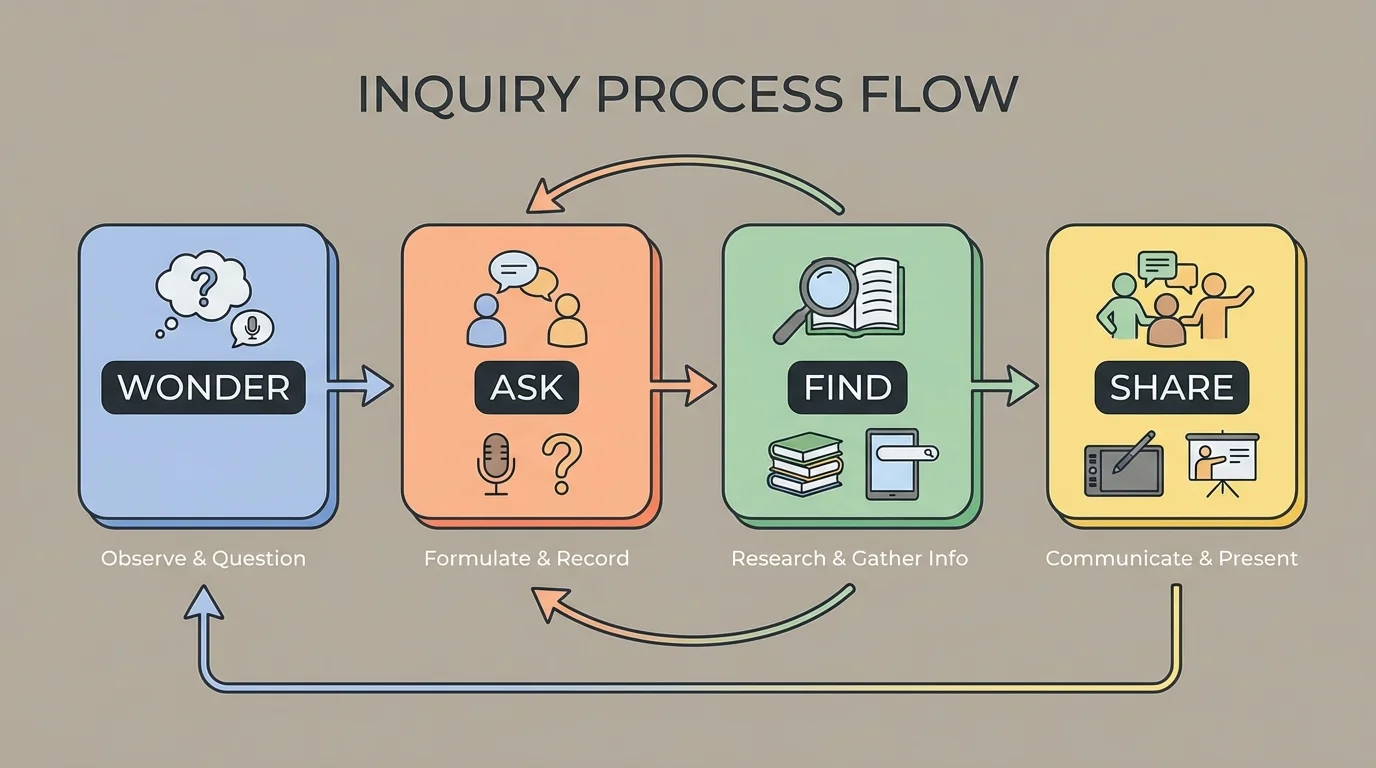
[Figure 3] After a question is asked, the class begins an investigation. This means trying to find the answer. The simple path starts with a wondering, moves to a question, then to finding information, and finally to sharing. That is how research and inquiry often work in early grades.
Students may recall something they already know. They may gather information by listening to a book, looking at real objects, studying pictures, or talking with others. Then they can share what they found by speaking, drawing, labeling, or writing a sentence.
Suppose the class asks, "Why do we wear coats in winter?" Students can think about cold weather, remember personal experiences, and listen to an informational book. Then they can answer, "We wear coats to help keep our bodies warm." The question leads the search for information.
Later, the class may use the same process again. Learning does not stop after one answer. One answer can lead to a new question, and a new question can begin another investigation.
Class example: answering a question together
The class asks, "How do birds build nests?"
Step 1: Ask the question.
The teacher writes the question on chart paper after students say it aloud.
Step 2: Gather information.
The class looks at photos, hears a book, and talks about twigs, grass, and mud.
Step 3: Share the answer.
Students say, draw, or write that birds use different materials to build nests.
The question helps the whole class stay focused on the same learning goal.
Asking questions takes courage. Sometimes students worry that their question is too small or too silly. But thoughtful questions help everyone. If something is confusing, asking about it can help many classmates too.
It is also important to listen when others ask questions. One student may think of a question another student did not notice. Teachers often welcome these moments because they show that students are paying attention and thinking deeply.
If you cannot write a question by yourself yet, you can still be a strong learner. You can speak clearly and ask an adult to write your words. That is part of participating in research and inquiry. Your ideas matter, whether you write them or dictate them.
Remember: Good learners do more than hear information. They notice, wonder, ask, and try to find answers. A question is one of the best tools for learning.
When students write or dictate questions during instruction, they become active learners. They are not just waiting for facts. They are helping shape the learning by noticing what they want to understand next.
