Have you ever read a book page that taught you many facts, and then wondered, "What is this whole page mostly about?" Good readers are like detectives. They notice important words, details, and patterns. Then they figure out the main topic of the whole text and the smaller focus of each paragraph.
Informational texts often have more than one paragraph. Each paragraph gives a part of the information. When we read all the paragraphs together, we can find the main topic of the entire text. When we look closely at just one paragraph, we can tell what that paragraph is mostly about.
The main topic is what the whole text is mostly about. It is not every single fact in the text. It is the big subject that holds the whole text together.
For example, if a text has three paragraphs about frogs, the whole text might be mostly about frogs. One paragraph may tell where frogs live. Another may tell what frogs eat. Another may tell how frogs grow. All of those paragraphs fit under the same main topic: frogs.
Main topic means the subject the whole text is mostly about.
Paragraph focus means what one paragraph is mostly about.
Detail means a small piece of information that tells more about the topic.
A main topic can be stated in just a few words. It is usually not a complete sentence. For example, "ocean animals," "how plants grow," or "school gardens" can all be main topics.
A topic is different from a tiny fact. If a text is about penguins, the topic is not "penguins slide on ice." That is just one detail. The main topic is bigger: penguins.
Each paragraph in a text has a job to do. It tells one main part of the whole topic. The focus of a paragraph is the main thing that paragraph is teaching.
Think of a bicycle. The whole bicycle helps you ride, but each part has its own job. The wheels roll. The seat helps you sit. The handlebars help you steer. In the same way, the whole text has one big topic, and each paragraph has its own focus.
Suppose a text is about apples. One paragraph might be about apple trees in spring. Another paragraph might be about how apples are picked. A third paragraph might be about foods made from apples. Each paragraph focus is different, but they all connect to the same main topic: apples.
You may already know that a paragraph is a group of sentences about one idea. This helps when you read a longer text, because each paragraph usually stays centered on one part of the topic.
When you name a paragraph focus, keep it short and clear. You do not need to repeat every detail. You only need to tell what that paragraph is mostly about.
Readers do not guess. They look for clues. One clue is the title. The title often tells the topic right away. If the title is Busy Bees, the text is probably about bees.
Another clue is repeated words. If the words "bees," "hive," and "honey" appear again and again, those words point to the topic. Important words often repeat because the author keeps teaching about the same subject.
Readers also pay attention to key details. These are the most important facts. Key details help explain the topic. If a paragraph says, "Bees visit flowers. They collect nectar. They carry pollen," the paragraph focus may be how bees help flowers and gather food.
The first sentence of a paragraph can help too. Sometimes it tells the paragraph's main idea right away. The last sentence can also help because it may remind the reader what the paragraph was about.
Pictures, headings, and captions may give clues in some texts. But readers should always check the words in the paragraph too. The best answer comes from the text itself.
Some nonfiction books repeat the same important word many times on purpose. That repetition helps readers stay focused on the subject and learn new facts about it.
As you read, you can ask two questions: What is the whole text mostly about? and What is this paragraph mostly about? Those two questions help you stay on track.
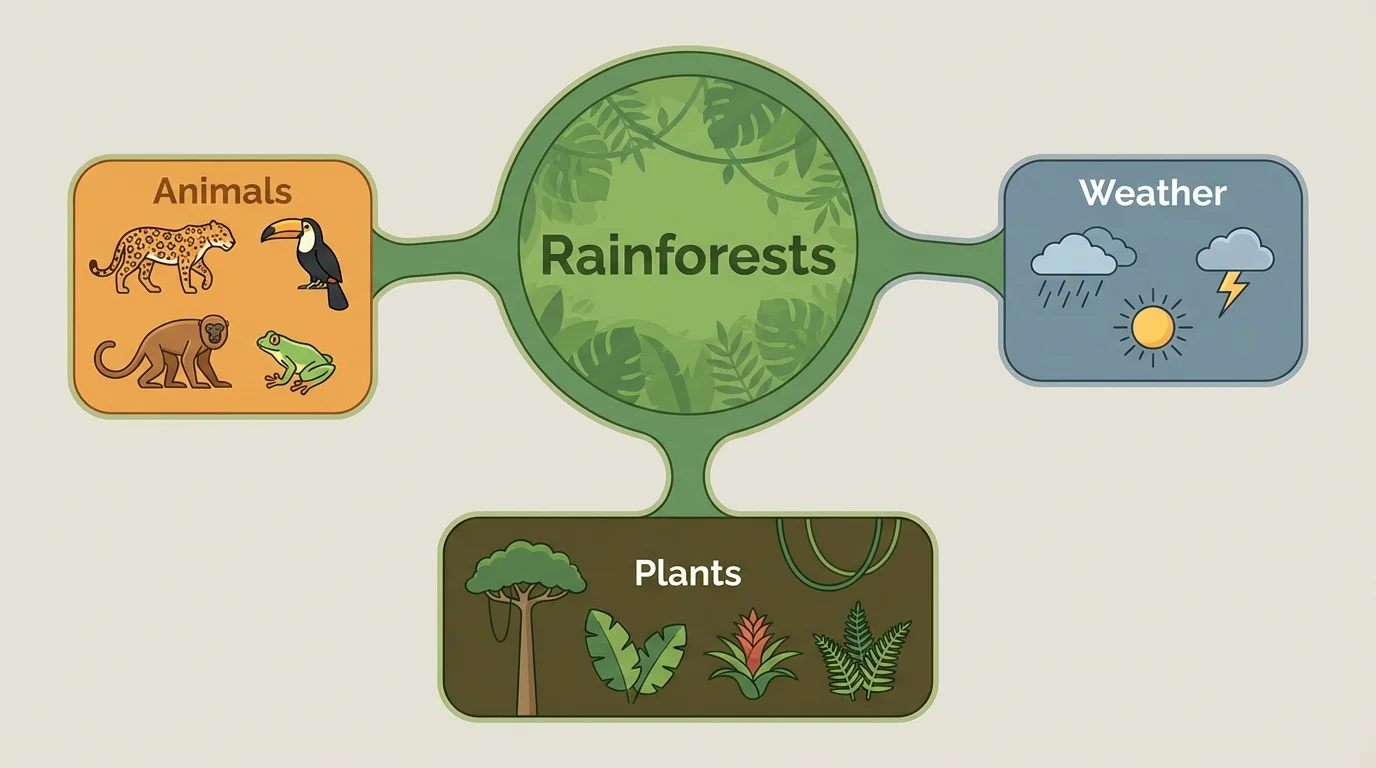
One whole text can have one big topic and several smaller parts, as [Figure 1] shows. The big topic is like the top of an umbrella. The paragraph focuses are like the smaller parts under it. They all belong together.
For example, a text about rainforests may have one paragraph about animals, one about weather, and one about plants. Those paragraph focuses are not random. They all help the reader learn about rainforests as a whole.
If one paragraph does not fit the big topic, it probably does not belong in that text. That is another clue. Good informational writing stays connected to its main topic.
When readers understand this relationship, they do not get lost in lots of facts. They can sort the information. They know which details belong to which paragraph focus, and which paragraph focuses belong to the whole text.
Later, when you read science or social studies, this skill helps a lot. A chapter may be about one big topic, and each paragraph or section teaches one part. The rainforest example in [Figure 1] makes this easier to see because each smaller part connects back to the same big subject.
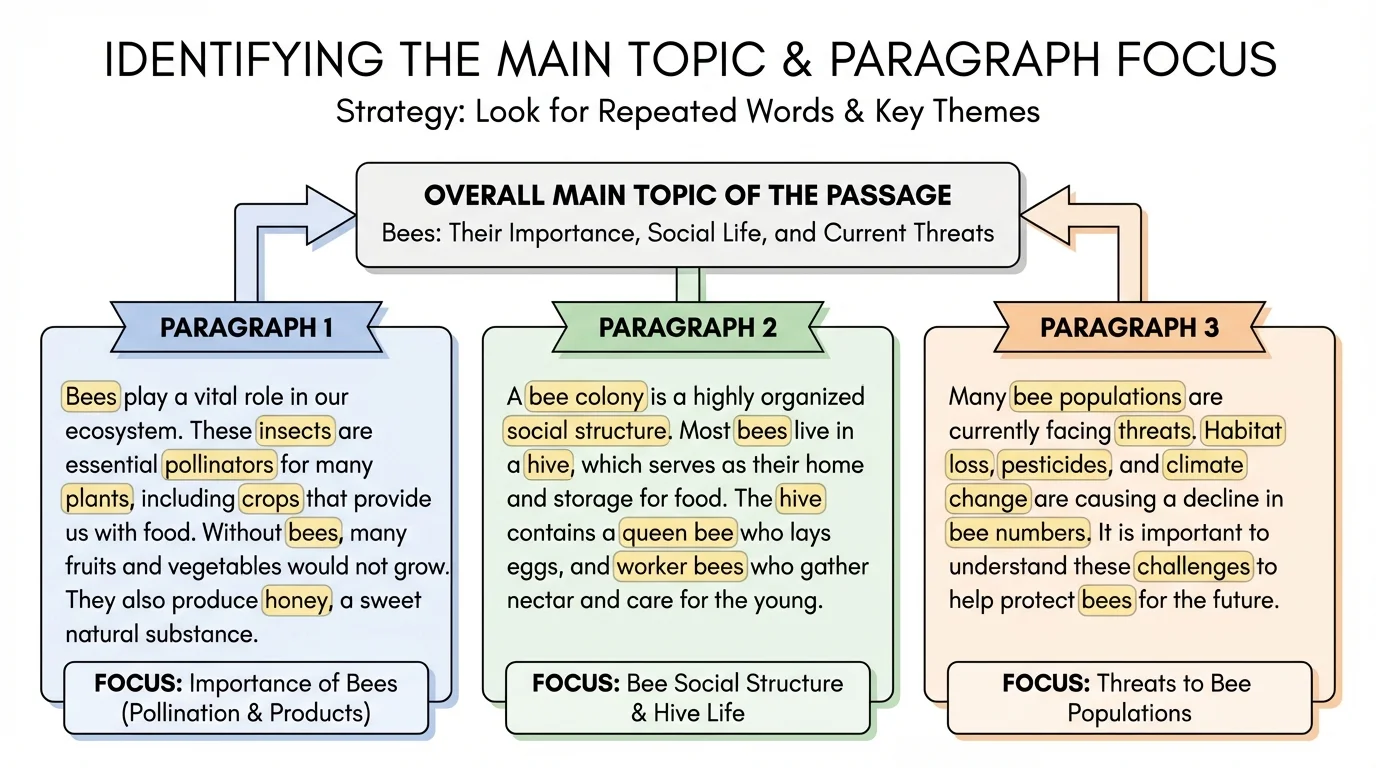
[Figure 2] shows how repeated words and separate paragraph ideas help readers identify the whole topic and each paragraph's focus.
Let's look closely at a short multiparagraph text about bees. Readers can track the whole topic and each paragraph's job by noticing repeated words and separate paragraph ideas.
Paragraph 1: "Bees are important insects. Many bees live together in a hive. They work as a group to care for the hive."
The focus of paragraph 1 is bees living and working in a hive. Important details include "live together," "hive," and "work as a group."
Paragraph 2: "Bees visit flowers to collect nectar. They also pick up pollen on their bodies. As bees move from flower to flower, they help plants make seeds."
The focus of paragraph 2 is how bees gather food and help plants. Important details include "collect nectar," "pick up pollen," and "help plants make seeds."
Paragraph 3: "People use honey made by bees. Beeswax can also be used to make candles and other things."
The focus of paragraph 3 is how people use things from bees. Important details include "honey," "beeswax," and "candles."
Now look at all three paragraphs together. They are all about bees. So the multiparagraph text has the main topic bees. Each paragraph adds a different part of learning about bees.
Example: Finding the whole topic and paragraph focus
Read this short set of paragraph ideas: paragraph 1 is about where turtles live, paragraph 2 is about what turtles eat, and paragraph 3 is about how turtles protect themselves.
Step 1: Look for what all the paragraphs share.
All three paragraphs are about turtles.
Step 2: Name the whole-text topic.
The main topic is turtles.
Step 3: Name each paragraph focus.
Paragraph 1: where turtles live. Paragraph 2: what turtles eat. Paragraph 3: how turtles stay safe.
This shows how one big topic can include several paragraph focuses.
When readers study a sample like this, they learn not to mix up one paragraph focus with the whole topic. The text about bees in [Figure 2] makes that clear because each paragraph has its own part, but all parts stay connected.
One common mistake is picking a detail instead of the topic. If a text is about dolphins, "dolphins click and whistle" is only one detail. The topic is dolphins.
Another mistake is choosing a topic that is too big. If a text is only about pumpkins, the topic is probably not plants. "Plants" is much broader. "Pumpkins" is a better match because it fits the text more exactly.
A third mistake is choosing a topic that is too small. If a paragraph says, "Pumpkins can be orange, white, or green," the paragraph focus is not just orange pumpkins. It is more likely pumpkin colors.
Choosing the right size answer
A good topic answer is the right size. It is not so big that it covers too many things, and it is not so tiny that it names only one fact. Readers look for an answer that matches most of the details in the paragraph or whole text.
You can test your answer by asking, "Do most of the details fit this topic?" If the answer is yes, your topic is probably a good one.
You use this reading skill in many places. In science, you may read a page about weather with one paragraph about clouds, one about rain, and one about wind. In social studies, you may read a page about communities with one paragraph about jobs and another about transportation.
You can use it when reading magazines, websites, posters, and books. It helps you understand information faster because you know what matters most.
This skill also helps when you talk or write about what you read. You can say the main topic of the whole text first, then explain the focus of each paragraph. That makes your thinking clear and organized.
Strong readers keep asking, "What is this mostly about?" They ask it for the whole text and for each paragraph. That simple question helps them understand more and remember more.
