Have you ever played catch and noticed that the game only works when everyone pays attention and tosses the ball back? A conversation works in a similar way. People share ideas back and forth, and the talk becomes stronger when each person listens and then adds something connected. In school conversations, strong speakers do not just say random thoughts. They listen carefully and build on what others say.
When people talk together, they can learn more than they would learn alone. One person might notice something in a story. Another person might remember a detail. A third person might make a smart connection. When these ideas fit together, the group understands more.
Building on others' talk helps conversations stay on topic. It also shows respect. When you connect your idea to someone else's idea, you show that their words matter. That makes group talk feel fair, thoughtful, and friendly.
A good conversation is not a race to speak first. It is more like a team activity where each speaker helps the next idea grow.
In class, this skill helps during partner talks, book discussions, science conversations, and sharing time. It helps you learn new information and helps other people learn from you too.
A link is a connection. In conversation, you make a link when your words connect to something another person said. As [Figure 1] shows, good classroom talk can move like a chain, with one idea leading to the next instead of bouncing in unrelated directions.
For example, if Maya says, "The boy in the story feels lonely," and Eli says, "I agree because he is sitting by himself at lunch," Eli is building on Maya's idea. He is not starting a brand-new topic. He is taking Maya's comment and adding a reason.
Another student might say, "I want to add to both of your ideas. He also does not smile in the picture." Now the conversation is growing. Each speaker links to the earlier remarks.
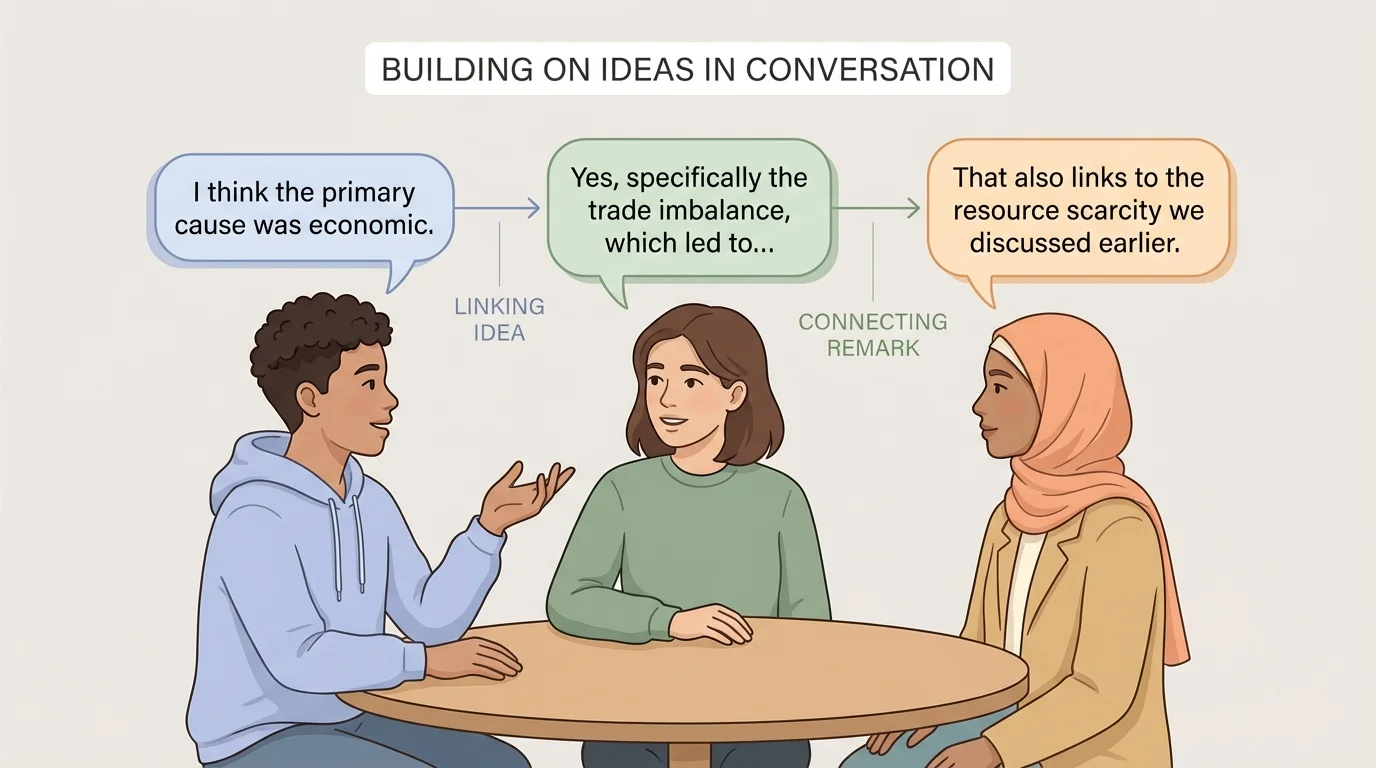
Build on others' talk means to listen to what someone says and then connect your own comment to it in a clear way. Active listening means listening with care by watching, thinking, and waiting for your turn before responding.
This does not mean you always have to agree. You can build on someone's talk by agreeing, adding a detail, asking a question, making a comparison, or politely saying a different idea. The important part is that your comment connects to the conversation already happening.
Sometimes children know what they want to say, but they need a helpful way to begin. Sentence starters can make speaking easier. These starters help you show exactly how your idea connects to someone else's.
Here are some useful ways to begin:
| Conversation move | Sentence starter |
|---|---|
| Agree and add | "I agree with ___ because ..." |
| Add a new detail | "I want to add that ..." |
| Connect two ideas | "That goes with what ___ said about ..." |
| Ask for more | "Can you tell more about ...?" |
| Compare ideas | "This is like what ___ said because ..." |
| Gently disagree | "I see it a little differently because ..." |
Table 1. Helpful sentence starters for linking comments in conversations.
Using a classmate's name can help make the connection clear. Instead of saying, "I think the dog is scared," you can say, "I agree with Jordan that the dog is scared, and I noticed its tail is down." That shows exactly which idea you are building on.
You do not need long, fancy sentences. Clear words are best. Short comments can still be powerful when they connect well.
Active listening, as [Figure 2] illustrates, happens before you even begin to talk. You listen with your ears, your eyes, and your mind. You pay attention to the speaker instead of planning a completely different comment.
Good listeners often look at the speaker, keep their bodies calm, and wait for the speaker to finish. They think about the idea they heard. Then they respond to that idea.
If you speak without listening, your comment may not fit. It might repeat the same thing, change the subject, or confuse the group. Listening helps your words make sense in the conversation.
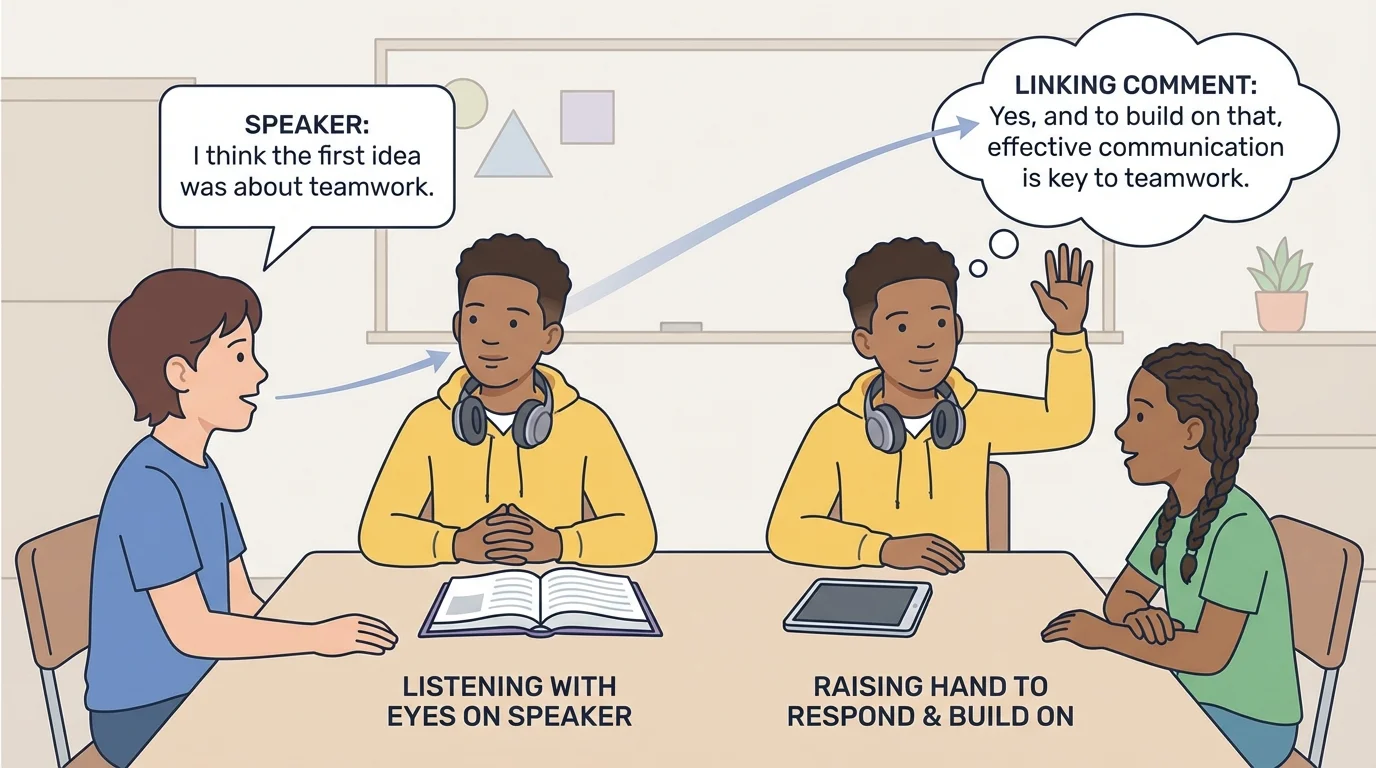
Remember that conversations have turns. One person speaks, another listens, and then the next person responds. Taking turns helps everyone hear and be heard.
A helpful way to think is: listen, think, connect, speak. First you hear the idea. Next you think about it. Then you decide how your idea connects. Finally, you speak.
There are several useful ways to connect your comments. Learning these different moves helps you join many kinds of classroom discussions.
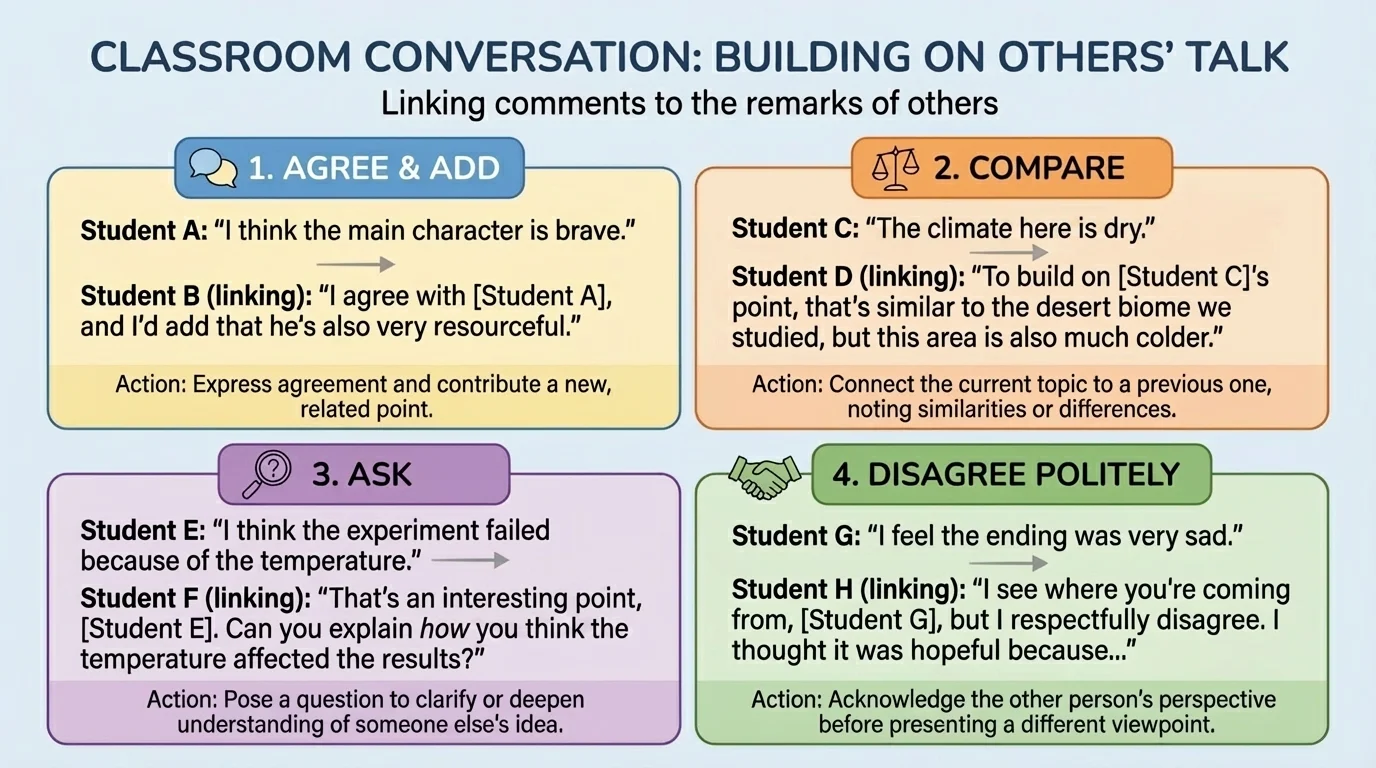
[Figure 3] Agree and add. You can show agreement and then give a reason or detail. Example: "I agree with Ava that the plant needs sunlight because plants grow toward the window."
Add on. You can add information without repeating exactly what was already said. Example: "I want to add that the soil also needs water."
Compare. You can connect one idea to another. Example: "That is like what Mateo said about seeds needing care."
Ask a follow-up question. A follow-up question keeps the conversation moving. Example: "Why do you think the character hid under the table?"
Politely disagree. Sometimes you have a different idea. You can still connect respectfully. Example: "I see it a little differently from Noor. I think the girl is surprised, not scared, because her mouth is open but she is smiling."
Connected talk helps learning grow. When students connect ideas, they do more than take turns speaking. They compare thoughts, explain reasons, notice evidence, and understand topics more deeply. One strong comment can help the next speaker think of an even stronger one.
Notice that each example points back to someone else's remark. That is the important part. The speaker is not dropping a random fact into the discussion. The speaker is joining the shared thinking of the group.
Let us look at how connected talk sounds in real classroom conversations. These examples are about grade 2 topics like stories, science, and classroom problem-solving.
Example 1: Talking about a story
Step 1: First speaker shares an idea.
Lena says, "I think the fox is clever."
Step 2: Second speaker links and adds.
Owen says, "I agree with Lena because the fox tricks the other animals."
Step 3: Third speaker connects to both remarks.
Suri says, "That goes with what Owen said. The fox also makes a plan before acting."
The talk stays on one idea and grows stronger with each speaker.
In that example, each child says something new, but each comment still matches the earlier one. That is what strong linking sounds like.
Here is another kind of conversation. One child can ask a question that helps everyone think more.
Example 2: Talking about science
Step 1: First speaker makes an observation.
Ben says, "Our ice melted faster in the sun."
Step 2: Second speaker adds a connected reason.
Zara says, "I want to add that the sunlight made the ice warmer."
Step 3: Third speaker asks a follow-up question.
Ty says, "Can you tell more about why warmth changes ice into water?"
The question is connected, so it keeps the group learning together.
As we saw earlier in [Figure 1], connected comments work like links in a chain. These examples show that the chain can grow through reasons, details, and questions.
A conversation can even include different ideas, as long as the speaker stays respectful and explains the connection.
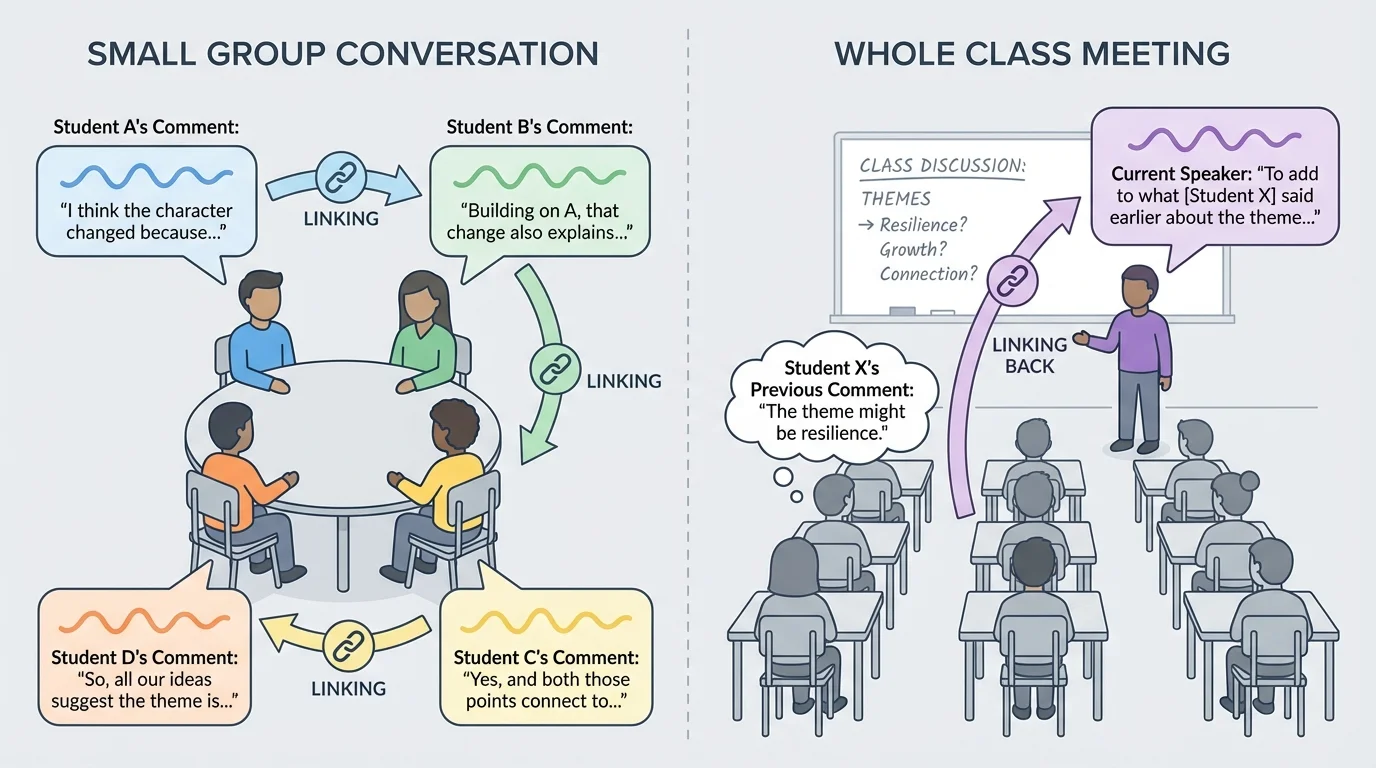
As [Figure 4] shows, you can use this skill in many places. In a partner talk, you may only have one other speaker to listen to. In a small group, you may need to connect your idea to several classmates. In a whole-class conversation, you may need to remember a remark from earlier and connect to it clearly.
Example 3: Politely disagreeing
Step 1: First speaker shares a thought.
Kim says, "I think recess should be longer so kids can run more."
Step 2: Second speaker responds respectfully.
Diego says, "I think something a little different. I think lunch should be longer because students need enough time to eat."
Step 3: Third speaker links both ideas.
Nina says, "Both ideas are about helping students feel better during the day."
Even with different opinions, the students stay connected to the shared topic.
You can use this skill in many places. In a partner talk, you may only have one other speaker to listen to. In a small group, you may need to connect your idea to several classmates. In a whole-class conversation, you may need to remember a remark from earlier and connect to it clearly.
In small groups, it helps to say the speaker's name: "I want to add to what Emma said." This makes the link easy to hear. In larger group talks, it may also help to mention the idea itself: "I want to add to Emma's idea about teamwork."
When many people are talking, listening becomes even more important. The active listening habits shown in [Figure 2] help you keep track of the conversation so your response matches what others have said.
Sometimes a teacher may ask, "Who can build on that idea?" That question is asking you to connect, not to start over. You might agree, add evidence, ask a question, or share a different opinion tied to the same topic.
Sometimes conversations get off track. One problem is interrupting. That means talking before another person is finished. Interrupting can make people feel unheard. The fix is to wait, listen, and then respond when it is your turn.
Another problem is changing the topic too fast. If the class is talking about why a character is brave and you suddenly talk about your favorite snack, your comment does not link to the conversation. A better choice is to think, "How does my idea connect to what we are discussing right now?"
A third problem is repeating without adding anything new. It is okay to agree, but strong speakers usually add a reason, an example, a question, or a detail. The categories in [Figure 3] help you choose a stronger way to respond.
"Listen to understand, then speak to connect."
Another problem is disagreeing in an unkind way. Saying "You are wrong" can stop good conversation. Instead, use respectful words such as "I think something different" or "I see it another way." Kind words help everyone feel safe to share.
When you build on others' talk, you become both a stronger speaker and a stronger listener. You show that you can pay attention, remember ideas, and connect your thinking to the group.
This skill matters in reading discussions, science talks, social studies conversations, and everyday classroom problem-solving. It also matters outside school. Families, teams, and friends all communicate better when people listen carefully and respond to one another instead of talking past one another.
You do not have to be the loudest person in the room to be an excellent conversation partner. You can be thoughtful, respectful, and clear. Each time you listen closely and connect your idea to someone else's remark, you help the whole conversation become smarter and kinder.
