Have you ever started telling a story and someone asked, "Wait, what are you talking about?" Writers solve that problem right away. The beginning of a piece of writing tells the reader the topic. When you introduce a topic well, your reader knows what your writing will be about and is ready to keep reading.
When writers share an opinion, they need to help the reader from the very first sentence. An introduction is the opening part of a piece of writing. It tells the subject and helps the reader understand what is coming next.
If a writer begins with unclear words, the reader may feel confused. But if the writer names the topic quickly, the writing feels strong and organized. For example, if you are writing about whether school should have longer recess, your reader should know that topic at the beginning.
Introduction is the beginning of a piece of writing. It tells the reader the topic and often gives the writer's opinion.
Opinion is what a person thinks or believes about a topic.
Reason is something that explains why the writer has that opinion.
Think of an introduction like opening a door. It lets the reader step into your ideas. A strong opening says, "Here is my topic, and here is what I think about it."
A good introduction has important parts, as [Figure 1] shows. First, it names the topic. Second, it tells the writer's opinion. Third, it may give a small preview of the reasons that will come later.
Here is a simple example: "School lunch should have more fresh fruit because it is healthy and tasty." This introduction names the topic, which is school lunch. It also shares the opinion, which is that school lunch should have more fresh fruit. Then it gives reasons: that it is healthy and tasty.
You do not need a very long beginning. Grade 2 writers often write introductions that are only one or two sentences long. What matters most is being clear.
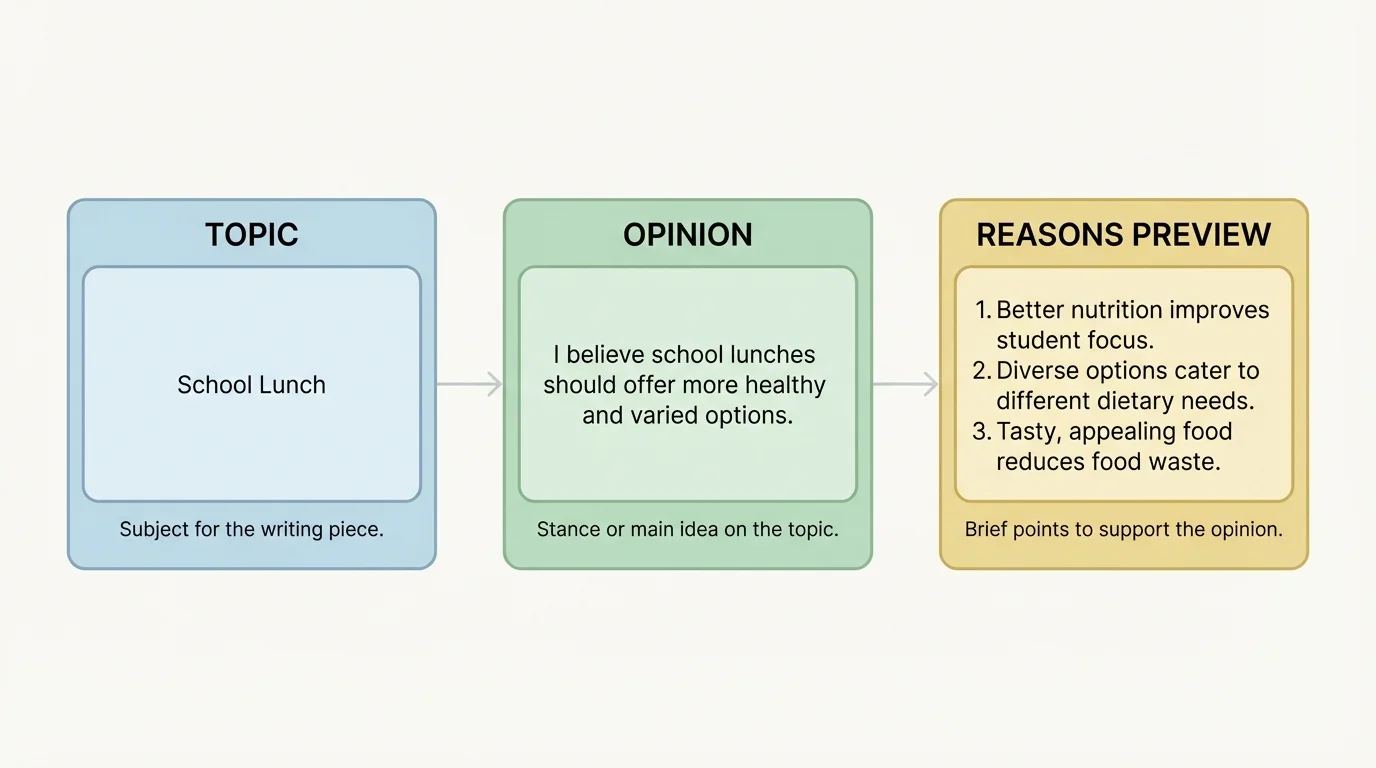
Another example is: "I think our class should grow a garden because plants are fun to study and vegetables can be delicious." The topic is the class garden. The opinion is that the class should grow a garden. The preview of the reasons is that plants are fun to study and vegetables can be delicious.
When you introduce a topic, your reader should not have to guess. The beginning should make the subject easy to understand. That is why many writers plan the topic, opinion, and reasons before they start writing the whole piece, just as the organizer in [Figure 1] lays out the parts.
The job of the introduction
An introduction is not the whole piece of writing. Its job is to start the writing clearly. It opens the topic, states an opinion, and points toward the reasons. After that, the middle of the piece explains each reason in more detail.
Sometimes the introduction includes a feeling word that helps the opinion sound strong. Words like best, important, helpful, and wonderful can show what the writer thinks.
There is more than one good way to begin, as [Figure 2] illustrates. Writers can start with a question, a clear statement, or an interesting detail. The best choice is the one that helps the reader understand the topic quickly.
One way is to begin with a question. For example: "Should every classroom have a pet?" This question invites the reader to think. Then the next sentence can give the opinion: "I think every classroom should have a pet because animals help children learn responsibility."
Another way is to begin with a statement. For example: "Reading every day is a great habit." Then the writer can continue: "I believe kids should read each night because books build knowledge and imagination." This kind of beginning is simple and direct.
A third way is to begin with an interesting detail. For example: "Our library is full of books about space, animals, and adventure." Then the writer can add: "That is why I think library time is one of the best parts of school."
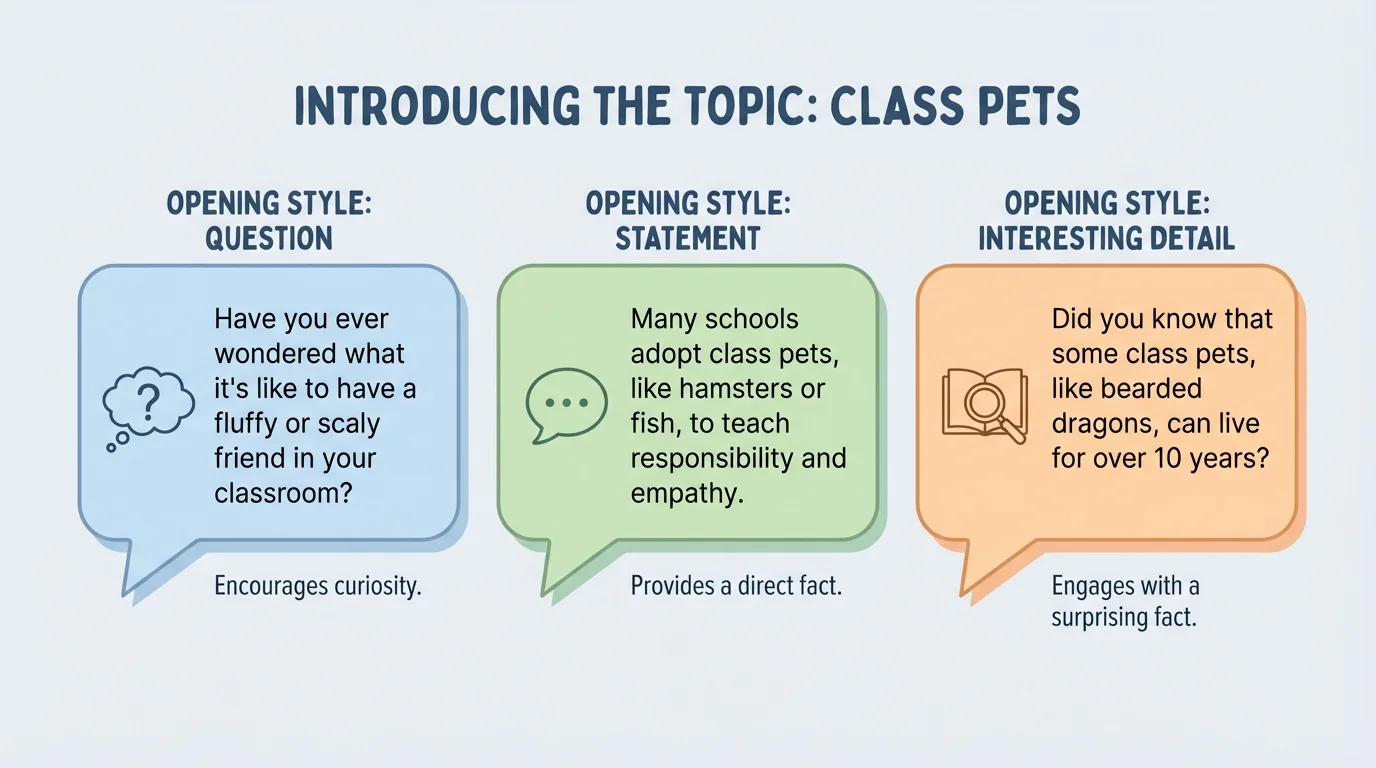
All three ways can work well. The opening should match the topic. If your topic is school uniforms, a question may sound strong. If your topic is your favorite book, an interesting detail may grab attention right away.
What matters most is not being fancy. What matters most is being clear. A reader should know the topic without feeling lost.
Many strong writers spend extra time on the first sentence because it helps the reader decide to keep going. A short, clear opening can be more powerful than a long, confusing one.
That means you can choose a simple opening and still write very well. A sentence does not need hard words to be strong. It needs to make sense.
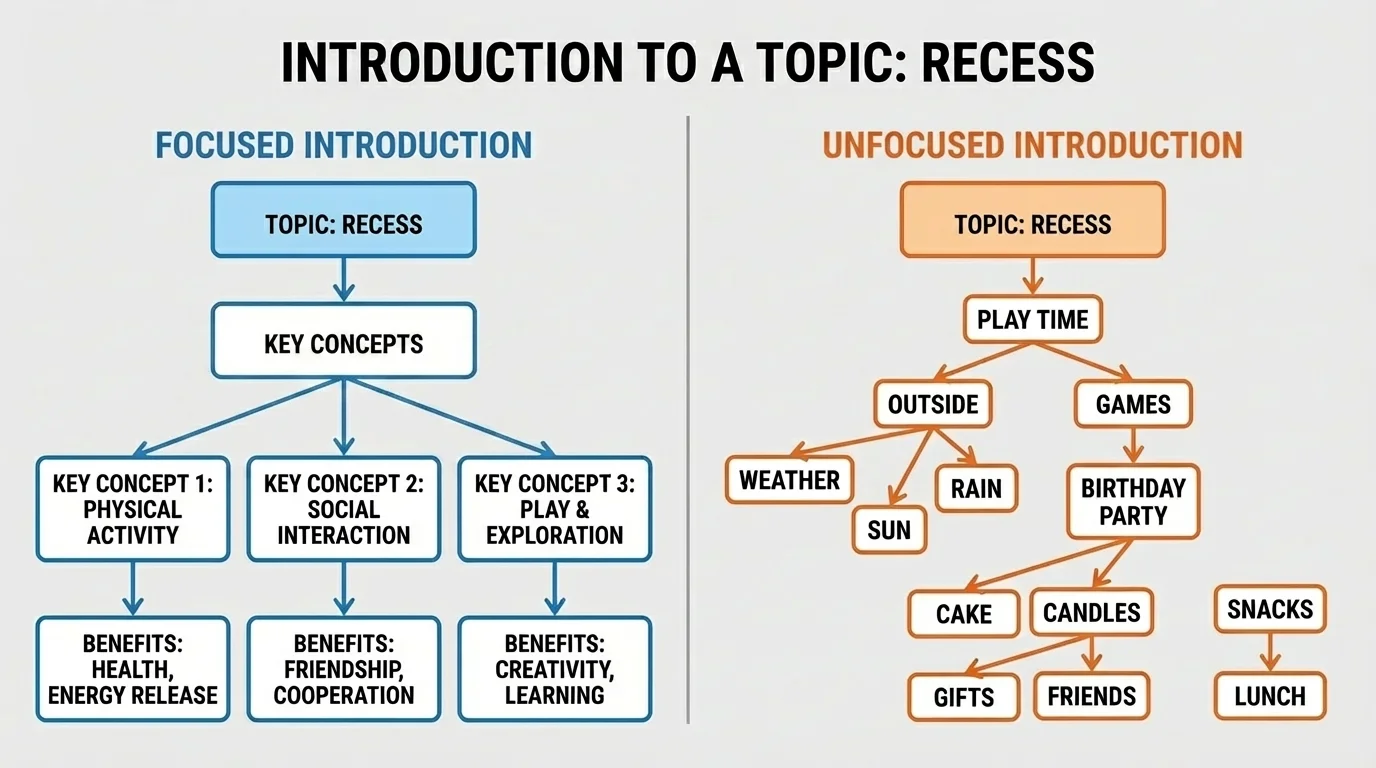
[Figure 3] compares a focused introduction with one that wanders off topic.
Strong writers stay focused on one topic. If your writing is about recess, your introduction should not suddenly talk about birthday cake, rainy weather, and your uncle's dog. Those ideas do not belong unless they truly connect to recess.
Read this example: "Recess should be longer because children need exercise and time to play with friends." This is focused. Every part fits the same subject.
Now read this one: "Recess is fun. My birthday cake was chocolate. I like jumping rope. The weather is sunny." These sentences may all be true, but they do not work together as a strong introduction. The topic is not clear enough.
When you check your own introduction, ask, "Do all my sentences match my main idea?" If the answer is no, take out the extra part or save it for a different piece of writing.
Being focused helps your reader trust you. It also helps you know what reasons to write next. The focused example in [Figure 3] is easier to follow because every sentence points to the same idea.
Let's look at several model introductions. Each one tells the topic, shares an opinion, and gives supporting reasons.
Example 1: Favorite animal
"Dogs make the best pets because they are friendly, playful, and helpful."
Step 1: Find the topic.
The topic is pets, especially dogs.
Step 2: Find the opinion.
The opinion is that dogs make the best pets.
Step 3: Find the reasons.
The reasons are friendly, playful, and helpful.
This introduction is short, but it does a lot of work. The reader knows exactly what the writer believes.
Here is another one: "Our school should have more art time because creating art is relaxing and helps students share ideas." The topic is art time. The opinion is that school should have more of it. The reasons are that creating art is relaxing and helps students share ideas.
Example 2: Favorite place to read
"The library is the best place to read because it is quiet and full of exciting books."
Step 1: Name the topic.
The topic is the library as a place to read.
Step 2: State the opinion.
The writer thinks it is the best place.
Step 3: Notice the reasons.
The reasons are quiet and exciting books.
You can also write an introduction about a book. For example: "Charlotte's Web is a wonderful book because it is touching, funny, and full of friendship." This introduces the topic clearly and gives reasons for the opinion.
A strong beginning does not tell every detail. It opens the door, then the next paragraphs explain more. If the writer says dogs are helpful, a later paragraph might explain that dogs can guard homes or comfort people.
A clear introduction helps the reader know where the writing is going. It also helps the writing sound smooth. Good introductions use words that fit together and lead into the next sentence.
For example, read this pair of sentences: "I think school gardens are important. They teach students about nature and healthy food." The first sentence introduces the opinion. The second sentence begins giving reasons. The writing moves forward in a neat way.
Writers already know that complete sentences need to make sense and stay on one idea. Those same skills help when writing an introduction. A strong beginning uses complete thoughts and clear word order.
You can make your introduction stronger by choosing exact words. Instead of saying something is "good," you might say it is "helpful," "fun," or "important." Exact words help the reader understand your opinion better.
Transitions can also help. A word like because is very useful in opinion writing. It connects the opinion to the reason. In the sentence "We should have music class every week because singing and instruments build skills," the word because connects the idea clearly.
Sometimes a beginning is too vague. For example, "I like things at school" does not clearly introduce one subject. A stronger version is "Recess is the best part of school because it gives kids time to move and play."
Another mistake is forgetting to give an opinion. If a writer says, "There are many books in the library," the topic is there, but the opinion is missing. A stronger version is "The library is one of the best places in school because it is peaceful and full of interesting books."
A third mistake is leaving out reasons. "Cats are great" gives an opinion, but it is not very complete. "Cats are great pets because they are gentle and easy to care for" is a fuller introduction.
Fixing a weak introduction
Weak beginning: "School is nice."
Step 1: Add a clearer topic.
Choose one school subject or part of school, such as recess, lunch, reading time, or art.
Step 2: Add an opinion.
Example: "Reading time is the best part of school..."
Step 3: Add reasons.
Example: "Reading time is the best part of school because stories are exciting and books help children learn new things."
Notice how the strong version tells much more. The reader now knows the topic, the opinion, and the reasons.
When you write an opinion piece, the beginning is important. It sets up the whole piece. A reader should be able to say, "I know what this writing is about, and I know what the writer thinks."
You can introduce a opinion piece by naming the subject clearly, stating your opinion, and hinting at your reasons. You may start with a question, a statement, or an interesting detail. Then you stay focused so the rest of the writing matches the opening.
Writers often reread their first sentence and first two lines to see if the beginning is strong. If the introduction sounds clear, focused, and connected to reasons, it is doing its job well.
When readers understand the beginning, they are ready to listen to every reason that comes next. That is the power of introducing a topic clearly.
