Have you ever watched a mystery unfold one clue at a time, or read a poem that changes with each stanza? Stories, dramas, and poems work in a similar way. They are not just a big pile of words. They are built in parts, and each part helps the reader understand something new. When good readers talk about a text, they do not just say, "I liked it," or "It was sad." They can point to the exact part that gave them that idea.
When you read literature, it helps to know the names of its parts. A story may be divided into chapters. A play or drama may be divided into scenes. A poem may be divided into stanzas. Knowing these names helps you explain your thinking clearly. It also helps you notice how one part leads to the next.
Chapter is a main section of a story or book.
Scene is a part of a drama or play that usually happens in one place or time.
Stanza is a group of lines in a poem, often separated by spaces.
Readers also pay attention to how each new part builds on what came before. A chapter may introduce a problem, and the next chapter may make the problem harder. A scene may reveal a secret, and the next scene may show how characters react. A stanza may begin with one feeling, and the next stanza may deepen or change that feeling.
Authors organize texts in parts for a reason. Parts help readers follow events, ideas, feelings, and changes. If a whole book had no chapters, it would be harder to see where one important event ends and another begins. If a play had no scenes, it would be harder to tell when the setting changes. If a poem had no stanzas, the poem's ideas might seem mixed together.
These parts are like stepping-stones across a stream. Each stone helps you get to the next one. If you skip one, you may miss an important detail. That is why readers should notice where they are in a text and be able to say, for example, "In chapter 2, the character finds the map," or "In stanza 3, the speaker's mood becomes hopeful."
Many long books use chapters to help readers rest and think, but chapters also help authors control suspense. A chapter might end with a surprise so the reader wants to keep going.
Using the right term shows that you understand the kind of text you are reading. If you call part of a poem a chapter, that is not precise. Careful readers match the text type with the correct word.
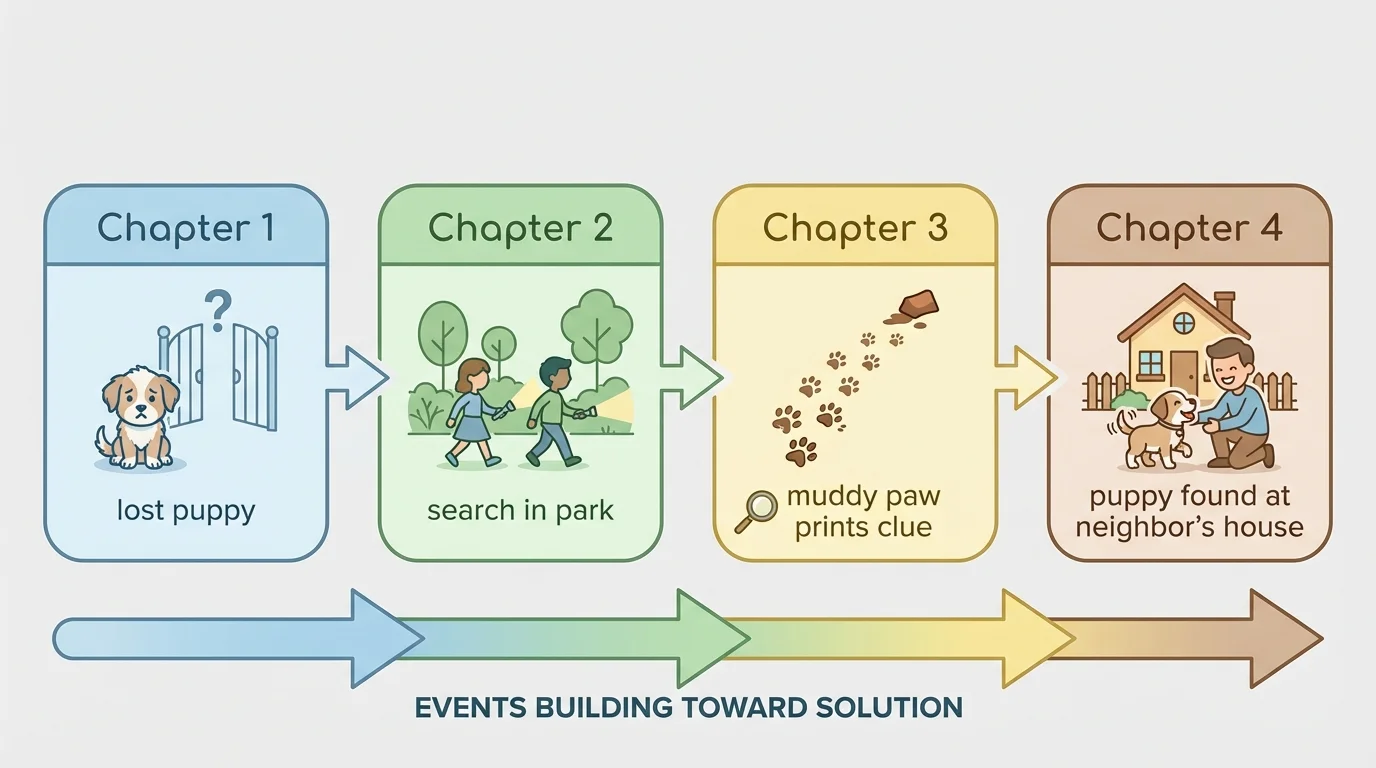
[Figure 1] A chapter is one of the main parts of a story. In many books, each chapter moves the plot ahead in a story that grows from problem to solution. One chapter may introduce a character, another may present a problem, and later chapters may show attempts to solve that problem.
Think about an invented story called The Lost Puppy. In chapter 1, Maya discovers that her puppy is missing. In chapter 2, she searches the park. In chapter 3, she finds muddy paw prints near a garden gate. In chapter 4, she follows the clues and finds the puppy at her neighbor's house. Each chapter adds something important. Chapter 4 makes sense because of what happened in chapters 1, 2, and 3.
When you talk or write about this story, you can be specific. You might say, "In chapter 1, Maya learns that the puppy is gone, and this starts the problem." Or you might say, "Chapter 3 builds on chapter 2 because Maya finally finds a clue during her search." Those sentences name the part and explain how the story develops.
Stories often have a beginning, middle, and end. The beginning usually introduces characters and setting. The middle develops the problem and adds events. The end brings change, solution, or understanding. Chapters help organize these larger parts. A chapter is not just a stopping place. It has a job to do in the story.
Sometimes a later chapter changes what the reader thinks about an earlier chapter. For example, if chapter 1 shows a character acting strangely, chapter 5 might explain why. Then the reader understands the earlier behavior in a new way. This is another way that one part builds on earlier sections.
[Figure 2] A drama, or play, is written to be performed. Instead of chapters, plays are often divided into scenes, and sometimes larger groups called acts. A scene may show a new place, a new time, or a new part of the action. The people in a scene usually speak through dialogue, and readers learn about the story by listening to what characters say and do.
Picture an invented play called The Class Election. In scene 1, two friends decide to run for class president. In scene 2, they give speeches in the classroom. In scene 3, one friend feels upset because the other forgot to mention teamwork. In scene 4, they solve their disagreement and work together. Each scene pushes the action forward.
When discussing a drama, it helps to say exactly which scene you mean. You could write, "In scene 2, the speeches reveal that both characters want to help the class." You could also say, "Scene 3 builds on scene 2 because the speeches lead to hurt feelings." This kind of speaking and writing is clear and strong.
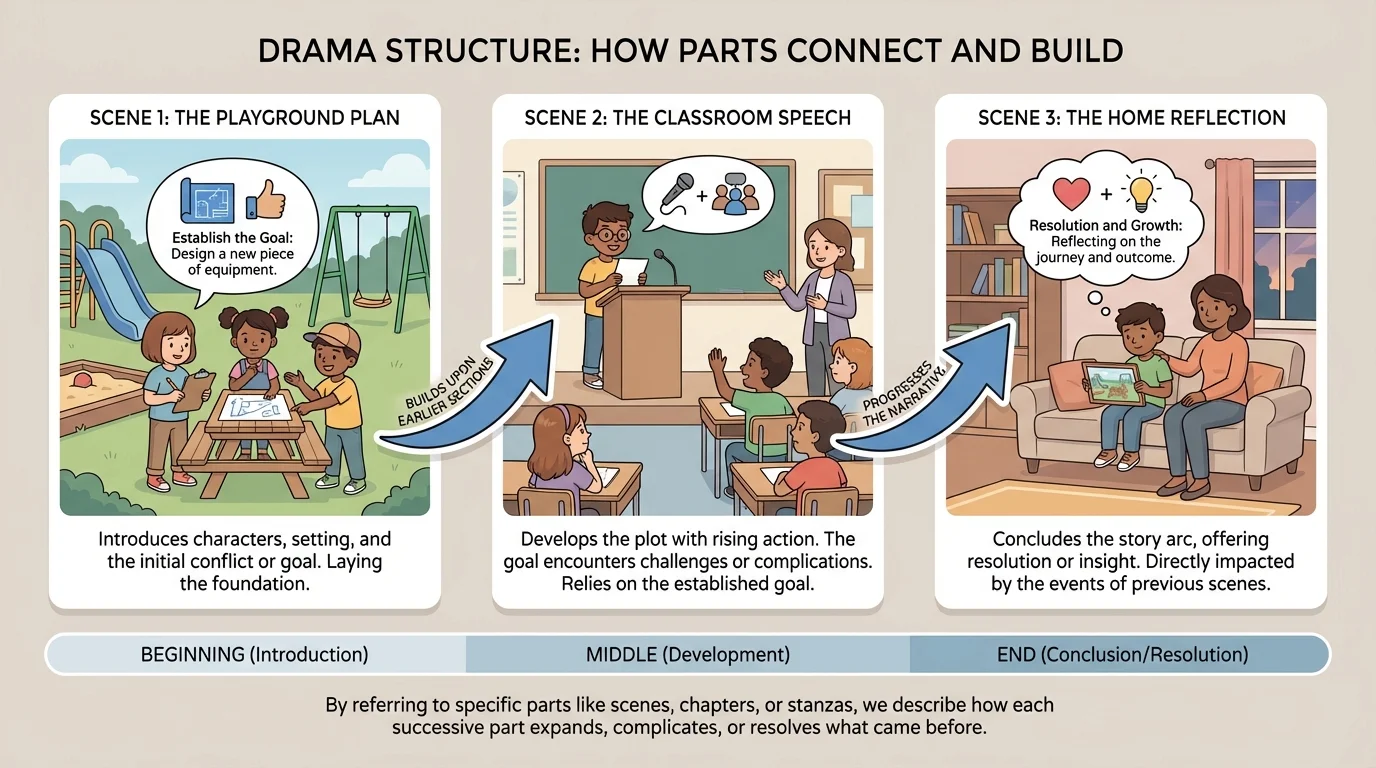
Scenes are important because they show change. A character may sound confident in one scene and worried in the next. A secret may be hidden in one scene and exposed in another. A problem may begin in one scene and grow larger in the next scene. If you only talk about the play in a general way, you may miss how those changes happen.
Plays also include stage directions. These are notes that tell how characters should move, speak, or behave. Sometimes a scene builds on an earlier one not just through words, but through actions. A slammed door in one scene may show anger that began in the previous scene.
How scenes move a play forward
In a drama, each scene usually adds new action, new feelings, or new information. Readers ask, "What changed in this scene?" and "How did this scene grow from the one before it?" Those questions help readers understand the whole play.
When you compare scenes, think about cause and effect. If one character tells a lie in scene 1, then scene 2 may show the trouble caused by that lie. That means scene 2 builds directly on scene 1.
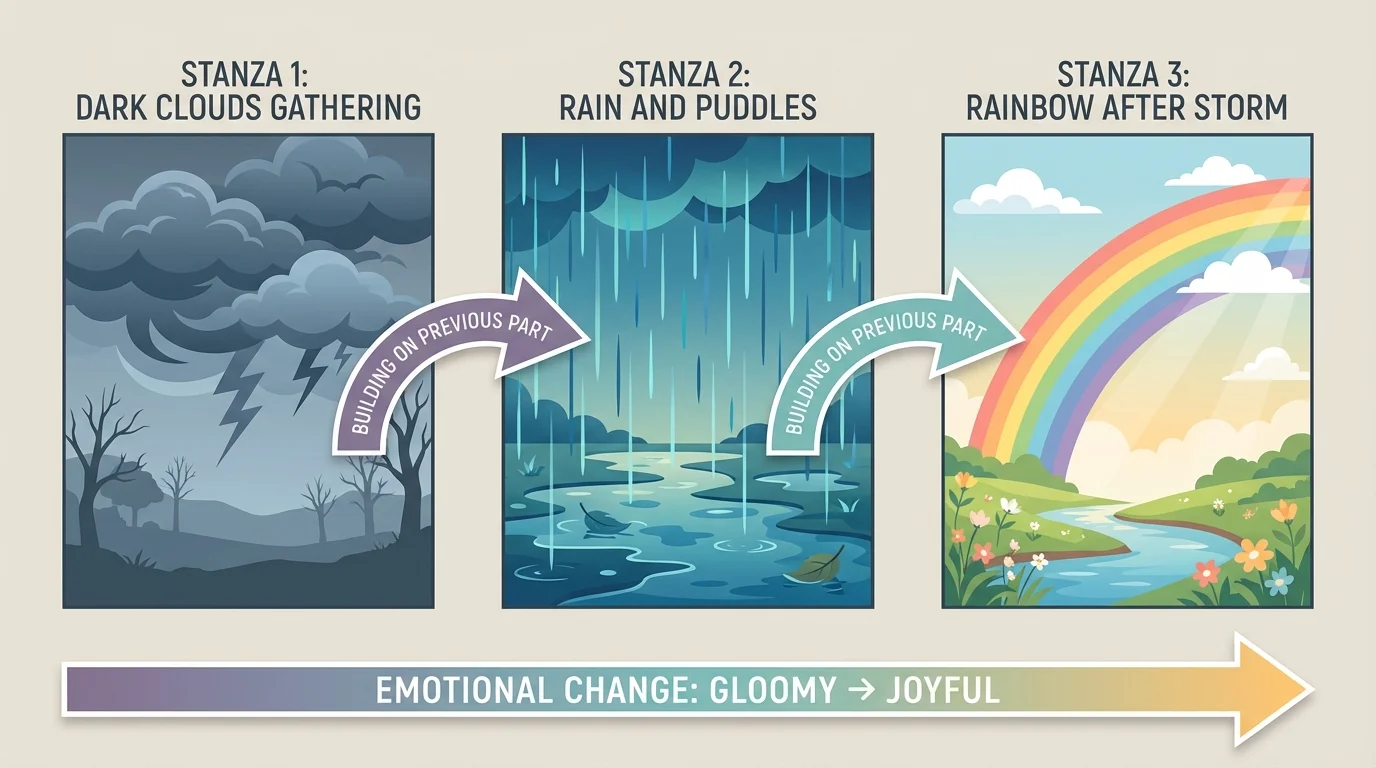
[Figure 3] Poems are often arranged in groups of lines called stanzas. A stanza is like a paragraph in a poem. It helps organize ideas, feelings, sounds, and images. A poem can change from one stanza to the next, moving through images such as rain, puddles, and finally a rainbow.
Think about an invented poem called After the Storm. In stanza 1, dark clouds gather and the wind blows. In stanza 2, rain splashes on roofs and puddles fill the sidewalk. In stanza 3, the storm ends and a rainbow appears. Each stanza adds another part of the experience. The poem grows in order, and the ending feels bright because the earlier stanzas were stormy.
When you write or speak about the poem, you can point to the exact stanza. For example: "In stanza 1, the poem creates a gloomy mood." Or: "Stanza 3 builds on the earlier stanzas by showing calm weather after the storm." Using the word stanza helps others understand exactly where your evidence comes from.
Sometimes each stanza adds a new detail. Sometimes each stanza repeats an idea in a new way. Sometimes the feeling changes. A poem might start with fear, move to hope, and end with peace. Readers should notice these shifts and explain them clearly.
Poems can also use repeated words, sounds, or images across stanzas. If a bird appears in every stanza, its meaning may grow each time. Maybe at first the bird seems lonely, then brave, and later free. The later stanzas build on the earlier ones by adding meaning to the repeated image.
When you answer a question about literature, it is important to be specific. Instead of saying, "The text shows she is brave," you can say, "In chapter 6, she is brave when she enters the cave alone." Or, "In scene 2, the character speaks bravely in front of the crowd." Or, "In stanza 4, the speaker sounds brave because she no longer fears the night."
Being specific helps in two ways. First, it shows where your idea comes from. Second, it helps you explain how the text develops. Saying the exact part gives your answer a strong foundation.
Sentence frames for talking about text parts
Step 1: Name the text part.
Use words such as "In chapter 2," "In scene 3," or "In stanza 1."
Step 2: Tell what happens there.
State the event, idea, or feeling from that part.
Step 3: Explain how it connects to an earlier part.
Use phrases like "This builds on...," "This changes...," or "This explains...."
Example: "In chapter 4, Luis finds the key. This builds on chapter 2, when he first noticed the locked box."
You can also use words that show connection, such as because, so, later, earlier, after, and as a result. These words help you explain how parts work together instead of sounding like separate notes.
The word successive means coming one after another in order. In literature, successive parts are the chapters, scenes, or stanzas that follow one another. Good readers notice not only what happens in each part, but also how each new part grows from what came before.
There are many ways this can happen. One part can add information. One part can increase tension. One part can answer a question raised earlier. One part can change the mood. One part can solve a problem that began before. These connections help the text feel complete.
In the story example from [Figure 1], the clue found in a later chapter matters because the search began earlier. In the play example from [Figure 2], the disagreement in one scene matters because of what was said in the scene before. In the poem example from [Figure 3], the rainbow feels joyful because the earlier stanzas described the storm.
| Type of text | Name of part | How a later part may build on an earlier part |
|---|---|---|
| Story | Chapter | A new event grows from an earlier problem or clue. |
| Drama | Scene | A character reacts to something said or done in a previous scene. |
| Poem | Stanza | A feeling, image, or idea deepens or changes from one stanza to the next. |
Table 1. Comparison of text parts and how later parts connect to earlier ones.
As you read, ask yourself questions like these: What happened earlier that made this part possible? What changed here? What is the same? What is different now? Those questions help you see the structure of the text.
Let us look at three short examples more carefully. In an invented story called The Secret Garden Gate, chapter 1 shows Nia hearing music behind a locked gate. Chapter 2 shows her returning with a flashlight. Chapter 3 reveals that her grandfather once played the violin there. Chapter 3 builds on chapter 1 because the strange music from the beginning is finally explained.
In an invented drama called One More Chance, scene 1 shows a soccer player missing an important goal. Scene 2 shows teammates blaming him. Scene 3 shows the coach reminding everyone to support one another. Scene 3 builds on scene 2 because it answers the conflict created there.
In an invented poem called Seeds, stanza 1 describes tiny seeds sleeping in the soil. Stanza 2 describes rain soaking the ground. Stanza 3 describes green shoots reaching upward. Stanza 3 builds on stanza 1 because the growth at the end comes from the planted seeds at the beginning.
When you use evidence from a text, your job is not only to tell what happens. Your job is also to explain where it happens and how it connects to other parts.
Notice that each example uses the proper term for the kind of text. That is part of being an accurate reader and writer. It also helps your teacher or classmates follow your thinking more easily.
One common mistake is using the wrong word for the part of a text. A poem has stanzas, not chapters. A play has scenes, not stanzas. Another mistake is giving an answer that is too general. If you say, "The story gets exciting," that does not explain where or how.
A stronger answer names the part and tells how it builds on earlier parts. For example, "In chapter 5, the story gets more exciting because the main character opens the mysterious box mentioned in chapter 2." That answer is stronger because it is specific and connected.
Another mistake is treating each part like it stands alone. In a well-written text, parts are connected. Readers should look for those links. Events lead to other events. Feelings change because of earlier experiences. New ideas often grow from earlier ones.
"The best readers do not just notice parts. They notice connections."
When you practice speaking and writing this way, you become more thoughtful about literature. You begin to see the text as something carefully built, piece by piece.
Careful readers pay attention to structure. They notice how a chapter starts a problem, how a scene changes a relationship, or how a stanza shifts the mood. They use the right words to describe what they see, and they explain how the text develops from one part to the next.
This skill matters in class discussions, reading responses, and longer writing. It helps you support your ideas with evidence. It also helps you understand texts more deeply, because you are not just reading for events. You are reading for patterns, growth, and meaning.
Whenever you read a story, drama, or poem, look for its parts. Name them correctly. Then ask how each new part builds on what came before. That habit turns simple reading into strong understanding.
