Have you ever been in a conversation where everyone talked at once? It can feel loud, confusing, and frustrating. Good discussions are different. They work almost like a team game: everyone has a role, everyone follows the rules, and everyone gets a fair chance. When students follow agreed-upon rules for discussions, they can share smart ideas, understand texts better, and learn from one another.
A discussion is a shared talk about a topic, question, or text. In school, discussions happen when partners talk, when small groups work together, or when the whole class speaks with the teacher. A discussion is not just talking. It also involves listening, thinking, responding, and showing respect.
Discussion rules are shared expectations that help people speak and listen respectfully. These rules include taking turns, listening carefully, waiting to speak, staying on the topic, and responding kindly to others' ideas.
These rules matter because every person in a class deserves to be heard. If one person interrupts again and again, others may stop sharing. If students do not listen, important ideas can be missed. If the group jumps to a new topic too quickly, the conversation becomes confusing. Rules help make discussions fair, calm, and useful.
When students follow rules, they create a classroom where people feel safe to speak. That does not mean everyone always agrees. It means everyone knows how to share ideas in a respectful way. A strong discussion can include many different thoughts, but the group still works together.
Discussion rules also help students understand what they read and hear. When a class talks about a story, article, or lesson, students often notice things that others missed. One student may explain a character's feelings. Another may point out an important detail. Another may ask a question that helps everyone think more deeply. Careful discussion helps learning grow.
Good listeners often become strong speakers too, because they learn how clear ideas sound and how respectful conversations work.
Discussion rules are not only for school. People use them in meetings, sports teams, clubs, families, and communities. Learning them now helps students in many parts of life.
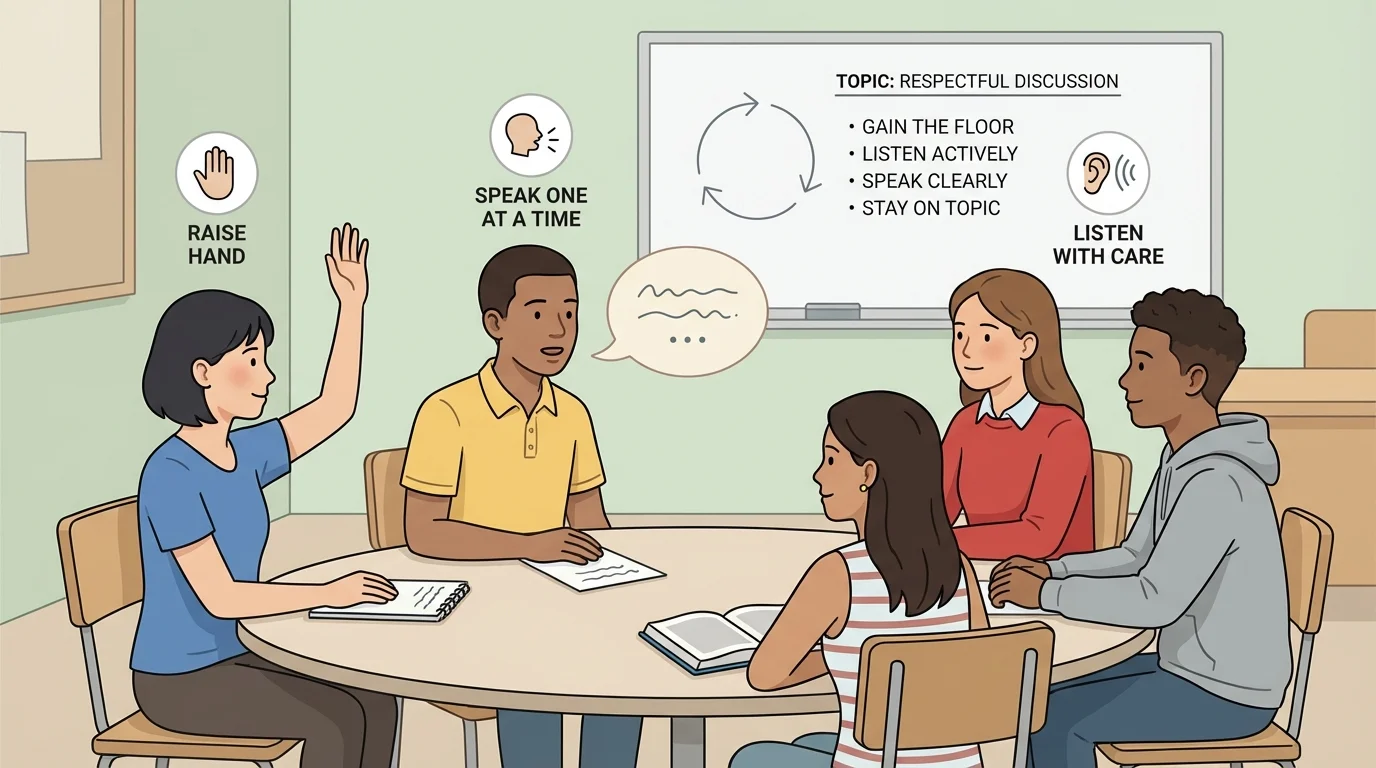
One important rule is learning how to gain the floor, or get a turn to speak, in a respectful way. In a classroom discussion, respectful turn-taking keeps the conversation orderly, as shown in [Figure 1]. Instead of blurting out, students wait for the right time and use the class routine for joining in.
Different classrooms may use different signals. A student might raise a hand, place a finger on the desk, make eye contact with the teacher, or wait for a partner to finish and then begin. The important idea is the same: do not grab a turn by interrupting someone else.
Respectful ways to begin speaking include short, polite phrases such as, "I would like to add something," "I agree with that idea because...," "I have a different thought," or "May I ask a question?" These sentence starters help a speaker enter the discussion smoothly and kindly.
Waiting can be hard, especially when you are excited about your idea. A good strategy is to keep the idea in your mind until it is your turn. You might quietly hold up one finger to remind yourself that you have something to say, or think of a key word to remember your point.
Respectful turn-taking also means noticing when another person is still speaking. If a classmate pauses to think, that does not always mean the turn is over. Good speakers give others enough time to finish. This patience shows respect.
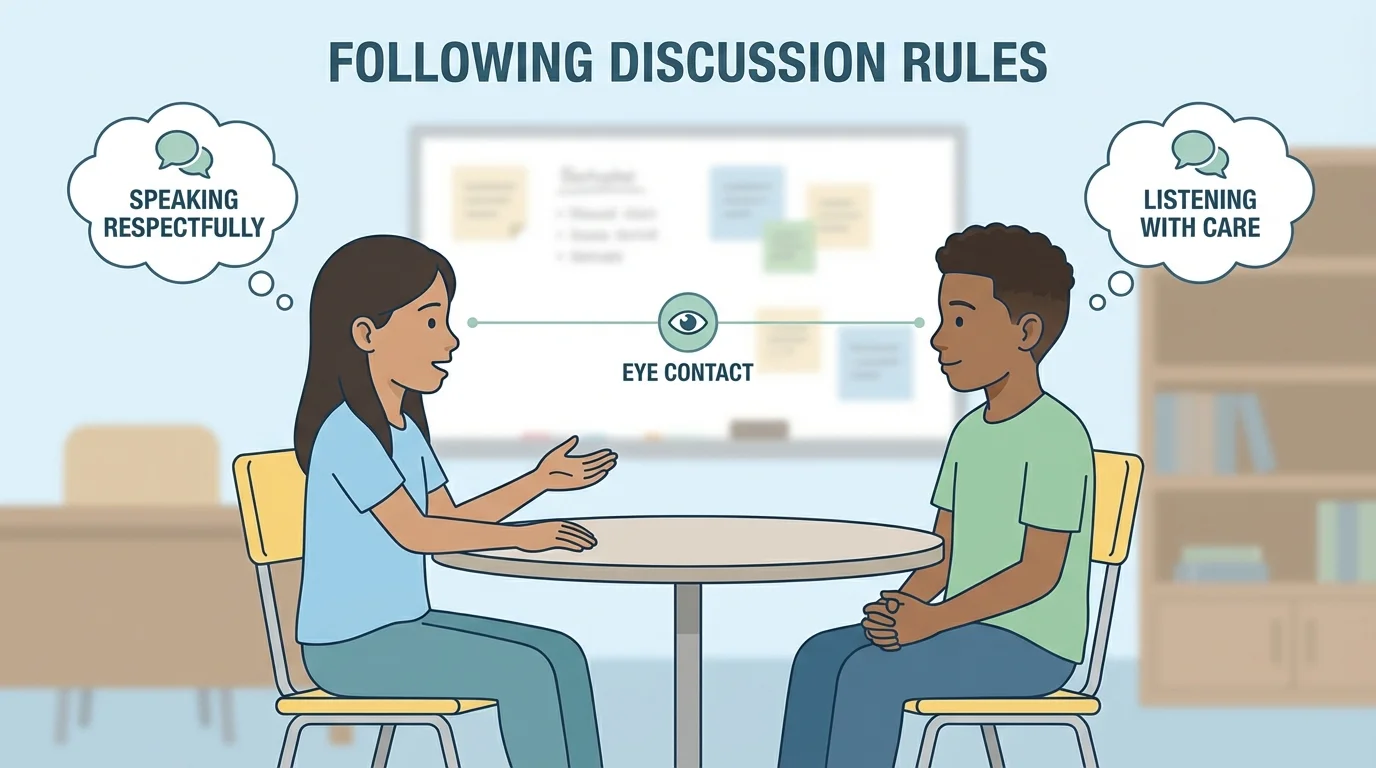
[Figure 2] Rules for discussion are not only about speaking. They are also about active listening, which means listening with your mind and body. Active listening shows the speaker, "Your ideas matter, and I am paying attention."
Listening with care includes looking toward the speaker, keeping your body calm, and thinking about the message. It also means not whispering to someone else, not playing with objects, and not planning your own answer so much that you stop hearing the speaker's words.
Sometimes active listening includes small actions like nodding, waiting quietly, or responding with a thoughtful question when it is your turn. These actions tell the speaker that the group is following along.
A careful listener tries to understand the speaker's meaning, not just hear sounds. For example, if the class is discussing a fable, one student might say, "I think the lesson is about honesty." A careful listener thinks, "What details from the story support that idea?" Then, when it is time to speak, the listener can respond clearly.
Listening also means allowing room for ideas that are different from your own. You may not agree, but you still listen respectfully. Later, you can explain your own thinking in a calm and kind way. This is an important part of learning together.
Listening with your whole attention means using your eyes, ears, mind, and self-control together. Your eyes help you focus on the speaker, your ears help you hear the words, your mind helps you understand the idea, and your self-control helps you wait for your turn.
When students do this well, discussions become stronger. As seen earlier in [Figure 2], body language can help a speaker feel respected, but true listening also happens inside your mind when you connect the speaker's words to the topic or text.
Another important rule is speaking one at a time. If several people speak at once, no one can listen well. The group may miss key details, and some students may feel ignored. Taking turns allows each idea to be heard clearly.
Speaking one at a time is especially important when discussing a text. A text might be a story, poem, article, or passage read in class. If one student is explaining what happened in the story while another student suddenly talks about recess, the discussion loses focus. Strong discussions stay on the topic under study.
To stay on topic, students should connect their words to the main question or the text being discussed. If the class is talking about why a character made a choice, a helpful comment might be, "I think she made that choice because she felt left out." A less helpful comment would be something unrelated, such as talking about a different book or a personal story that does not connect.
Sometimes a personal connection can help, but it should match the topic. For example, if the class reads about teamwork, a student might say, "This reminds me of soccer because teammates have to trust one another." That connection helps the discussion because it fits the idea being explored.
When you answer a question about a reading, it helps to think: "What is the question asking?" and "Which details from the text match my answer?" Those same habits are useful in discussions.
Staying on topic also helps the group use time wisely. Class discussions often have a purpose: understanding a chapter, solving a problem, or comparing ideas. A focused conversation helps everyone reach that purpose.
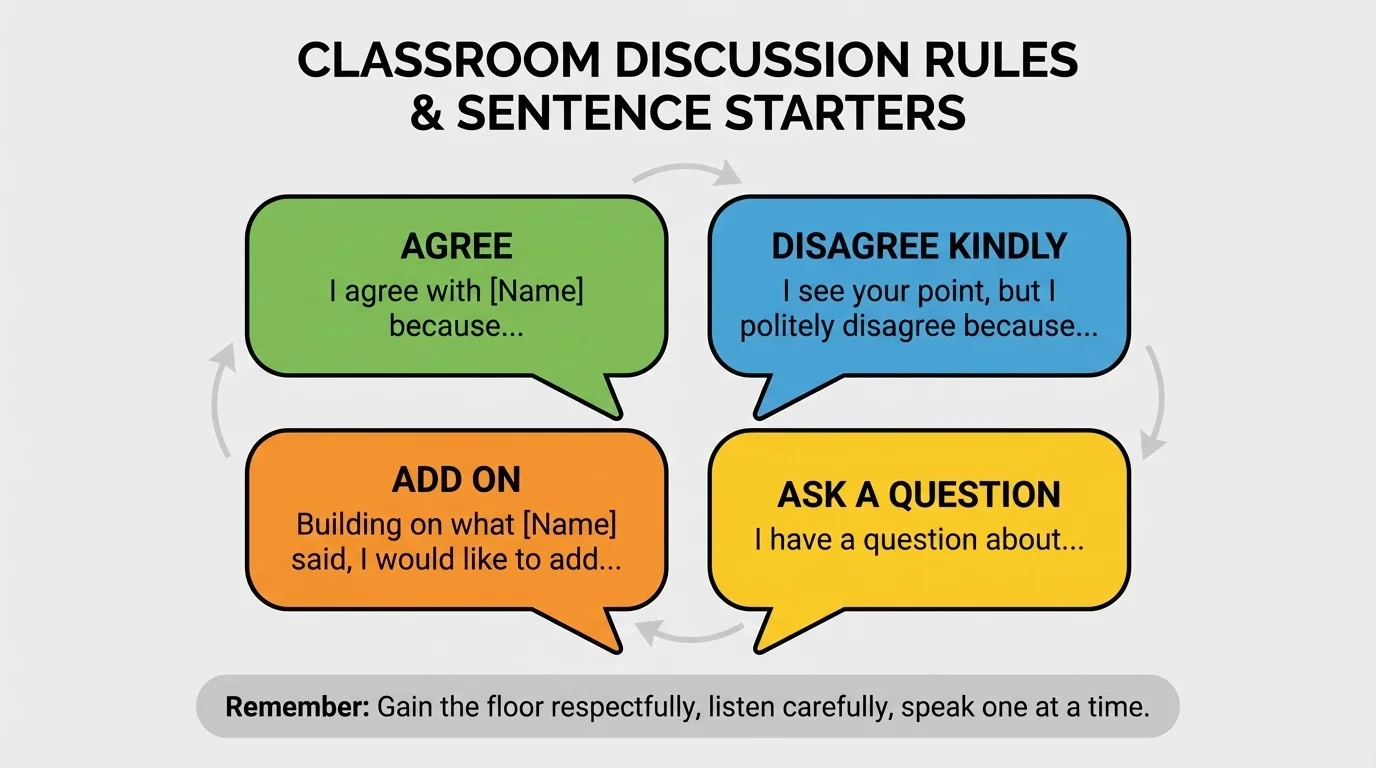
[Figure 3] A great discussion is not a line of separate speeches. It is a connected conversation. Students build on one another's thoughts by responding in ways that move the talk forward, and the figure presents some simple sentence starters that help with this important skill.
There are several ways to build on an idea. You can agree and explain why. You can disagree respectfully and give a reason. You can ask a question to learn more. You can add evidence from the text. You can connect one classmate's idea to another classmate's idea.
Helpful sentence starters include: "I agree with you because...," "I would like to add...," "I see it differently because...," "What part of the text makes you think that?," and "That connects to what ___ said about...". These short beginnings help keep the discussion clear and respectful.
Suppose the class is discussing a story about a brave child. One student says, "The character is brave because she told the truth." Another student might build on that idea by saying, "I agree, and I also think she is brave because she spoke up even when she was nervous." That second speaker is not starting over. The second speaker is growing the idea.
Respectful disagreement is part of good discussion too. A student could say, "I understand your idea, but I think the character acted more kindly than bravely because she was trying to help." This kind of response shows respect while sharing a different opinion.
Example: Building on ideas during a text discussion
The class is discussing why a character returned a lost wallet.
Step 1: Listen to the first idea carefully.
A student says, "I think he returned it because he wanted to do the right thing."
Step 2: Connect your response to that idea.
You might say, "I agree because the story says he remembered his family's rule about honesty."
Step 3: Add evidence or a new thought.
You could continue, "I also think he felt empathy for the owner because losing a wallet can be upsetting."
This response listens, connects, and adds more thinking.
When students use these moves well, the discussion becomes deeper. Later in the conversation, a student might return to the response patterns shown in [Figure 3] to choose whether to agree, ask a question, or add evidence from the text.
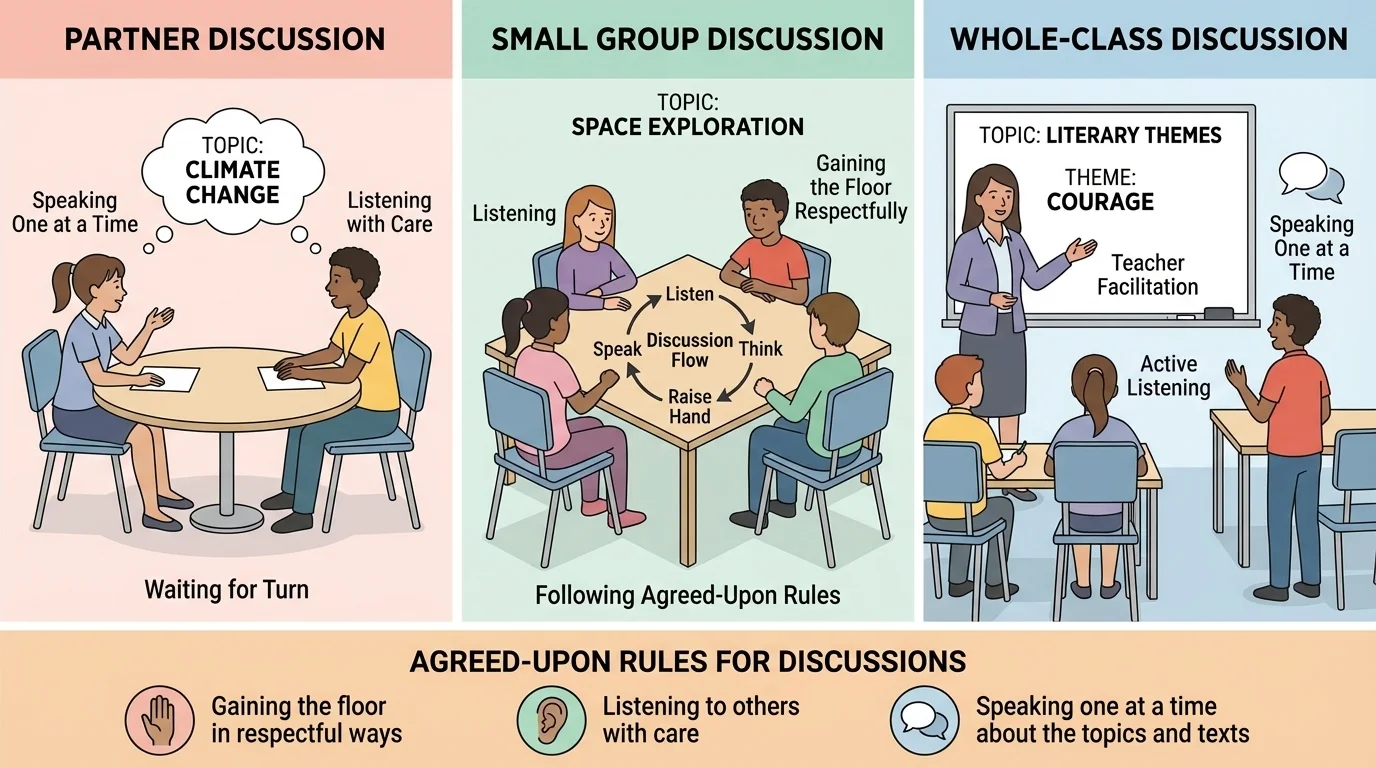
[Figure 4] Discussion rules matter in many kinds of classroom talk. The figure shows how they apply in partner, small-group, and teacher-led settings. The rules stay important, but the way they look can change a little depending on the setting.
In a one-on-one discussion, each person gets more chances to speak. Because there are only two people, it is very important to listen closely and not interrupt. Partners should take turns naturally and respond directly to one another's ideas.
In a small group, students must share time fairly. If one person speaks too much, others may not get a chance. Group members need to notice who has spoken and who has not. Sometimes a student can help the group by saying, "We have not heard from everyone yet."
In a teacher-led discussion, students may need to use special signals, such as raising a hand or waiting for the teacher to call on them. Even then, students should still listen to classmates, not just to the teacher. The goal is shared thinking, not only answering questions.
These settings feel different, but the same habits matter in all of them: respect, patience, attention, and clear speaking. Looking back at [Figure 4], you can see that the number of speakers changes, but turn-taking and listening stay important in every scene.
| Setting | What Good Discussion Looks Like | What to Watch Out For |
|---|---|---|
| Partners | Take turns, respond directly, listen closely | Interrupting or talking only about your own idea |
| Small group | Share time, include everyone, stay on topic | One person talking too much or side conversations |
| Teacher-led | Follow class signals, answer clearly, listen to classmates | Blurting out or speaking without connecting to the topic |
Table 1. Comparison of discussion behaviors in different classroom settings.
Even good discussions can have problems. Someone may interrupt. Someone may speak too softly to hear. Two people may disagree strongly. A student may drift off topic. What matters is how the group handles the problem.
If someone interrupts, a calm response can help. A teacher or classmate might say, "Please let her finish," or "Let's take turns." This reminds everyone of the rule without being rude. If a student keeps interrupting, the class may need to review the expectations again.
If a speaker is hard to hear, the group can respond respectfully: "Can you please say that a little louder?" This shows that the listener wants to hear the idea, not ignore it. Speaking clearly is part of helping others understand you.
When there is disagreement, students should focus on ideas, not on the person. It is respectful to say, "I see it another way," instead of, "You are wrong." This keeps the conversation safe and thoughtful.
"Respectful discussion means we can have different ideas and still treat each other well."
If the group drifts off topic, someone can gently guide it back by saying, "How does that connect to the story?" or "Let's go back to the question." This helps everyone return to the purpose of the conversation.
These rules are useful in many places outside class. On a sports team, players need to listen to instructions and take turns speaking during planning. In music or drama groups, students share ideas and respond to one another. At home, family members solve problems better when they listen with care and speak respectfully.
Discussion rules also help people become better learners and better friends. When students know how to wait, listen, connect ideas, and speak kindly, they show maturity and responsibility. These habits help people trust one another.
Example: Using discussion rules in everyday life
Four students are deciding how to make a poster together.
Step 1: One student shares an idea.
"I think we should put the title at the top."
Step 2: Another student listens and adds on.
"That makes sense, and we can put the pictures underneath."
Step 3: A third student disagrees respectfully.
"I like that idea, but I think the pictures should go on the sides so the writing is easier to read."
Step 4: The group stays on topic and decides together.
They compare the choices and pick the one that best fits the assignment.
The group succeeds because students listen, take turns, and respond with respect.
Following agreed-upon rules for discussion is a skill that grows with practice. Every time students take turns, listen carefully, stay on topic, and build on others' ideas, they become stronger communicators. Good discussions do not happen by accident. They happen when everyone helps make them work.
