Have you ever heard two people tell the same story and noticed that it sounded different each time? Maybe one person said, "I was nervous when I stepped up to bat," while another said, "Jalen looked nervous when he stepped up to bat." The event is the same, but the way it is told changes how we understand it. In stories, that difference is called point of view, and it is one of the most important parts of understanding narration.
The point of view of a story is the perspective from which the story is told. In other words, it answers the question: Who is telling the story? The voice that tells the story is called the narrator. Sometimes the narrator is a character inside the story. Sometimes the narrator is not a character at all.
Point of view matters because it affects what readers learn. A narrator may know a lot or only a little. A narrator may notice certain details and ignore others. A narrator may feel excited, worried, proud, or confused, and those feelings can shape the way events are described.
Point of view is the angle from which a story is told. Narration is the act of telling the story, and the narrator is the voice that tells it.
When readers compare stories, they should pay attention not only to what happens but also to how the story is told. A funny scene, a mystery, or an argument can feel very different depending on the narrator's point of view.
[Figure 1] shows that in first-person narration, the narrator is part of the story and speaks using words like I, me, my, we, and our. This point of view lets readers see the story through one character's eyes. Readers learn what that character thinks, feels, notices, and remembers.
For example: I opened the front door and saw muddy paw prints on the rug. My heart sank. Luna had gotten inside again. In this example, the narrator is in the story. The words I and my are strong clues that the story is told in first person.
First-person narration often feels close and personal. Readers can understand the narrator's feelings right away. If the narrator says, "I felt my hands shake before the spelling bee," readers know exactly how that character feels. But there is also a limit: readers usually know only what that narrator knows. They do not automatically know what other characters are thinking.
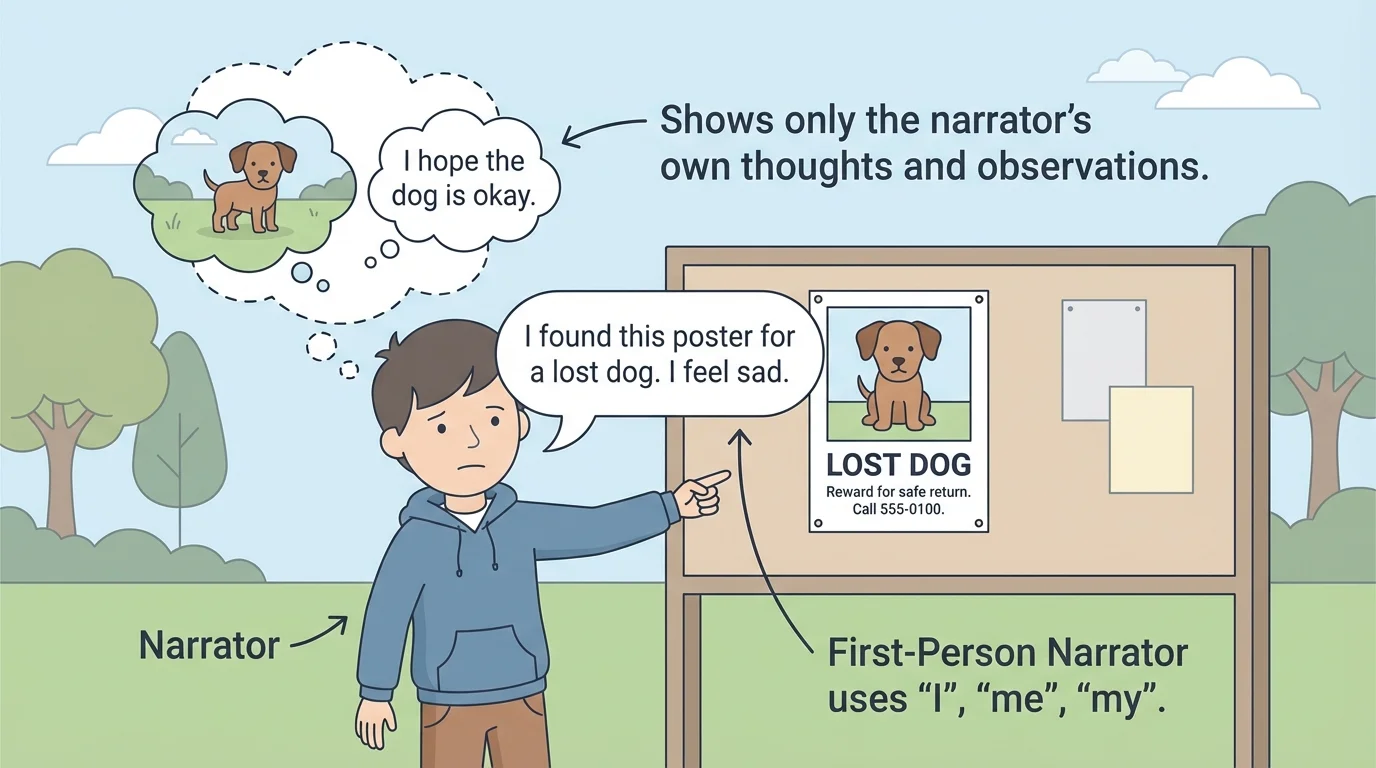
That means first-person narration can be powerful, but it can also be narrow. If the narrator misunderstands something, the reader may misunderstand it too. If the narrator feels angry, scared, or jealous, those emotions may color the story. This is why readers should think carefully about the narrator's words.
Example of first-person narration
I was sure Eli had taken my soccer ball. I saw him walking away from the field, and he would not look at me. Later, I found the ball under the bench where I had left it. Eli had been carrying his own bag the whole time.
This example shows that a first-person narrator can make mistakes. Readers are close to the narrator's thinking, but that does not always mean the narrator is correct.
The closeness of first person is one reason authors use it. A first-person narrator can make readers feel as if they are right in the middle of the action, hearing one person's private thoughts as events happen.
[Figure 2] shows that in third-person narration, the narrator is outside the story and talks about the characters using words like he, she, they, him, her, and them. This outside viewpoint means the narrator is telling the story about the characters instead of being one of them.
For example: Mia opened the front door and saw muddy paw prints on the rug. Her heart sank. Luna had gotten inside again. Here, the story is about Mia, but Mia is not saying "I." The narrator uses Mia and her, so the story is in third person.
Third-person narration can still feel close to a character, especially when it shares that character's thoughts and feelings. It can also feel more distant, almost like a camera watching from the outside. Because of this, third-person stories can vary quite a bit.
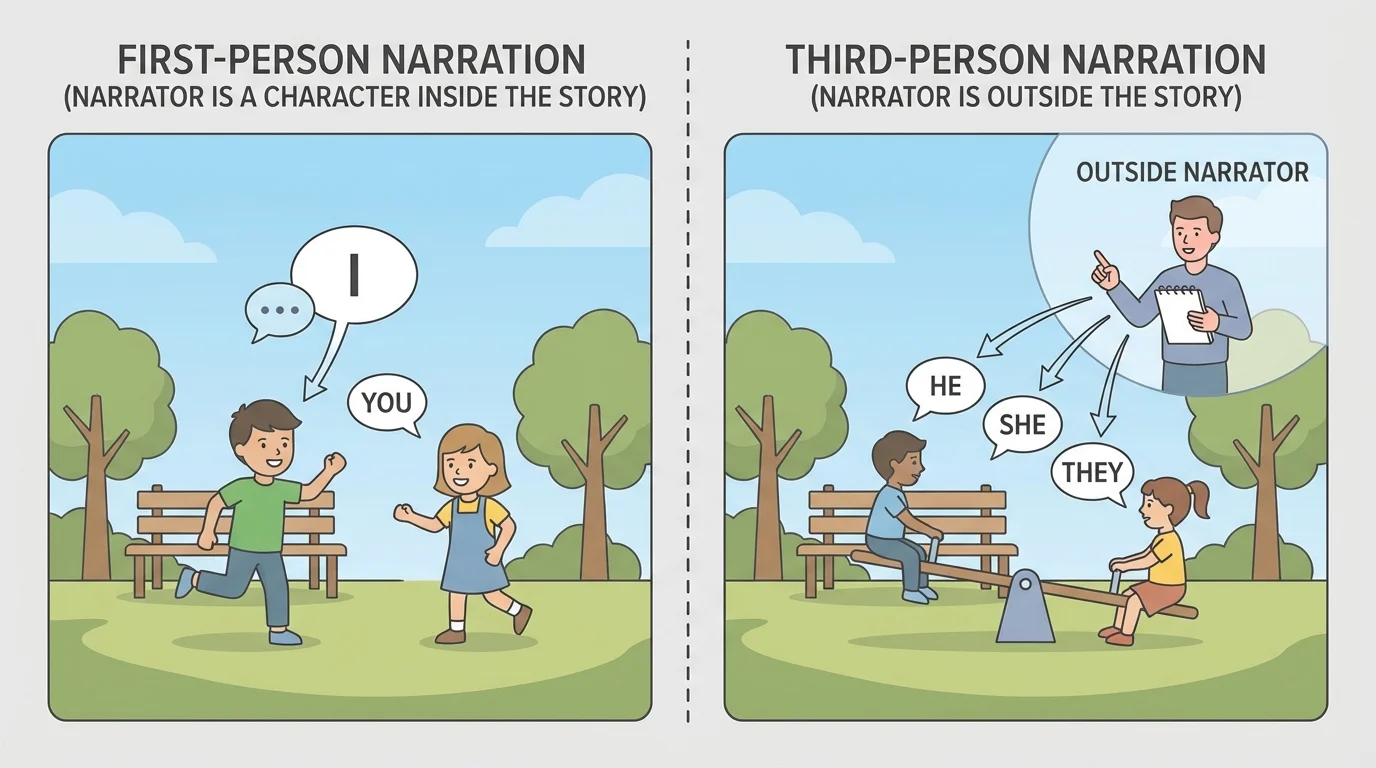
In some third-person stories, readers learn mainly about one character's thoughts. In others, readers learn about several characters. Sometimes the narrator tells only actions and speech, and readers must figure out feelings from clues. The key idea is that the narrator is not saying "I" as a character in the story.
Why third person is flexible
Third-person narration gives authors many choices. It can focus closely on one character, move between several characters, or stay outside everyone's thoughts. This flexibility helps authors choose how much the reader should know and how the story should feel.
When you read third-person narration, do not assume all third-person stories work the same way. Some feel very personal, and some feel more distant. The pronouns help identify third person, but readers should also notice how much information the narrator shares.
[Figure 3] highlights how readers can compare these two kinds of narration by asking how close each one feels and how much the narrator knows. Both first-person and third-person stories can describe the same events, but they create different reading experiences.
First person often feels as if one character is speaking directly to the reader. Third person often feels as if an outside voice is describing what happens. Neither one is better all the time. Each works well for different kinds of stories.
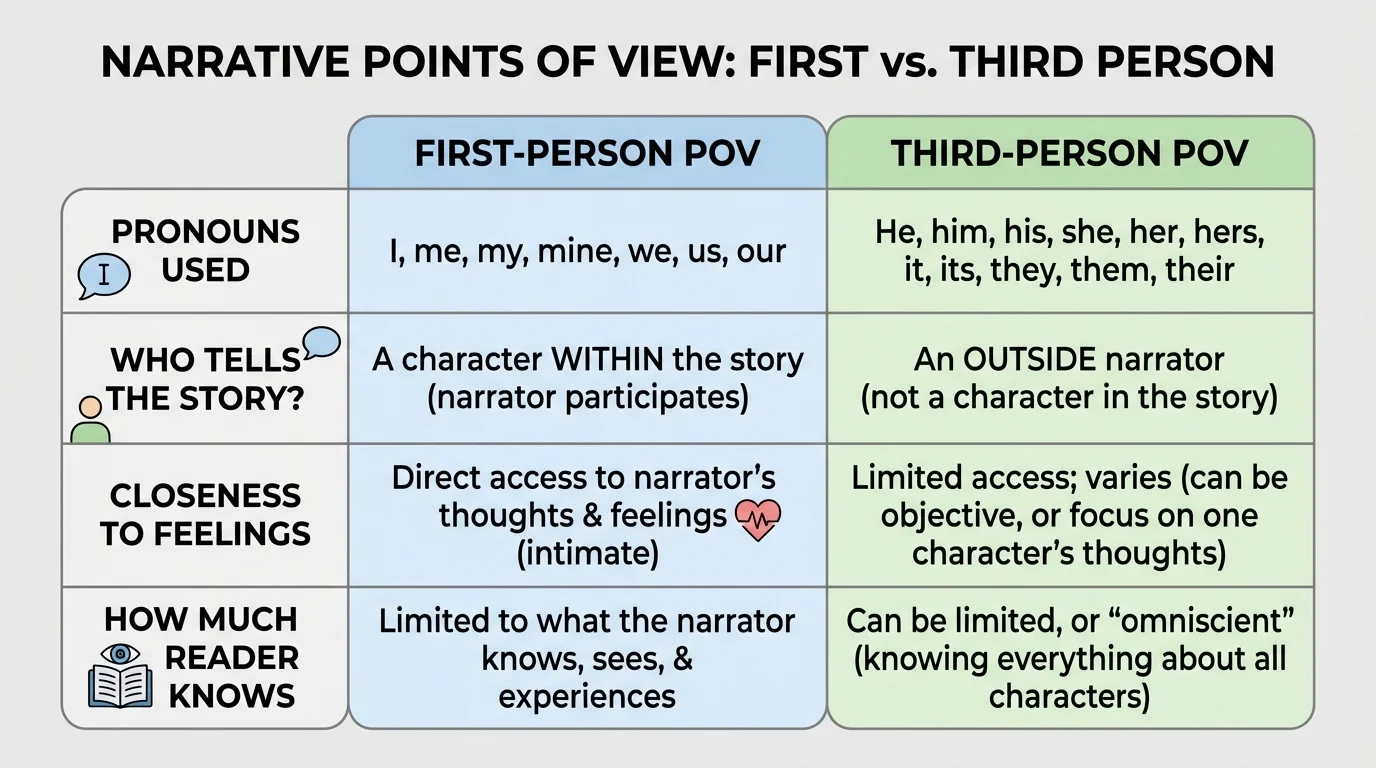
| Feature | First Person | Third Person |
|---|---|---|
| Common pronouns | I, me, my, we, our | he, she, they, him, her, them |
| Who tells the story? | A character in the story | A narrator outside the story |
| What readers usually know | Mainly what one character knows | One character's thoughts, several characters' thoughts, or only actions, depending on the story |
| How it often feels | Close and personal | Can be close or more distant |
Table 1. Comparison of important features of first-person and third-person narration.
One big similarity is that both kinds of narration tell a story with characters, events, and details. One big difference is the narrator's relationship to the story. In first person, the narrator lives through the events. In third person, the narrator reports on the events from the outside.
Pronouns are useful clues, but they are not the only clues. Readers should also ask whose thoughts are shared and how the story sounds.
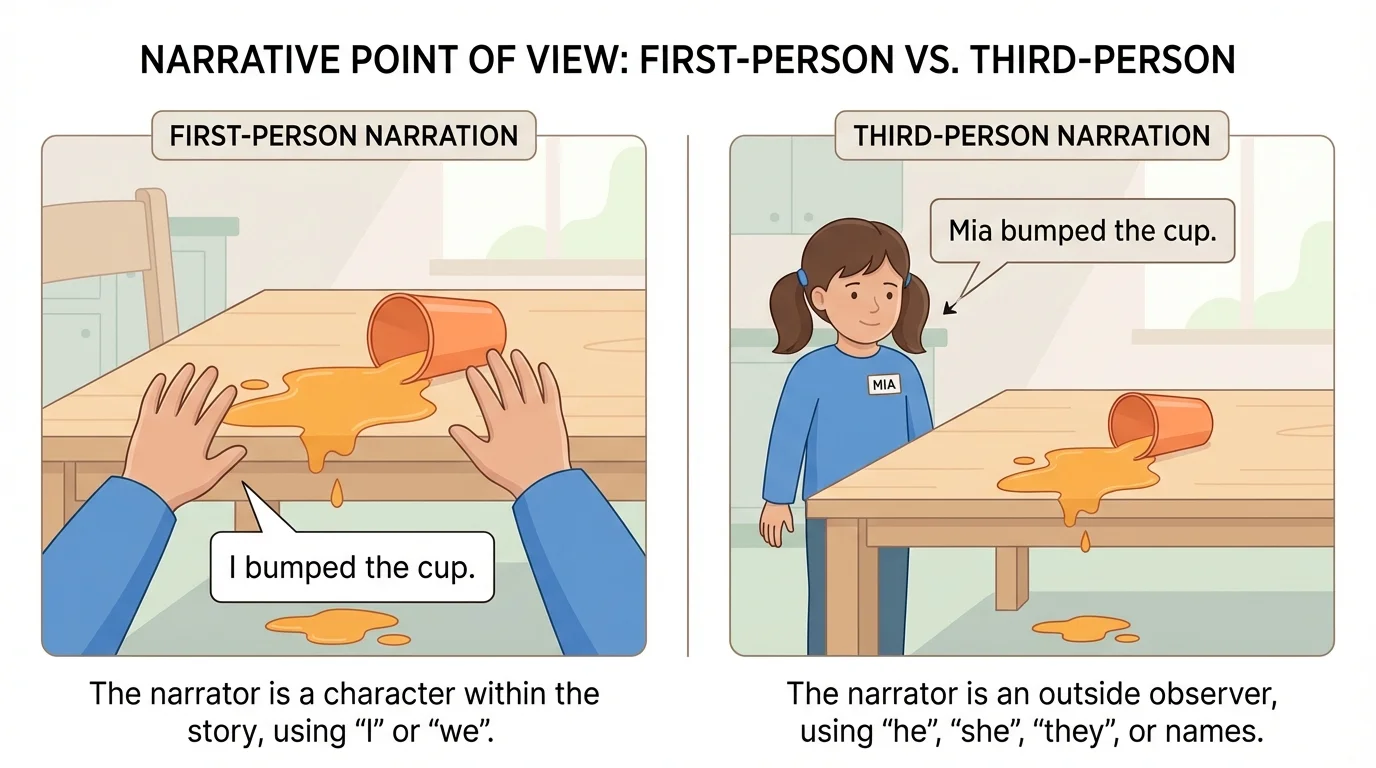
[Figure 4] shows that the same event can sound very different depending on the narrator. Changing point of view changes what details stand out and what emotions the reader feels first.
Look at this first-person version: I bumped the lunch table, and my juice spilled everywhere. My face burned as everyone turned to stare.
Now read the same moment in third person: Mia bumped the lunch table, and juice spilled everywhere. Her face turned red as the other students looked over.
Both versions tell about the same accident. But the first-person version puts readers inside the embarrassed character's feelings right away. The third-person version gives a little more distance. The event has not changed, but the storytelling has.
Many mystery stories use point of view in clever ways. If the narrator does not know who caused a problem, the reader may have to solve the mystery at the same time.
This is why comparing narrators across different stories is important. One story may let you feel every bit of a character's worry. Another may hold back information and make you observe more carefully. Point of view is part of an author's craft, not just a grammar choice.
A narrator does more than report events. A narrator also shapes meaning. If a first-person narrator says, "I bravely entered the dark basement," that sounds different from an outside narrator saying, "Theo stepped into the dark basement, trying not to show how scared he was." One version feels proud. The other may reveal fear.
Sometimes a narrator may be reliable, which means the narrator tells events in a way readers can trust. Sometimes a narrator may be mistaken, confused, or unfair. A child who thinks, "My friend ignored me on purpose," may later learn that the friend simply did not hear.
When you studied characters earlier, you learned to pay attention to what characters say, do, think, and feel. Point of view connects to that skill because the narrator controls how much of that information reaches the reader.
Point of view can also show bias. Bias means a person leans strongly in one direction and may not be completely fair. A narrator who dislikes a character may describe that person in a negative way. Readers should notice whether the narration seems balanced or one-sided.
For example, if one narrator says, My little brother ruined my science project on purpose, readers hear blame and frustration. Another narrator might describe the same event this way: Ben reached for the poster board and accidentally knocked over the model volcano. The point of view changes how readers judge the situation.
Good readers look for clues in the language of the story. The first clue is pronouns. If you see I, me, or my, the story is likely first person. If you see he, she, or they, the story is likely third person.
The second clue is this question: Is the narrator a character in the story? If yes, it is first person. If no, it is third person.
The third clue is what the narrator knows. In first person, the narrator usually shares personal thoughts and feelings directly. In third person, the narrator may share one character's thinking, several characters' thinking, or mostly outside actions.
How to identify point of view
Step 1: Look for pronouns.
If the story says I raced to the bus stop, that points to first person. If it says Leah raced to the bus stop, that points to third person.
Step 2: Ask who is telling the story.
If Leah herself is speaking, it is first person. If an outside voice is speaking about Leah, it is third person.
Step 3: Check what the narrator knows.
If the story tells only what Leah thinks, the narration is limited to her view. If it also tells what Sam thinks, the third-person narrator may know more than one character's thoughts.
These steps help readers do more than label a story. They help readers understand how the author builds the story's mood, mystery, and meaning.
Suppose one story says, I could barely breathe as the final note of the song echoed through the auditorium. Another story says, Amara stood still after the final note, waiting to see whether the audience would clap. Both stories might be about a concert, but the first puts readers inside the singer's body and emotions, while the second lets readers watch her from outside.
Now compare a different pair of stories. In one, a first-person narrator says, I knew the storm was coming because the sky turned green and the birds disappeared. In another, a third-person narrator says, The sky turned green. Carlos looked up, but he did not yet understand what the strange silence meant. The first narrator sounds informed and personal. The third-person narrator creates suspense because readers watch Carlos realize the danger slowly.
When comparing stories, ask these questions: Who is narrating? What pronouns are used? How much does the narrator know? How close do I feel to the character? What details do I notice because of this point of view?
[Figure 4] showed how even a simple spilled-drink moment changes when the point of view changes. That same idea works for bigger story events too, such as concerts, storms, games, and mysteries.
Authors choose first person when they want readers to feel deeply connected to one character's mind and heart. This works well in stories about growing up, solving a personal problem, or facing a challenge that feels intense and immediate.
Authors choose third person when they want more flexibility. They may want to describe several characters, move across places more easily, or create a little distance so readers can observe and think.
"The storyteller's voice changes the story we hear."
Neither point of view changes the basic events by magic. Instead, each one changes how readers experience those events. The narrator is like a window. A clear window, a close-up window, and a wide window can all face the same scene, but each gives a different view.
As seen earlier in [Figure 1] and [Figure 2], one big difference is whether the narrator stands inside the story or outside it. That choice shapes everything from feelings to mystery to the amount of information readers receive.
