Have you ever started telling a story and heard someone ask, "Wait—who was there?" or "What happened first?" That happens when the beginning is not clear enough. A strong narrative helps the reader step into the story right away. The writer shows the situation, introduces the narrator and characters, and then tells events in an order that makes sense.
A narrative is a story. It can be real or imagined. Good narratives do more than list events. They help readers understand where the story is happening, who is involved, what problem or experience is beginning, and how each part leads to the next.
Orient the reader means to help the reader understand the story from the start. A writer does this by establishing the situation, introducing the narrator and/or characters, and organizing events so they unfold naturally.
Narrator means the voice that tells the story. The narrator may be a character inside the story or a voice outside the story.
Event sequence means the order in which events happen in a story.
When readers are oriented well, they do not feel lost. They can picture the scene and follow the action. They know whose story it is and why the events matter. That makes the story more exciting, more meaningful, and easier to understand.
The beginning of a story is like opening a door. If the door opens into a clear scene, readers can walk right in. If the door opens into confusion, readers may stop and wonder what is going on. A good beginning gives enough information to get the reader started, but it does not have to explain everything at once.
For example, look at this weak opening: It happened. I was there. Then things changed. This opening is confusing. What happened? Where was the narrator? What changed?
Now look at this stronger opening: On the morning of the school talent show, I stood behind the stage curtain, squeezing my recorder so tightly my hands felt slippery. My best friend Nia whispered, "You've got this." This opening tells us when the story happens, where the narrator is, who is nearby, and what important event is beginning.
The first version leaves the reader confused. The second version makes the situation clear.
[Figure 1] To orient the reader, a writer usually answers a few quiet questions near the beginning of the story: Where is this happening? When is this happening? Who is here? What is starting to happen? The writer does not need to answer these like a checklist, but the information should appear naturally in the opening.
Establishing the situation means creating the starting moment of the story. The situation includes the setting, the people involved, and the first event or problem. Sometimes the situation is calm at first. Sometimes trouble begins right away. Either way, the reader should know enough to follow along.
Here is an example: Last Saturday afternoon, my little brother and I were helping Grandpa clean his garage when we found a dusty wooden box tucked behind a stack of paint cans. In one sentence, the writer shows time, place, characters, and the beginning of an interesting event.
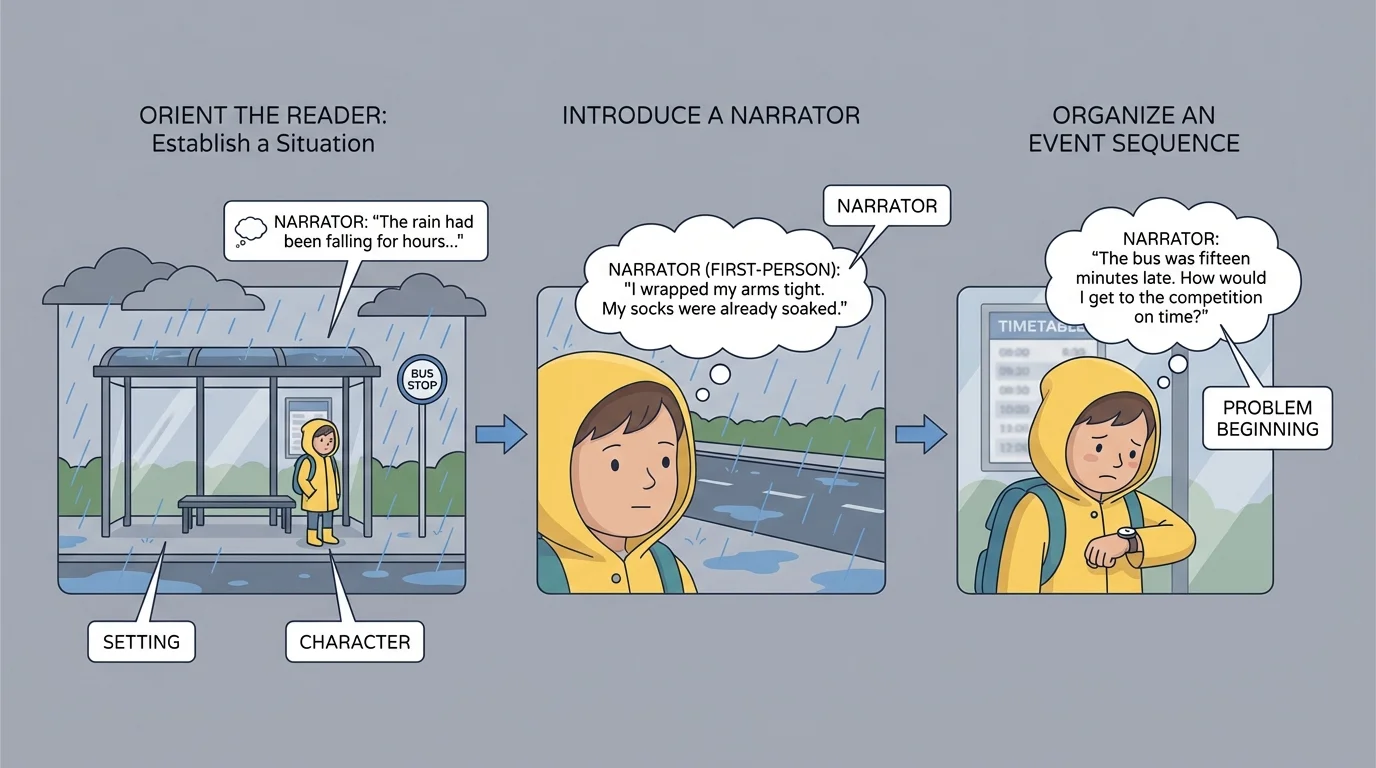
A story opening often works best when it includes specific details. Instead of saying It was nice outside, a writer might say The sun warmed the sidewalk, and the smell of cut grass drifted across the yard. These details help readers picture the moment.
Readers also need to know what kind of experience is beginning. Is this story about solving a problem, learning something, facing a fear, or enjoying a special day? The opening can hint at that. In the garage example, the box suggests mystery. In the talent show example, the curtain and nervous hands suggest a challenge.
Later in the story, the same clear beginning still matters. When readers understand the setup, they can better appreciate changes, surprises, and solutions. That is why the opening scene focuses not just on a place, but also on a problem beginning to form.
Many favorite books begin by giving just enough information for readers to ask a question. That question pulls readers forward: What is in the box? Will the performance go well? Why is the character worried?
Strong narrative writing often starts small. Instead of beginning with a whole life story, it begins with one meaningful moment.
The narrator is the voice telling the story. In some narratives, the narrator says I. This is called first-person narration. Example: I opened the box and held my breath. In other narratives, the story uses names like Maya or words like he and she. This is called third-person narration. Example: Maya opened the box and held her breath.
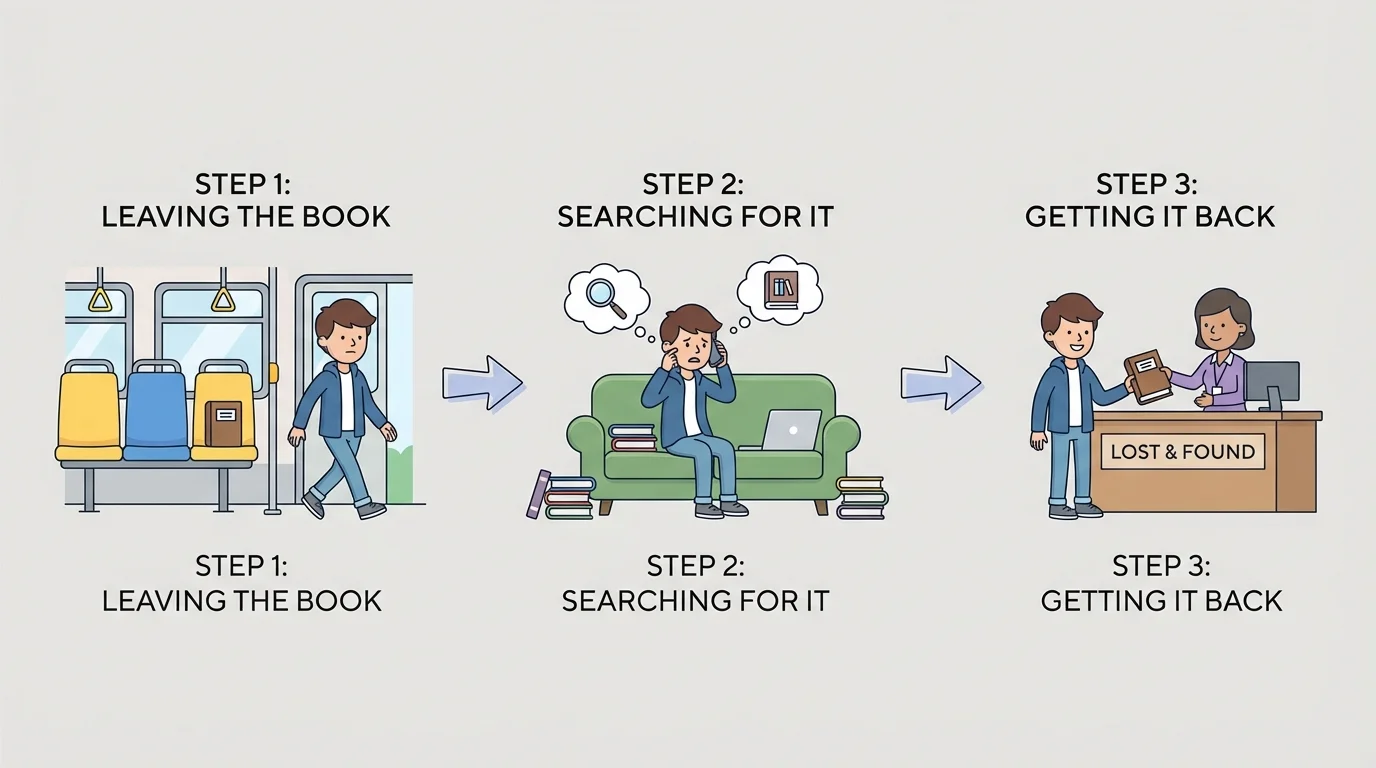
Both kinds of narration can work well. The important thing is to make it clear who is telling the story and who the main characters are, as [Figure 2] also suggests when events are shown in a clear order. Readers should not have to guess.
When introducing characters, include the ones who matter most at the start. If too many names appear in the first few lines, readers may get mixed up. It is often better to introduce the main character first, then add others when they become important.
For example, this introduction is crowded: Emma, Luis, Tara, Grandpa Ben, Aunt Kay, Mr. Soto, and the twins were all there when something happened. That is a lot to remember at once.
This version is clearer: Emma was sweeping the garage beside Grandpa Ben when she noticed a wooden box in the corner. A minute later, her cousin Luis leaned over her shoulder. Now the reader meets the characters in a calmer, more natural way.
Writers can also reveal a little about a character through actions, thoughts, or words. Compare these two examples:
Jada was nervous.
Jada kept tapping her shoe against the floor and checking the clock above the stage.
The second sentence shows nervousness instead of only naming it. This makes the character feel more real.
Choosing what readers need first
At the start of a narrative, readers need the most important information first: the main character or narrator, the setting, and the event that begins the action. Smaller details can come later. This helps the story stay clear instead of overloaded.
Dialogue can also introduce characters naturally. If Nia says, "You've practiced every day," we learn that she is close to the narrator and knows about the performance. Dialogue should reveal something useful, not just fill space.
Once the beginning is clear, the writer must build an event sequence that readers can follow. Events should connect step by step. One event leads to another. The middle grows from the beginning, and the ending grows from what happened before.
A natural sequence usually follows time order: first, next, later, and finally. But a story is not only a timeline. The best sequences also show cause and effect. This means one event happens because of another event.
For example: I left my library book on the bus. Because I needed it for class, I ran to the front office after school. The secretary called the bus garage, and the driver found it under a seat. This sequence feels natural because each event leads to the next.
Writers often organize narratives with a beginning, middle, and end. The beginning introduces the situation. The middle develops the problem, action, or experience. The end shows what happens last and how things change.
Here is a simple table that shows how those parts work.
| Story Part | What It Usually Does | Example |
|---|---|---|
| Beginning | Introduces setting, narrator, characters, and first event | Sam arrives at the swim meet and feels nervous. |
| Middle | Shows actions, problems, choices, and important moments | Sam forgets his goggles, borrows a pair, and misses the first call. |
| End | Shows the result, solution, or final feeling | Sam races anyway and feels proud for not giving up. |
Table 1. Main parts of a narrative and what each part usually contributes to the story.
Transitions also help the sequence flow. Words and phrases like that morning, a few minutes later, after that, meanwhile, and in the end help readers move smoothly through time. These should sound natural, not forced.
If a writer jumps from one event to another without a bridge, the story may feel choppy. For example: I got on my bike. Suddenly it was dinner. Then I won the race. The reader misses the important events in between.
As the story develops, the chain of events in [Figure 2] reminds us that each new part should grow from the one before it. Random events may be interesting by themselves, but they do not create a strong narrative unless they connect.
When you write a paragraph in any subject, ideas should go in an order that makes sense. Narrative writing follows that same rule, but it uses story events instead of facts and details only.
Sometimes writers choose to start with action and then explain a little background. That can work, but the story still needs to become clear quickly. Readers should not stay confused for long.
A natural sequence does not feel rushed or random. It feels like the reader is walking through the experience with the narrator or characters. Writers create this feeling by choosing the most important moments and giving enough detail to connect them.
This is called pacing. Pacing is the speed of a story. Big moments may need more sentences. Small, unimportant moments may need fewer. If a writer spends ten sentences tying a shoe but only one sentence describing the final game-winning shot, the pacing may feel unbalanced.
[Figure 3] Writers should linger on important events: the discovery of the box, the moment before the performance, the race to the bus, the sound of a strange noise. These moments deserve space because they matter to the story.
On the other hand, some parts can move quickly. A sentence like For the next two hours, we searched every shelf in the garage can cover time without dragging.
Natural pacing also means avoiding giant leaps that confuse the reader. If the story begins at school and the next sentence says the character is camping in the mountains, readers need a sentence or two to explain the change.
Dialogue and description do more than make a story sound vivid. They help events unfold clearly. Dialogue can reveal what characters want, fear, know, or decide. Description can show what the narrator notices at each important moment.
Compare these two versions: I opened the door. I was scared. I went in. This tells the events, but it feels flat. Now read this version: I pressed my hand against the cold doorknob. "Are you sure this is the place?" I whispered. The door creaked open, and a dusty smell drifted out. I took one careful step inside. The second version uses action, dialogue, and sensory details to guide the reader through the same moment.
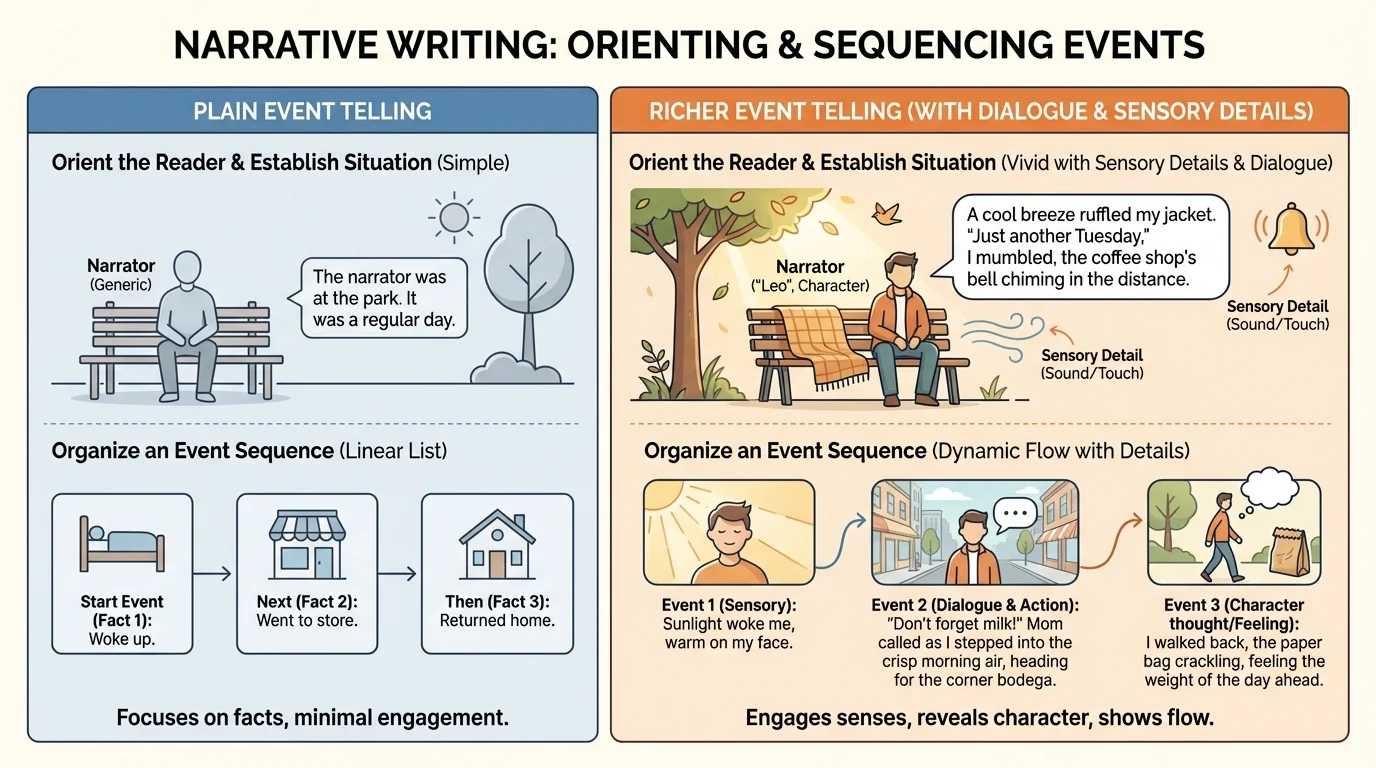
Description helps readers picture the setting and understand mood. Sensory details include what characters see, hear, smell, feel, or taste. In a narrative, these details should support the event sequence, not slow it down too much.
Dialogue should sound like real speech, but it should also be purposeful. Characters do not need to say every ordinary thing. A line of dialogue should reveal character, move the action, or add tension.
For example, "The key was in the box all along," Grandpa said. That line changes what happens next. But a long conversation about lunch might not belong in the middle of a mystery scene unless it matters to the plot.
Later, when a story reaches an important choice or discovery, the richer style in [Figure 3] helps readers feel the moment instead of just hearing a report about it.
Model opening and event sequence
Read how this short narrative orients the reader and unfolds naturally.
Step 1: Clear opening
On the first day of spring break, I rode my scooter to my neighbor Mrs. Lopez's house to feed her cat, Pepper. The air smelled like wet soil, and dark clouds were gathering above the roofs.
Step 2: Characters and problem appear
When I opened the back gate, Pepper shot past me like a furry rocket. "Pepper!" I yelled, dropping the food scoop. The cat disappeared between two hedges.
Step 3: Events connect in order
Because the rain was starting, I chased her into the alley. First I looked behind the recycling bins. Next I checked the neighbor's porch. Then I heard a faint meow coming from under a parked truck.
Step 4: Ending grows from the middle
I slid onto the wet pavement and reached under the truck with the bag of treats. Pepper crept forward, snatched one from my hand, and finally let me carry her inside. By the time I shut the door, rain was drumming on the windows, and I was laughing too hard to feel annoyed.
This narrative begins with a clear setting and task, introduces the narrator and Pepper, and moves event by event toward a believable ending.
Notice how the problem starts quickly, but not too quickly. First, the reader learns where the narrator is and why. Then the cat escapes. Because the setup is clear, the chase makes sense.
Also notice the transitions: When, Because, First, Next, and Then. These words help the reader track the sequence.
Writers often improve narratives by rereading the opening and checking whether a new reader would understand it. Revision is not just fixing spelling. It is making the story clearer and stronger.
Here is a weak version of an opening: It was exciting. We went there. Something bad happened.
Here is a revised version: On Friday night, my cousin Ava and I hurried into the packed middle school gym for the family trivia contest. We were still laughing about our team name, The Brainy Bananas, when the lights suddenly flickered and went out.
The revised version tells when and where the story happens, who is there, and what event begins the action. It orients the reader much better.
When revising, a writer can ask: Who is telling this story? Who else matters right now? Where are we? What is the first important event? Does each new event connect to the one before it?
Revision for story flow
Revision helps a writer check whether the story unfolds naturally. If a reader would ask "Who?" "Where?" or "Why did that happen next?" the writer may need to add details, reorder events, or cut extra parts.
Sometimes writers discover that an event belongs earlier or later. Moving a sentence can make the whole story easier to follow.
One common mistake is beginning too vaguely. Example: It was weird, and everything changed. This creates mystery, but it does not orient the reader enough. A fix is to add a clear setting, character, and starting event.
Another mistake is naming many characters at once. Readers can lose track. A fix is to introduce the main character first and add others only when they matter.
A third mistake is writing events that do not connect. Example: I woke up late. My dog barked. I ate cereal. We won the game. My aunt called. These events may all be true, but they do not yet form a narrative. A fix is to focus on the events that matter most and connect them with cause and effect.
A fourth mistake is rushing through the most important part. If the story is about finding the missing cat, the search should take up more space than unrelated details about breakfast.
A fifth mistake is overusing dialogue that does not help the story. A fix is to keep lines that reveal something important and trim the rest.
| Common Problem | Why It Confuses Readers | Possible Fix |
|---|---|---|
| Vague opening | Readers do not know the situation | Add when, where, who, and what is starting |
| Too many characters at once | Readers forget who matters | Introduce characters one by one |
| Random events | The sequence feels jumpy | Show how one event leads to another |
| Rushed important moment | The story feels unbalanced | Slow down and add key details |
| Extra dialogue | The action stalls | Keep dialogue that moves the story |
Table 2. Common narrative problems, why they cause confusion, and ways to improve them.
Good writers are not writers who get everything perfect on the first try. Good writers notice problems and fix them.
A strong beginning orients the reader. A strong ending feels connected to the events that came before it. The ending should not appear out of nowhere.
If the story begins with a nervous performer behind a curtain, the ending might show the performer finishing the song, hearing applause, and feeling proud or relieved. If the story begins with a mysterious box in the garage, the ending might reveal what is inside and why it matters.
Endings can show change. The character may learn something, solve a problem, grow braver, or see something differently. Even a small change can feel meaningful when it grows naturally from the event sequence.
Look at this beginning and ending pair:
Beginning: On Monday morning, I hid my poster behind my back because I was sure everyone would laugh at it.
Ending: When Ms. Green pinned my poster to the bulletin board, I still felt nervous—but this time I stood a little taller.
The ending connects to the beginning. The character has changed, and the sequence feels complete.
"A good story helps the reader know where they are, who is there, and why the next moment matters."
When you write a narrative, think like a guide. You are leading the reader through a path. If the path is clear, the reader can enjoy every turn.
