Have you ever heard someone say, "It's raining cats and dogs," even though no animals were falling from the sky? English is full of expressions that mean something different from the exact words they use. Good readers learn to notice this quickly. When you can recognize these special sayings, stories make more sense, conversations sound clearer, and writing becomes more interesting.
Some expressions are funny, some are wise, and some have been passed down for many years. Three important kinds are idioms, adages, and proverbs. They are all part of figurative language, which means language that is not always meant to be taken exactly, or literally.
When language is literal, the words mean exactly what they say. If someone says, "The glass is full of water," the meaning is direct and clear. But when language is figurative, the words may create a picture or idea that stands for something else. A reader has to think beyond the exact words.
This matters because authors, speakers, and even friends use figurative language all the time. They use it to be colorful, brief, memorable, or powerful. Instead of saying, "Calm down," someone might say, "Cool your jets." Instead of saying, "You did very well," someone might say, "You knocked it out of the park."
Literal language means exactly what the words say. Figurative language uses words in a creative or nonliteral way to express an idea, feeling, or comparison.
If you only read the words literally, you can get confused. That is why strong readers ask themselves, Does the exact meaning make sense here? If the answer is no, the words may be part of an idiom, adage, or proverb.
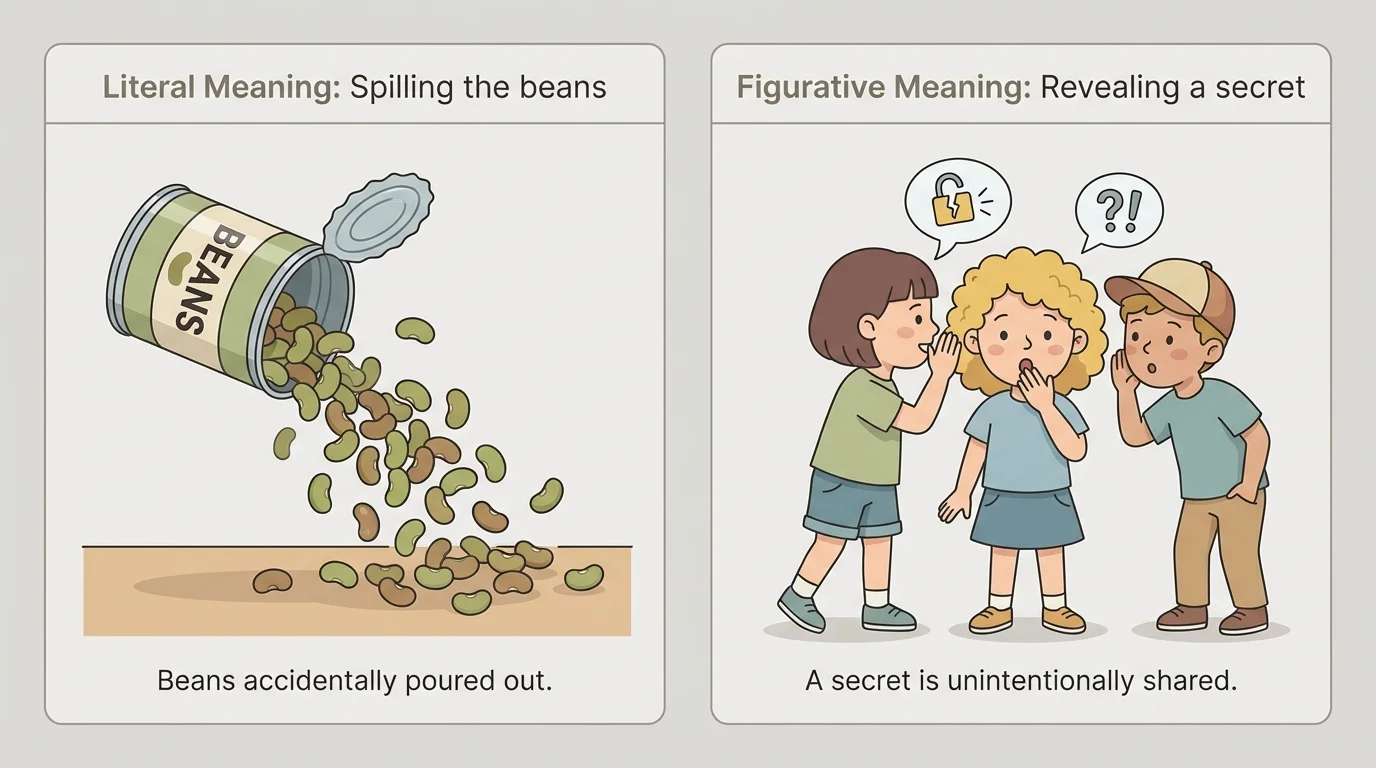
An idiom is a group of words with a meaning that is different from the literal meaning of each word. This is one reason idioms can be tricky. As [Figure 1] shows, the literal picture and the real meaning are not the same. If someone says, "spill the beans," the person usually does not mean beans are falling onto the floor. The phrase means to reveal a secret.
Idioms are common in everyday speech. People use them without even thinking about it. You may hear them at home, at school, in books, in movies, and in songs. Because idioms are used so often, learning them helps you understand what others really mean.
Here are some common idioms and their meanings:
Notice that these meanings cannot be found by looking at each word by itself. For example, "piece," "of," and "cake" are ordinary words. But together, they form an expression that means something easy. That is why readers must understand the whole phrase, not just the parts.
Explaining an idiom in context
Sentence: "Before the test, Maya told herself to hit the books."
Step 1: Read the whole sentence.
The sentence is about a test, so the topic is probably school or studying.
Step 2: Check the literal meaning.
Actually hitting books with your hand would not make sense in this situation.
Step 3: Infer the figurative meaning.
Because the sentence is about a test, "hit the books" means to study.
The idiom helps the writer say the idea in a lively, memorable way.
Later, when you meet a new idiom, remember the same strategy. Just as we saw with "spill the beans" in [Figure 1], the exact words may create a silly picture, but the real meaning fits the situation.
An adage is a short saying that expresses a general truth. A proverb is also a short saying, but it usually teaches a lesson or gives advice based on common experience. These expressions are closely related, and readers can compare them clearly, as [Figure 2] illustrates.
Many people use the words adage and proverb almost the same way because both are old, familiar sayings. The main idea is that they convey wisdom. They are often remembered because they are short and easy to say.
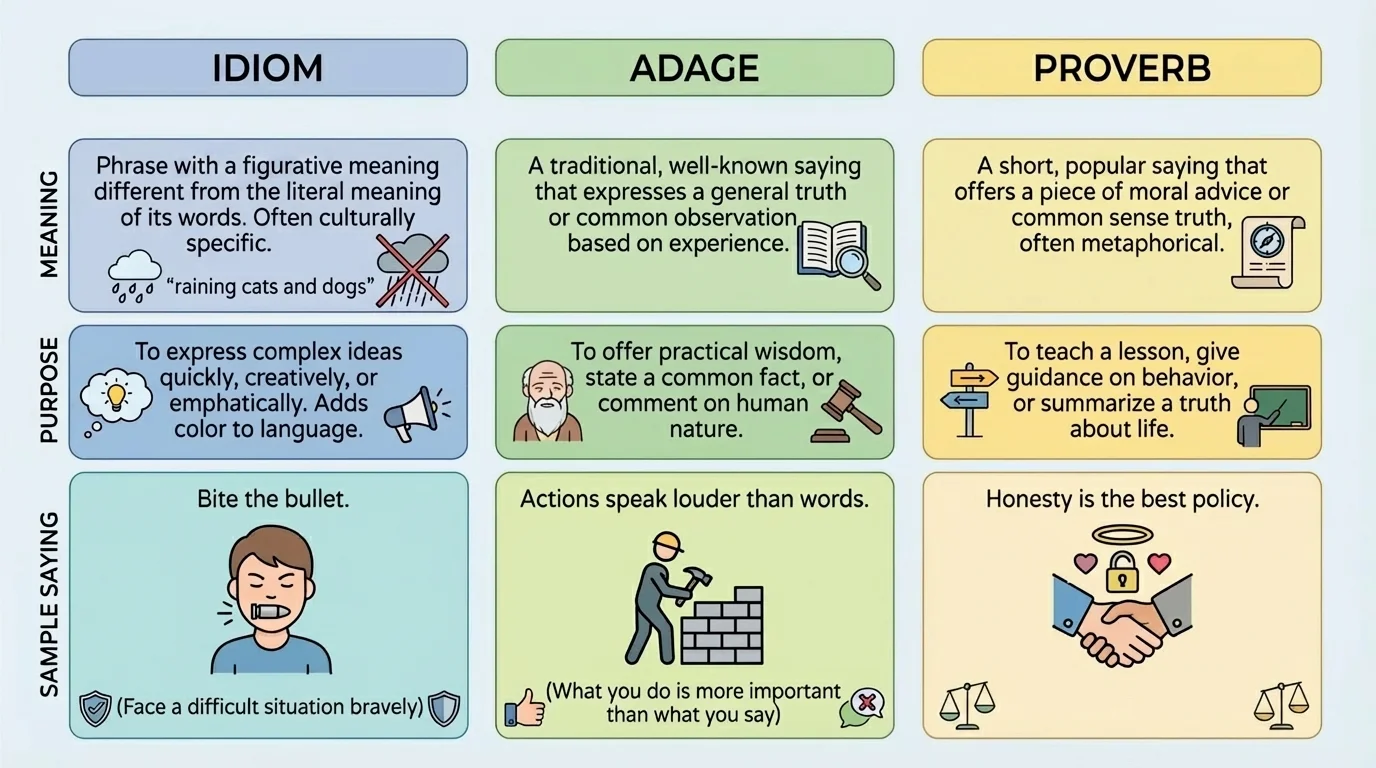
Here are some examples of adages and proverbs:
One difference is that idioms usually act like colorful expressions inside ordinary speech, while adages and proverbs often sound like complete lessons. If someone says, "He let the cat out of the bag," that is an idiom. If someone says, "Look before you leap," that is advice and sounds more like a proverb.
| Type | What it does | Example |
|---|---|---|
| Idiom | Expresses an idea in a nonliteral way | "Piece of cake" |
| Adage | States a general truth | "Better late than never" |
| Proverb | Teaches a lesson or gives advice | "Practice makes perfect" |
Table 1. A comparison of idioms, adages, and proverbs by purpose and example.
When you read or listen, ask yourself: Is this a colorful phrase? Is it a general truth? Is it advice? Those questions help you identify the kind of saying you are hearing.
Sometimes a saying is familiar, but sometimes it is new. When that happens, use context clues. These are hints from the words, sentences, and situation around the saying. The strategy in [Figure 3] helps readers move from confusion to understanding.
Here is a smart way to figure out the meaning of an unknown saying:
First, read the whole sentence or paragraph. Second, test the literal meaning. Ask whether it makes sense exactly as written. Third, look for clues about what is happening. Fourth, connect the saying to the situation. Finally, infer the meaning that fits best.
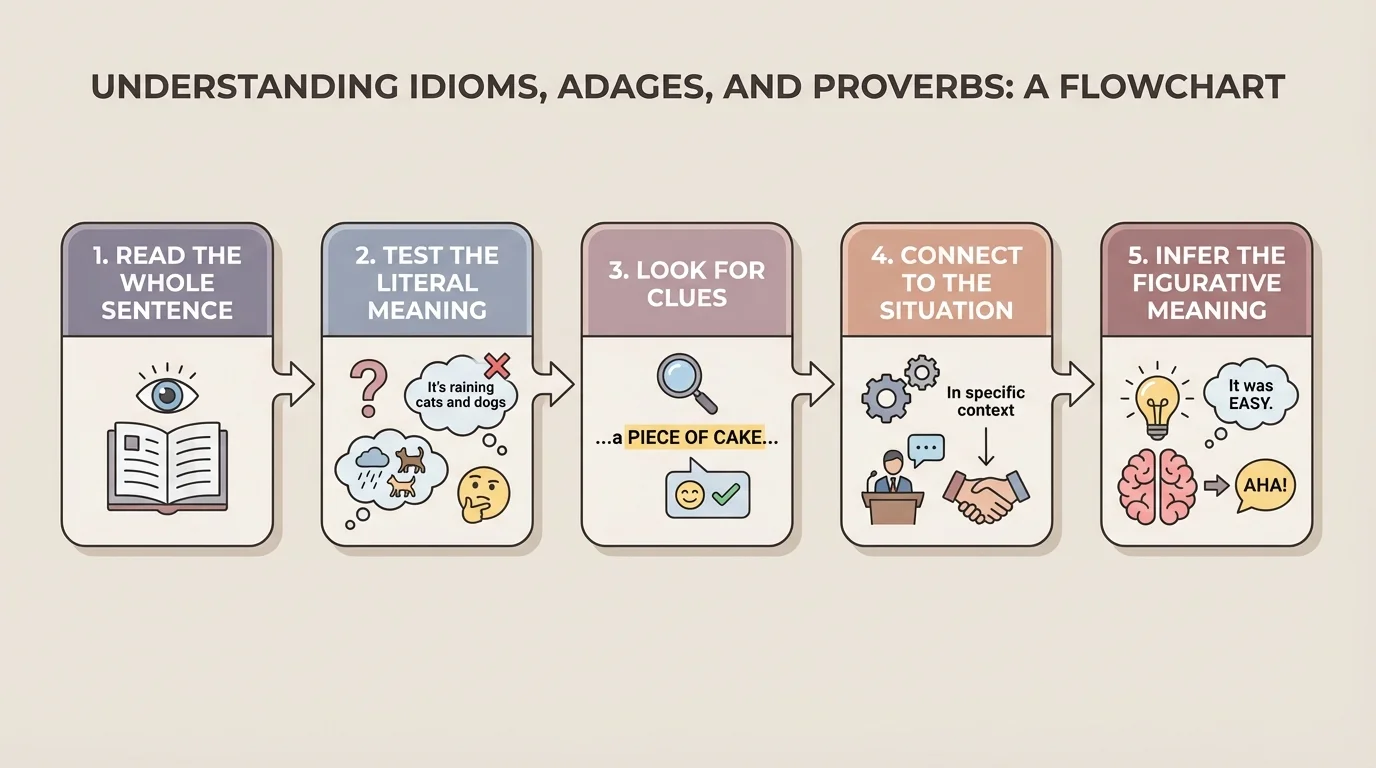
For example, read this sentence: "After missing two easy shots, Jay told himself to get his head in the game." The literal meaning would suggest that his head is somehow outside the game, which is impossible. But the context is sports, missed shots, and focus. So the phrase means pay attention and concentrate.
Readers already know how to use nearby words and sentences to understand unknown vocabulary. The same reading habit works with figurative language too. You use the surrounding text to infer meaning.
Another clue comes from what characters do or how they feel. In the sentence "Lena was nervous about meeting her new team, so Coach told a joke to break the ice," the clue is that Lena feels nervous and the coach wants people to relax. "Break the ice" means to help people feel comfortable with each other.
If the saying still seems confusing, think about what lesson or message it might be giving. That is especially helpful with proverbs. A proverb often points to a choice, a habit, or a result.
Idioms appear in many places because they make language vivid. Friends might use them in conversation. Teachers might use them while giving directions. Authors use them in stories to show personality and make dialogue sound real.
For example, if a student says, "I'm all ears," the student does not mean their whole body turned into ears. The student means, "I am listening carefully." If a parent says, "We're in the same boat," the meaning is that everyone shares the same situation or problem.
Some idioms are so old that people no longer remember how they first started. Even so, the expressions remain useful because people understand their figurative meanings.
Writers choose idioms carefully. A character who says "easy as pie" may sound relaxed and cheerful. A character who says "walking on thin ice" may sound worried or cautious. The choice of words adds mood and voice.
Understanding idioms also keeps readers from misunderstanding important moments. If a coach says, "Keep your eye on the ball," the coach may mean that in a literal sports setting. But in another situation, the same phrase might mean to stay focused on the main goal. Context helps you decide.
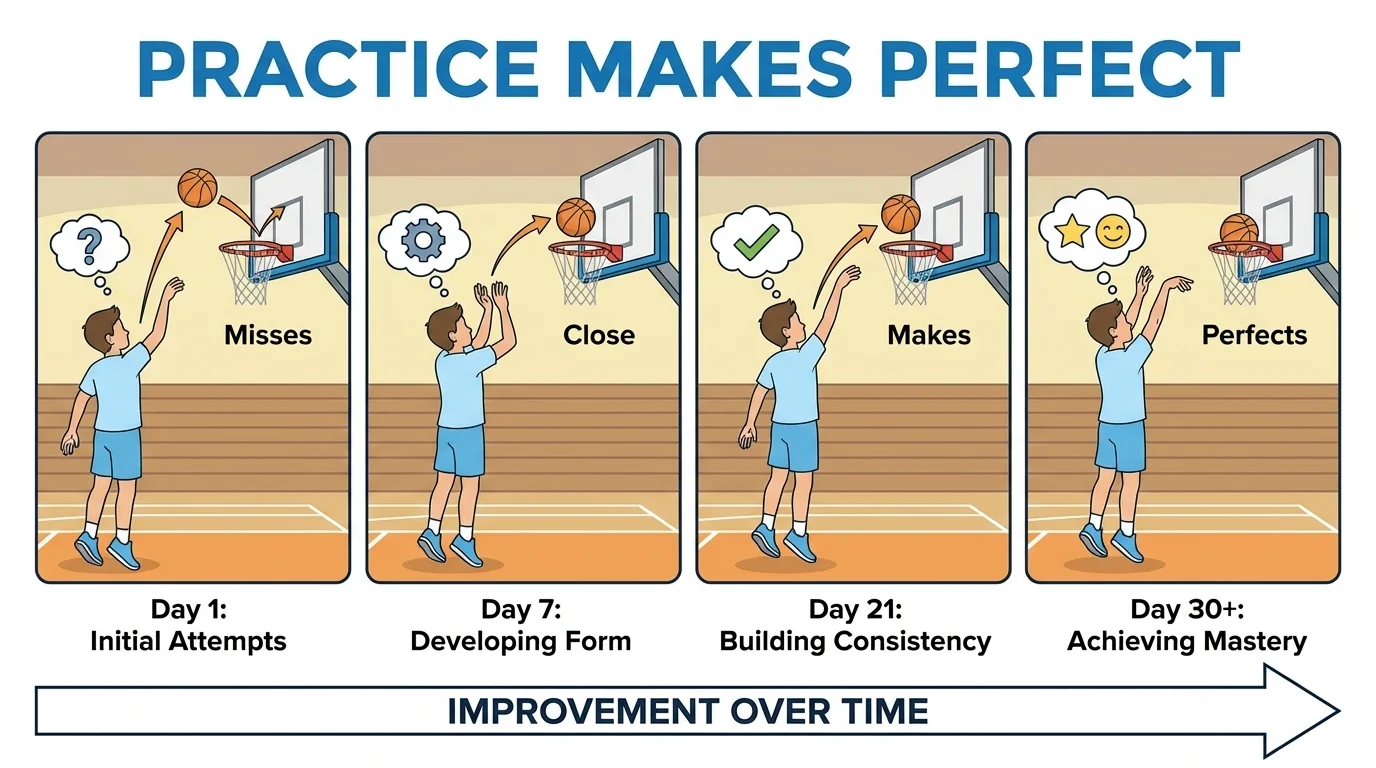
Adages and proverbs often stay popular because they hold a lesson people find useful. As [Figure 4] shows, "Practice makes perfect" connects repeated effort with improvement over time. These sayings are short, but they can express big ideas about choices, hard work, patience, and honesty.
When someone says, "Actions speak louder than words," the message is that what people do matters more than what they only say. When someone says, "Two wrongs don't make a right," the lesson is that doing something bad in return does not fix the first bad action.
These sayings can guide behavior. A student who remembers "Slow and steady wins the race" may decide not to rush through a project. A friend who remembers "Honesty is the best policy" may choose to tell the truth even when it feels hard.
"Practice makes perfect."
— Common proverb
Because proverbs teach lessons, they often connect to themes in stories. A story about patience might fit the proverb "Good things come to those who wait." A story about being careful might connect to "Look before you leap." As with the practice example in [Figure 4], the saying becomes clearer when you connect it to real actions and results.
Some sayings seem alike, but they are not exactly the same. Good readers notice these small differences, called nuances. A nuance is a slight difference in meaning.
For example, "Better late than never" and "The early bird catches the worm" both relate to time. But they do not teach the same lesson. "Better late than never" means it is still worth doing something even if you are late. "The early bird catches the worm" means starting early gives you an advantage. One encourages finishing; the other praises being early.
Compare these pairs:
These differences matter. If you are explaining a saying, you should try to give the exact meaning, not just a close guess. Saying that "look before you leap" means "be early" would be incorrect. It really means "be careful before making a choice."
How word relationships help meaning
Readers understand sayings better when they connect them to related ideas. For example, sayings about patience, caution, honesty, or effort can be grouped together. Then the reader can see both the shared idea and the small difference in message.
Thinking about word relationships also helps when you notice repeated themes across texts. A folktale, a classroom rule, and a family saying may all teach similar wisdom in slightly different ways.
One common mistake is taking every expression literally. If a character says, "My little brother is a couch potato," the character is not saying the brother is made of food. The meaning is that he sits around too much and is not active.
Another mistake is guessing too quickly. Readers should not grab the first meaning that comes to mind. Instead, they should read around the saying, think about the situation, and choose the meaning that fits best. The clue process from [Figure 3] is especially helpful when the saying is unfamiliar.
A third mistake is confusing an idiom with an adage or a proverb. An idiom usually works like a phrase inside a sentence. A proverb often stands alone as advice or wisdom. If you keep asking whether the expression is giving a lesson, you will have an easier time telling them apart.
Comparing three expressions
Read each one and identify what kind it is and what it means.
Step 1: "Under the weather"
This is an idiom because the words do not mean exactly what they say. It means feeling sick.
Step 2: "Better late than never"
This is a proverb because it teaches that doing something late is still better than not doing it at all.
Step 3: "Look before you leap"
This is a proverb because it gives advice: think carefully before acting.
Looking at purpose helps identify each type correctly.
Smart readers keep a curious attitude. If a phrase sounds odd, funny, or impossible, that is often a sign that the writer is using figurative language.
When you understand idioms, adages, and proverbs, you become a stronger reader. You understand characters better, follow stories more closely, and catch hidden lessons. You also become a better listener because you can understand what people mean, not just what they say word for word.
You can also use these expressions in your own speaking and writing. An idiom can make a sentence more lively. A proverb can support an opinion or connect to the lesson in a story. Still, it is important to use them carefully and correctly. A saying is most powerful when it matches the situation.
For example, if you are writing about how effort helps someone improve at piano, "Practice makes perfect" fits well. If you are writing about making a rushed decision, "Look before you leap" would be a stronger choice. Picking the right saying shows that you understand its meaning, not just its words.
The more you read, the more of these expressions you will notice. Each time you meet one, pause and ask: What is the saying? Is it literal or figurative? Is it an idiom, an adage, or a proverb? What message does it give? Those questions help turn confusing phrases into clear meaning.
