Have you ever noticed that people do not talk exactly the same way all day long? A student might chat one way with a friend at lunch and a different way when giving a report to the class. Both ways of speaking can be correct. The important skill is knowing which kind of English fits the moment. Strong speakers know how to match their words to the situation.
When we speak, we are not just sharing words. We are also sending a message about how seriously we take the moment. If you are presenting ideas to your class, your teacher and classmates need clear, organized information. If you are talking with two partners while solving a classroom problem, a more relaxed style may work well. Good speakers think about audience, purpose, and place before they begin.
Your purpose is the reason you are speaking. Maybe you want to explain, persuade, report, ask a question, or have a friendly conversation. The same person may use different kinds of English during the same school day because the purpose changes.
Formal English is careful, respectful, organized language used in serious or public situations. Informal discourse is relaxed, everyday speaking used in comfortable social situations, such as talking with friends or working in a small group.
Neither style is "better" all the time. Each one has a job. Formal English helps people sound prepared and respectful. Informal discourse helps people connect, brainstorm, and share ideas comfortably. Learning when to switch styles is part of becoming an effective speaker and listener.
Formal English is the kind of speaking people use when the situation is important or when they are speaking to a larger group, adults they do not know well, or people who expect careful language. Formal English usually includes complete sentences, correct grammar, specific word choices, and a respectful tone.
In formal English, speakers often avoid slang. They also avoid words that are too casual, such as "gonna," "wanna," or "yeah," when a more polished choice like "going to," "want to," or "yes" fits better. Formal speakers try to sound clear instead of rushed or silly. They organize their ideas so listeners can follow them easily.
For example, a student giving a science report might say, "Today I will explain how plants need sunlight, water, and air to grow." That sounds organized and clear. The student likely would not say, "So, like, plants kinda need stuff and all that," because that sounds unclear and too casual for a presentation.
Features of formal speaking
Formal speaking often includes an introduction, clear facts, transition words such as first, next, and finally, and a respectful ending. The speaker thinks ahead, chooses precise words, and speaks in a way that helps the audience understand.
Formal English does not mean using big, confusing words. It means choosing the right words. A grade 4 student can speak formally by being clear, respectful, and organized.
Informal discourse is relaxed conversation. It is the kind of talk people often use with friends, family members, or classmates during partner work and small-group discussion. Informal speech can still be polite and thoughtful, but it sounds more natural and less stiff.
When students are sharing ideas in a small group, they may use shorter sentences, everyday words, and a conversational tone. Someone might say, "I think this part means the character feels nervous," or "Wait, can you explain your idea again?" Those are appropriate informal comments for a group conversation.
Informal speaking is helpful because it lets people think out loud, ask quick questions, and build ideas together. It can make teamwork easier. Even so, informal does not mean rude. Students should still listen carefully, take turns, and respond respectfully.
Some skilled speakers switch styles many times in one day. A person might speak formally during a meeting, then informally while chatting with coworkers at lunch, and then formally again when giving instructions.
That ability to switch styles is called being flexible with language. Flexible speakers pay attention to the moment and adjust their speech to fit.
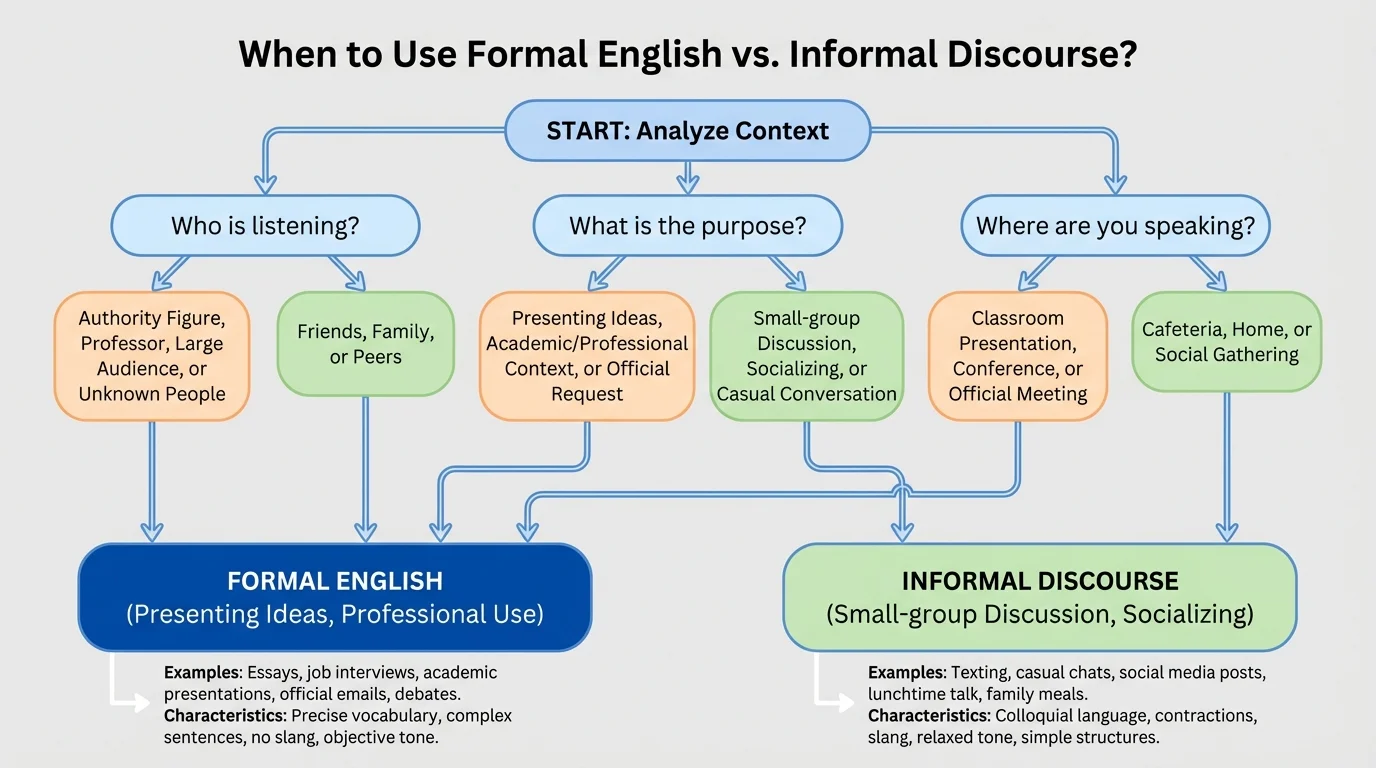
[Figure 1] One smart way to decide is to ask three questions: Who is listening? What is the reason for speaking? Where is the speaking happening? These questions help you choose whether a formal or informal style fits best.
If the audience is your whole class, your principal, a visitor, or an adult you do not know well, formal English is often the better choice. If the purpose is to present information, report findings, or explain something important, formal English usually fits. If the setting is a classroom presentation, school assembly, or official event, formal English is usually expected.
If the audience is a few classmates you know well, the purpose is to discuss ideas together, and the setting is a partner or group activity, informal discourse may be appropriate. In those situations, your speech can sound more conversational while still being respectful and clear.
Think of it like choosing clothes for the weather. You would not wear a heavy winter coat on a hot day, and you would not wear flip-flops in a snowstorm. In the same way, you choose language that fits the situation. The best style is the one that matches the moment.
Sometimes the choice is easy, but sometimes it is mixed. For example, in a small-group discussion about a serious topic, students may speak informally, but they still need accurate words and respectful behavior. Style is not just one switch that says formal or informal. It is a set of choices about tone, word choice, and organization.
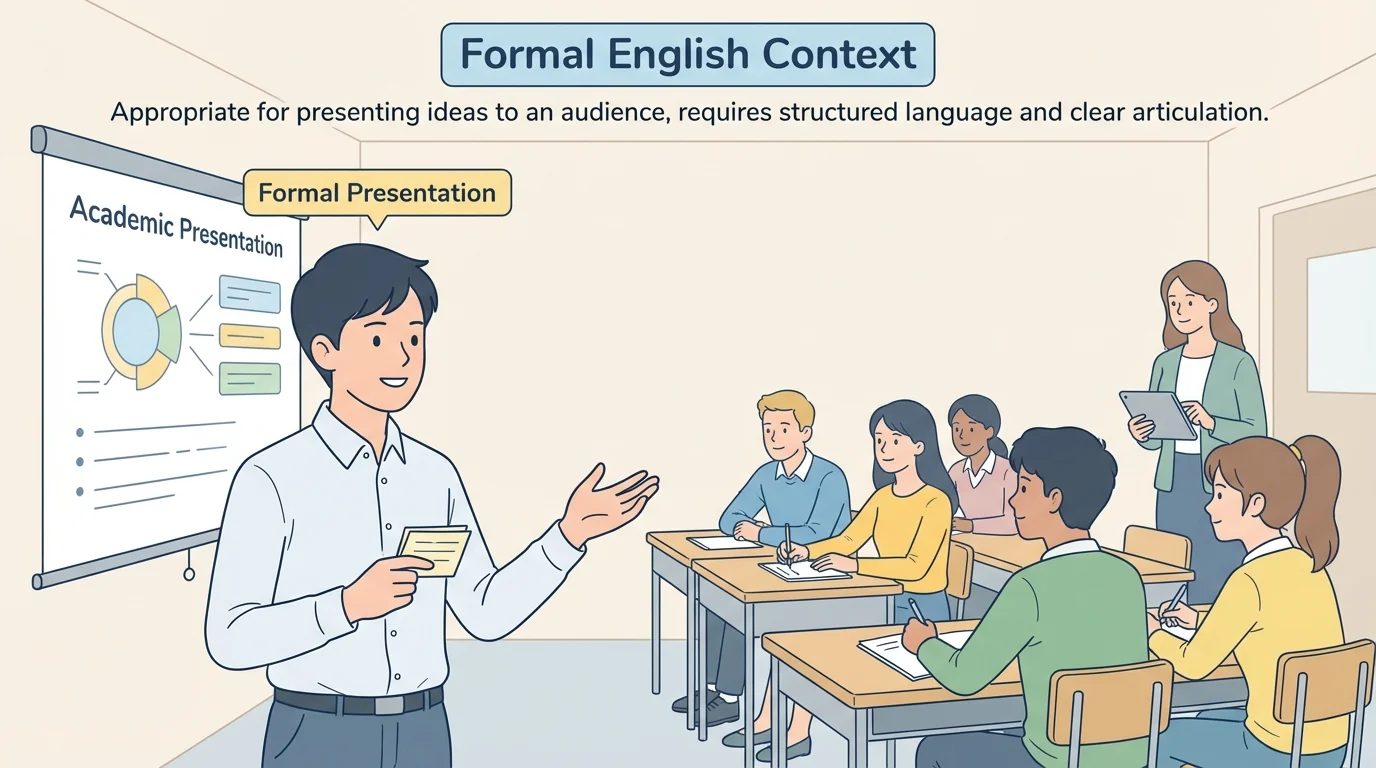
[Figure 2] Many school situations call for a more polished style. When you present ideas to the class, read a report aloud, give announcements, or explain your work to a teacher or principal, formal English helps others understand you and shows respect for the occasion.
Formal English is also useful when speaking to an adult visitor, interviewing someone, answering a serious question, or participating in a ceremony. If you are introducing a guest speaker, you would likely say, "Welcome to our classroom. Thank you for visiting us today." That sounds respectful and prepared.
Here are signs that a situation may call for formal English: many people are listening, the information needs to be accurate, the setting is public, or the event feels important. When these signs appear, careful speaking is a wise choice.
Formal English also helps when emotions are strong. If students disagree during a class debate, formal language can keep the conversation calm and respectful. Instead of saying, "That's a bad idea," a student might say, "I understand your point, but I disagree because I found different information." That sounds stronger and kinder at the same time.
Examples of formal speaking
Step 1: Presenting a book report
"My report is about Charlotte's Web. First, I will describe the main characters. Next, I will explain the problem in the story."
Step 2: Asking an adult a question
"Excuse me, could you please tell us when the assembly begins?"
Step 3: Sharing findings
"Our group observed that the seeds in sunlight grew taller than the seeds kept in the dark."
Notice that these examples use complete thoughts, respectful words, and a clear purpose.
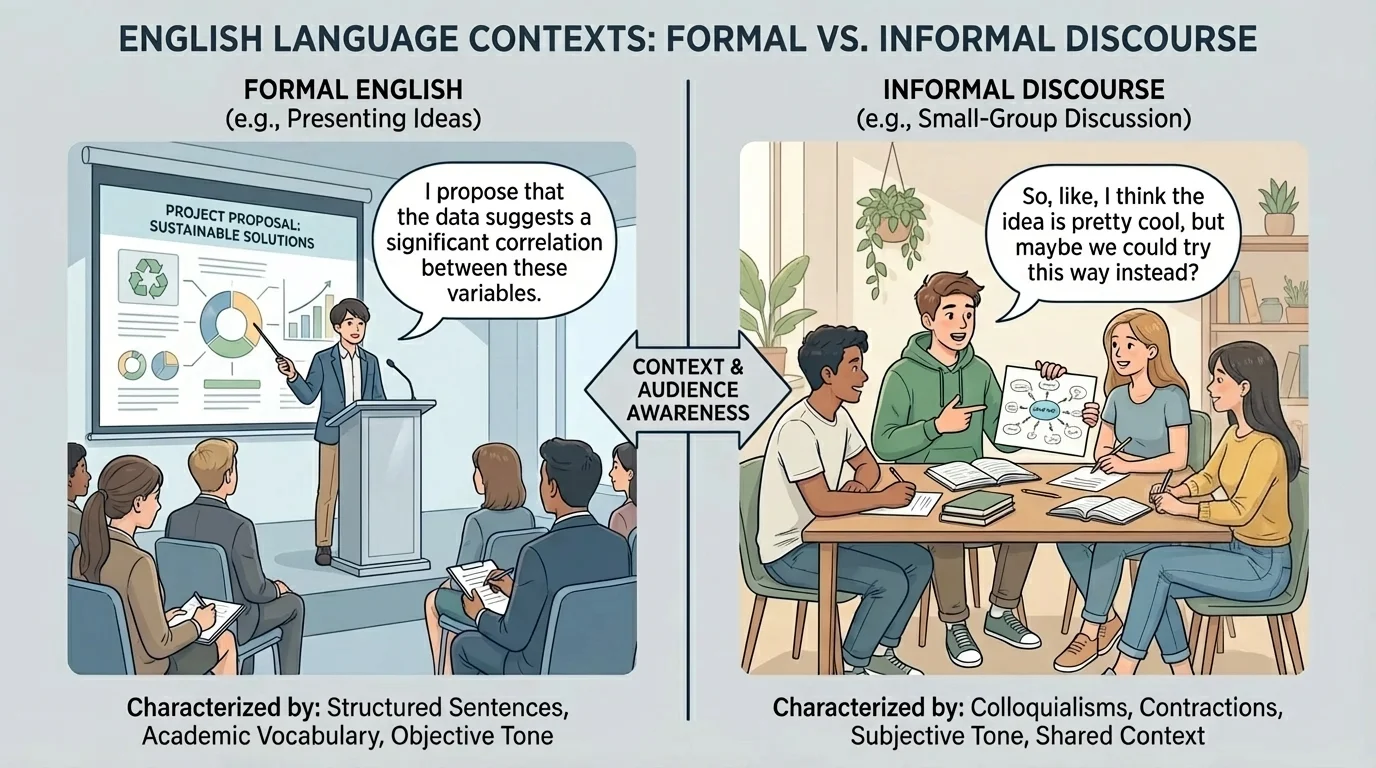
[Figure 3] At other times, a more relaxed style works well. During partner talk, group problem-solving, lunch conversation, or chatting with a friend after school, informal discourse is usually appropriate. These situations are more personal and less public.
In a small group, students often test ideas before sharing them with the whole class. They may say, "Maybe we should start with the strongest reason," or "I am not sure yet, but I think this answer makes sense." This kind of speaking helps ideas grow.
Informal speech can include contractions such as "I'm," "we're," and "don't." It can sound warmer and more natural. The key is that it should still be understandable and kind. Informal speech is not the same as interrupting, mumbling, or using hurtful slang.
Even in informal settings, there are limits. Talking with close friends at recess may be very casual, but talking with classmates during school work should still stay focused on the task. A good speaker adjusts not only to the people but also to the job that needs to get done.
Later, when the same group shares its final ideas with the whole class, the style often shifts toward formal English. This is why flexible speakers move smoothly from a relaxed small-group style to a more polished presentation style.
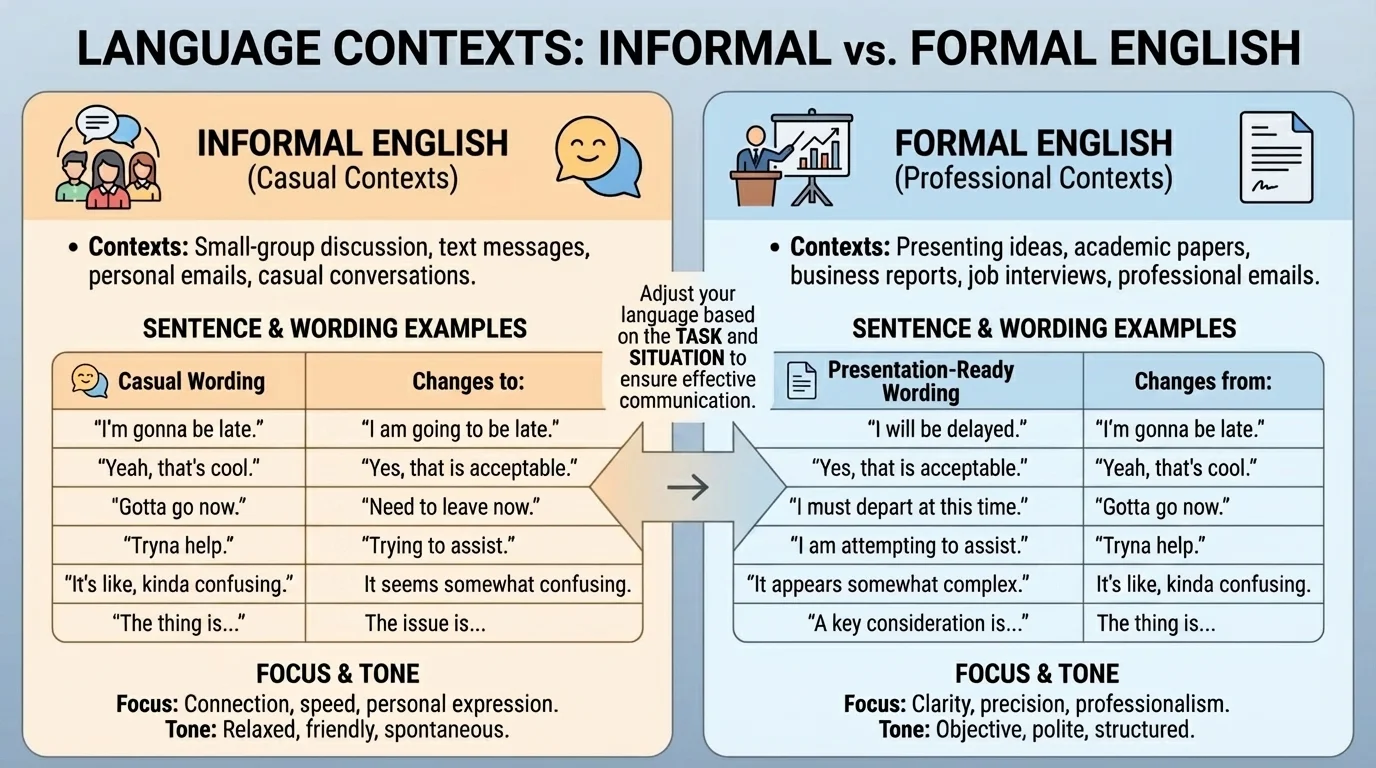
The same message can often be said in two different ways, as [Figure 4] illustrates. One version may fit a friendly conversation, and the other may fit a presentation. Learning to revise your words is an important speaking skill.
Look at how these ideas change:
| Informal version | Formal version |
|---|---|
| "Yeah, we found a lot of bugs by the log." | "Yes, we found many insects near the log." |
| "We're gonna tell you about volcanoes." | "We are going to explain how volcanoes erupt." |
| "This book was really awesome." | "This book was very interesting and exciting." |
| "Can you say that again?" | "Could you please repeat that?" |
Table 1. Examples of changing informal sentences into formal ones.
The information stays similar, but the tone changes. Formal English often replaces casual words with more specific ones. It may also add polite words such as "please," "could," or "thank you."
You do not need to sound like a robot. Formal English should still sound natural. The goal is not to erase your personality. The goal is to speak in a way that suits the task.
Remember that a complete sentence shares a full thought. Complete sentences help listeners follow your ideas, especially in formal speaking.
Suppose a student says to a small group, "I kinda think the character is upset." That may work in discussion. But in a book presentation, the student might improve it by saying, "I think the character feels upset because she lost her friend." The second version is clearer and more complete, just as the comparison shows.
A speaker should make a plan before sharing information. The plan may be simple, but it helps the message stay clear. The plan changes depending on whether the speaking is informal or formal.
For an informal discussion, the plan might be short: know the topic, think of one or two important ideas, listen to others, and respond to their comments. In a small group, the conversation can move around more naturally.
For a formal presentation, the plan should be more organized. A student can prepare an opening, key points, examples, and a closing. Note cards may help. The speaker should also think about speaking slowly enough for the audience to follow.
A simple plan for speaking
When planning, ask: What is my main idea? Who will hear me? What facts or examples should I include? How should I begin and end? Formal speaking usually needs more structure, while informal speaking allows more back-and-forth conversation.
Imagine a class studying weather. During group work, one student might speak informally: "I think we should explain tornadoes first because that part is exciting." Later, during the class presentation, the same student might say formally: "First, we will explain how tornadoes form and why they can be dangerous." The student has the same topic but a different speaking plan.
Whether speech is formal or informal, some good habits always matter. Speakers should talk clearly, stay on topic, and choose respectful words. Listeners should pay attention, avoid interrupting, and respond thoughtfully.
Tone is the feeling a voice gives. A kind, calm tone helps in both formal and informal settings. A rude or angry tone can hurt communication even if the words themselves are acceptable. Volume matters too. A presentation may need a stronger voice than a table discussion.
Presentation skills include facing the audience, speaking at a steady pace, and organizing ideas. In discussions, students still need to listen and take turns. The difference is that discussions are often more flexible and less planned than presentations.
Comparing speaking habits
Step 1: In a formal setting
Face the audience, use complete sentences, and explain ideas in order.
Step 2: In an informal setting
Make eye contact with group members, respond to their ideas, and keep the conversation friendly and focused.
Step 3: In both settings
Listen carefully, speak clearly, and show respect.
The best communicators are not just good talkers. They are good listeners too. Listening helps you know when to speak formally, when to speak casually, and how your words are being received.
One common mistake is using very casual language in a formal setting. A student might begin a report by saying, "Hey guys, today we're gonna talk about stuff." That sounds too loose for a class presentation. A smart fix would be: "Today I will explain our project and share what we learned."
Another mistake is sounding too stiff in a relaxed conversation. If a student says to a friend during partner work, "I would like to inquire about your interpretation of this paragraph," the words are correct, but they sound overly formal for the moment. A better choice might be: "What do you think this paragraph means?"
A third mistake is thinking that informal means careless. In truth, even friendly group talk should be understandable and polite. Sloppy speaking can confuse others. Respectful informal discourse still needs good listening and turn-taking.
"Good speakers do not always sound the same. They sound right for the situation."
When students ask the three questions from [Figure 1] and remember the differences between public speaking and group conversation, they make wiser language choices.
As you grow, you will speak in many situations: with classmates, teachers, family members, community helpers, and larger groups. Some moments will call for a relaxed voice. Others will call for polished, formal English. Knowing the difference helps you communicate clearly and respectfully.
Being able to switch styles is a real strength. It shows that you understand your audience, your purpose, and your setting. It also helps your ideas shine. People are more likely to listen carefully when your words fit the task.
When you present information formally, aim for complete sentences, clear organization, and respectful word choice. When you join an informal discussion, aim for friendly, focused conversation. Both styles matter, and both help you become a thoughtful communicator.
