Have you ever noticed that two people can walk into the same situation and react in completely different ways? One person may stay calm, while another panics. Stories work the same way. Writers build meaning by showing how people, places, and events are alike and different. When you learn to compare and contrast these parts of literature, you become a sharper reader who can explain not just what happens, but why it matters.
To compare means to tell how things are alike. To contrast means to tell how they are different. Strong readers do both. They do not just say, "These characters are different." They explain how they are different and point to details from the text.
Comparing and contrasting helps you understand a story more deeply. When you notice that one character is brave and another is cautious, you start to see how each one handles a problem. When you compare two settings, you may discover how the place changes the mood. When you contrast events, you can explain how one event causes another.
Character is a person, animal, or being in a story. Setting is where and when a story happens. An event is something that happens in the plot. A drama is a story written to be performed by actors. Evidence is a detail from the text that supports an idea.
Good literary analysis depends on paying attention to details. A reader may notice words in narration, actions, dialogue, thoughts, and descriptions. These details are the clues that help you build a clear explanation.
When readers study literature closely, they often look for a trait, which is a quality a character shows, such as kindness, stubbornness, or courage. They also look at motivation, or the reason a character acts in a certain way. These ideas help readers explain why characters make certain choices.
Another important phrase is text evidence. Text evidence includes exact words, actions, or descriptions from the story or drama. Instead of making a guess, you support your thinking with proof from the text.
Remember that stories often include a beginning, middle, and end. Characters face problems, make choices, and respond to events. Knowing this basic story structure makes it easier to compare what happens and why.
Readers also pay attention to interaction. An interaction is how characters act toward one another. A kind interaction may build friendship, while a harsh interaction may create conflict. Looking at interactions is especially helpful when comparing characters.
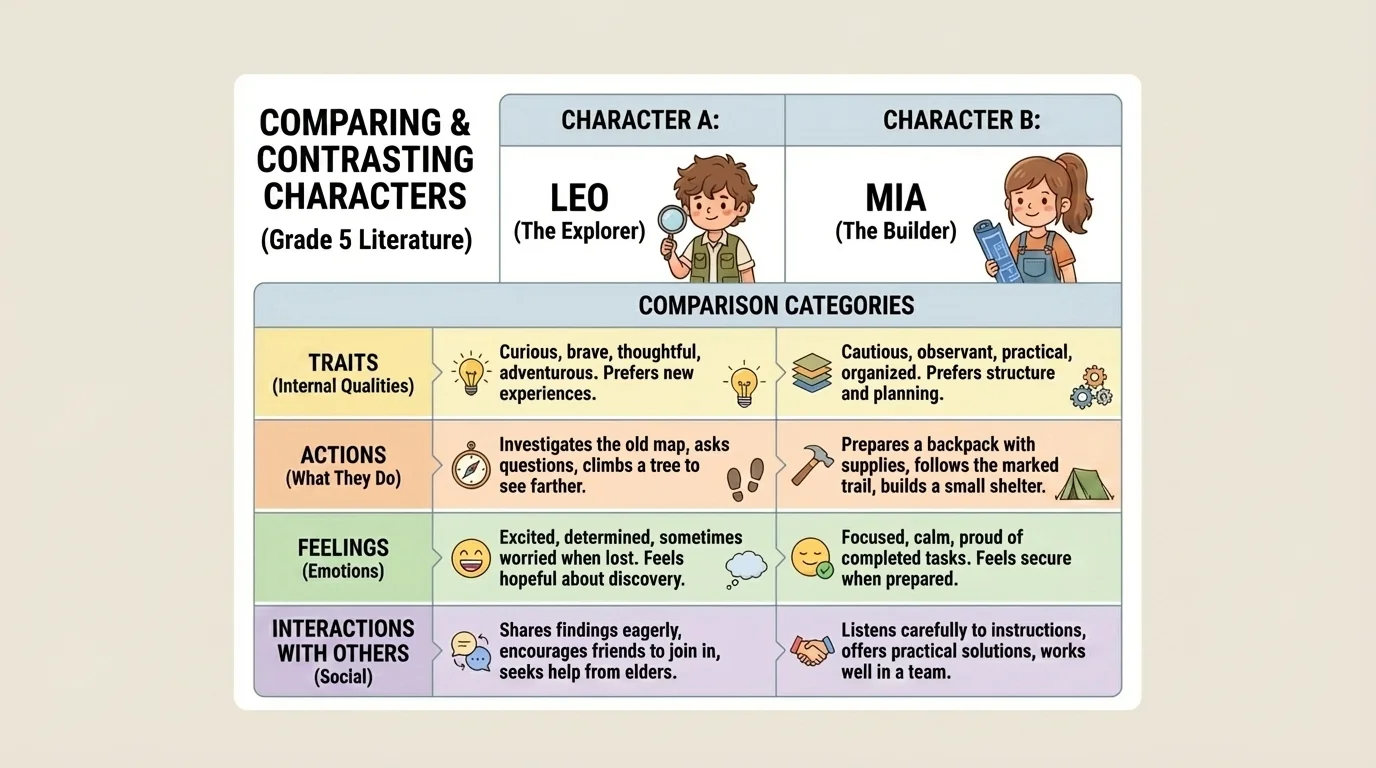
Characters can be compared by their appearance, personality, words, actions, and relationships. Readers also compare what characters want and how they respond to the same challenge, as [Figure 1] illustrates through a side-by-side character comparison. The strongest comparisons use details about what characters say, do, think, and how they treat others.
Suppose a story has two siblings, Maya and Leo, who discover a lost dog. Maya immediately makes posters and asks neighbors for help. Leo worries that they might make a mistake and wants to check for a collar first. These details show that both characters are caring, but Maya is more ready to take action, while Leo is more careful and thoughtful.
A strong comparison might sound like this: "Maya and Leo both want to help the dog, but they act differently. Maya takes quick action by making posters, while Leo takes more time to look for clues first." Notice that this explanation compares and contrasts at the same time.
You can also compare characters by looking at change. Sometimes two characters begin in different ways and grow toward the same lesson. At other times, one changes while the other stays the same. That difference can reveal an important message in the story.
Interactions matter too. If one character encourages others while another bossily gives orders, those interactions reveal personality. Later, when a conflict appears, the reader understands why the group follows one person and resists the other. This is one reason character comparison goes beyond listing traits; it explains relationships and effects.
Character analysis example
Consider this response to a story about two friends crossing a river.
Step 1: Identify a similarity.
Both friends want to reach the other side and help their team.
Step 2: Identify a difference.
One friend takes a risk and jumps first, while the other stops to test the rocks.
Step 3: Add evidence from the text.
The first friend says, "We can't wait all day," while the second kneels down and checks each stone before stepping.
Step 4: Explain why it matters.
The difference shows that one character is impulsive and the other is cautious, which creates tension in their teamwork.
Later in a story, the same comparison can help you understand theme. For example, if the impulsive friend causes trouble but the cautious friend helps solve it, the story may suggest that patience is valuable. We can see that kind of relationship more clearly when we compare character behavior over time, just as the organized categories in [Figure 1] make differences easier to notice.
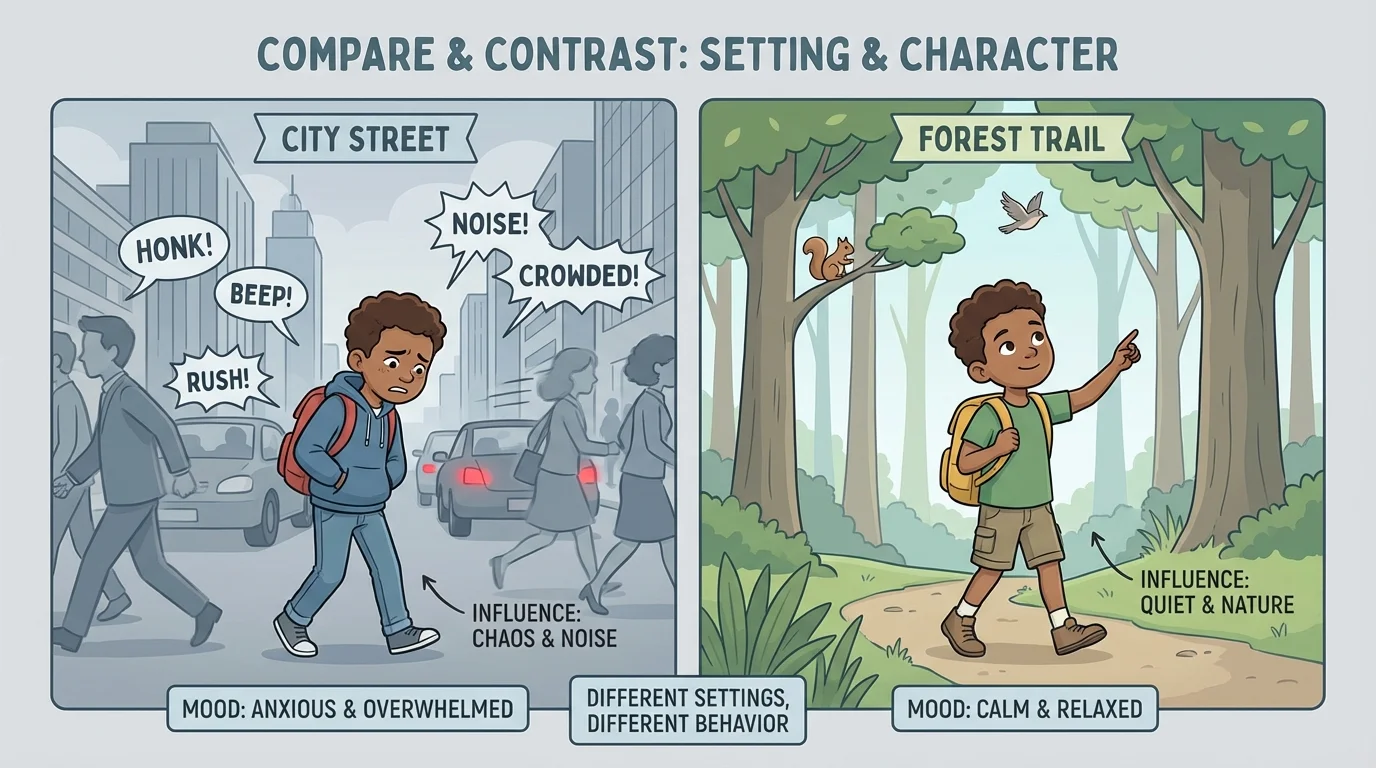
A setting includes place and time, but it can also include weather, season, sounds, and the feeling of the place. Readers compare settings to understand how the environment shapes the story, as [Figure 2] shows with two very different places affecting the same character in different ways.
Think about a story that takes place in a crowded city and another scene that happens in a quiet forest. In the city, the character may feel rushed because of noise, traffic, and people moving everywhere. In the forest, the same character may feel calm, nervous, or more aware of nature. The setting changes the mood and the choices the character makes.
Writers often use setting to create problems or opportunities. A snowstorm can trap characters indoors. A sunny park can make conversation easier. A nighttime setting may increase suspense because characters cannot see clearly. Comparing settings helps readers explain why the same character behaves differently in different places.
When comparing settings, ask questions like these: Where does each scene happen? When does it happen? What details help create the mood? How does each setting affect the characters or events? A strong answer includes both the details and the effect.
For example, you might write, "The school hallway and the empty library are both inside the same building, but they create very different moods. The hallway is loud and hurried, while the library is silent and serious. Because of this difference, the character feels distracted in the hallway but focused in the library."
Some authors use setting almost like another character. A storm, a desert, or a crowded neighborhood can create so much pressure that the place itself seems to push the plot forward.
Comparing settings can also reveal change. If a story begins in a warm, welcoming home and later moves to a dark, unfamiliar place, the contrast helps the reader feel the shift in the character's life. The mood differences in [Figure 2] help readers notice how place can shape emotion and action.
An event is something that happens in the plot. Readers compare events by looking at order, cause, effect, and importance. Two events may seem similar because both involve a challenge, but they can still have very different results.
Suppose, in one part of a story, a character loses a race because she does not practice. Later, she enters another race after training every day. These events both involve competition, but they contrast in preparation and outcome. The comparison helps show character growth.
When comparing events, think about questions such as: What happened first? What happened next? What caused each event? How did each event affect the character or plot? These questions help move your thinking beyond retelling.
Readers should also notice repeated patterns. Sometimes an author includes two similar events on purpose. The first event may show a mistake, and the second may show learning. This pattern helps readers understand the message of the story.
Cause and effect in event comparison
When you compare events, do more than list them. Explain the link between them. If one event causes fear and another causes confidence, that contrast may show growth. If two events lead to the same problem, the story may be warning the reader about repeated poor choices.
Events can also be compared across texts. If two different stories both include a hero helping someone in danger, you can compare how each event unfolds. One hero may act alone, while another asks for help. One event may end happily, while another leads to a harder lesson.
One of the most important reading skills is supporting your ideas with details from the text. This means using words, actions, descriptions, or lines from the story or drama instead of making a claim with no proof.
For fifth-grade readers, evidence does not always need to be a direct quotation. You can paraphrase, which means to tell the detail in your own words. For example, instead of copying a sentence exactly, you might explain that the character hid the letter in a drawer, which shows secrecy.
A strong evidence-based response often follows a clear pattern: make a point, give evidence, and explain the evidence. For example: "Tariq and Elena both care about their grandmother. Tariq shows it by fixing her fence, while Elena shows it by reading to her every evening. These actions show that both are loving, but they help in different ways."
Turning details into evidence
Question: How are the two settings different, and how does that affect the main character?
Step 1: Make a clear claim.
The beach setting feels open and joyful, but the cave setting feels cramped and scary.
Step 2: Add text details.
At the beach, sunlight sparkles on the water and children laugh nearby. In the cave, water drips from the ceiling and the passage is narrow and dark.
Step 3: Explain the effect.
The character feels free at the beach but tense in the cave, so the setting changes the mood of each scene.
Notice that the explanation does not just repeat details. It connects the details to an idea. That is what strong readers do when they support analysis, reflection, and research with evidence from literary texts.
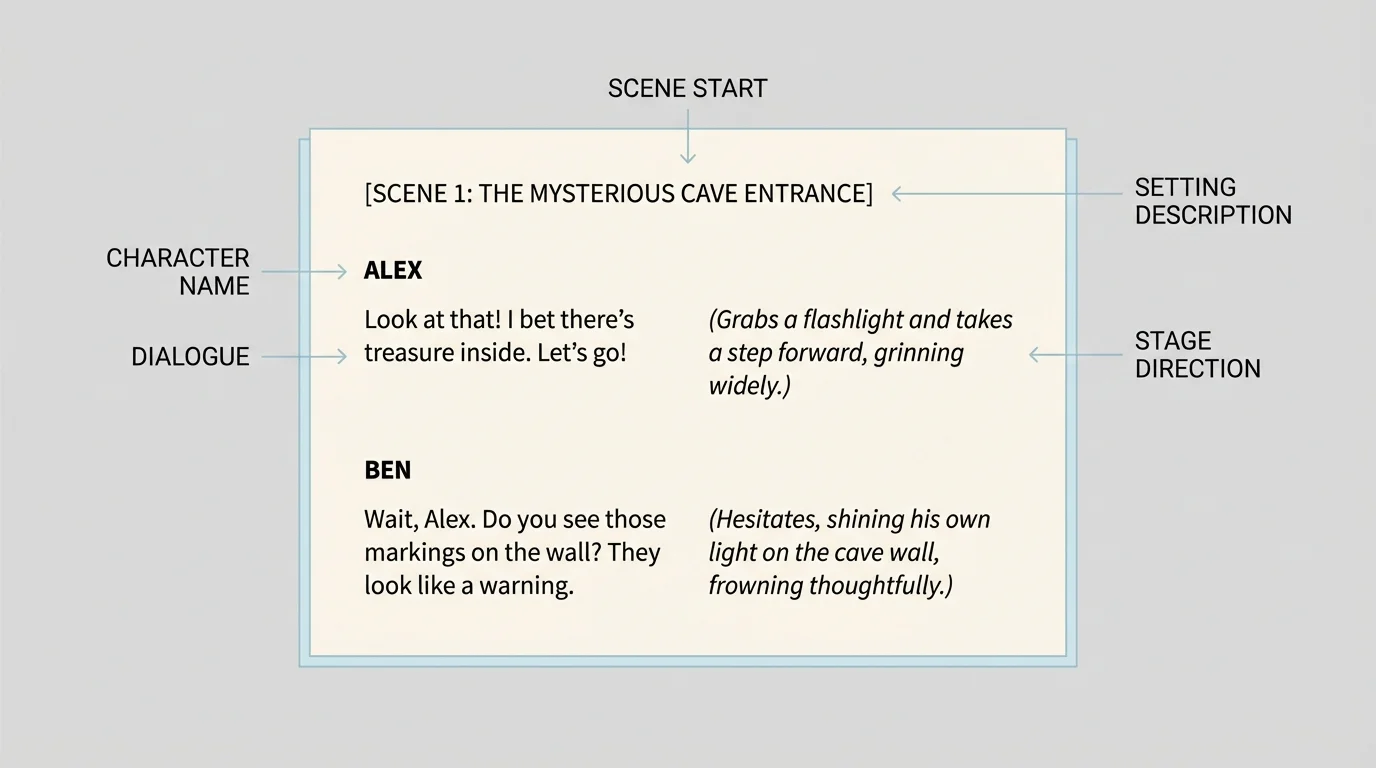
[Figure 3] Stories and dramas both include characters, settings, and events, but they present them in different ways. In a story, readers often learn through narration, description, and inner thoughts. In a drama, readers learn mainly through spoken lines and stage directions.
Stage directions are notes that tell how characters move, speak, or act on stage. If a stage direction says that a character whispers while looking down, that detail helps you compare that character to another who speaks loudly and stands tall. In a drama, those clues are very important because readers may not get long descriptions.
When comparing events in a drama, pay close attention to dialogue. A short exchange can reveal conflict, friendship, fear, or excitement. A reader might compare two scenes by noticing how the same character speaks differently in each one. If the character starts with angry, sharp answers and later speaks calmly, that contrast may show growth.
Settings in dramas may also be shown in a special way. A script might begin a scene with a note such as "A small kitchen at dawn" or "A crowded courtroom in the afternoon." Even a short note can shape how readers imagine the scene. The labels in [Figure 3] remind us where to find these clues in a drama.
"Read the clues the author gives you, and then explain what those clues show."
— A strong rule for literary analysis
Whether you are reading prose or drama, your job is the same: notice details, compare carefully, and explain your thinking clearly.
Many readers can spot details, but strong readers organize those details into a clear explanation. One useful method is to sort ideas into categories. For characters, use categories such as traits, goals, actions, and interactions. For settings, use place, time, mood, and effect. For events, use what happened, why it happened, and what changed after it happened.
An organized comparison often sounds stronger than a list. Instead of saying, "They are alike and different," you can say, "Both characters are determined, but one solves problems through teamwork while the other prefers to work alone." This sentence gives a similarity, a difference, and a meaningful explanation.
| What to compare | Questions to ask | Helpful evidence |
|---|---|---|
| Characters | What are they like? What do they want? How do they interact? | Dialogue, actions, thoughts, relationships |
| Settings | Where and when does it happen? What mood does it create? | Descriptions of place, time, weather, sounds |
| Events | What happens? What causes it? What changes? | Plot details, sequence, effects on characters |
Table 1. Questions and evidence types readers can use when comparing literary elements.
These categories are helpful when preparing a paragraph, discussion answer, or research note about a text. If you gather evidence carefully, your ideas become easier to explain.
Comparing and contrasting literary elements does more than answer one question. It can also help you uncover theme, which is the deeper message or lesson in a text. If two characters make different choices and one choice leads to a better outcome, the author may be teaching something about honesty, patience, or courage.
You can also connect comparisons to point of view. A scene told by one character may feel very different from the same event described by another character. Even if the event stays the same, the feelings and opinions around it may change. That contrast helps readers understand how perspective shapes a story.
For example, a rainy day may feel exciting to one character who loves adventures but miserable to another who had planned a picnic. The setting has not changed, but the response has. Comparing those reactions can reveal theme, mood, and personality all at once.
From comparison to theme
Suppose two classmates are chosen to lead a project.
Step 1: Compare the characters.
Both want the project to succeed, but one listens to everyone while the other refuses suggestions.
Step 2: Compare the results.
The group with the listener works well together, while the other group argues and falls behind.
Step 3: Infer the theme.
The story suggests that good leadership includes listening and cooperation.
This kind of thinking moves you from simple comparison into deeper literary understanding.
One common mistake is making a comparison that is too general. Saying "They are different" is not enough. You must explain the difference and support it with details.
Another mistake is using only one side of the comparison. If a question asks you to compare and contrast, include at least one similarity and at least one difference when it makes sense to do so.
A third mistake is forgetting the text. Personal opinions can be interesting, but in literary analysis, your ideas must be connected to evidence. The text is your foundation.
Finally, avoid retelling the entire story when the question asks for analysis. Retelling gives every detail in order. Analysis chooses the details that prove a point. That difference matters.
