Have you ever noticed that two articles can be about the exact same subject but feel completely different to read? One article about earthquakes might tell events in time order, while another explains what causes earthquakes and what effects they have. The topic is the same, but the authors build their ideas in different ways. Learning to spot that pattern is a powerful reading skill because it helps you understand not just what a text says, but how it says it.
Text structure is the way an author organizes ideas, information, or events in an informational text. Structure matters because it helps a reader follow the author's thinking. If you know the structure, you can predict what kind of information might come next.
For example, if a text begins by describing a problem such as plastic waste in oceans, you can guess that the author may soon explain possible solutions. If a text starts with "First," "next," and "finally," you can expect a chronological pattern, in which events or steps are arranged in time order.
Overall structure means the main pattern an author uses to organize most of a text. A text may contain many details and even a few smaller patterns, but its overall structure is the big organizational plan.
Informational text is nonfiction writing that gives facts, explains ideas, describes events, or teaches about a topic.
When you compare two or more texts, you are not only asking, "What are these texts about?" You are also asking, "How did each author choose to arrange the information?" That second question is the heart of this skill.
A text's overall structure is not the same as its subject. For instance, two texts may both be about the water cycle. One could explain the stages in order: evaporation, condensation, precipitation, and collection. Another could explain what causes each stage and what effects it has on weather. They have the same topic, but they use different structures.
Readers sometimes confuse details with structure. A detail is a fact, example, or piece of evidence inside the text. Structure is the framework holding those details together. Think of structure like the shape of a bookshelf and details like the books sitting on it.
You may already know how to find a main idea and supporting details. This skill builds on that earlier learning. Once you know the main idea, the next step is to notice how the author arranged the supporting details to develop that idea.
When comparing texts, always look at the whole piece before deciding on its structure. One paragraph might compare two ideas, but the entire article might still mainly be cause and effect.
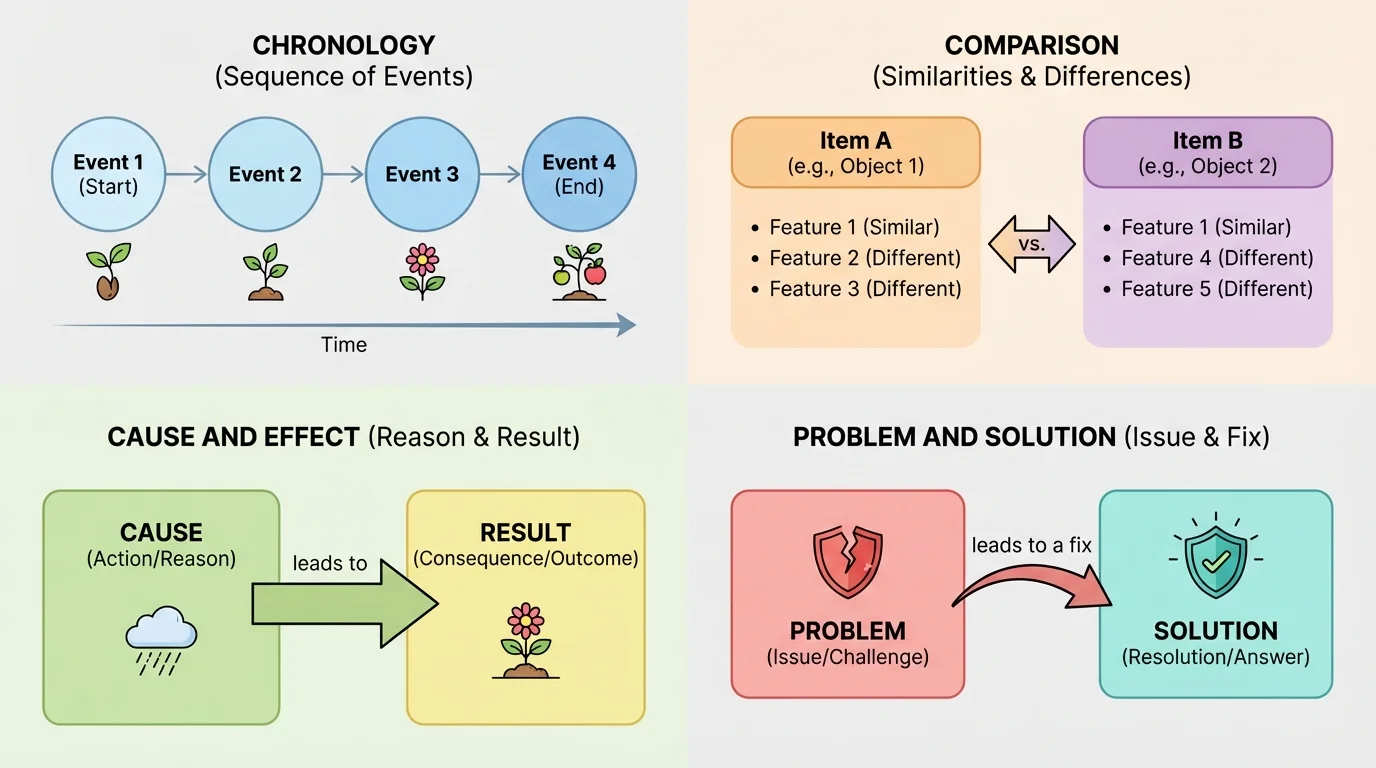
[Figure 1] Readers often study four major structures: chronology, comparison, cause and effect, and problem and solution. These patterns are easier to recognize when you picture how ideas move through a text. Once you know these patterns, reading informational texts becomes more organized and less confusing.
Chronology organizes events or steps in time order. This structure is common in biographies, historical articles, and process texts. Signal words may include first, next, then, after, before, and finally.
Comparison shows how two or more things are alike and different. This structure is common in science and social studies when authors compare animals, places, inventions, or ideas. Signal words may include both, similarly, unlike, in contrast, however, and on the other hand.
Cause and effect explains why something happens and what happens because of it. A text may show one cause with several effects, several causes leading to one effect, or even a chain of causes and effects. Signal words may include because, since, as a result, therefore, and led to.
Problem and solution presents an issue and one or more ways to solve it. This structure appears often in articles about communities, science challenges, and inventions. Signal words may include problem, challenge, solution, answer, and so that.
Signal words help, but they are not enough by themselves. A writer may use the word because once in a comparison text. That does not automatically make the whole text cause and effect. Good readers study the entire pattern of the piece.
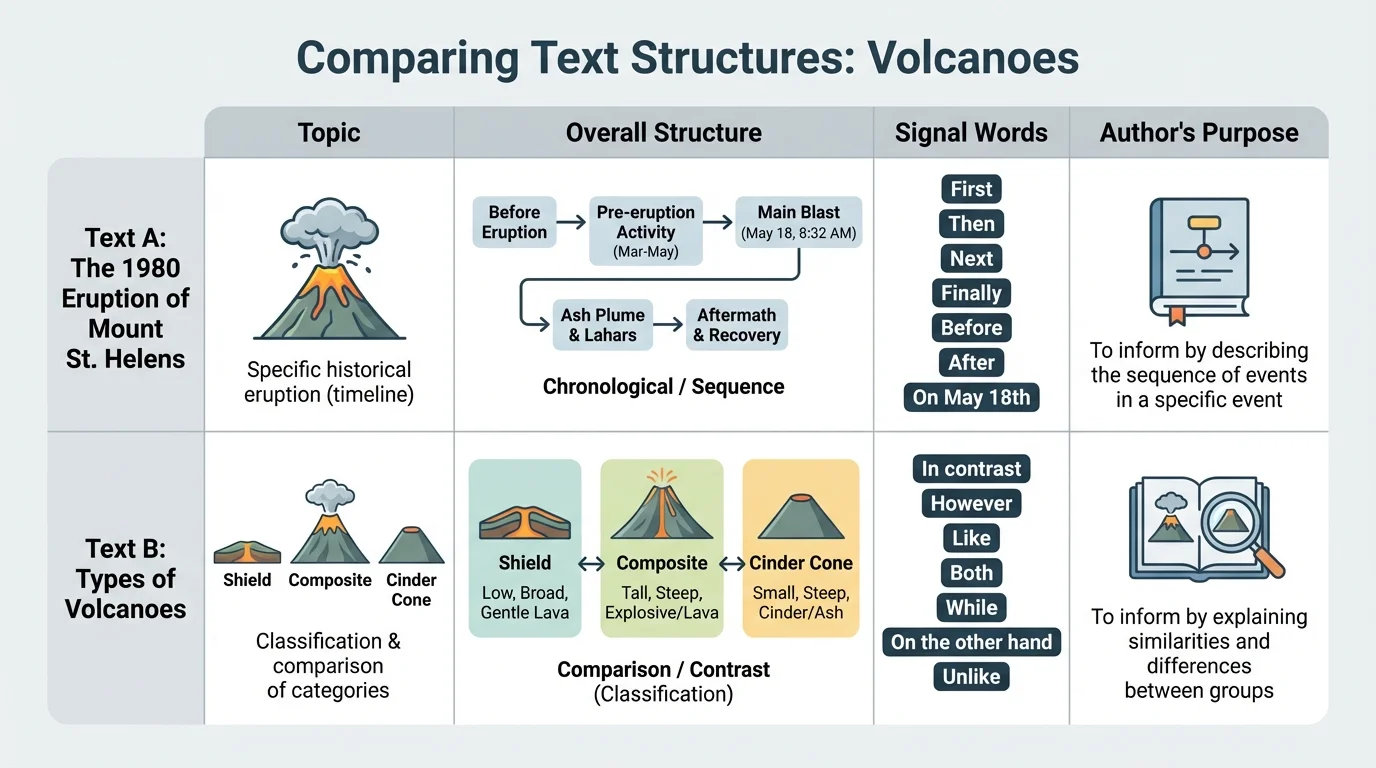
[Figure 2] When you compare texts, focus on how each author organizes ideas. Two texts can share a topic but have very different structures because the authors have different purposes.
Imagine two texts about volcanoes. Text A tells about the eruption of Mount St. Helens by describing what happened before, during, and after the eruption. That text is chronological. Text B explains pressure inside Earth, gas buildup, and magma movement, then describes the results of eruptions. That text is cause and effect.
If you were comparing these texts, you might say: "Both texts are about volcanoes, but the first text is organized in time order, while the second text explains causes and results." Notice that this statement names both the similarity in topic and the difference in structure.
| Text | Topic | Overall Structure | How the Author Organizes Information |
|---|---|---|---|
| Text A | Volcanoes | Chronology | Events before, during, and after an eruption |
| Text B | Volcanoes | Cause and effect | Reasons eruptions happen and what they cause |
Table 1. Comparison of two texts on the same topic with different overall structures.
Sometimes two texts also use the same structure. For example, two biographies of Harriet Tubman may both be chronological, but one may focus more on her childhood while the other emphasizes her work on the Underground Railroad. In that case, the structures are alike even though the details and focus differ.
Example: Comparing two texts about recycling
Step 1: Read Text A's pattern.
Text A explains how recycling programs began, how they changed over time, and how cities use them today. The pattern follows time order.
Step 2: Read Text B's pattern.
Text B explains that too much trash fills landfills, which harms the environment, and then gives ways communities can recycle more. The pattern is problem and solution.
Step 3: Compare the structures.
Both texts are about recycling, but Text A is chronological and Text B is problem and solution.
A strong comparison names the structure and includes evidence from the text, such as the order of ideas, headings, or signal words.
Chronology is one of the easiest structures to spot because time order creates a clear path. In a historical article, the author may begin with an important event, move to what happened next, and end with later results.
Suppose one text explains the history of the bicycle. It starts with early bicycle designs, then moves to safety improvements, and ends with modern bikes. That is chronological. A second text about bicycles might compare mountain bikes and road bikes instead. These texts share a topic, but one is chronological and one is comparison.
Chronological texts often answer the question, "What happened first, next, and later?" They may also show steps in a process, such as how a seed grows into a plant. If two process texts both explain stages in order, then their structures are similar even if one is about bread baking and the other is about butterfly growth.
Some history writers begin with the most exciting event first and then go back in time. Even then, the overall structure may still be chronological if most of the text follows a time-order sequence.
This is why readers should look at most of the text, not just the opening sentence.
Comparison structure helps readers understand similarities and differences. It often appears in texts that explain choices, categories, or kinds of things.
For example, one article might compare city life and country life. Another article might compare freshwater and saltwater habitats. If both texts mainly organize information by showing how two things are alike and unlike, then they share the same structure even though the topics are different.
Authors use comparison structure to help readers notice patterns. A science text might compare reptiles and amphibians by body covering, habitat, and reproduction. A social studies text might compare two regions by climate, resources, and population. In both cases, the author places related features side by side.
When comparing two comparison texts, pay attention to what categories each author uses. One author may compare by appearance, while another compares by function or behavior. The overall structure is still comparison, but the details are arranged in different categories.
Cause and effect texts explain relationships between actions, events, or conditions. They answer questions like, "Why did this happen?" and "What happened because of it?"
A text about drought may explain that low rainfall causes crops to fail and rivers to shrink. A second text about erosion may explain that wind and water cause rock to wear away over time. These two texts have different topics, but both use cause and effect.
Sometimes a text includes many linked effects. For example, one cause such as pollution can lead to dirty water, harmed wildlife, and unsafe swimming conditions. In other texts, many causes combine to create one result. Heavy rain, melting snow, and clogged drains may all lead to flooding.
Chains of cause and effect can stretch across several paragraphs. One event may cause a second event, which then causes a third. Readers should trace the whole chain to understand the text's organization.
This structure can sometimes look like problem and solution, but they are not the same. Cause and effect explains reasons and results. Problem and solution focuses on an issue and ways to fix it.
Problem and solution texts are common in articles about communities, inventions, health, and the environment. They often begin with a challenge that needs attention.
For example, one text may describe how too many cars near a school create traffic problems and then suggest walking groups, crossing guards, and staggered drop-off times. Another text may describe the problem of endangered sea turtles and then explain beach protections and safer fishing methods. They have different topics, but they share the same overall structure.
Some authors give just one solution, while others give several. Some also explain whether the solution worked. When comparing two problem and solution texts, notice whether one text offers practical steps while the other mostly describes ideas. That can change the reader's understanding even when the structure matches.
Problem and solution texts often answer the questions, "What is wrong?" and "How can it be fixed?" If a text spends most of its space answering those questions, that is probably its overall structure.
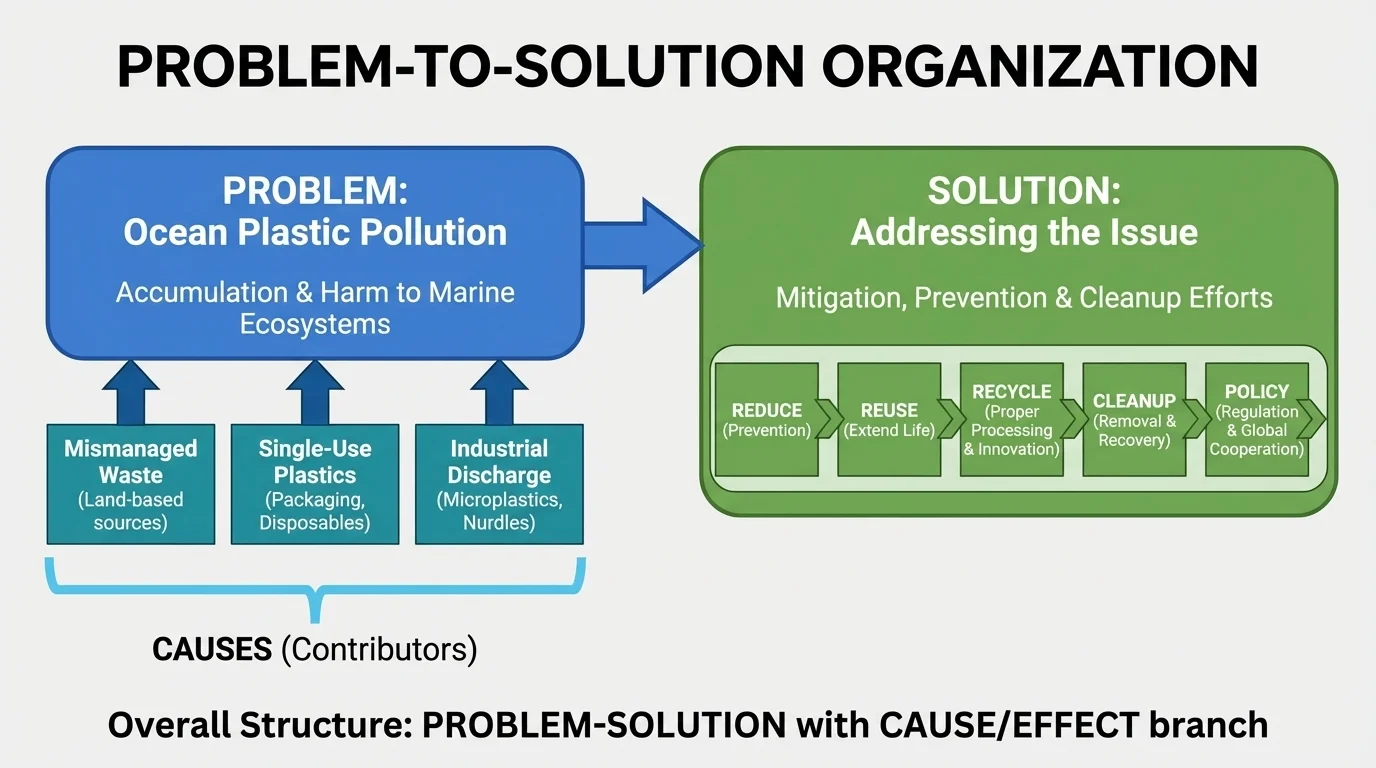
[Figure 3] Not every text fits neatly into one box. A longer article may contain several organizational patterns, yet still have one dominant overall structure. An article might mainly follow a problem-and-solution plan while including a short cause-and-effect section to explain why the problem exists.
Imagine an article about plastic in oceans. The author might begin by describing the problem of floating trash. Next, the article may explain that littering and poor waste systems cause the problem. Finally, it may present cleanup efforts and ways to reduce plastic use. The small middle section uses cause and effect, but the overall structure may still be problem and solution because the entire article centers on the issue and how to solve it.
This is an important idea: readers should not choose a structure based on one paragraph alone. They should ask which pattern controls most of the text.
Later, when you compare two complex texts, the same rule still applies. One article might be mostly cause and effect, while another may be mainly problem and solution even though both mention causes and results.
Readers use several clues to identify and compare structures. One clue is signal words, which are words and phrases that hint at how ideas are connected. Another clue is the order in which paragraphs appear.
Headings and subheadings also help. A text with sections titled Causes of Soil Erosion and Effects on Farms is probably cause and effect. A text with headings such as The Challenge and Possible Solutions is probably problem and solution.
Readers can also ask what question the text mainly answers:
These questions help you look past individual words and notice the full pattern of the text.
When explaining how two texts are organized, be clear and specific. Name each text's structure, then explain how you know. Good answers usually include both similarities and differences.
Here are useful sentence patterns:
Example: Writing a comparison statement
Step 1: Identify the topic both texts share.
Both texts are about weather disasters.
Step 2: Identify Text A's structure.
Text A tells the sequence of events during a hurricane, so it is chronological.
Step 3: Identify Text B's structure.
Text B explains what causes tornadoes and what damage they create, so it is cause and effect.
Step 4: Combine the ideas into one clear sentence.
Both texts are about severe weather, but Text A is organized in time order, while Text B is organized by causes and effects.
The best comparisons do more than label the structure. They point to evidence, such as time-order transitions, categories being compared, or a stated problem followed by solutions.
One common mistake is naming the topic instead of the structure. Saying "The text is about whales" does not explain organization. You must say whether the text is chronological, comparison, cause and effect, or problem and solution.
Another mistake is choosing a structure based on one clue only. A single signal word does not decide the entire structure. Readers should study how the whole text is built.
A third mistake is ignoring the author's purpose. If the author mostly wants to explain why something happens, the structure is likely cause and effect. If the author mostly wants to show ways to solve an issue, the structure is likely problem and solution.
"Good readers notice not only the information in a text, but also the path the author uses to deliver it."
That path is what makes structure such an important reading tool.
You use this skill in many subjects. In science, you may read one article that explains the life cycle of a frog in time order and another that compares frogs and toads. In social studies, you may read one text about the causes of a war and another about the timeline of important battles. In health, you may read one article about the problem of poor sleep habits and another about the effects of sleep loss on the body.
This skill also matters outside school. News articles, websites, museum displays, and instruction manuals all use structure. When you recognize the pattern, you understand information faster and more accurately.
As you become a stronger reader, comparing structures helps you think more deeply. You begin to see that authors make choices. They decide whether to tell events in order, compare ideas, explain causes, or present problems and solutions. Those choices shape what the reader notices first and what ideas feel most important.
