Have you ever skipped one scene in a movie and suddenly felt lost? Texts work the same way. A single sentence can change the mood, a paragraph can explain a big idea, and a chapter can completely shift what the reader understands. Strong readers do more than notice what a part says. They ask, Why is this part here? and How does it help the whole text make sense?
Every text has an organization. Authors do not usually place sentences and paragraphs randomly. They choose where to put information, dialogue, description, and events so readers can follow the text and understand its meaning. When you analyze structure, you study how the pieces work together.
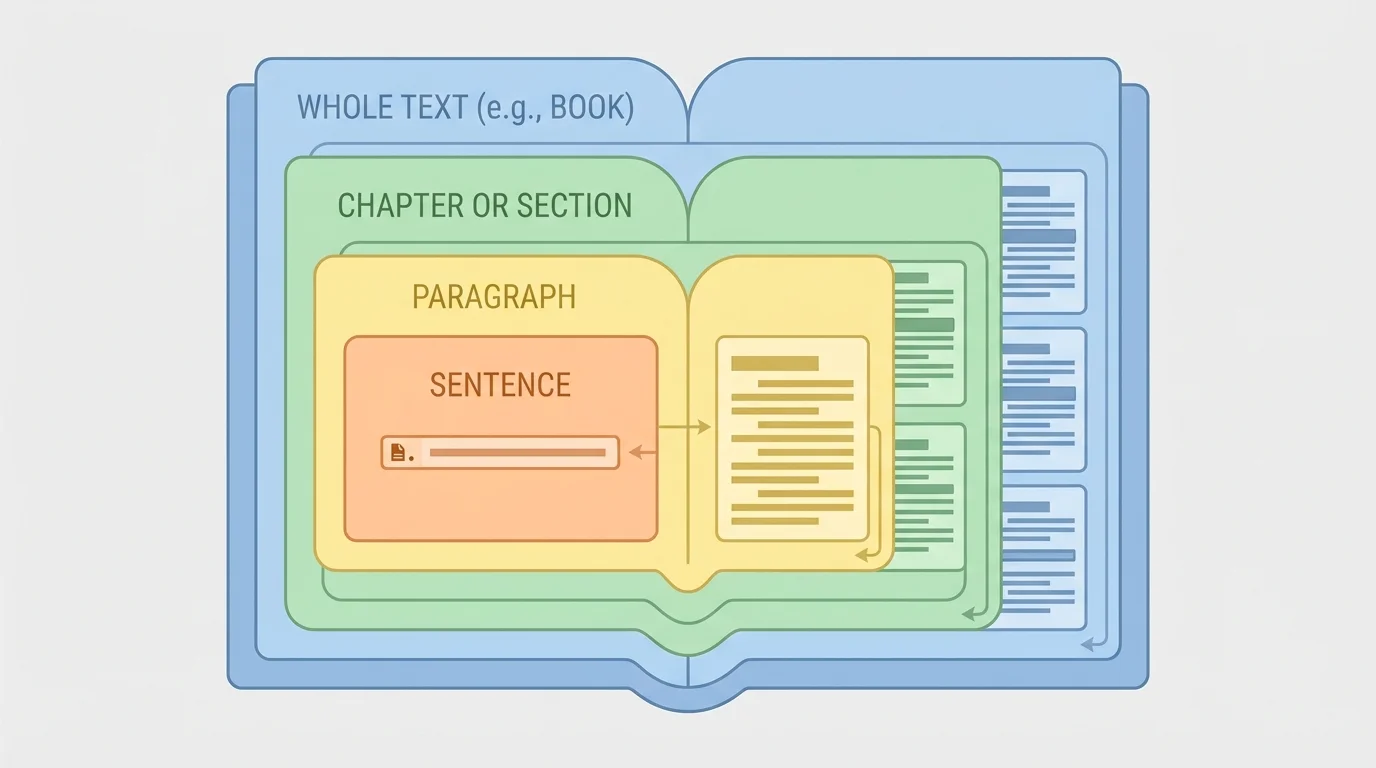
[Figure 1] Think of a text like a bicycle. A pedal, a chain, and a wheel are separate parts, but each part helps the whole bicycle move. In reading, a sentence, paragraph, chapter, or section is one part of a larger design. If you understand the job of each part, you understand the text more deeply.
Structure is the way a text is arranged. Development of ideas means the way a text builds, expands, or changes its ideas over time. A part of a text fits into the overall structure when it has a clear role in helping the whole text work.
Sometimes a part introduces an idea. Sometimes it gives evidence, creates suspense, explains a cause, reveals a character trait, or prepares for an important event later. Good readers notice these roles.
The overall structure of a text is the big plan that holds everything together. In a story, that plan may include the introduction of characters, the problem, the rising action, the climax, and the resolution. In an article, it may include an introduction, sections with facts and explanations, and a conclusion.
Inside that larger plan are smaller units: sentences inside paragraphs, paragraphs inside sections, and sections or chapters inside the whole text. A reader should ask how one small piece connects to the larger purpose. Does it begin a new idea? Add proof? Slow the pace? Create tension? Help the reader understand a theme?
This kind of analysis is different from simply retelling what happened. If you say, "This chapter is about the storm," that is a summary. If you say, "This chapter appears right before the main conflict and builds suspense by showing the storm getting closer," that is analysis.
Remember that authors make craft choices on purpose. In earlier reading work, you may have studied character, setting, plot, or main idea. Structure connects to all of these because the way a text is arranged affects how readers understand them.
When you analyze overall structure, you are really asking how the author's choices guide the reader's thinking and feelings from one part of the text to the next.
A sentence may seem small, but it can do important work. One sentence can introduce a new idea, signal a change, reveal a character, or highlight something the author wants the reader to remember.
For example, imagine a story paragraph describing a girl walking through a quiet forest. If the author adds the sentence, "Then she noticed that the birds had stopped singing," that sentence does more than add a detail. It changes the mood, creates tension, and prepares the reader for trouble. It fits into the paragraph and the larger story by warning that something is about to happen.
Some sentences act like bridges. Words such as however, meanwhile, later that afternoon, or for example tell readers how one idea connects to another. These are often called transitions. They help the text move smoothly.
Other sentences emphasize a key idea. In an article about recycling, a sentence like "Small actions by many people can reduce huge amounts of waste" might appear near the end of a section. That sentence may function as the section's main takeaway, helping the reader connect all the details to one central message.
Example: Analyzing one sentence in a story
Text: "Marta laughed with her friends all morning. But when she saw the empty seat at lunch, her smile disappeared."
Step 1: Find the important sentence.
The sentence "her smile disappeared" stands out because it marks a change.
Step 2: Ask what job it does.
It shifts the mood from cheerful to serious and signals that the empty seat matters.
Step 3: Connect it to the whole text.
This sentence likely begins a bigger idea about friendship, loss, or concern, so it helps move the story toward a new conflict.
Notice that the best analysis explains both the local job of the sentence and its larger effect on the text as a whole.
[Figure 2] A paragraph usually groups related ideas together. One paragraph often starts with a focus and then builds support around it. That means a paragraph often has a job in the text: introducing a topic, giving description, presenting evidence, comparing ideas, or showing a change.
In fiction, one paragraph may describe a setting, while the next shows a character's thoughts. In nonfiction, one paragraph may state a claim, and the next may provide facts and examples. Paragraphs help the author organize the reader's experience.
Suppose an article about sharks begins with a paragraph about people being afraid of sharks. The next paragraph explains that shark attacks are actually rare. That second paragraph fits into the article by correcting a common misunderstanding. It moves the reader from fear to a fact-based understanding.
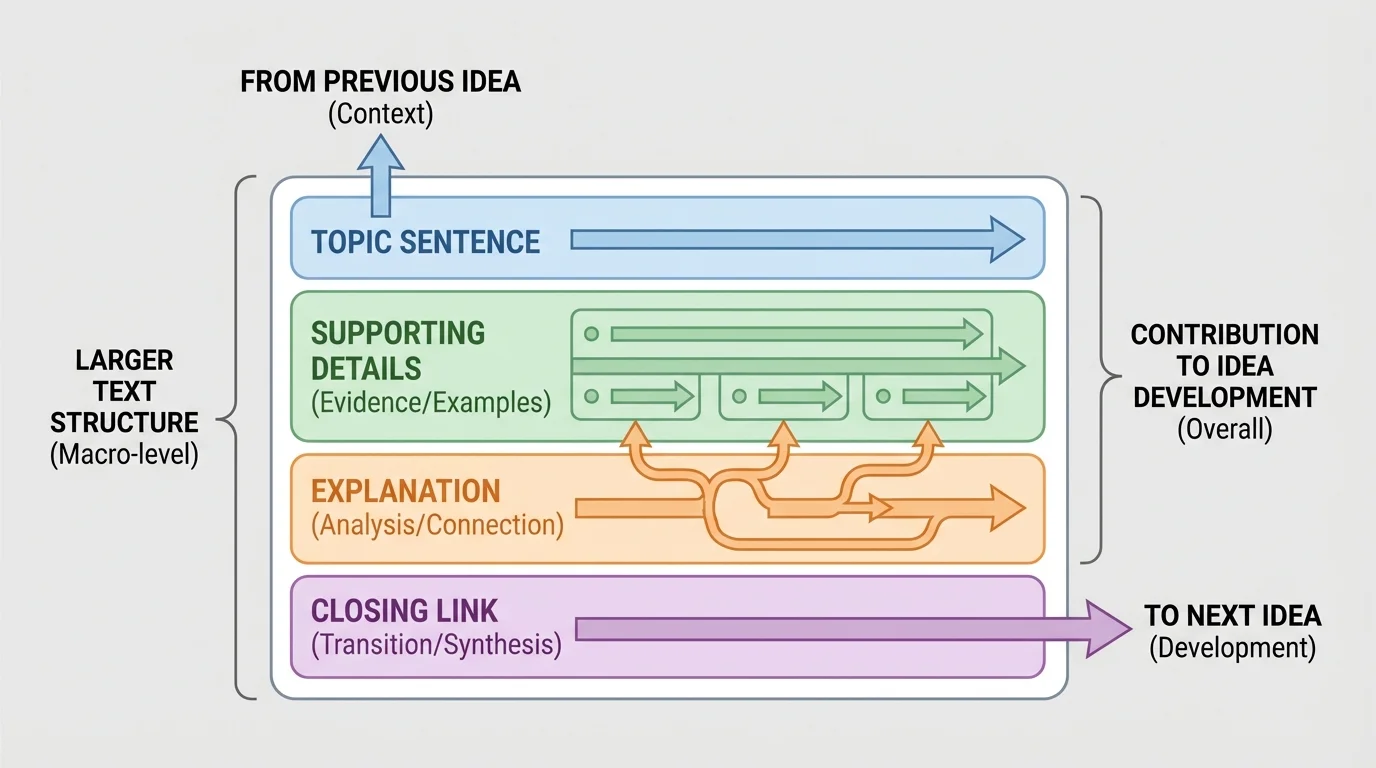
Paragraphs can also develop ideas gradually. The first paragraph might raise a question. The next one may answer part of it. A later paragraph may add a surprising detail that changes what the reader believes. This is one reason readers should think about sequence, not just isolated parts.
As you continue reading, the paragraph pattern in [Figure 2] helps you notice whether the author is explaining, proving, describing, or shifting direction. That makes it easier to tell why a paragraph appears where it does.
How a paragraph can contribute to idea development
A paragraph can introduce a topic, expand it with details, provide an example, show a contrast, explain a cause or effect, or connect one idea to the next. The same paragraph may do more than one of these jobs at once.
When you analyze a paragraph, ask: Why is this grouped here? What would be missing if this paragraph were removed? If removing it would make the text less clear, less convincing, or less powerful, then that paragraph has an important structural role.
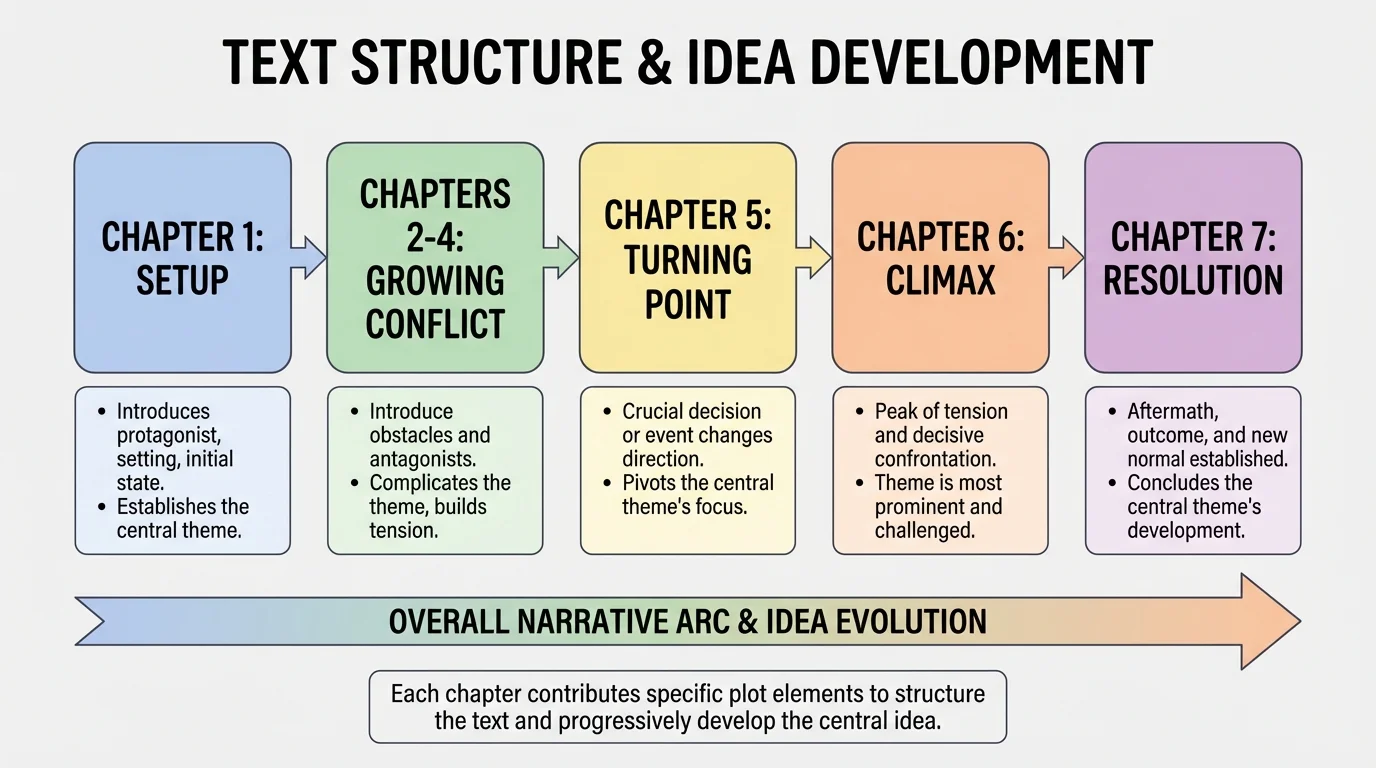
[Figure 3] In longer texts, chapters and sections are especially important because they control pacing and development over time. A story's chapters may move through setup, conflict, and resolution. One chapter may introduce a problem, another may deepen it, and a later one may solve it.
Authors often place chapters and sections carefully so readers gain information in a certain order. If readers learn a secret too early, suspense disappears. If they learn it too late, the text may become confusing. Structure helps authors decide the best moment for each reveal.
For example, in an adventure story, an early chapter may show that a character is afraid of water. At first, that detail may seem small. Later, when the character must cross a river to save someone, that early chapter becomes important. It prepared the reader and made the later event more meaningful.
Sections in informational texts work in a similar way. An article about volcanoes may begin with what volcanoes are, continue with how eruptions happen, then explain their effects on people and land. Each section builds on the one before it. If the order changed, readers might struggle to understand the explanation.
Later, when you think back to the chapter sequence in [Figure 3], you can see that authors often plant ideas early and return to them later. This kind of structure makes a text feel connected rather than random.
Some mystery writers place tiny clues in early chapters that seem unimportant at first. Readers often notice their importance only after the ending, which shows how structure can hide and reveal meaning at the same time.
In both stories and articles, chapters and sections are not just containers. They shape how ideas grow, how fast events move, and what the reader notices at each stage.
Strong readers use a few powerful questions whenever they study a part of a text. These questions turn reading from simple understanding into deeper analysis.
You might ask:
These questions work for a single sentence, a paragraph, a chapter, or a whole section. The size of the part changes, but the thinking process stays similar.
"Readers understand a text better when they notice not only what the author says, but also how the author builds it."
That idea matters because authors use structure as a tool. It is part of the text's craft, just like word choice, imagery, or point of view.
Different types of texts often use different structural patterns. Knowing these patterns helps you predict what a part might be doing.
| Type of text | Common structural pattern | How a part may contribute |
|---|---|---|
| Story | Beginning, rising action, climax, resolution | A chapter may build suspense, reveal character growth, or solve the conflict. |
| Mystery | Clues, false leads, reveal | A sentence may hint at a clue without fully explaining it. |
| Article | Introduction, explanation, examples, conclusion | A paragraph may define the topic or provide supporting facts. |
| Compare-and-contrast text | Similarities and differences | A section may show how two ideas are alike before explaining how they differ. |
| Cause-and-effect text | Cause first or effect first | A paragraph may explain why something happened or what resulted from it. |
Table 1. Common text patterns and ways individual parts contribute to the whole.
If you can identify the pattern, you can better explain the role of a specific part. A paragraph in the middle of a compare-and-contrast article probably has a different purpose from a paragraph at the end of a mystery story.
Consider this short story pattern: Chapter 1 introduces Luis, who pretends he is never afraid. Chapter 2 shows him laughing when others worry about exploring an old tunnel. Chapter 3 includes a paragraph where he pauses at the entrance and remembers getting lost when he was younger. Chapter 4 shows him entering the tunnel anyway to help a friend.
The paragraph in Chapter 3 is important because it reveals the real reason for Luis's behavior. Without it, readers might think he is simply rude or reckless. With it, readers understand his fear and his hidden struggle. That paragraph fits into the overall structure by deepening character development right before a brave decision.
Now think about an informational article called Why Bees Matter. The first section explains what bees do. The second section describes pollination. The third section explains what could happen if bee populations shrink. The final section gives ideas for helping bees.
If the pollination section comes before the section about shrinking bee populations, that order helps the reader understand the danger. The author first explains the bees' role, then explains the consequence of losing them. This is clear idea development. The sections build knowledge step by step.
Example: Analyzing a section in an article
Text pattern: introduction to bees, explanation of pollination, effects of bee decline, solutions.
Step 1: Identify the section.
The section on pollination appears near the beginning.
Step 2: Explain its job.
It teaches the reader what bees do and why their work matters.
Step 3: Connect it to later sections.
Because readers understand pollination first, the later section about bee decline becomes more meaningful and urgent.
This kind of explanation shows how one section contributes to the development of the article's ideas, not just what facts it contains.
One common mistake is only summarizing. Saying "This paragraph tells about the volcano eruption" is not enough. You need to explain how that paragraph functions in the text. Does it provide evidence? Increase danger? Explain a cause?
Another mistake is treating one part as isolated. A sentence should be connected to its paragraph. A paragraph should be connected to its section. A chapter should be connected to the whole text. Readers should keep moving back and forth between the part and the whole.
A third mistake is forgetting the author's purpose. Authors make choices to inform, entertain, persuade, or move readers. A strong structural analysis connects a part of the text to that purpose.
From part to whole
The best analysis moves in two directions: it looks closely at the specific part and then zooms out to explain the effect on the entire text. This is what turns a detail into evidence about structure and idea development.
When you read carefully, you start to notice that texts are built with intention. A single sentence can signal a turning point. A paragraph can make an idea clearer. A chapter can transform what the reader understands. Every part can matter.
