A story can have suspense, vivid description, and realistic dialogue, but if the ending feels weak, the whole piece can lose power. Think about a movie with an exciting build-up and then a final scene that just stops. Most readers remember the last lines of a narrative because those lines shape what the story means. A strong ending does more than stop the action. It leaves the reader with understanding, emotion, and a sense that the events mattered.
A conclusion in a narrative is the closing part that helps the reader understand where the events have led. In eighth-grade writing, a conclusion should not sound like a report summary. Instead, it should grow out of the experience itself. When a writer ends well, the reader can see how the narrator has changed, what the event revealed, or why the moment still matters.
In a real or imagined narrative, the ending works like the final note in a song. It does not have to be loud or dramatic, but it should feel right. If a story is about losing a championship game, the conclusion might reflect on teamwork, pressure, or disappointment. If a story is about getting lost during a hike, the conclusion might focus on courage, trust, or seeing the natural world differently afterward.
Because of this, a conclusion should connect to the story's theme, conflict, and emotional direction. The reader should feel that the ending belongs to this story and no other.
Conclusion is the closing part of a narrative that gives the reader a sense of completion.
Reflection is the writer's or narrator's thinking about what the experience meant, changed, or revealed.
Resolution is the outcome of the main problem or conflict in the story.
Notice that these three ideas are connected. A conclusion often includes a resolution, but it becomes stronger when it also includes reflection. The best endings do not just say what happened next. They help the reader feel why the experience was important.
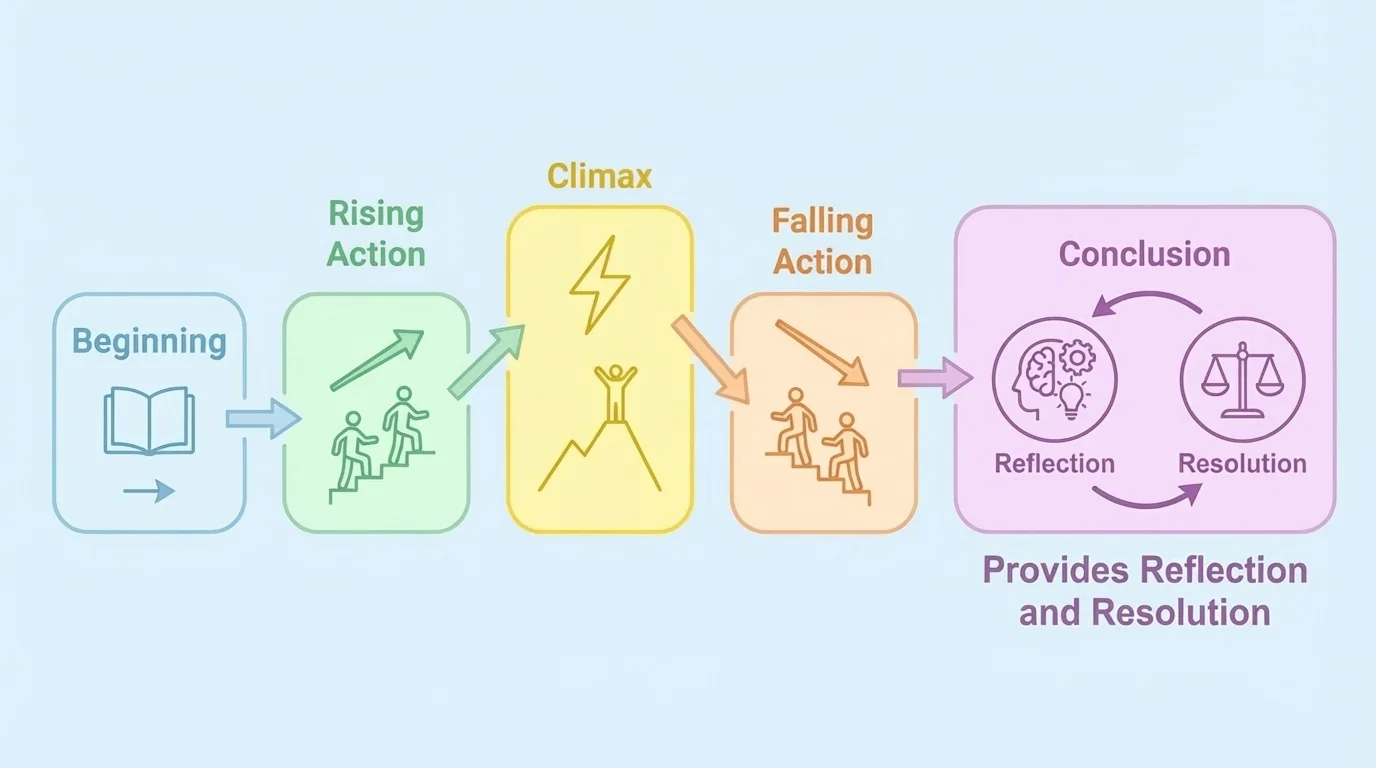
A strong ending grows from the earlier events and completes the story arc, as [Figure 1] illustrates. It does not feel taped onto the end. Instead, it answers the question, "Now that this happened, what does it mean?"
Most effective narrative conclusions do several things at once. They bring the action to a close, show the effect of the experience, and leave the reader with a clear final impression. Sometimes that impression is hopeful. Sometimes it is thoughtful, tense, bittersweet, or unresolved in a meaningful way.
A strong conclusion often includes these elements:
If a student writes, "That was the day I learned never to give up," the line may provide closure, but by itself it can sound generic. A better ending usually gives a specific thought or image connected to the story. For example: "When I looked at the cracked finish line ribbon in my hand, I realized I had spent the whole race trying to beat everyone else. What mattered more was that I had finally stopped quitting on myself." This version reflects on the event instead of naming a lesson in a broad, predictable way.
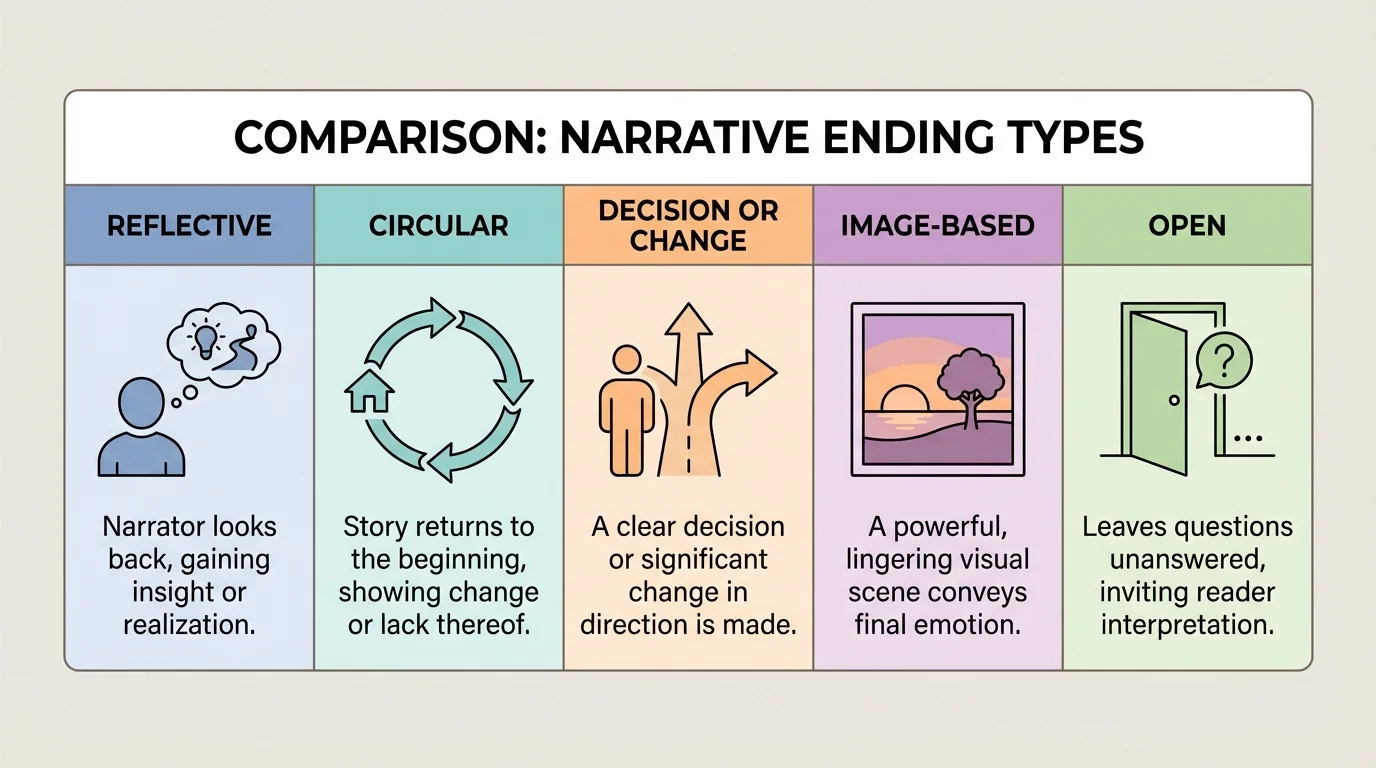
[Figure 2] Writers do not all end stories in the same way. Different patterns can work well. The best choice depends on the story's purpose, tone, and central experience.
Reflective ending: The narrator looks back on the event and explains what changed. This works especially well in personal narratives. Example: "I still get nervous before speaking in front of a crowd, but now I know that fear is not always a sign to stay silent."
Circular ending: The conclusion returns to an image, line, or idea from the beginning. This creates a satisfying sense of design. If a story opens with a broken watch inherited from a grandfather, it might end with the narrator hearing the repaired watch tick again and understanding its meaning.
Decision or change ending: The conclusion shows that the character has made a choice or changed in some way. Example: "The next morning, instead of deleting the recording, I pressed send."
Image-based ending: Instead of explaining everything directly, the writer ends with a strong image that suggests meaning. Example: "The field lights went dark one by one, but the muddy cleat prints still crossed the grass."
Open ending with reflection: Not every narrative answers every question. Sometimes the story ends with uncertainty, but the narrator reflects on it in a meaningful way. Example: "I never found out who left the note in my locker. What stayed with me was the feeling that someone had seen me at exactly the moment I needed it."
| Conclusion type | What it does | Best use |
|---|---|---|
| Reflective | Explains meaning or insight | Personal growth stories |
| Circular | Returns to an earlier detail | Stories with strong symbols or motifs |
| Decision/change | Shows what the character will do next | Stories about growth or choice |
| Image-based | Leaves the reader with a vivid final picture | Emotional or literary narratives |
| Open with reflection | Keeps some uncertainty but adds meaning | Mysterious or realistic situations |
Table 1. Common types of narrative conclusions and when writers often use them.
Many published short stories do not end by explaining everything. Instead, they trust one final image, thought, or choice to let the reader feel the story's meaning.
The key point is not to memorize one "correct" ending style. The goal is to choose an ending that fits your narrative and reflects on the events in a believable way.
One of the biggest mistakes in student writing is adding an ending that does not grow from the story. If the narrative is realistic and serious, a silly joke at the end may break the tone. If the conflict has been about friendship, the ending should not suddenly focus on a completely different idea such as school rules or weather unless those details truly matter to the story.
To make a conclusion follow naturally, think backward. Ask yourself what the central experience really was. Was it about embarrassment, pressure, loyalty, risk, competition, grief, independence, or trust? Once you identify that core idea, your last lines can reflect on it clearly.
Details from earlier in the narrative can help the ending feel earned. Repeating a meaningful object, place, or phrase can create unity. For instance, if the narrator keeps noticing the sound of the train throughout the story, ending with that same sound can tie the whole narrative together. As the narrative arc in [Figure 1] shows, the conclusion should feel like the result of the events, not a separate attachment.
Following from the story means that the conclusion matches the events, conflict, tone, and character development that came before it. Readers should be able to say, "Yes, this ending makes sense because of what happened," even if the ending is surprising or subtle.
Writers also need to think about pacing. If the story builds toward an intense moment, the conclusion should usually slow down enough for the reader to absorb the result. That does not mean writing a long ending. It means giving the final idea enough space. One thoughtful paragraph can be stronger than five rushed sentences.
Reflection is what separates a simple ending from a meaningful one. A narrative tells what happened, but reflection explores what the experience meant. This is especially important in first-person and personal narratives, where the reader wants more than a list of events.
A reflective ending may show:
Compare these two endings to a narrative about moving to a new city.
Weak reflective line: "That is why moving can be hard sometimes."
Stronger reflective line: "For weeks I thought I missed my old house most, but on that first afternoon laughing on the apartment steps, I understood that what I had really been missing was the feeling of belonging somewhere."
The stronger version reflects on the experience in a precise way. It does not just announce a general truth. It reveals a new understanding.
Analyzing reflection in an ending
Suppose a narrative tells the story of a student who freezes during a violin audition but returns later to play again.
Step 1: Identify the event's deeper meaning.
The story is not only about music. It is about fear, pressure, and courage after failure.
Step 2: Avoid a generic lesson.
An ending such as "I learned to be brave" is too broad because it could fit almost any story.
Step 3: Write a specific reflection tied to the moment.
"When my bow touched the strings the second time, my hands were still shaking. The difference was that I finally understood courage was not the absence of fear. It was walking back into the room while fear was still there."
This ending reflects on the experience and connects directly to the narrated event.
Reflection can be quiet. It does not need to sound dramatic or philosophical. In fact, the best reflective endings often use plain, honest language.
Weak endings usually fail in one of four ways. First, they end abruptly. The story simply stops: "Then we went home." Unless the whole narrative is built for that effect, this feels unfinished.
Second, some conclusions only repeat earlier information. A writer may retell the plot instead of adding insight. For example, "So that is how I got lost and then found the trail again" does not offer much beyond what the reader already knows.
Third, weak endings sometimes add a fake moral that does not match the experience. A serious story about a family argument should not suddenly end with "And that is why kindness is magic." That sounds forced and disconnected.
Fourth, some conclusions introduce brand-new information. If the last sentence reveals an entirely new conflict or setting, the ending may confuse the reader rather than satisfy them.
Earlier parts of a narrative establish characters, setting, conflict, and important details. The ending should build from those elements rather than replacing them with a new idea.
When revising, ask whether your conclusion sounds true to the story's voice. If the narrator has been thoughtful and observant all along, the ending should sound like that same narrator. Consistency matters.
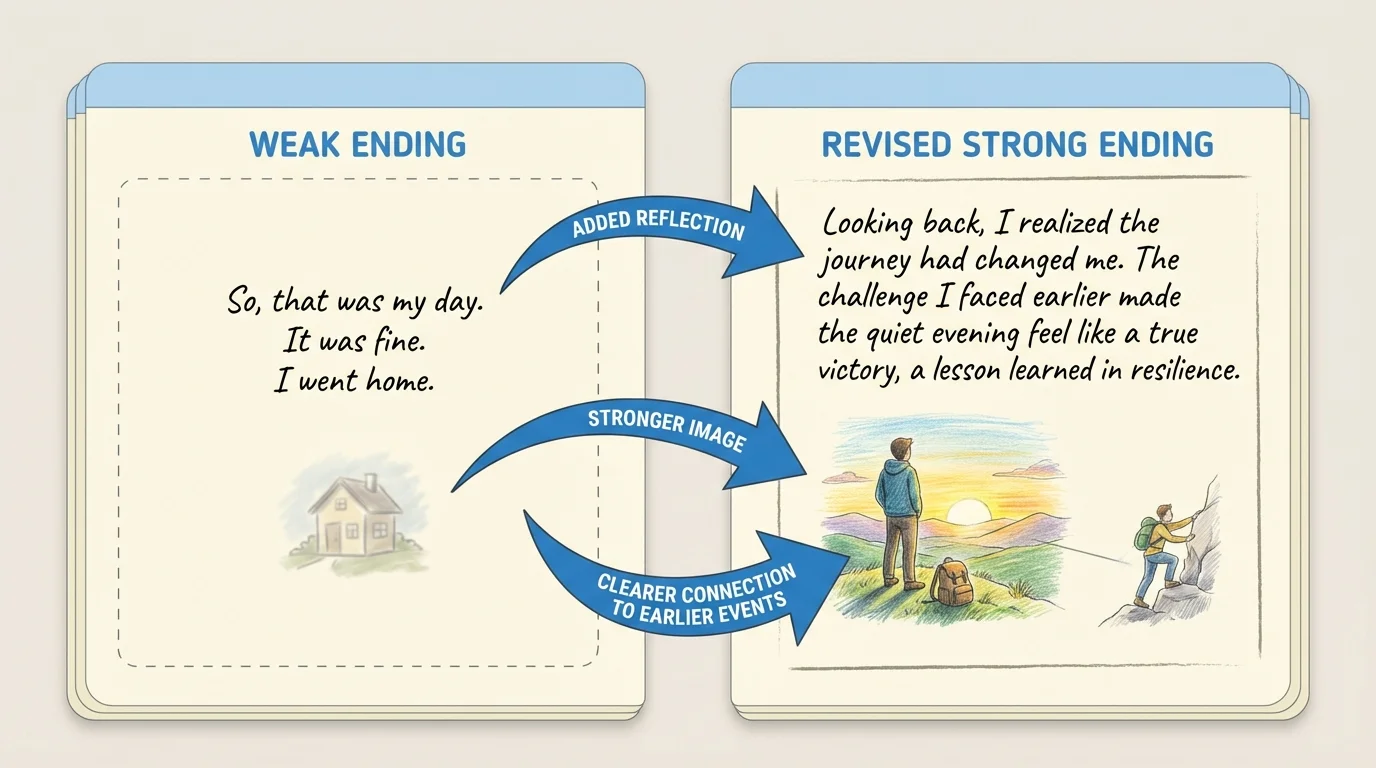
[Figure 3] Comparing weak and strong endings helps writers notice exactly what changes create meaning. Revision is not about making an ending fancier. It is about making it more honest, specific, and connected to the story.
Example 1: Sports narrative
Weak ending: "We lost the game, and I was sad. I will always remember it."
Stronger ending: "As we picked up our gear in silence, I kept staring at the dirt on my jersey. I had spent the whole season thinking leadership meant shouting the loudest. Walking off that field, I finally understood it also meant being the one who stayed when everyone else wanted to disappear."
This revision adds reflection, a specific image, and a clearer understanding that grows from the event.
Example 2: Family narrative
Weak ending: "After that, my grandmother smiled and everything was okay."
Stronger ending: "My grandmother did not say much when I handed her the burned bread. She just tore off a piece, tasted it, and laughed until I laughed too. Years later, I still think of that moment whenever I ruin something important, because she taught me that love can make room for mistakes."
This conclusion reaches beyond the event and explains why the experience lasted in the narrator's memory.
Example 3: Fictional suspense narrative
Weak ending: "I never went back into the attic again."
Stronger ending: "I closed the attic door and slid the box back under my bed, but sleep did not come easily. Every time the house settled and creaked, I thought of the photograph inside. By morning, I still had no proof of what I had seen. I only knew the attic no longer felt empty."
This ending leaves some uncertainty, but it still reflects on how the experience changed the character's understanding.
Notice that the stronger versions do not always explain every detail. They simply leave the reader with something meaningful to carry forward. Later, when you think about circular structure or revision choices, the comparison in [Figure 3] remains useful because it shows that strong conclusions are usually built, not accidentally written.
Different narratives call for different endings. A personal narrative often benefits from deeper reflection because the writer is explaining the significance of a real experience. A fictional action story may rely more on a final choice, image, or moment of realization. A humorous narrative may end with a clever twist, but even that twist should connect to the events before it.
Here is a helpful comparison:
| Type of narrative | Effective conclusion move | Why it works |
|---|---|---|
| Personal narrative | Reflection on change or understanding | Shows why the real experience mattered |
| Adventure story | Resolution plus image or lesson | Closes action while leaving impact |
| Emotional story | Quiet reflection or symbolic detail | Matches serious tone |
| Mystery or suspense | Partial closure with meaningful uncertainty | Keeps tension without feeling incomplete |
| Humorous narrative | Surprising but connected final line | Leaves the reader amused and satisfied |
Table 2. Ways conclusions can be matched to different kinds of narratives.
When choosing an ending, think about the reader's final feeling. Should the reader feel relief, sadness, admiration, curiosity, or hope? Your last lines should guide that response.
Good conclusions are often brief, but they are carefully crafted. Word choice matters. Specific nouns and verbs are usually more powerful than vague statements. Sensory language can also help if it connects naturally to the moment: the buzz of gym lights, the sting of cold air, the smell of rain on asphalt, the weight of a trophy, the silence after an argument.
Sensory language works especially well in image-based endings because it lets the reader feel the final moment instead of just hearing about it. Dialogue can also appear in a conclusion, but it should reveal something important. A single line such as "You came back," whispered by a coach, friend, or parent can carry emotional force if the story has earned it.
A useful final strategy is to test your last sentence by asking three questions:
If the answer to all three is yes, the conclusion is probably doing its job. Great narrative endings do not just close a story. They deepen it.
"The end of a story should feel both surprising and inevitable."
— A common principle in narrative writing
That idea is useful because a strong ending may reveal something new, but once the reader gets there, it feels right. It follows from the narrated experience and reflects on it at the same time.
