Have you ever loved one book so much that you wanted another book by the same author? That is something readers can explore together. A class can look at many books, ask questions, talk about what they notice, and make a writing project as a team. This is called working together to learn.
When a class does a project together, everyone helps. The teacher may read books aloud. Children listen, look closely, and share ideas. The class may ask simple questions such as, "Who wrote this book?" "What happens in the story?" and "Which book do you like best?"
In a shared project, children use author names, book covers, pictures, and story details to learn something. Then they talk and write about what they learned. Sometimes the writing is a class chart. Sometimes it is a big book made by the whole class. Sometimes it is a page with a drawing and one sentence.
Research means looking for information so we can learn more. Opinion means what you think or feel, such as liking one book more than another. A project is a job we do over time to make or learn something together.
Shared research and writing are important because readers do not always learn alone. They can learn by listening to others, noticing new details, and adding their own ideas. One child may notice a funny character. Another child may notice the colors in the pictures. Together, the group understands more.
Sometimes a class studies books by a favorite author. The children look for the same name on each book cover. That helps them learn that one person can write many stories.
For example, as [Figure 1] shows, a class might read three books by the same author. The stories may be different, but the author name stays the same. Children begin to notice patterns. Maybe the author writes about animals in every book. Maybe the stories are silly. Maybe the pictures are bright and playful.
Children can also notice the title of each book. The title tells the name of the book. Looking at the title and the author together helps children keep track of which books belong in the project.
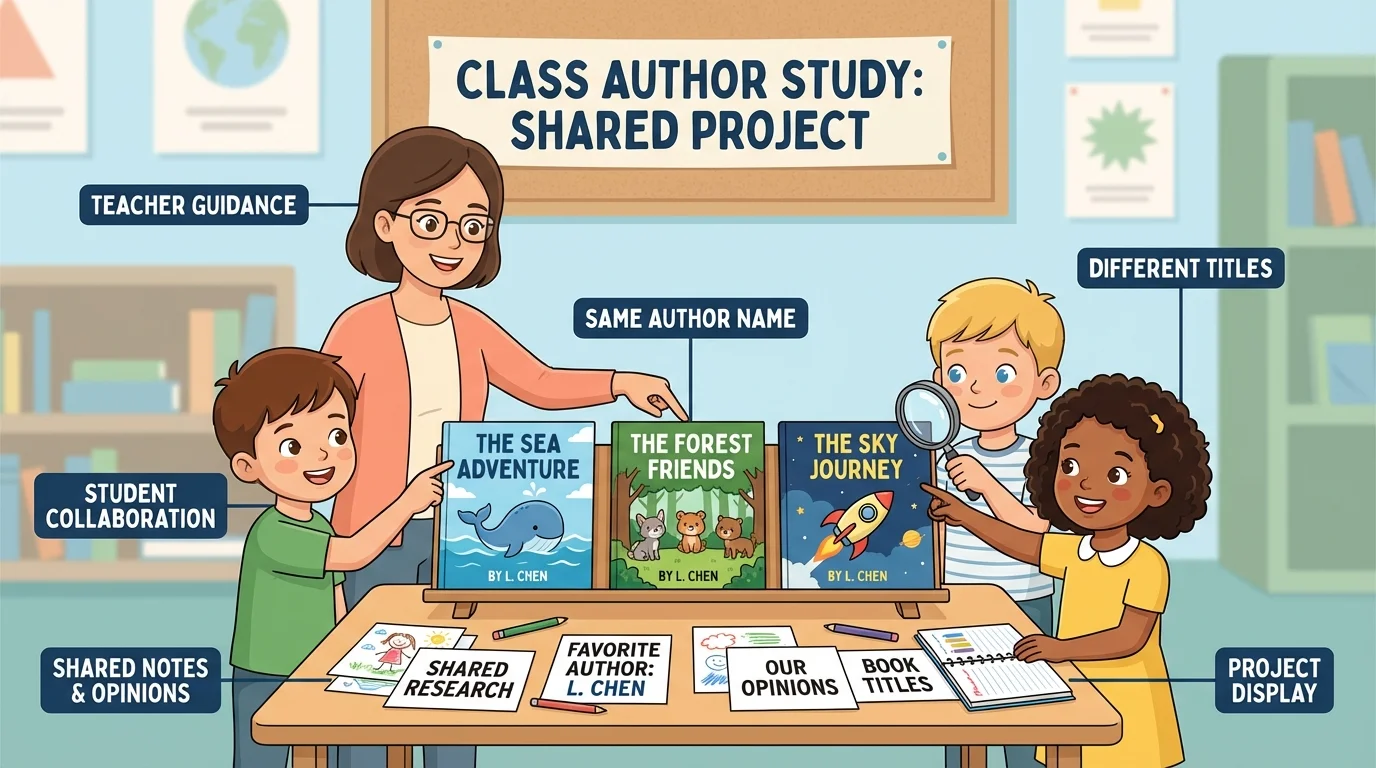
When students explore several books by one author, they are not just reading for fun. They are also comparing. They notice what is the same and what is different. One book may have a bear. Another may have a dog. But both books may feel funny, gentle, or exciting.
Many authors write books that have a special style. That means their stories may sound, look, or feel a little alike, even when the characters are different.
Later, when children talk about their favorite book, they can use what they noticed from all the books. That makes their ideas stronger. As seen in [Figure 1], looking across several covers helps children connect books to one author.
Books are resources that help us learn, and [Figure 2] illustrates how a class gathers information by listening to a read-aloud, studying pictures, and adding ideas to a group chart. Young students often find information by looking, listening, and talking.
A teacher may ask, "Who is in this story?" "Where does the story happen?" "What is the problem?" Children answer with words from the story, details from the pictures, and things they remember. This kind of shared research helps everyone collect ideas.
A class can make a simple chart with parts like these:
| Book | Who is in it? | What happens? | What do we think about it? |
|---|---|---|---|
| Book 1 | A rabbit | The rabbit looks for a friend | It is sweet |
| Book 2 | A bear | The bear makes a mess | It is funny |
| Book 3 | A dog | The dog goes on an adventure | It is exciting |
Table 1. A simple class chart showing information and opinions about several books.
Children do not need to read every word by themselves to do research. They can listen to the teacher read. They can study pictures. They can answer questions. They can help remember details from one book to the next.
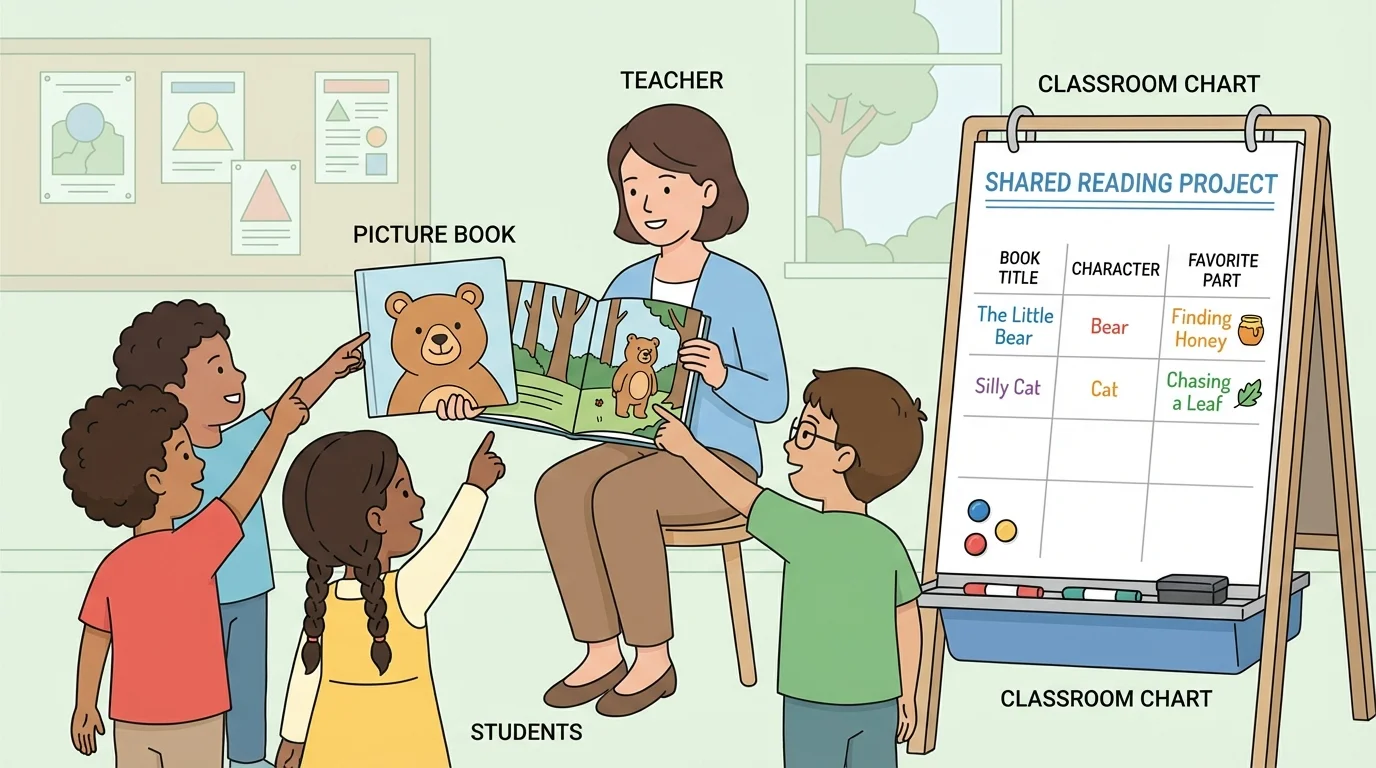
Research in kindergarten is often about noticing and collecting. Children gather small pieces of information from books, pictures, and talk. Then they put those pieces together to understand the stories better.
Working together also helps children hear many ideas. One student may say, "I see a cat." Another may add, "The cat looks scared." A third may remember, "The cat was scared because it got lost." These small ideas build a bigger understanding.
Later, the class can return to the group chart and use it to talk about favorites. The information collected earlier, like the details in [Figure 2], gives children something to think about and discuss.
After reading several books, children can share an opinion. An opinion tells what someone likes, loves, or does not like. In school, it is helpful to add a reason. A reason tells why.
A child might say, "I like Book 2 because it is funny." Another child might say, "My favorite is Book 1 because the rabbit is kind." These are simple opinion statements, but they are powerful because they connect feeling and thinking.
Speaking about a favorite book
Step 1: Name the book.
"My favorite book is The Bear Book."
Step 2: Tell the opinion.
"I like it best."
Step 3: Add a reason.
"I like it because the bear is funny."
This gives a full idea: "My favorite book is The Bear Book. I like it because the bear is funny."
Children may have different opinions, and that is okay. One child may like a quiet story. Another may like a noisy, silly story. Shared research helps children talk kindly about different ideas. They learn that readers can enjoy different books for different reasons.
Students can also compare books. They may say one book is funnier, sadder, shorter, or more exciting. Comparing helps children think about the books more carefully.
After the class talks and gathers ideas, it can create a shared shared writing piece. Shared writing means the group makes one piece of writing together. The teacher helps write the words while students help supply the ideas.
As [Figure 3] shows, a class project might be called Books We Love by Our Favorite Author. Each page can show one book. Students can add a drawing, the book title, and a sentence such as "We like this book because it is funny." Another page might say, "This book has a brave rabbit."
Some classes make a poster. Some make a book. Some make a wall chart with drawings and labels. The important part is that the writing comes from the group's research and opinions.
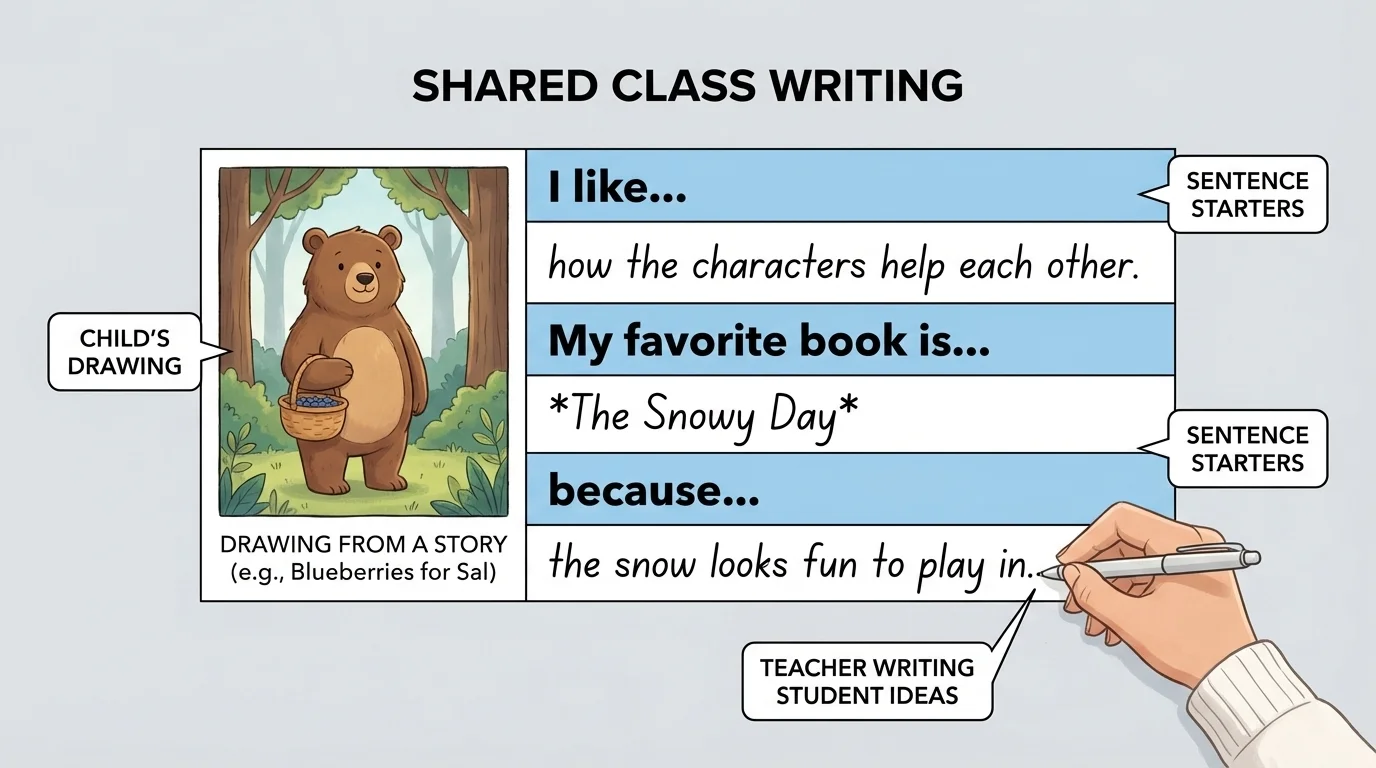
Children can take part in many ways. Some say the words. Some help choose the page order. Some draw pictures to match the ideas. Some point to a title or character from a story. Every child can be part of the final project.
When writers share ideas, they often say the words first and then write them. Talking before writing helps children organize what they want to say.
The finished project shows learning. It tells what books the class studied, what they found out, and what they thought. The sentence starters in [Figure 3] help young writers turn spoken opinions into written ones.
Shared research and writing are not only about books. They are also about how people work together. Children learn to listen when someone else is talking. They wait for a turn. They look at the same page together. They respond to ideas in kind ways.
Good group work sounds like this: "I agree." "I noticed that too." "I like a different book." "Can I add something?" These words help children be respectful while joining the conversation.
When everyone helps, the project becomes richer. One child remembers a character. Another remembers the ending. Another explains why a book feels happy or funny. Teamwork makes the research stronger and the writing more complete.
"We learn more when we listen, look, think, and share."
Reading several books by one author, talking about them, and making a class writing project helps children become thoughtful readers and writers. They learn to gather information, speak about opinions, and create something together.
