Have you ever listened to a book about frogs, trucks, or weather and thought, "What is this whole book about?" That is what strong readers do. They listen, look, and think. When we read or hear an informational text, we can find the big idea and tell back the important parts.
[Figure 1] A main topic is what the text is mostly about. It is the big idea. In a book about apples, the main topic is apples. The text may tell many things about apples, but one big idea holds it all together.
A text can have many small parts, but those small parts fit under the big topic. If a page says apples can be red, green, and yellow, those are details. If a page says apples grow on trees, that is also a detail. The main topic is still apples.
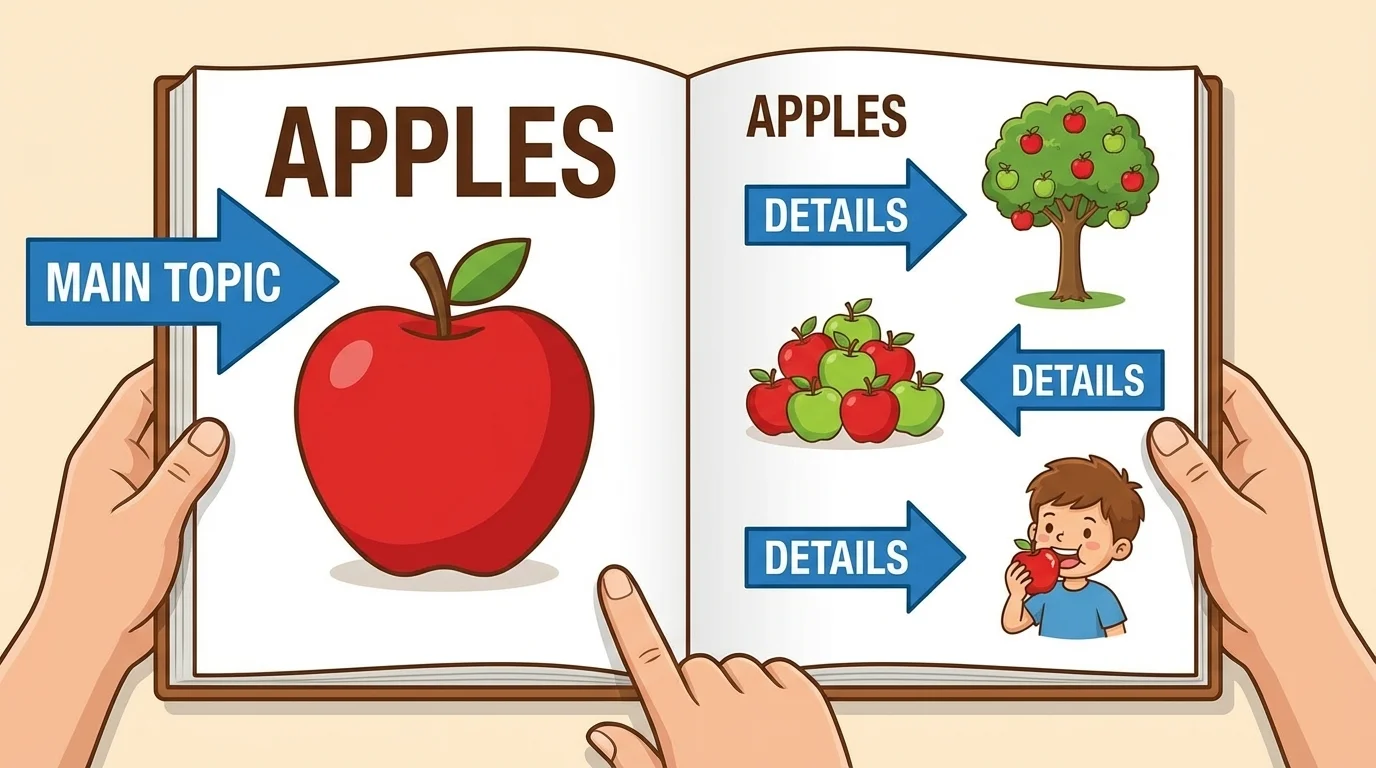
Main topic means what the whole text is mostly about.
Key details are the important facts that tell more about the main topic.
Retell means to tell the important parts again in your own words.
Sometimes the main topic is easy to find because the title and pictures help. A book called All About Bears is mostly about bears. A page with pictures of clouds, rain, and snow may be mostly about weather.
Not every word in a text is a key detail. Key details are the most important facts we should remember. They help us learn more about the main topic.
Think about a text about dogs. Important details might be: dogs can be pets, dogs have fur, and dogs bark. Those details help explain the topic. A tiny extra part, like the color of one dog in one picture, may not be a key detail unless the text says it is important.
How details connect to the big idea
Good readers ask, "Does this detail tell me more about the topic?" If the answer is yes, it is probably a key detail. If it is just a small extra part, it may not be one of the most important details to retell.
When a teacher or grown-up asks, "What is this page about?" or "What did you learn?", those questions help you stop and think. This kind of help is called a prompt. A prompt can be a question, a picture clue, or the first few words to help you begin.
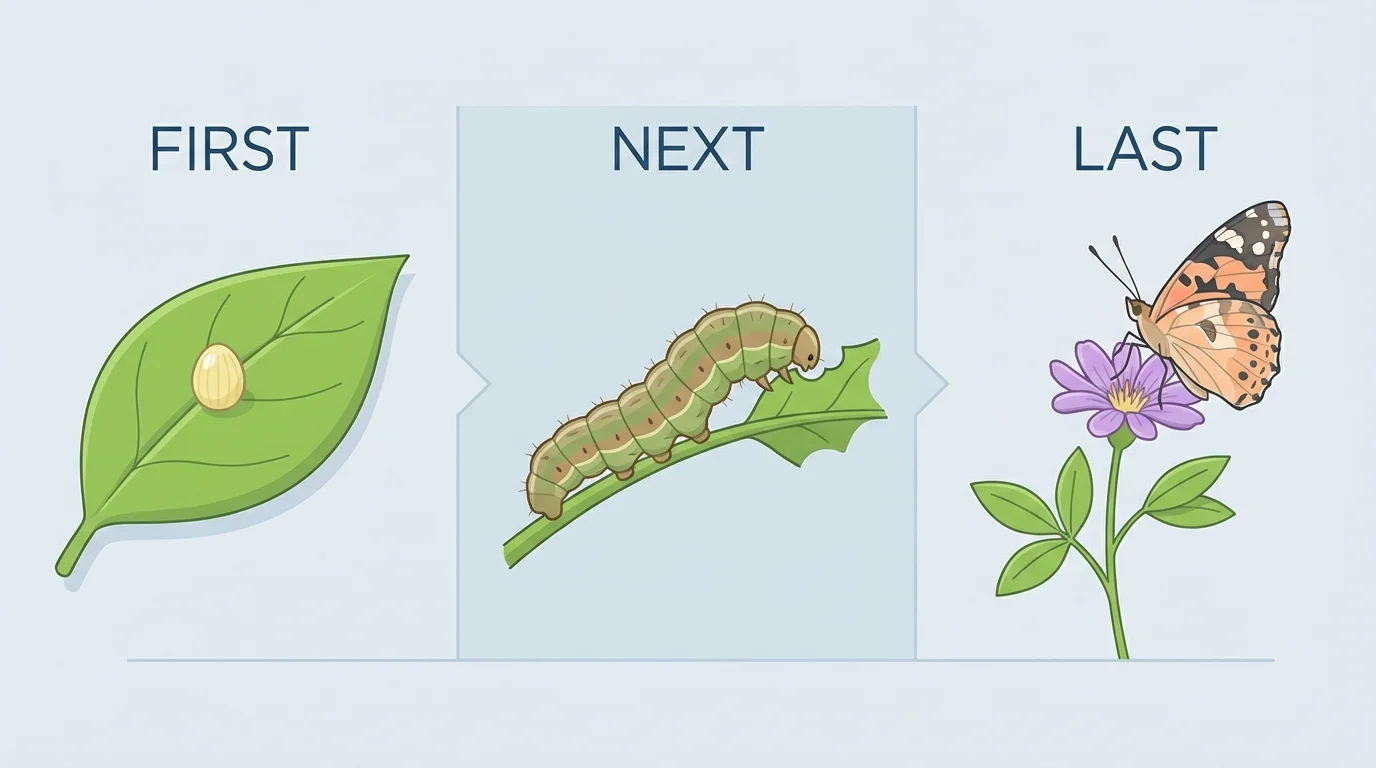
[Figure 2] After listening to a text, you can retell it by saying the important parts back. You do not have to say every single word. You say the big topic and some key details. Sometimes it helps to say them in order.
You can use words like first, next, and last. These words help your retell sound clear. If a text is about how a seed grows, you might say, "First, a seed goes into the soil. Next, it gets water and sun. Last, the plant grows."
Example retell
Text topic: rain
Step 1: Say the main topic.
"This text is about rain."
Step 2: Tell key details.
"Rain falls from clouds. Rain gives water to plants. People use umbrellas in the rain."
Step 3: Put it together.
"This text is about rain. Rain falls from clouds, helps plants grow, and makes people use umbrellas."
A good retell is short, clear, and full of important ideas. It is okay if your words are not exactly the same as the book's words. What matters is telling the big idea and the important facts.
Sometimes young readers need help, and that is okay. A teacher, parent, or partner may ask questions like, "What is this book about?" "What happened first?" or "What is one important thing you learned?" These questions help you find the answer.
Pictures help too. If a text shows bees on flowers, honeycombs, and bees flying, the pictures give clues about the topic. We can look at the pictures, listen to the words, and think about what keeps showing up again and again.
Brains are very good at noticing patterns. When you hear the same idea again and again in a text, that often helps you find the main topic.
If you are not sure, you can start with a sentence frame: "This text is about ___." Then add, "I learned that ___." That support helps you speak in a complete sentence.
Here is a simple example: "Frogs live in wet places. Frogs can jump. Frogs eat bugs." The main topic is frogs. The key details are that frogs live in wet places, can jump, and eat bugs.
Here is another one: "The sun is a star. It gives Earth light. It gives Earth heat." The main topic is the sun. The key details tell what the sun does.
Another example retell
Text: "Trees have roots. Trees have trunks. Trees grow leaves."
Step 1: Name the topic.
"This text is about trees."
Step 2: Add important details.
"Trees have roots, trunks, and leaves."
Step 3: Say the retell.
"This text is about trees. Trees have roots, trunks, and leaves."
Notice that the retell does not include extra made-up ideas. We stay with the facts from the text. That helps us be careful readers and listeners.
Good readers ask themselves, "What keeps coming up?" If a text keeps talking about penguins swimming, penguins eating fish, and penguins living in cold places, the topic is penguins. The details all match that one big idea. This is like the apple example we saw in [Figure 1]: many small facts fit under one big topic.
Good readers also think about order when they retell. If a text explains how something changes or grows, it helps to tell the details in order. The picture sequence in [Figure 2] reminds us that a retell can move from one important part to the next.
When you listen carefully, look at the pictures, and answer helpful questions, you can find the main topic and tell key details. That is how readers understand informational texts.
