Have you ever picked up a book and known right away which side goes first? Books give us clues. The outside and inside pages help us know what the book is called, who wrote it, and where to begin reading. When we know the parts of a book, we can use books with confidence.
A book has parts on the cover and parts inside. The outside of a book protects the pages. It also gives the reader information before reading even begins.
The two outside parts are the front cover and the back cover. These are not the same. One is the front of the book, and one is the back of the book.
Front cover means the outside front of a book. Back cover means the outside back of a book. Title page means a page near the beginning inside the book that shows the title, and often the author too.
When you hold a book, the side that opens first is usually the front. After you turn all the pages, you reach the back. Inside, near the beginning, you can find another important page.
The front cover is the outside front part of the book, as shown in [Figure 1]. It is usually the first part we see. The front cover often has the book's title, a picture, and the author's name.
The front cover helps us get ready to read. The picture may show who or what the book is about. The title tells the name of the book. Sometimes the front cover gives us a clue about whether the book is about animals, trucks, weather, or a story about a child.
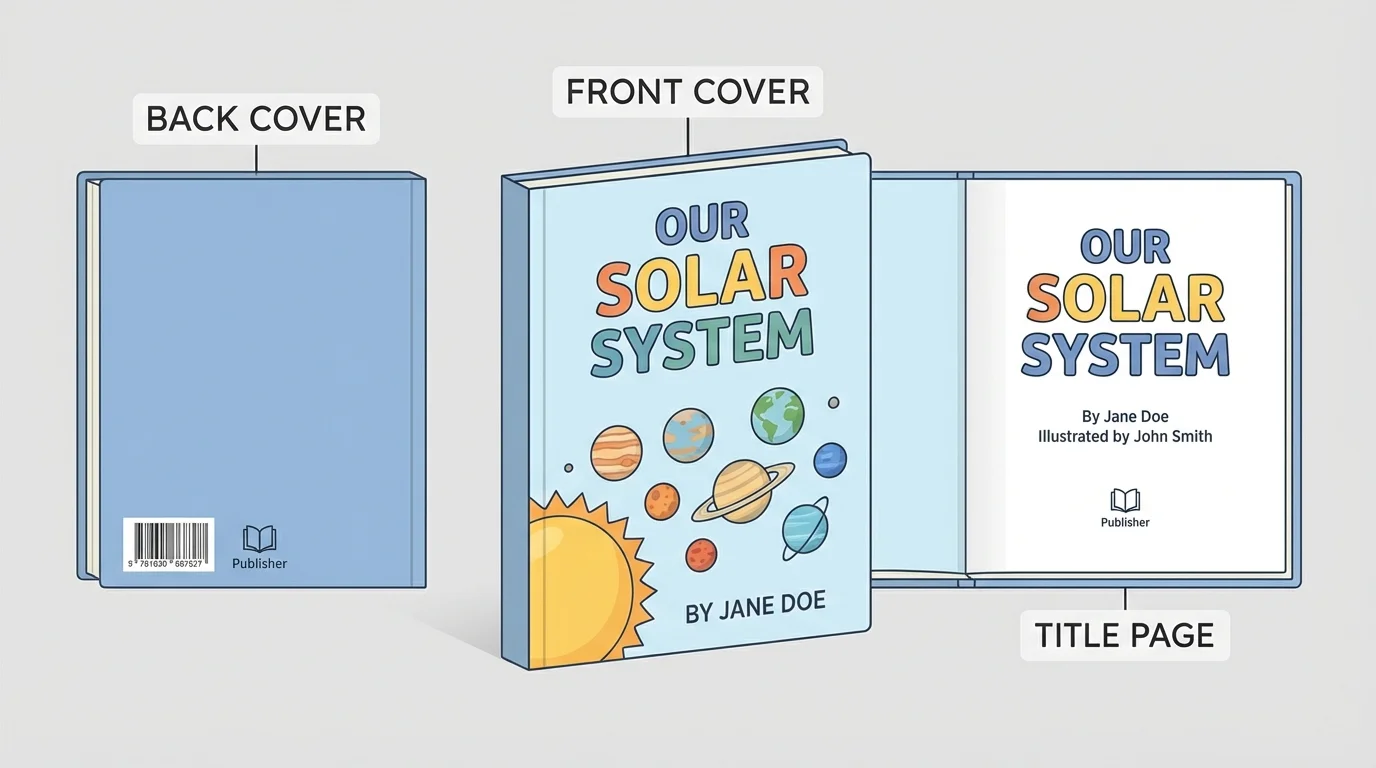
For example, a book with a big picture of a puppy and the title Max the Puppy on the front cover tells us that the book may be about a puppy named Max. A reader can look at the front cover and start to think, "What might this book be about?"
Later, when we talk about a book, we often point to the front cover first. We can say, "This is the front cover," and name the book by reading the title there.
The back cover is the outside back part of the book, on the opposite side from the front cover, as shown in [Figure 2]. We see it when we turn the book around.
The back cover may have a picture, a few words about the book, or a small box with information. Some back covers are plain. Some have colorful art. Even when it looks different from one book to another, it is still the back cover because it is on the back outside of the book.
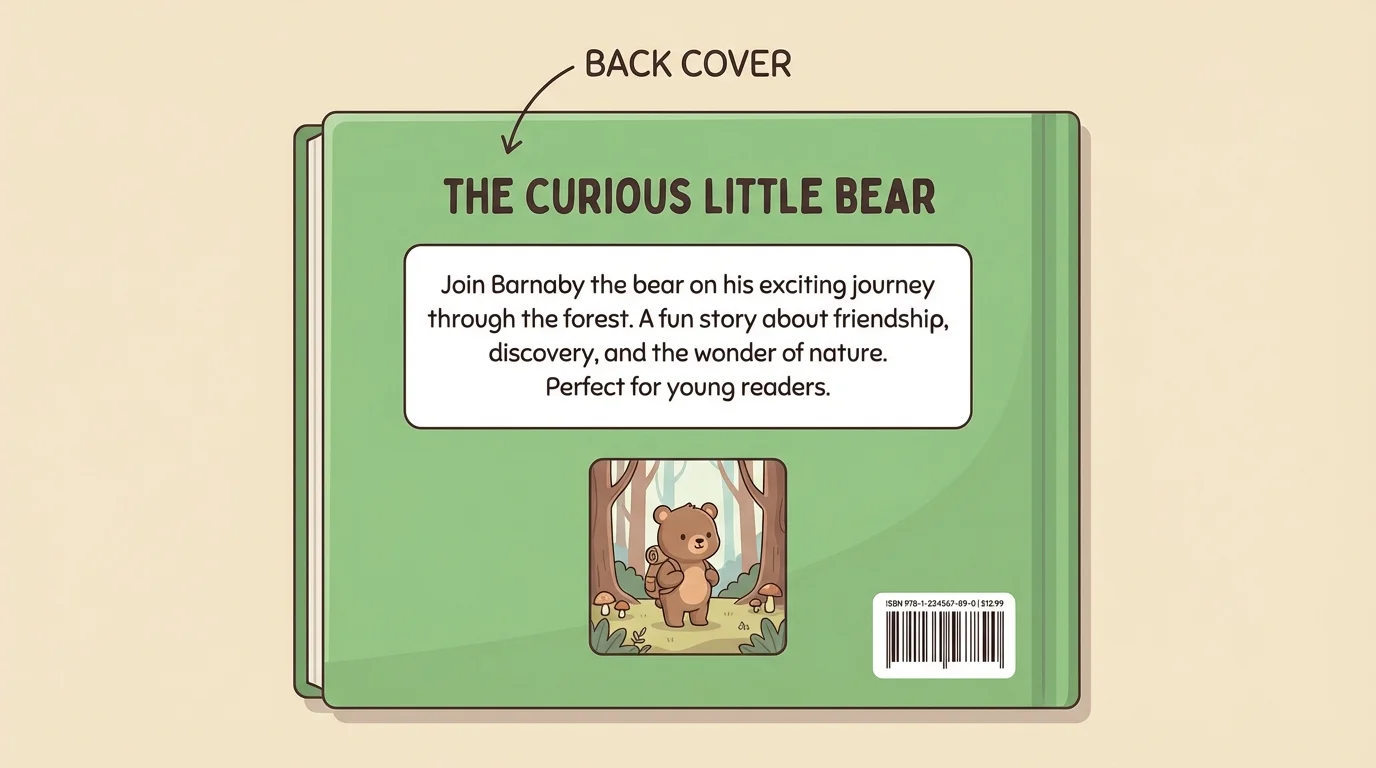
The back cover is not where we usually start reading the book. It is a part that gives extra information. A reader may look at it before choosing a book.
When we compare the two outside parts, the front cover usually shows the title more clearly, while the back cover is often used for extra details. Just like we saw with the front in [Figure 1], the outside of the book gives clues before reading starts.
The title page is inside the book, near the beginning, as shown in [Figure 3]. When we open the front cover, we turn a page or two and find the title page.
The title page usually shows the title of the book again. It often shows the author's name too. Sometimes it also shows the illustrator, the person who made the pictures.
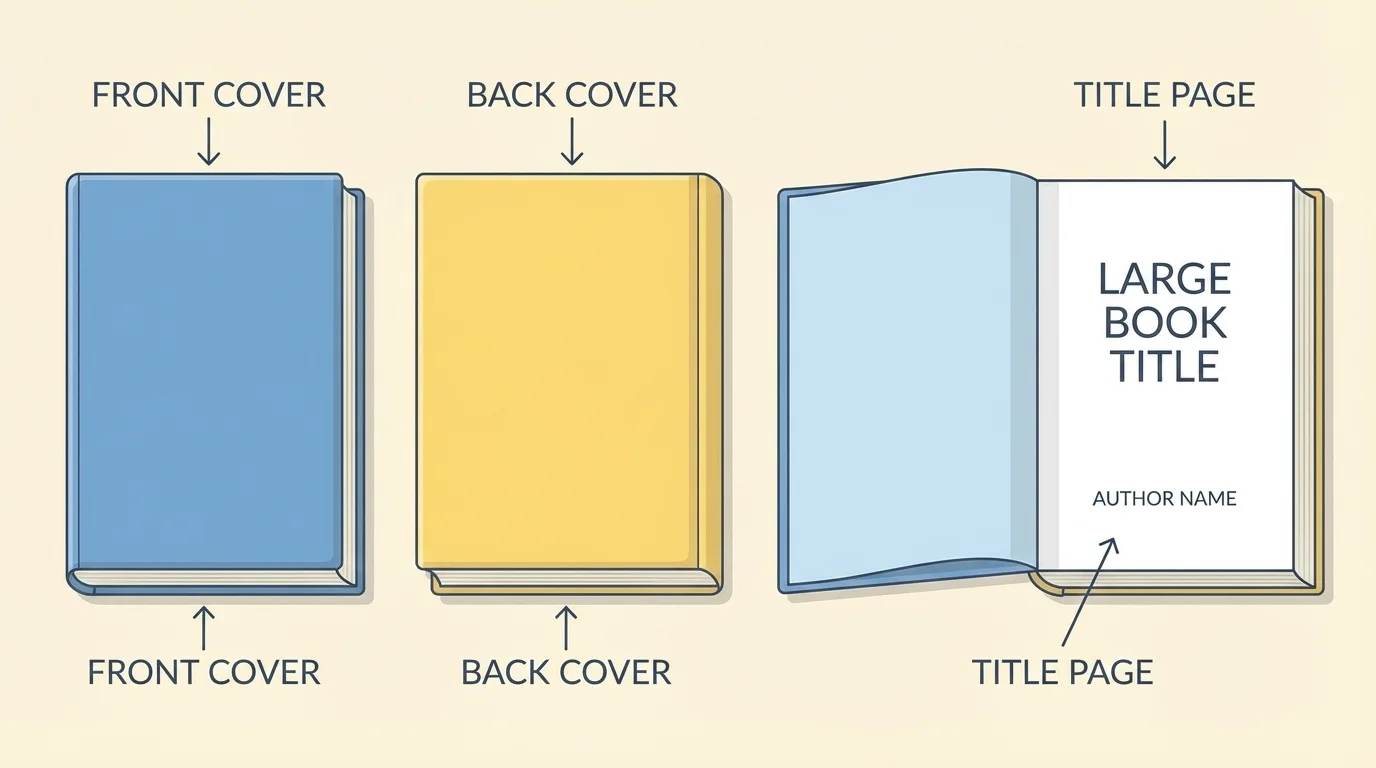
If the front cover says Rainy Day Fun, the title page inside may also say Rainy Day Fun. This helps the reader know the book's name for sure. The title page is a special inside page, not the front cover and not the back cover.
When a teacher, librarian, or student wants to check the name of a book, the title page is very helpful. It gives important book information in one place. Like the inside page in [Figure 3], the title is usually easy to spot because it is printed clearly.
Some books have a picture page before the title page. Even so, the title page is still near the beginning and is the page that shows the book's title clearly.
A reader learns where to begin by using these parts. First, the front cover helps us know which side is the front. Then, when we open the book, the title page helps us identify the book inside.
These book parts help us in different ways. The front cover helps us notice the book and learn its name. The back cover can give us more information. The title page confirms the title inside the book.
Knowing these parts also helps us take care of books. We can hold the book the right way, open it from the front, and find important information quickly.
How readers use book parts
Readers use the front cover to look at the title and picture, the back cover to look for extra information, and the title page to find the title inside the book. These parts help readers identify a book and understand how a book is organized.
If someone says, "Show me the front cover," you can point to the outside front. If someone says, "Open to the title page," you know to open the book and look near the beginning. If someone says, "Turn to the back cover," you can turn the book over and point to the outside back.
The three parts are easy to tell apart when we think about where they are and what they do.
| Book Part | Where It Is | What It Often Shows |
|---|---|---|
| Front cover | Outside front | Title, picture, author |
| Back cover | Outside back | Extra information, picture, short description |
| Title page | Inside near the beginning | Title and often author |
Table 1. This table compares the front cover, back cover, and title page of a book.
When you hold a book, think: outside front, outside back, and inside beginning page. That simple idea helps you identify each part correctly.
Example: Looking at one book
A child picks up a book called The Big Red Ball.
Step 1: The child looks at the outside front and sees the title and picture. That part is the front cover.
Step 2: The child turns the book over and sees the outside back. That part is the back cover.
Step 3: The child opens the book and finds a page near the beginning with the title again. That page is the title page.
Books may look different from one another, but these parts still have the same jobs. A small book, a big book, a picture book, and an informational book all can have a front cover, a back cover, and a title page.
