Have you ever heard a story and then someone asked, "Who was in the story?" or "What happened first?" Listening is a big job for your brain. When we listen carefully, we can understand stories, directions, songs, videos, and things people tell us. Good listeners do not just stay quiet. They think, ask questions, and answer questions too.
When we understand something we hear, we know the important parts. We can describe them in our own words. We can answer simple questions. We can also say when we do not understand. That is a smart thing to do.
Understand means to know what something means. Key details are the important parts. Clarification means getting more help so something becomes clear.
Sometimes a teacher reads a book aloud. Sometimes a grown-up gives directions. Sometimes we learn from a picture, a short video, or someone showing us what to do. In all of these times, listening and looking carefully help us learn.
Understanding means you can think about what you heard and talk about it. If someone reads, "The dog ran to the red ball," you may answer, "The dog ran to the ball." That shows you heard an important idea.
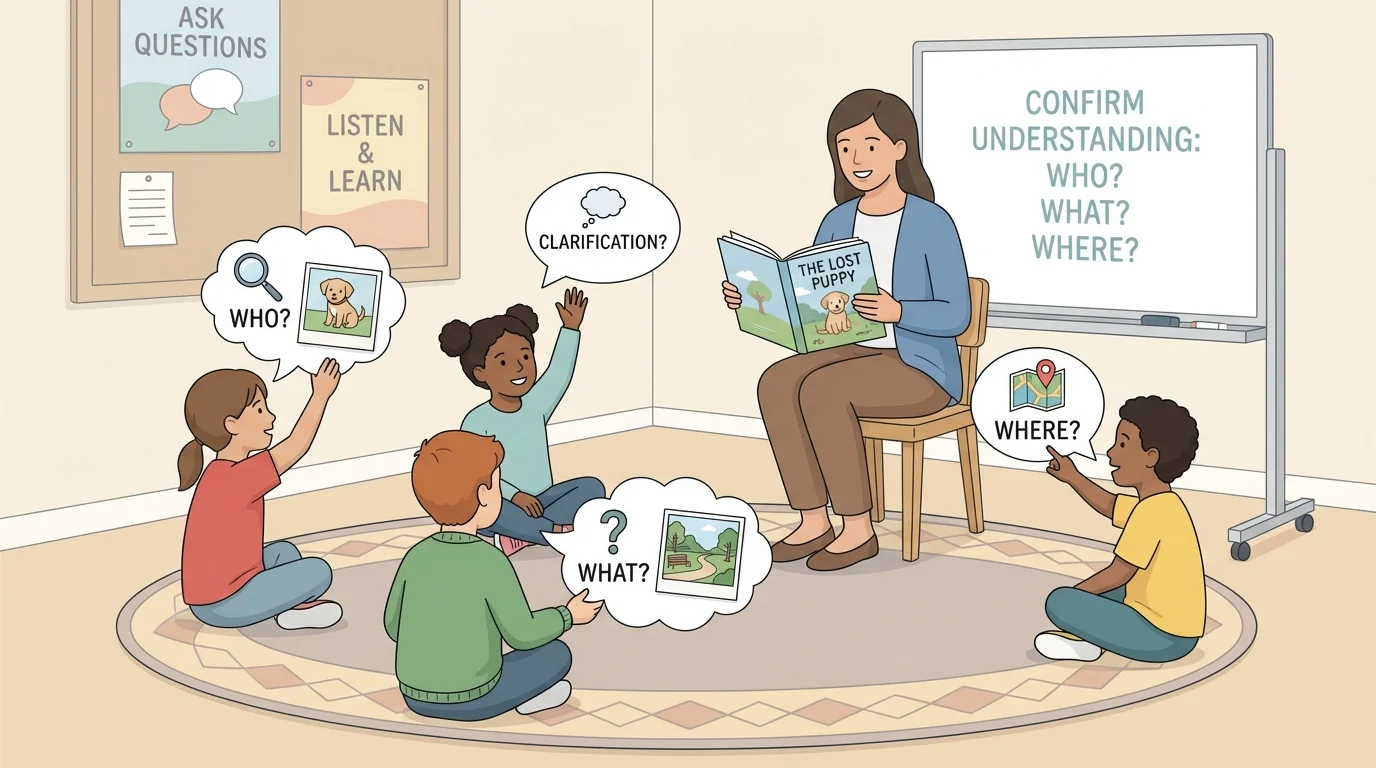
[Figure 1] You do not need to remember every single word. You need to remember the key detail parts. In a story, key details can be who is in it, where it happens, and what happens. In directions, key details can be what to do first, next, and last.
For example, if the teacher says, "Put your folder in your cubby and sit on the rug," the key details are put folder in cubby and sit on rug. If you only sit on the rug and forget the folder, you missed part of the message.
Good listeners ask questions about important parts. Questions help our brains hold on to information. They also help us check if we understood correctly.
You can ask questions like these: Who? What? Where? When? These questions help you find key details. If you hear a story about a cat sleeping on a chair, you might ask, "Who was sleeping?" or "Where was the cat?"
You can answer questions too. If someone asks, "What did the bear eat?" you listen to what you heard and answer with the important detail. A strong answer matches the story or information. If the story says the bear ate berries, the answer is "The bear ate berries."
Listening for key details
A teacher says, "Mia planted a seed in the garden."
Step 1: Listen for who.
The who is Mia.
Step 2: Listen for what happened.
The what is planted a seed.
Step 3: Listen for where.
The where is in the garden.
You can answer: "Mia planted a seed in the garden."
[Figure 2] When we answer questions, we do not need to guess wildly. We think back to what we heard. We use the information from the story, directions, or speaker. That helps us give a careful answer.
Later, when you hear a new story, the same kind of thinking still works. Just as [Figure 1] shows children focusing on story details, you can listen for the most important parts instead of trying to remember everything at once.
Sometimes you hear words but still feel confused. That is when clarification helps. Asking for clarification means you tell someone that you need the message again or in a different way.
Here are polite ways to ask: "Can you say that again?" "I do not understand." "Can you help me?" "What do I do next?" "Can you show me?" These are helpful phrases for learning. They help you get the information you need.
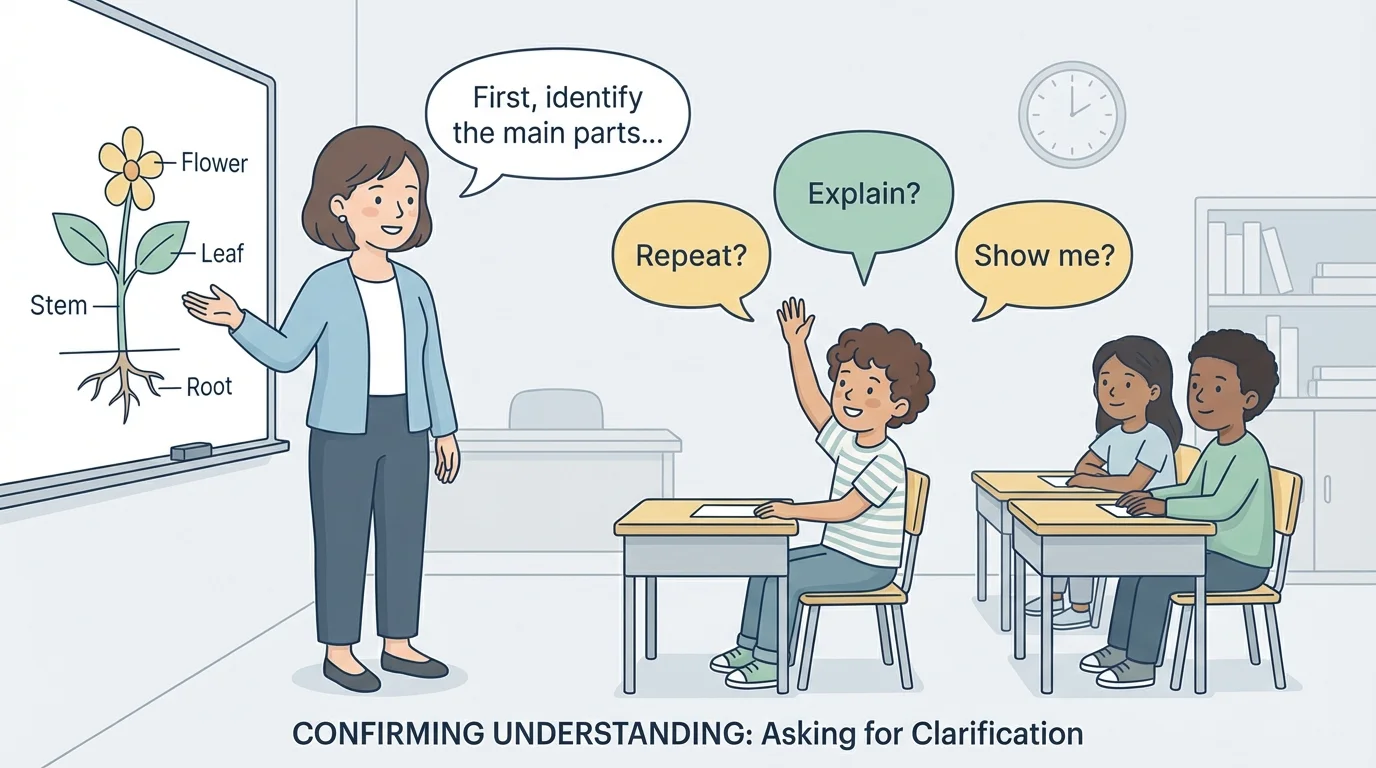
If directions are long, you might understand one part but not another part. You can ask about the part that is confusing. For example, "I know to get my crayons, but where do I put my paper?" That is a very helpful question.
Sometimes clarification also means asking about a word you do not know. If you hear "The rabbit hid in a burrow," you may ask, "What is a burrow?" When you ask, you learn a new word and understand the story better.
Why asking for help is a strong skill
Asking for clarification is not a sign that you failed. It shows you are paying attention and trying to understand. Careful learners notice when something does not make sense and then speak up politely.
[Figure 3] After you ask for help, listen again. Then try to do or say the information. This shows that the new explanation helped. Raising a hand, looking at the speaker, and asking politely all work together.
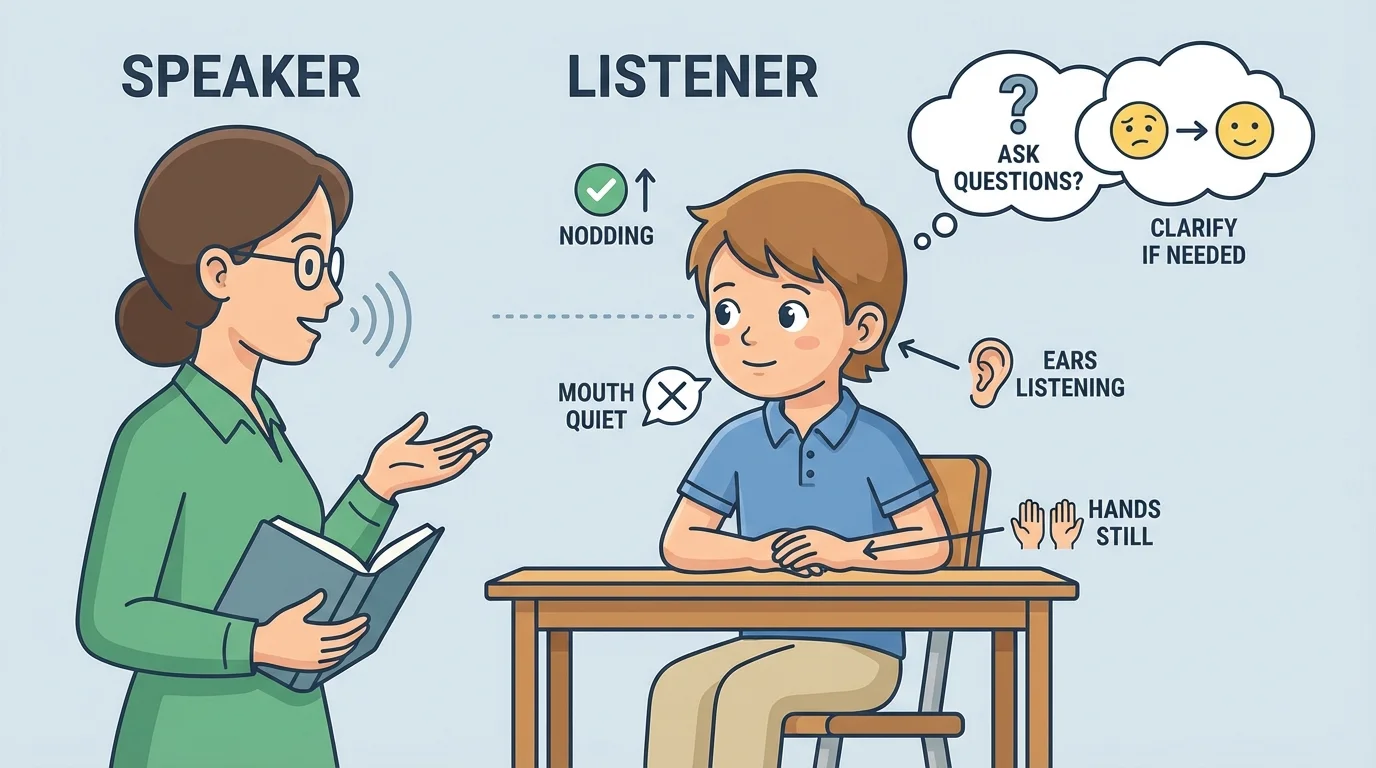
Listening is not only about ears. We also use our eyes, face, and body. Nonverbal language is the way we communicate without words. Looking at the speaker, keeping a quiet body, and nodding can show, "I am listening."
Verbal language means the words we say. We use verbal language when we answer a question, ask for help, or tell what we heard. We use nonverbal language when we raise a hand, look at the teacher, or point to something we mean.
Both kinds of communication matter. A child may say, "I understand," but if the child is looking away and playing with something else, the teacher may not be sure the child is really listening. Clear words and calm body language work best together.
When we listen, our body can help us remember. Eyes watch. Ears listen. Mouth stays quiet until it is time to talk. Hands and feet stay calm. These actions make it easier for the brain to focus.
Later, when you join a discussion, remember what [Figure 3] shows: listening bodies help us catch key details, and then our words help us ask and answer questions.
Sometimes information is not only spoken. You might learn from pictures, a video, a song, or someone acting something out. You still use the same skills. You look and listen for important parts. Then you ask and answer questions.
If you watch a short video about butterflies, key details might be that the butterfly starts as an egg, becomes a caterpillar, and later becomes a butterfly. You can ask, "What came first?" or answer, "The egg came first."
If a teacher shows how to wash hands, you can listen and watch. Then you may answer questions like, "What do we do after we put on soap?" or ask, "Do we dry our hands before or after rinsing?" Watching carefully helps you understand the steps.
Your brain learns more when you use both eyes and ears together. Looking carefully while listening can help you remember important details better.
Pictures can also give clues. If you hear a story about a rainy day and see children in boots holding umbrellas, the picture helps you understand what is happening. The words and the image work together.
In a classroom, these skills happen all day long. During story time, you listen and answer questions. During centers, you listen to directions. During cleanup, you may ask for clarification. During a class talk, you use verbal and nonverbal language together.
Here are helpful sentence frames: "I heard that ___." "The story is about ___." "Who is ___?" "Where did ___ go?" "Can you repeat that, please?" "I do not understand this part." These frames make speaking easier.
Classroom listening example
The teacher says, "Take out your journal, draw a tree, and color the leaves green."
Step 1: Listen for the first direction.
First, take out your journal.
Step 2: Listen for the next direction.
Next, draw a tree.
Step 3: Listen for the last direction.
Last, color the leaves green.
If you miss a part, you can ask, "What do I color green?"
Sometimes children worry about asking questions. But questions are how we learn. If you ask about a key detail, you understand better. If you answer a question, you show what you know. If you ask for clarification, you reduce confusion.
Strong listeners are active. They think, look, ask, answer, and check their understanding. That is how listening becomes learning.
