Have you ever tried to tell someone about a big, silly dog, a windy day, or your favorite playground? Sometimes words tell a lot, but a picture can tell even more. When we add a drawing or another visual display to what we say, our ideas become clearer. A listener can look, listen, and understand more details at the same time.
A visual display is something we can look at that helps show an idea. It might be a drawing, a picture with labels, or a set of pictures in order. When we speak and also show a picture, listeners can notice details more easily, as [Figure 1] shows. A picture can help people understand what an object looks like, where something happens, or what happened first and next.
If a child says, "My cat is funny," we know a little. If the child shows a picture and says, "My cat is orange, has white paws, and likes to sleep on the couch," we know much more. The picture and the words work together.
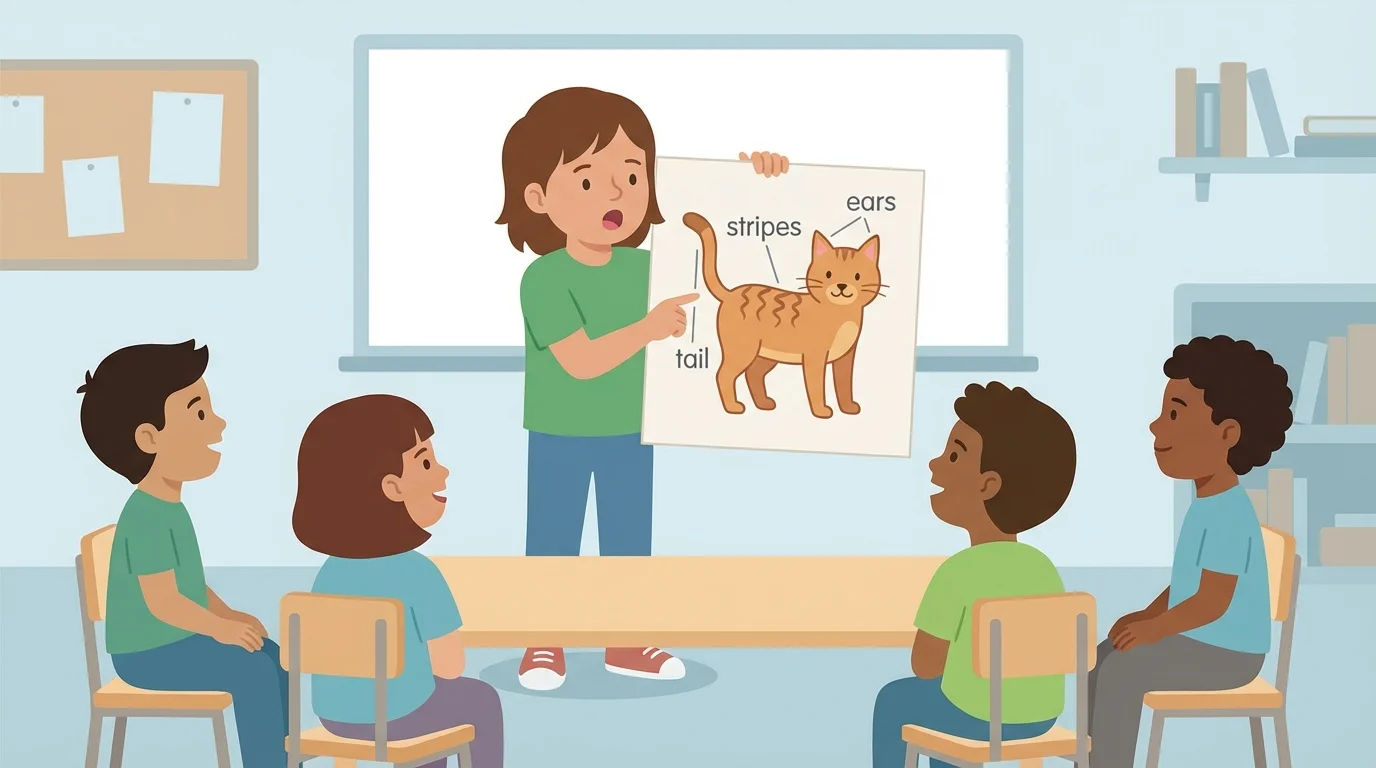
Pictures are helpful in a language-rich classroom because children are learning to share ideas, describe things, and listen to others. A visual can support speaking, and it can also support listening. A classmate may understand your idea better when your words and your picture match.
Drawing is a picture someone makes to show an idea. Description is telling about something with words. Detail is an important part that helps someone know more. A label is a word that names a part of a picture.
When we use both words and visuals, we communicate in more than one way. That is a strong way to share ideas.
There are many kinds of visuals children can use, as [Figure 2] illustrates. A simple drawing is one kind. A labeled picture is another kind. We can also use a simple chart with pictures, a map of a classroom, or a picture sequence that shows what happens first, next, and last.
A drawing is helpful when you want to show what something looks like. Labels are helpful when you want to name the parts, like head, wings, or wheels. A picture sequence is helpful when you want to tell events in order. For example, if you talk about planting a seed, one picture can show the seed, one can show watering, and one can show the flower growing.
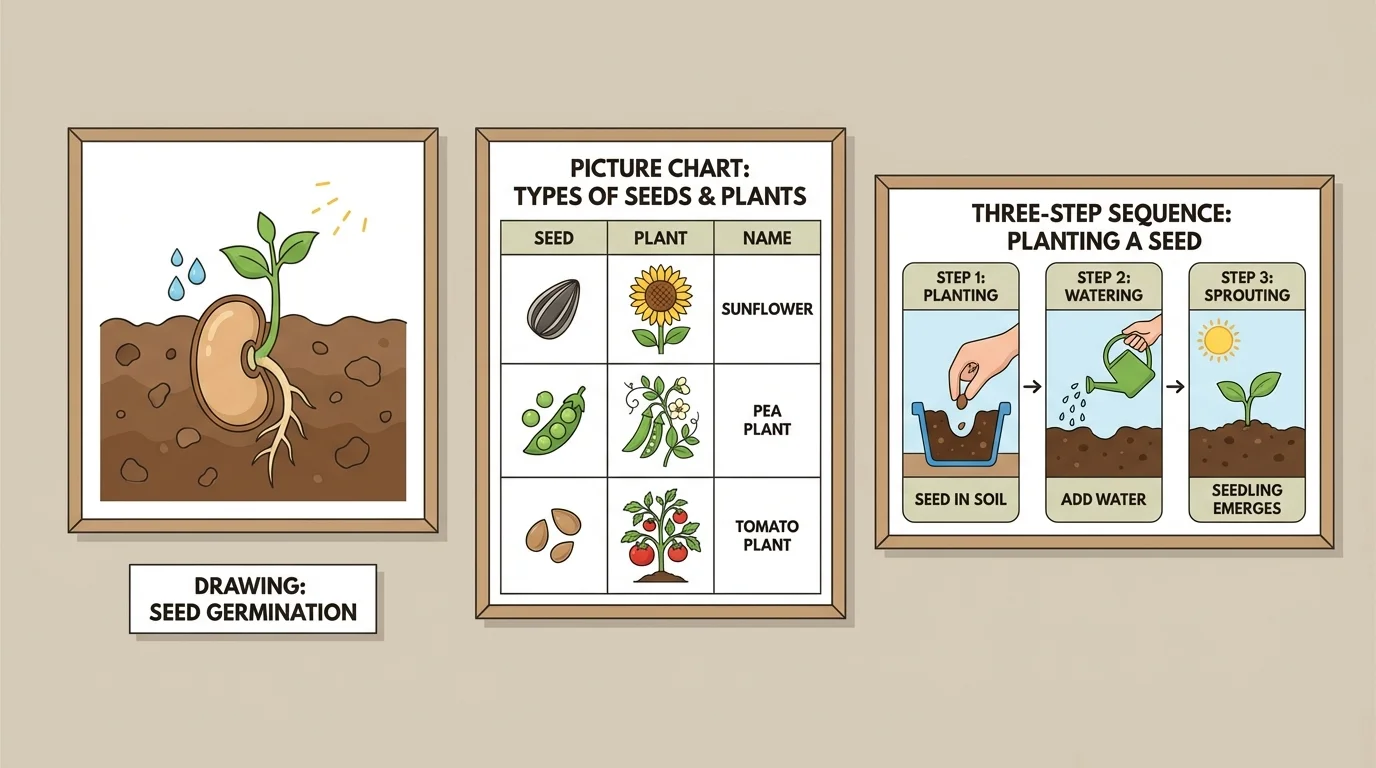
Each visual has a job. We choose the one that best matches what we want to say. If we are describing one object, one picture may be enough. If we are telling steps, a sequence of pictures is better.
Many books for young children use pictures and words together because the brain learns a lot from seeing and hearing at the same time.
That is why teachers often show charts, story pictures, and labeled drawings while they talk. The visual gives extra clues.
A good picture should match the words being spoken. If you say, "I saw a yellow duck in a pond," but your picture shows a red bird in a tree, the listener may feel confused. The visual and the description need to tell the same message.
Matching means the same object, the same action, and the same important details. If you describe a birthday cake with three candles, your picture should also show three candles, or the listener may think something different.
This is one reason careful looking matters. Before sharing, a speaker can look at the picture and think: "Does this show what I want to say?" If the answer is yes, the picture helps. If not, the picture may need more details or changes.
Details make a picture stronger, as [Figure 3] shows. A plain picture may show the main thing, but details help the listener know more. Children can add detail to a drawing using color, size, shape, number, place, and action.
Color tells what something looks like: a blue backpack or a green frog. Size tells how big or small: a tiny bug or a tall tree. Shape tells the form: round, long, or square. Number tells how many: two ducks or five blocks. Place tells where: under the table, on the hill, or next to the slide. Action tells what is happening: running, sleeping, or jumping.
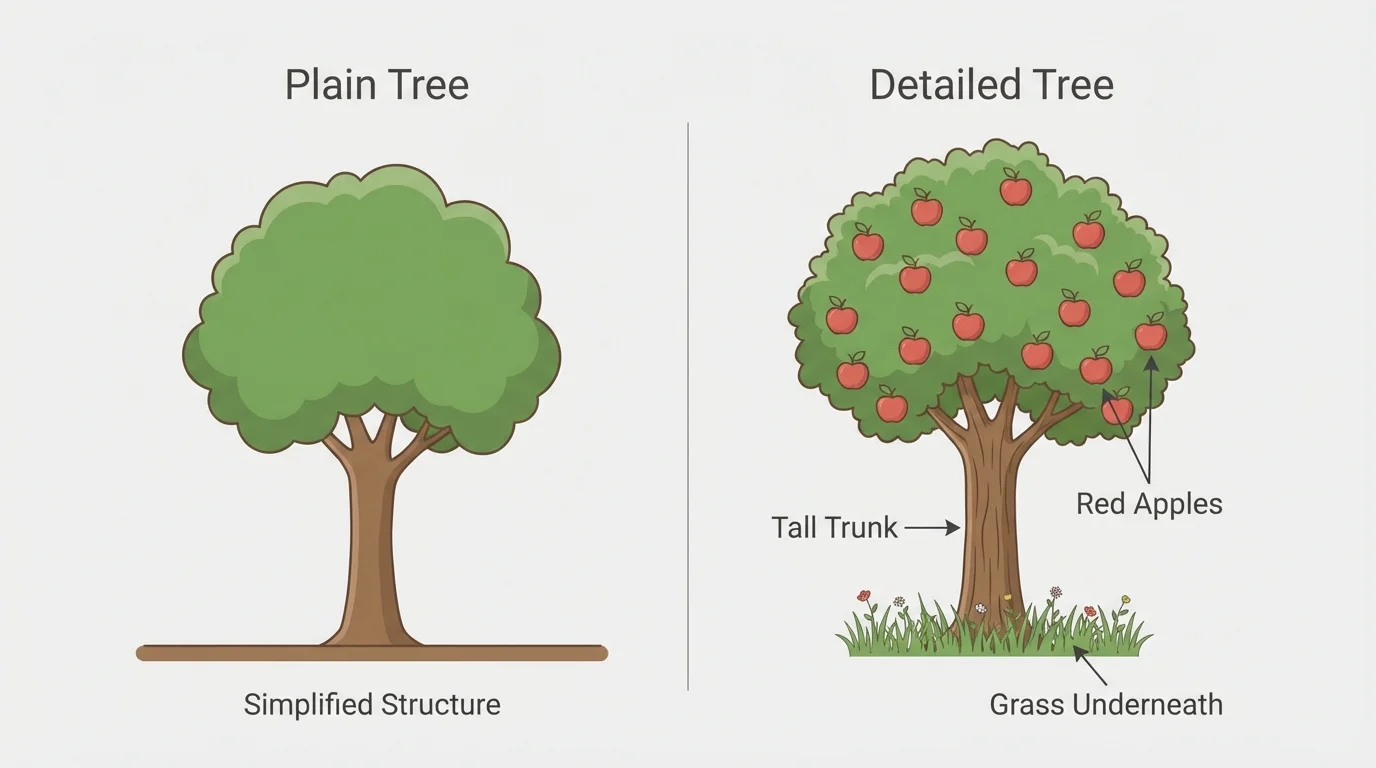
If a child says, "I saw a tree," that is a start. If the child adds, "I saw a tall tree with red apples and green leaves by my house," the listener can make a much clearer picture in the mind. The drawing should show those same details.
Example: Making a stronger description
A child wants to talk about a fish.
Step 1: Start with simple words.
"This is my fish."
Step 2: Add details with words.
"This is my little blue fish."
Step 3: Add matching details in the drawing.
The picture shows a small blue fish with bubbles in the water.
Now the listener learns much more from the words and the picture together.
As we saw in [Figure 3], adding the right details changes a picture from simple to informative.
When children speak with a picture, they can point to parts, name them, and explain them. A speaker may say, "Here is the sun. Here are the clouds. Here is the rain." That helps the audience follow along. A picture can help a speaker remember what to say in order, as [Figure 4] shows.
Speaking clearly with a visual means using words that fit the picture. It also means speaking loudly enough, facing the audience, and giving enough details. If the picture shows a playground, the speaker might say, "I am on the swing. My friend is on the slide. We are playing after school."
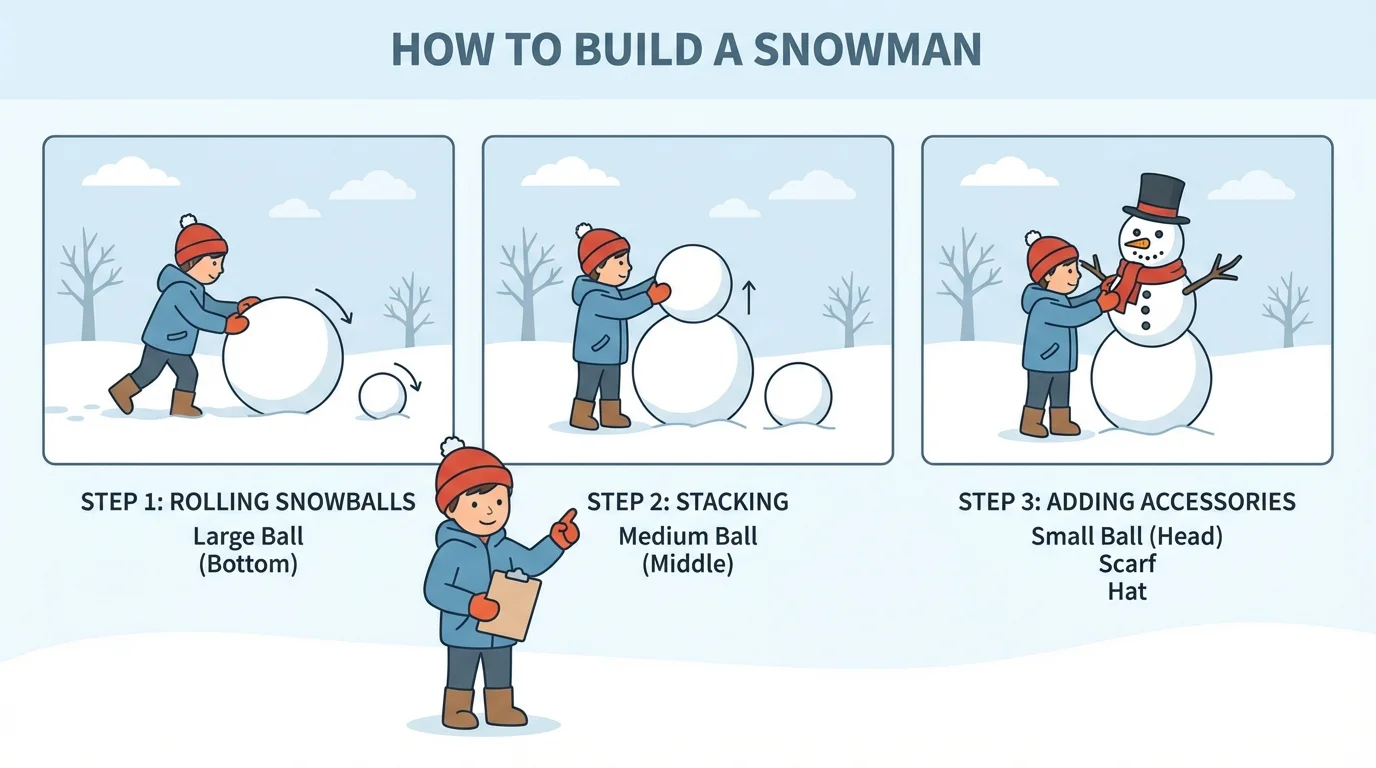
Pointing to the visual helps listeners know exactly which part is being described. This is useful when there are many things in one picture.
Words and visuals work as partners. The picture is not there to replace speaking. The picture helps support speaking. The best communication happens when the speaker uses clear words and the visual adds details those words describe.
A child telling how to build a snowman might use three pictures and say, "First we roll the snow. Next we stack the snowballs. Last we add a scarf and hat." The picture sequence helps keep the speaking in order. This ordered speaking is easier to understand, just like the sequence shown in [Figure 4].
Visuals help listeners too. When someone else speaks, we can look carefully at the picture and listen for words that match it. This helps us understand and remember what the speaker is saying.
A good listener may notice, "The picture shows a red ball under the chair, and the speaker says the same thing." That means the speaker and picture match. If something does not match, a listener may become confused or may ask for clarification later.
Looking and listening together are both important classroom skills. They help children understand stories, directions, and classmates' ideas.
When you listen carefully, you use your ears. When you look carefully, you use your eyes. Good communication often uses both.
This is why classroom posters, story cards, and student drawings are useful. They support understanding for everyone in the room.
Children use visuals every day. A drawing of a family can help a child talk about who lives at home. A weather picture can help a child explain, "It is rainy and windy today." A map of the classroom can help a child tell where the reading corner is. A picture from a story can help a child retell what happened.
A label can make a drawing even clearer. A child drawing a flower may add labels such as petal, stem, and leaf. A sequence of pictures can help explain steps, such as washing hands, building with blocks, or getting ready for recess.
When children choose a picture that fits their words, add useful details, and speak clearly, they share ideas in a strong and thoughtful way. Visuals help people understand more, remember more, and enjoy communication more.
