Have you ever had something exciting happen and wanted to tell all about it right away? A good story helps another person see what happened, when it happened, and how you felt. When you tell a story, you are sharing a narrative. A narrative can be about something real that happened to you, or it can be made up.
Young writers have many helpful ways to tell stories. You can draw pictures, say the words out loud for someone to write, and write some words yourself. All of these help your story make sense.
A story is easier to understand when the events are told in order, as [Figure 1] shows. Order means what happened first, next, and last. Many stories have a beginning, a middle, and an end.
You can use words such as first, next, then, and last. These words help your listener or reader follow your ideas. If you say, "First I put on my boots. Next I went outside. Then I jumped in a puddle. Last I laughed," your story is easy to follow.
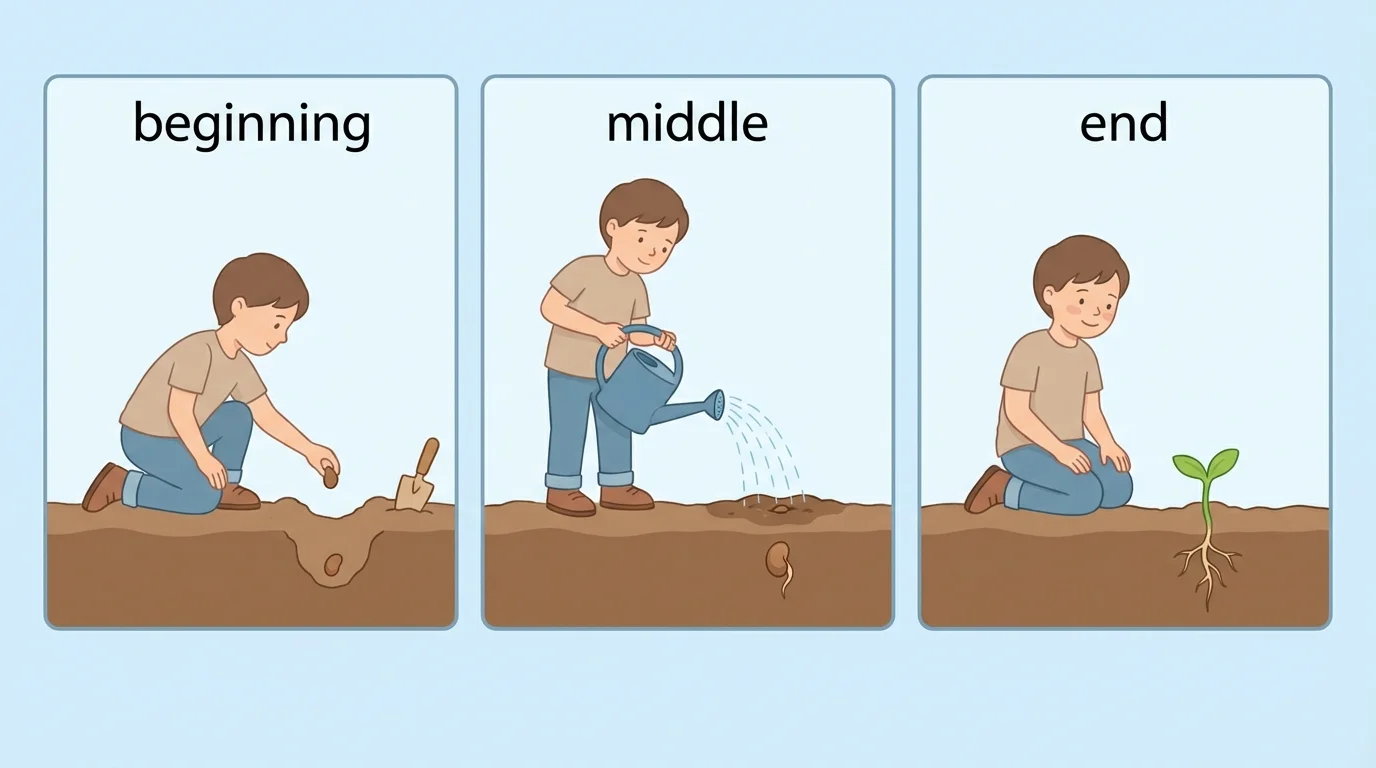
If the order gets mixed up, the story can feel confusing. Saying "I laughed, then I put on my boots, then I went outside" does not sound like the correct order. Good storytellers try to keep the events lined up clearly.
Beginning tells how the story starts. Middle tells what happens during the story. End tells how the story finishes.
Sometimes a story is very short. That is okay. Even a short story still needs an order. It can be as simple as: "I saw a butterfly. I ran after it. It flew away."
[Figure 2] Writers in kindergarten often use three powerful tools together: drawing, dictation, and writing. Each one helps tell the story.
Drawing shows the people, place, and action. A picture can show a dog running, a birthday cake, or a big splash in a puddle. The drawing helps others see what happened.
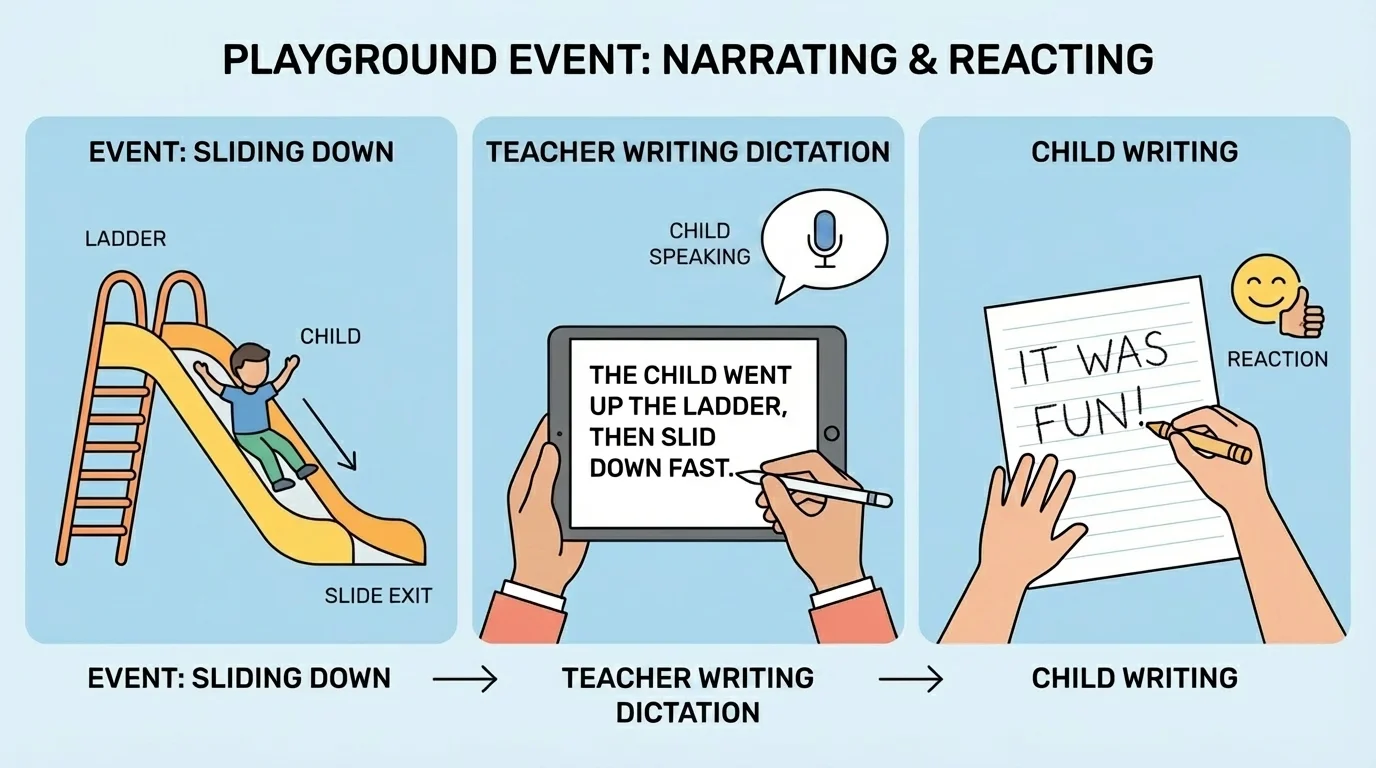
Dictating means saying your story out loud while an adult writes your words. This helps you tell more of your ideas, even if you cannot write every word by yourself yet.
Writing means you write letters, words, labels, or a sentence. You might write, "I fell," or label a picture with words like park, mom, or ball.
How the three parts work together
A picture shows details you can see. Dictated words tell the whole idea. Written words add labels or sentences. When you use all three, your story becomes stronger and clearer.
A child might draw a trip to the playground, tell an adult, "I went down the slide fast," and write the word slide. That is real storytelling. Later, the same child may add more words and even more details. As in [Figure 2], all three parts can tell the same event together.
Sometimes a story is about just one special thing that happened. For example: "I lost my tooth." That is one event. You can still tell the beginning, middle, and end: "I bit my apple. My tooth came out. I showed my family."
Sometimes a story includes a few things that are loosely linked. That means they go together, even if they are not one tiny moment. For example: "I went to the farm. I fed a goat. Then I rode on a wagon. Last I picked a pumpkin." These parts belong together because they all happened on the same trip.
A good storyteller chooses events that fit together. If you are telling about a rainy-day walk, adding a sentence about building a snowman on another day may not fit. Keeping the story connected helps your listener understand it.
Many picture books tell just one small moment, like losing a toy or finding a bug. Small moments often make the clearest stories because the writer can tell exactly what happened.
Small stories are often strong stories. When you stay close to one event or to a few connected events, you can tell them in a way that makes sense.
[Figure 3] A story does more than list actions. It also tells a reaction. A reaction is how you felt or what you thought about what happened.
You might say, "I was happy," "I felt scared," or "It was funny." You can also show a reaction in a drawing with a smiling face, wide eyes, or tears. Reactions help the story feel alive.
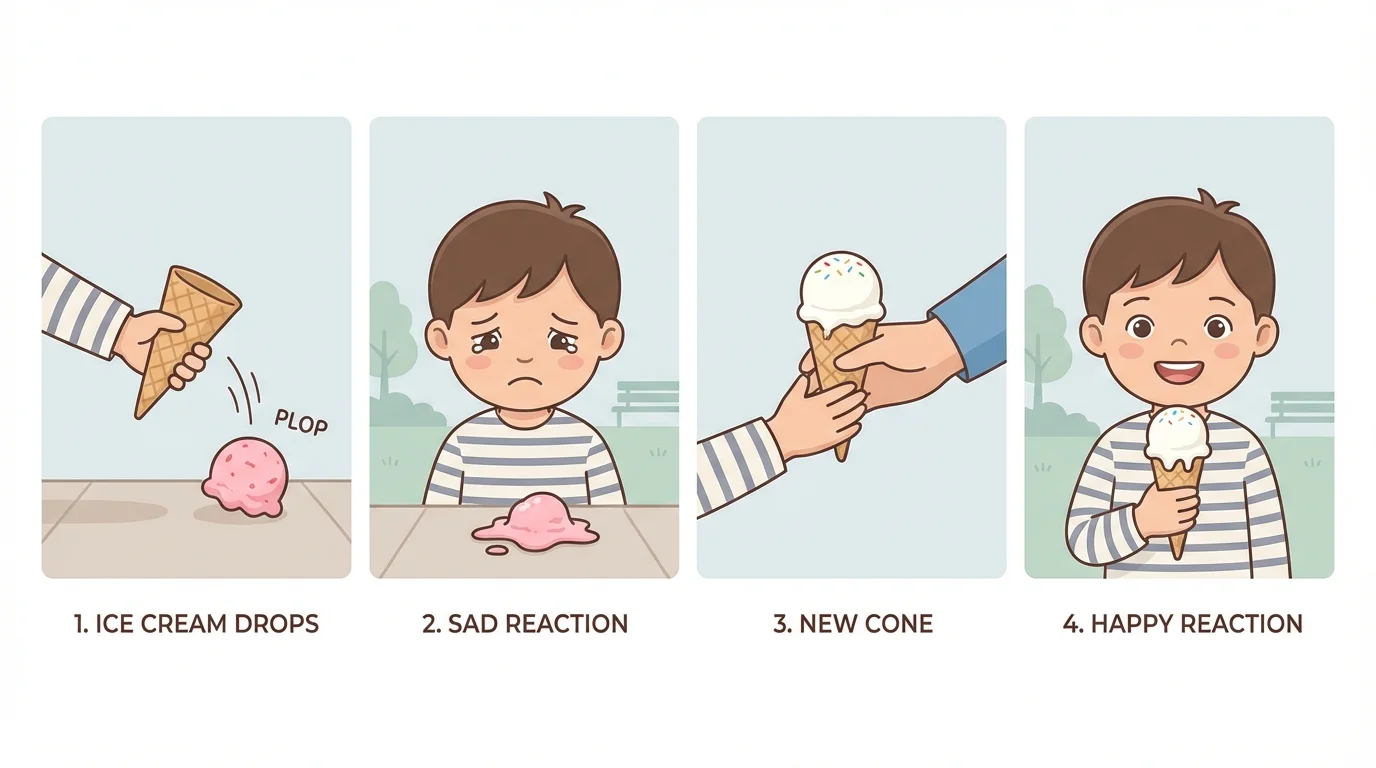
Here are some examples of reactions: "I was proud when I zipped my coat." "I felt surprised when the balloon popped." "I was sad when my block tower fell." The event tells what happened. The reaction tells how it felt.
Example: one event with a reaction
A child wants to tell about dropping a cookie.
Step 1: Draw the event.
The picture shows the cookie falling to the floor.
Step 2: Dictate the story.
"First I got a cookie. Then it slipped from my hand. Last it broke on the floor."
Step 3: Add writing.
The child writes: My cookie broke.
Step 4: Add the reaction.
"I felt sad."
Now the story tells what happened and how the child felt.
When you add a reaction, your story sounds more complete. The reader learns not only the action but also why it mattered to you. The feelings in [Figure 3] help show that stories include emotions as well as actions.
A complete kindergarten story can be short and still do an excellent job. It tells what happened, keeps the order clear, and ends with a feeling or thought.
Here is one example: "First I went outside with my dad. Next we saw a worm on the sidewalk. Then I picked it up with a leaf. Last we put it in the grass. I felt excited." This story tells a few linked events in order and gives a reaction.
Here is another example: "I had a red balloon. Then the wind pulled it away. I watched it fly up. I felt sad." This story is about one event. It is short, clear, and complete.
When you tell a story, make sure someone listening can answer these questions: What happened? What happened first, next, and last? How did you feel?
You do not need many sentences to be a real writer. A drawing, spoken words, and a few written words can work together to tell a strong story. The important part is making your ideas clear and keeping the events in order, just as the sequence in [Figure 1] helps the story make sense.
