Have you ever made a picture and then told someone all about it? That is how young writers make informative writing. Informative writing teaches about something real. A writer can teach about a dog, a tree, a bus, a pumpkin, or a firefighter. The writer tells what the page is about and gives some true information.
Informative writing is writing that tells about a real thing. It is not a made-up story. If you draw a cat and say, "This is my cat. My cat is soft," you are teaching about a real topic. Your topic is cat.
Informative writing tells about a real topic and gives true information. A topic is the thing the writer is writing about.
When writers make an informative page, they do two important jobs. First, they name the topic. Second, they tell information about it. A page that only has a picture can be a start, but adding spoken or written words helps other people learn.
A young writer can make a page in three simple ways: by drawing, by dictating, and by writing. These ways work together, as [Figure 1] shows on one simple page. The picture helps the reader see the topic. The spoken sentence tells an idea. The written letters or words help name the topic and share information.
Labels are little words that point to parts of the picture. A child might draw a bird and add labels like "beak" and "wing." The child might dictate, "A bird can fly." One page can have all of these parts together.
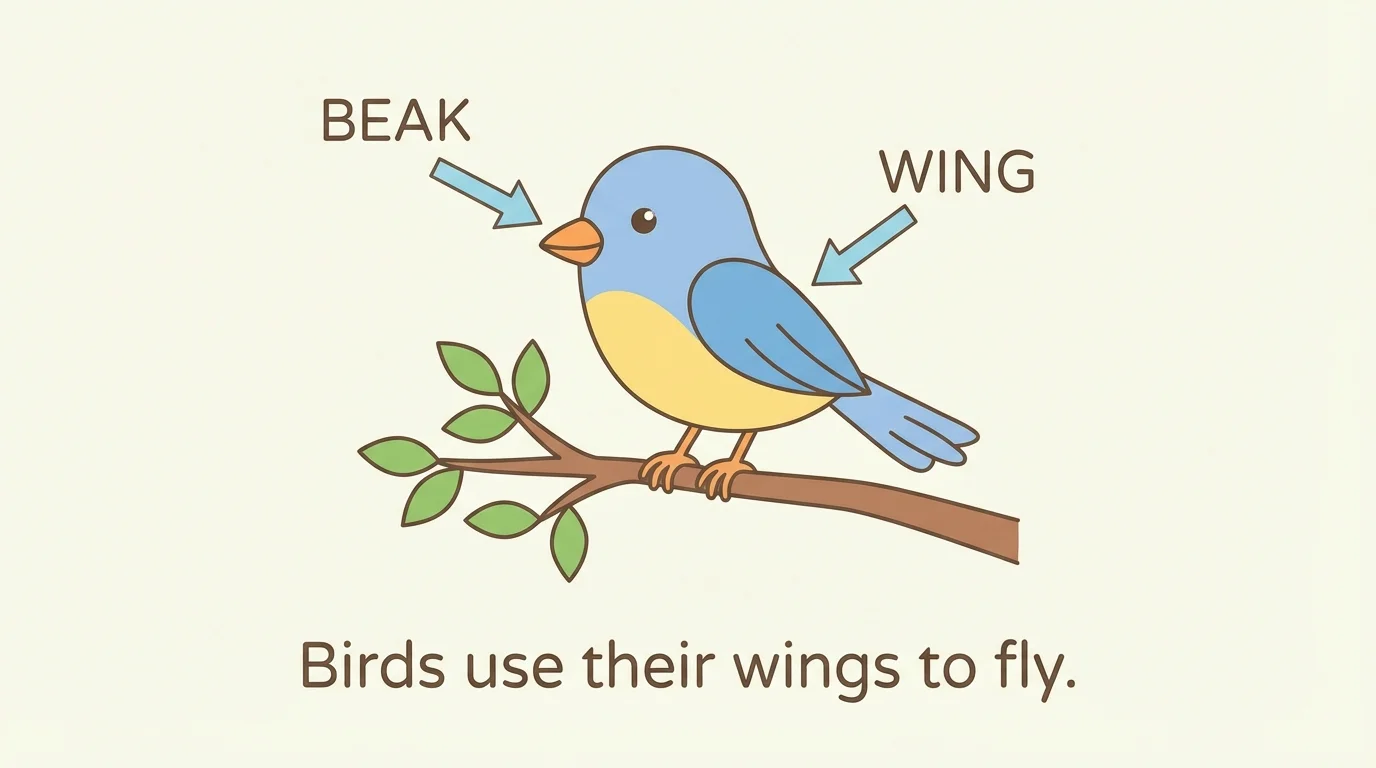
Sometimes a writer knows many letters and writes words alone. Sometimes a writer says the words and an adult writes them down. That is still real writing work. Dictating helps writers share big ideas, even when their hands are still learning how to write all the words.
How the three parts work together
The drawing shows the topic, dictating lets the writer say the information, and writing adds letters, words, or a sentence. When all three match, the page teaches clearly.
A picture of a fish with the sentence "Fish live in water" teaches more than the picture alone. A label like "fin" teaches even more. Writers are not just creating art. They are helping a reader learn.
A reader should know the topic right away. Writers can name the topic with a title, a label, or a sentence. A title might say Dog. A sentence might say, "This is a dog." Both tell the reader what the writing is about.
If the topic is a tree, the writer should make the picture, words, and labels all match tree. If the page suddenly talks about a car, the writing is off topic. Good informative writing stays on one topic so the reader can understand it.
Naming the topic
Step 1: Pick one real thing.
Example: a plant.
Step 2: Name it.
Write "Plant" or say, "This is a plant."
Step 3: Keep the picture and words about that same thing.
Draw the plant and add plant information.
Writers can name many kinds of topics: animals, people, places, things, or parts of nature. A writer might choose sun, apple, teacher, or truck. The important part is being clear.
After naming the topic, the writer adds information. Information means true details. Labels are one strong way to give information, as [Figure 2] shows with parts of one real object. If a writer draws a flower and labels "leaf" and "stem," the writer is teaching the names of parts.
Writers can also add information with a sentence. A page about a frog might say, "A frog can jump." A page about a bus might say, "A bus has wheels." These are simple facts that match the topic.
Information can tell different kinds of things. It can tell parts, what it does, what it looks like, or where it lives. A writer does not need many facts. Even one or two true details can make the page informative.
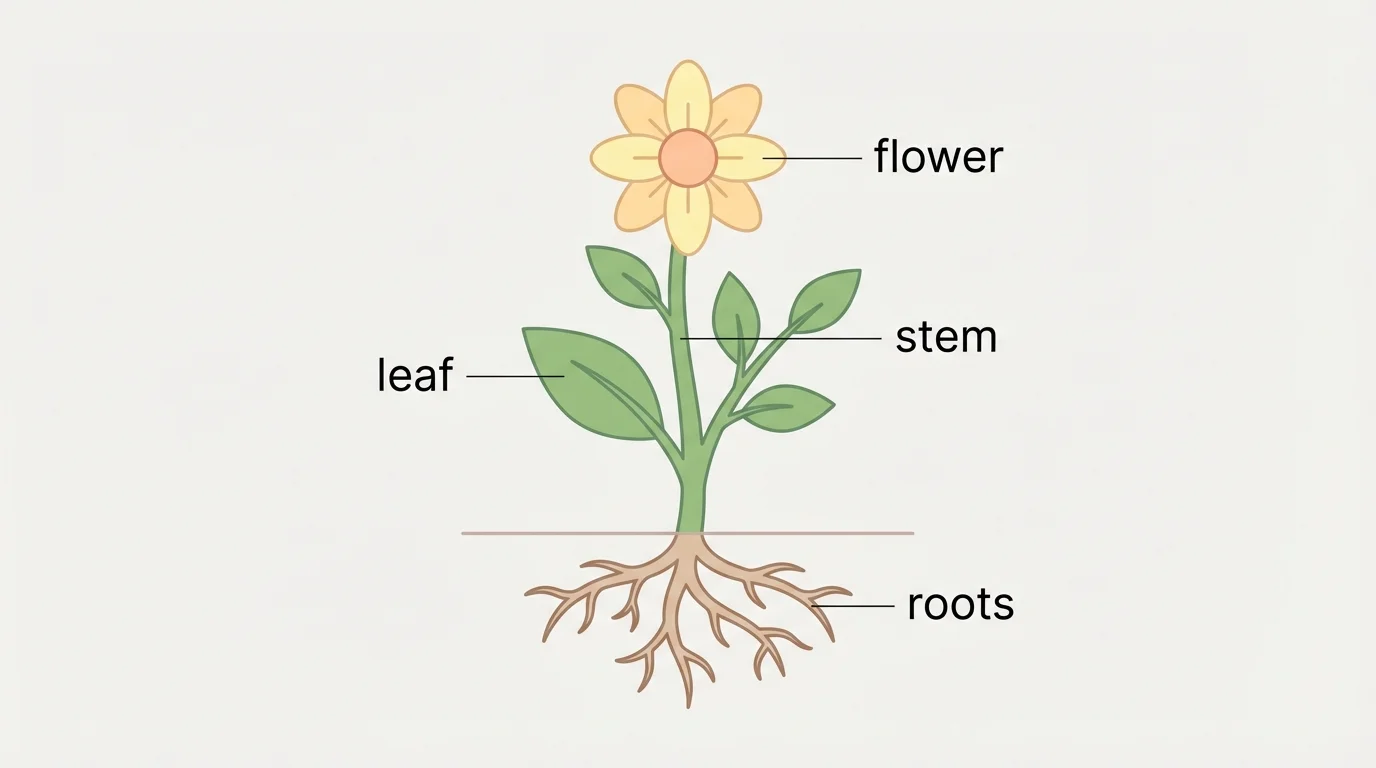
For example, if the topic is a bird, the writer might add: "Birds have wings." If the topic is an apple, the writer might add: "An apple grows on a tree." If the topic is rain, the writer might add: "Rain is water." Each sentence teaches something real.
Very young writers can teach a lot with just a picture, a few labels, and one sentence. Even one true fact helps a reader learn something new.
Labels do not have to be long. A single word can be a label. The label "tail" teaches about one part. The label "wheel" teaches about one part of a car or bus. Short labels are powerful because they connect the picture to a word.
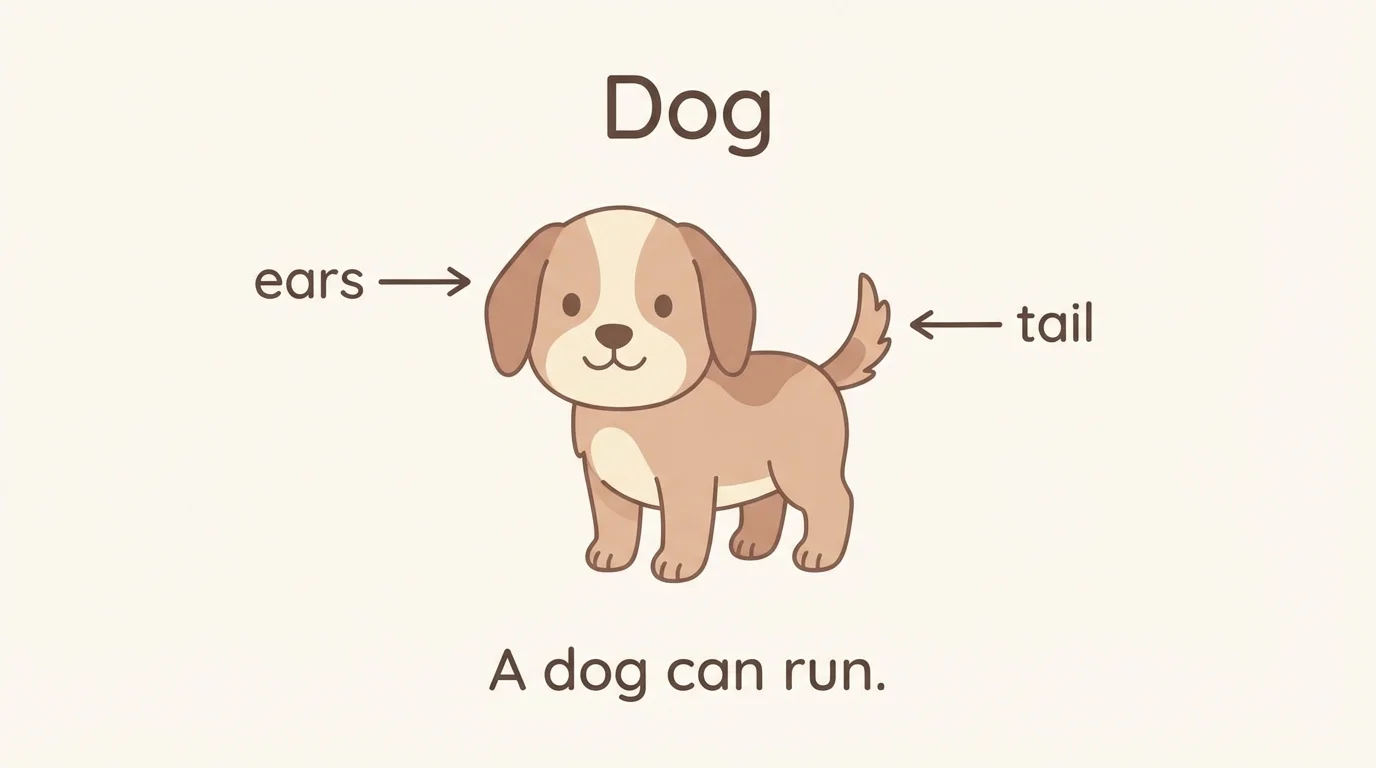
[Figure 3] shows how a page becomes easy to understand when all the parts work together. The topic is clear because the picture, labels, and sentence all teach about the same animal. A complete page can have a title, a drawing, labels, and one sentence with information.
Here is one example in words. Title: Dog. Picture: a dog. Labels: "ears," "tail." Sentence: "A dog can run." The reader knows the topic is dog, and the reader learns something about dogs.
Here is another example in words. Title: Pumpkin. Picture: a pumpkin. Label: "stem." Sentence: "A pumpkin is orange." This page names the topic and gives information.
Simple page models
Step 1: Draw the topic.
Draw one real thing, such as a bird.
Step 2: Add labels.
Write words like "wing" and "beak."
Step 3: Add a sentence.
Say or write, "A bird can fly."
Writers can make pages about many classroom topics. A page about weather might show a cloud and say, "Clouds are in the sky." A page about community helpers might show a mail carrier and say, "A mail carrier brings mail." As with the dog page in [Figure 3], each part should work together to teach.
Good informative writing is clear. The reader can tell what the topic is. The picture matches the words. The labels match the picture. The sentence tells something true.
It is also helpful when the writing is neat enough to read or when the dictation is written down so others can understand it. Kindergarten writers are still learning letters and words, so grown-up spelling is not the most important part. The most important part is sharing a real topic and true information about it.
You already know that pictures can tell ideas. Now you are using pictures and words together to teach someone else about a real topic.
When a writer draws a fish, labels "fin," and says, "Fish swim," the writer is doing the work of an author and a teacher. Informative writing helps us share what we know about the world.
