What if your picture and your words could go on a screen and be shared with your class? That is one exciting way writers work today. Even young children can be authors. With help from adults, you can use a tablet, computer, or other device to make writing that shows what you think, what you like, and what you want to say.
Writing does not have to start with lots of words. Kindergarten writers often begin with a picture, a label, or a sentence they say out loud while an adult helps type it. Digital tools make this easier because they let children draw, talk, type, and share in more than one way.
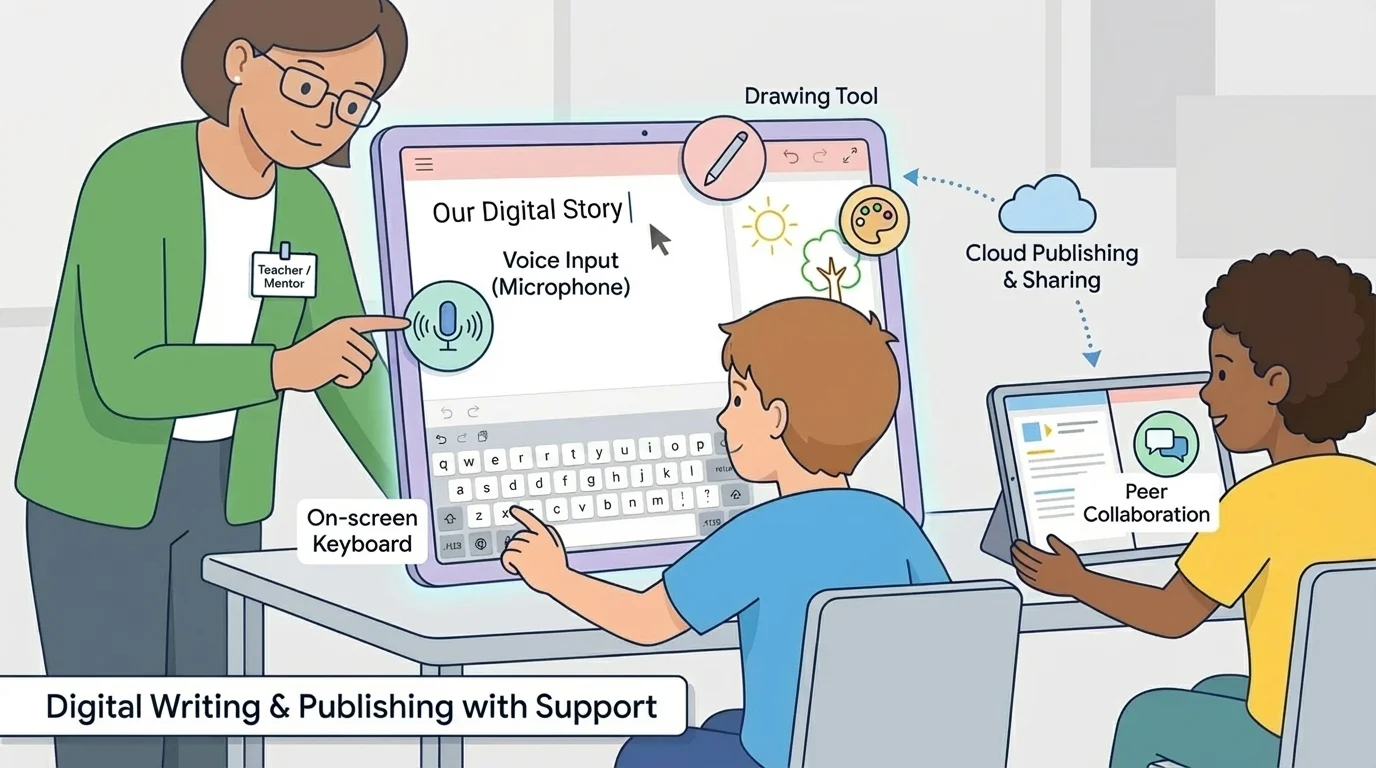
A digital tool is something on a device that helps us create. Writers can use a tablet, a computer, a touch screen, a keyboard, a microphone, or a drawing app. In [Figure 1], the child uses several tools together: drawing, typing, and speaking with a teacher nearby.
Some children tap letters on a screen. Some use a mouse or a finger to draw. Some say their sentence aloud, and an adult helps write the words. A camera can even help by adding a photo to the writing. These tools help children share ideas in ways that match what they are ready to do.
Publish means to share your writing so other people can see or hear it. Publishing can mean showing writing on a screen, printing it, or sharing it with classmates.
When children use digital tools, adults give support. A teacher, parent, or helper may open the app, help find letters, spell a word, or save the work. The child still has the important job: thinking of the idea and helping make the message.
Young writers can make an opinion piece by telling what they like or do not like. They do not need many sentences. They can draw a picture, add a label, and say a short sentence. As [Figure 2] shows, one simple digital page can have a drawing of a dog, the word dog, and the sentence "I like dogs."
A child might draw ice cream and add the label "ice cream." Then the child may say, "I like ice cream because it is cold." An adult can help type the sentence. Another child might draw a red ball and type just one word: "ball." That is still meaningful writing because the picture and the word work together.
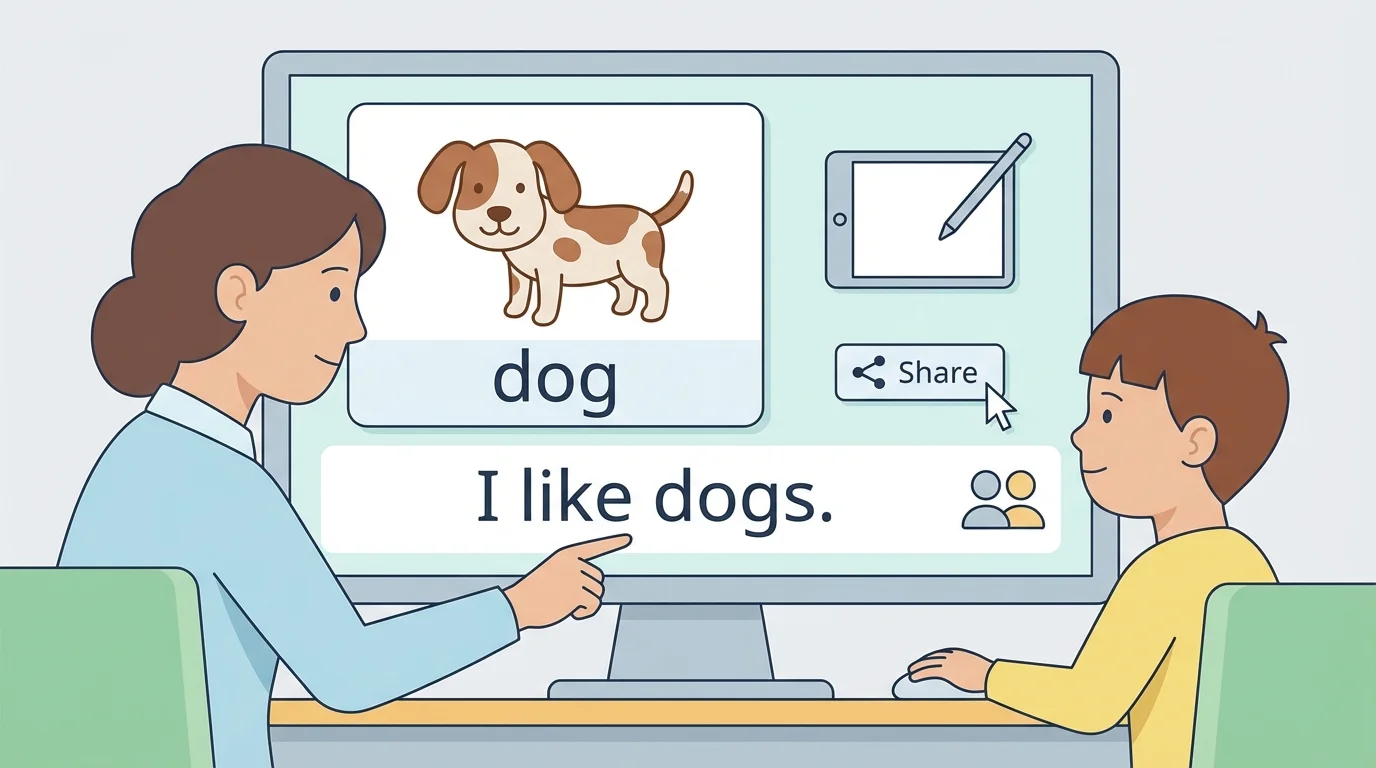
Writing can happen in different modes. A picture shows an idea. A label names the picture. A spoken sentence tells more. Typed words make the message clear for others to read. All of these parts help children express ideas and opinions.
Many ways to be a writer
Writers do not all work in the same way. Some begin by drawing. Some begin by talking. Some begin by typing a letter or word they know. Digital writing tools are helpful because they let children move between these ways of writing easily.
Later, children may return to their work and add more. They might change a color, add another label, or tell a longer sentence. That means digital writing can grow. The work does not have to be finished all at once.
After making writing, children can share it. Publishing might mean showing the page on a classroom screen, printing it, or sending it to a family member with adult help. A child may feel proud when others can see the picture, read the label, and hear the child's words.
Publishing also teaches that writing has a purpose. We write so someone else can understand our thinking. A page that says "I like cats" with a drawing of a cat tells readers what the child believes. A page that says "Best snack" next to a drawing of apples shares an opinion in a simple, clear way.
Example: Making and sharing a digital opinion page
Step 1: The child chooses an idea.
The child decides, "I like rainbows."
Step 2: The child draws on the screen.
The child makes a rainbow picture using digital crayons.
Step 3: The child adds writing.
The child types "rainbow" or asks an adult to help type "I like rainbows."
Step 4: The work is published.
The class sees it on the screen or the page is printed to take home.
The picture, the label, and the sentence all work together to share the child's opinion.
Saving work matters too. Adults often help children click save, choose a name, or print the page. This support helps young writers keep their work and return to it later.
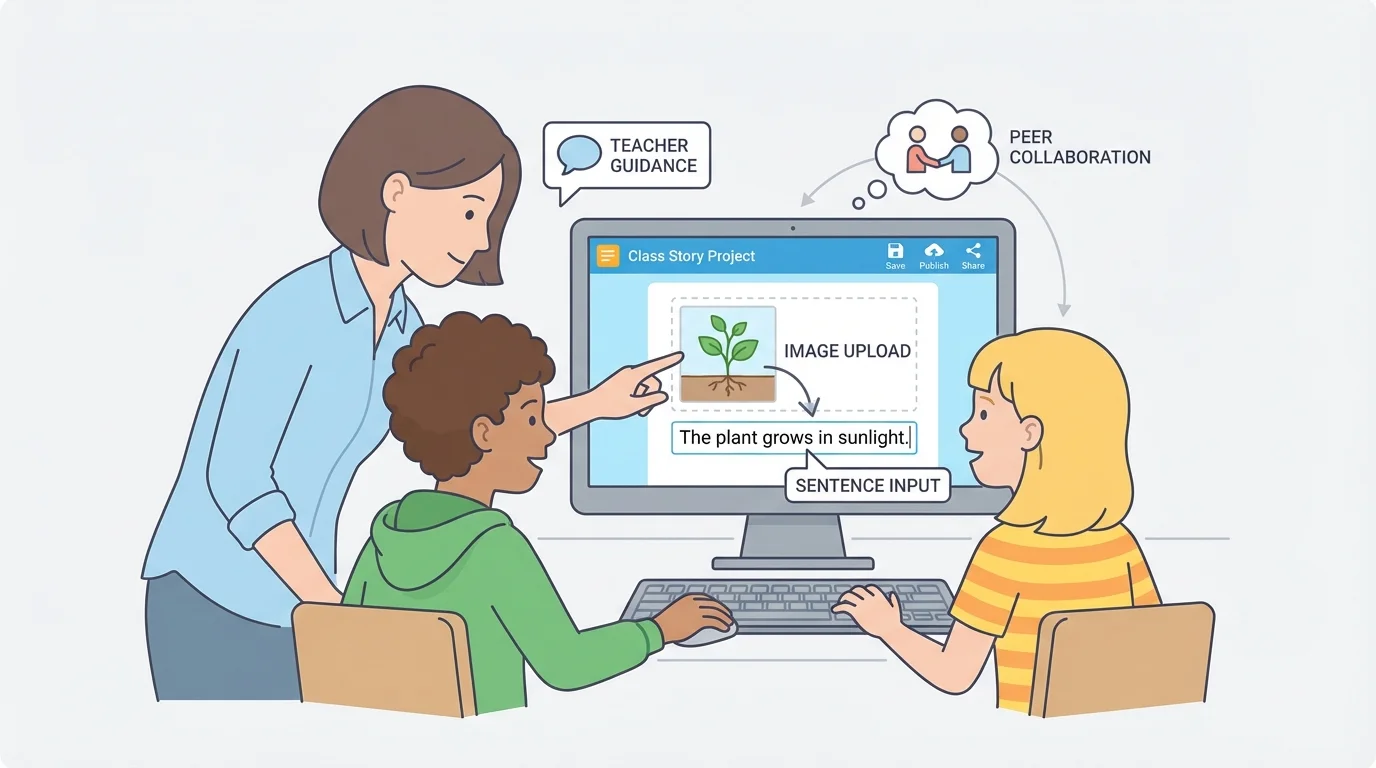
Writing can be something we do together. A collaboration is when people work on the same project. In [Figure 3], two children share one digital page. One child adds a picture, and the other helps with words while a teacher supports both.
When children collaborate, they take turns. One child may choose the picture. Another may say the sentence. One might tap the letters, while the other chooses the color for the drawing. Both children help make the final writing.
Working with peers teaches listening and sharing ideas. If two children make a page about their favorite playground game, one may say, "Let's draw the slide," and the other may say, "Let's write 'We like to play.'" Together, they create one message from shared thinking.
Sometimes collaboration means talking before writing. Children can decide what they want to say, who will draw, and who will help with letters. As seen earlier in [Figure 3], adult guidance helps children stay kind, patient, and focused while they work together.
Many books, signs, and messages people use every day are made with digital tools. Even very young writers can begin learning these real-world ways of making writing.
Peer work does not mean both children do exactly the same thing. Each child can have a different job, and both jobs matter. One idea, one picture, one label, and one sentence can all come from teamwork.
Digital writing works best when children use devices gently and ask for help when needed. They should carry devices carefully, tap softly, and keep food and drinks away. If something does not work, an adult can help fix it.
Children also learn that sharing writing should be done with trusted adults. A teacher or family member helps decide where the writing goes and who will see it. This keeps writing safe and respectful.
Writers share ideas in many ways. Before children write full sentences by themselves, they can draw, label, talk, and use adult support. These are real parts of writing.
The tools are important, but the child's idea matters most of all. A child's thoughts, choices, and opinions give writing meaning. Digital tools simply help those ideas come to life in ways that are easy to make and easy to share.
