Have you ever heard a book say one thing, and then another thing, and wondered, "How do those go together?" Good readers do that all the time. When we read or listen to an informational text, we think about how parts of the text are connected. A text may tell us about people, animals, places, events, or facts. We can learn more when we notice how they fit together.
A connection is how two things in a text are linked. They may go together because one helps the other, one comes after the other, or both are about the same big topic. Sometimes the text says the connection clearly. Sometimes we need a teacher, adult, or friend to help us notice it.
Connection means the way two things in a text go together. A connection can be between people, events, ideas, or pieces of information.
When we describe a connection, we tell how the two parts match. We do not just name the two things. We say what ties them together. For example, if a text says, "The bee lands on the flower. The bee carries pollen," the connection is that the bee and the flower work together.
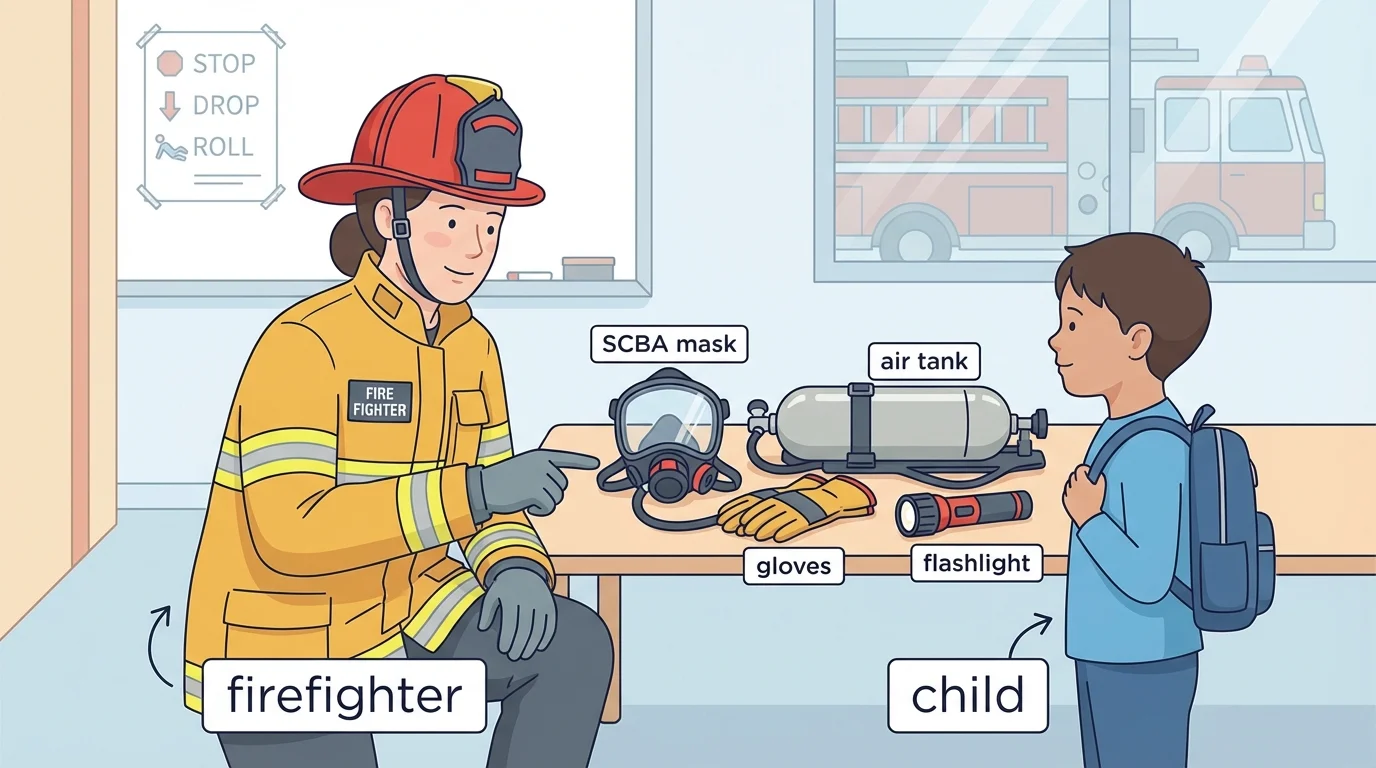
Sometimes a text tells about two people or two animals. A individual is one person or one living thing. In a text, two individuals can be connected by family, work, helping, or sharing a place. In a safety book, a firefighter and a child are connected because the firefighter teaches the child how to stay safe. That is a helper connection.
[Figure 1] Here is another example: "A mother bird brings food. The baby bird opens its beak." These two individuals are connected because the mother bird feeds the baby bird. One takes care of the other.
Texts can also connect community helpers and the people they serve. A doctor helps a patient. A farmer grows food for families. A teacher helps students learn. When you describe the connection, you can say, "They are connected because one helps the other."
Example: Two individuals in a text
Text: "The librarian gives Maya a book about bears."
Step 1: Name the two individuals.
The librarian and Maya.
Step 2: Think about what they are doing.
The librarian is giving Maya a book.
Step 3: Say the connection.
The librarian and Maya are connected because the librarian helps Maya find a book.
Later, when we read about helpers again, we can remember the firefighter and child in [Figure 1]. The same kind of thinking helps us explain many people connections in texts.
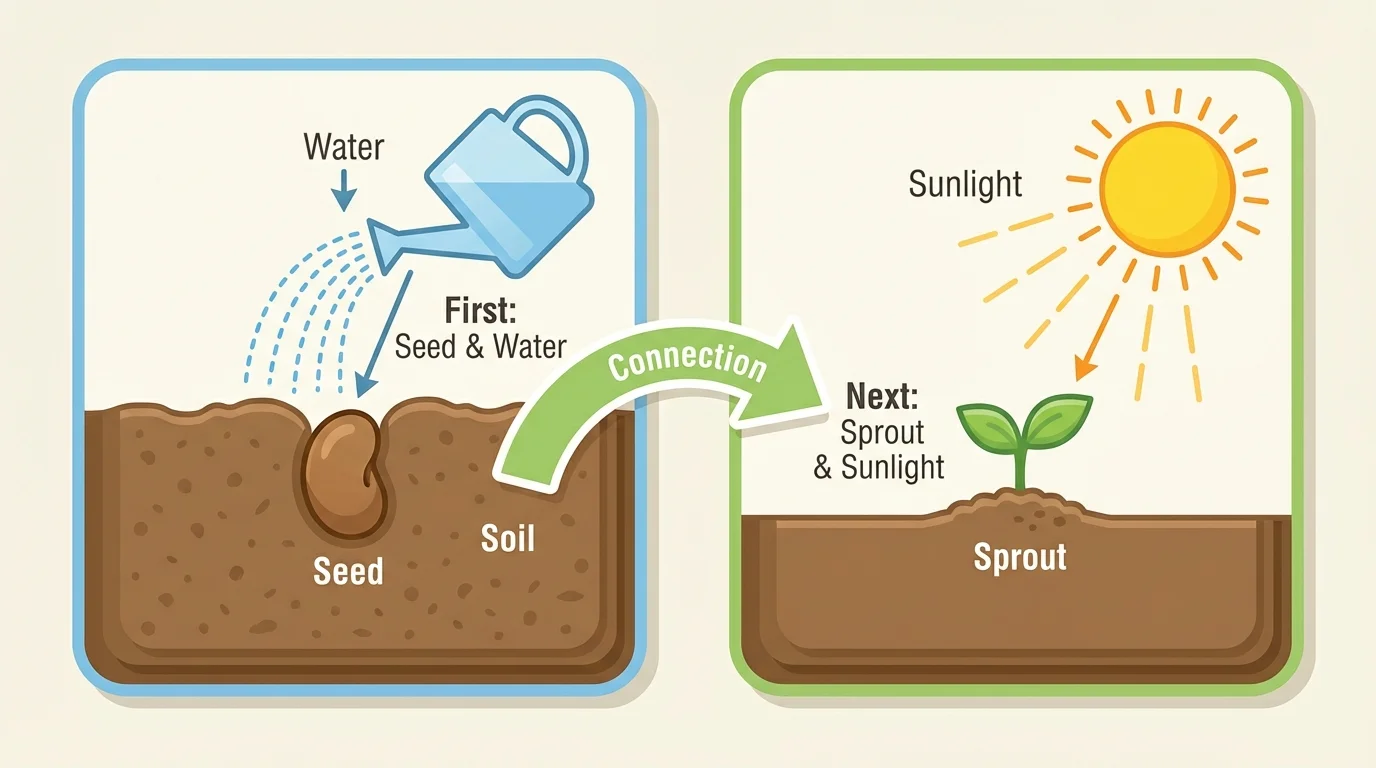
Sometimes a text tells about things that happen. An event is something that happens. Two events can be connected by order or by cause. In a plant book, a seed gets water, and then a sprout grows. These events are connected because the growing happens after the watering. One event can help make another event happen.
[Figure 2] We can also think about time words. If a text says, "First the snow falls. Next the road gets covered," the connection is that the second event happens after the first event. If a text says, "It rained all night, so the grass was wet," the connection is cause and effect. The rain caused the wet grass.
Some event connections are simple and some are more complex. "The boy put on boots. He splashed in puddles." The boots and the splashing are connected because the boots help him get ready for the puddles. "The alarm rang. The students lined up outside." The ringing and the lining up are connected because one event leads to the next.
Events can connect in two big ways. Sometimes one event comes before or after another event. Sometimes one event happens because of another event. Readers listen for both kinds of connections.
When we look back at the plant example in [Figure 2], we can say more than "these both happen in a plant book." We can say, "The seed gets water, and then the plant starts to grow." That tells the real connection.
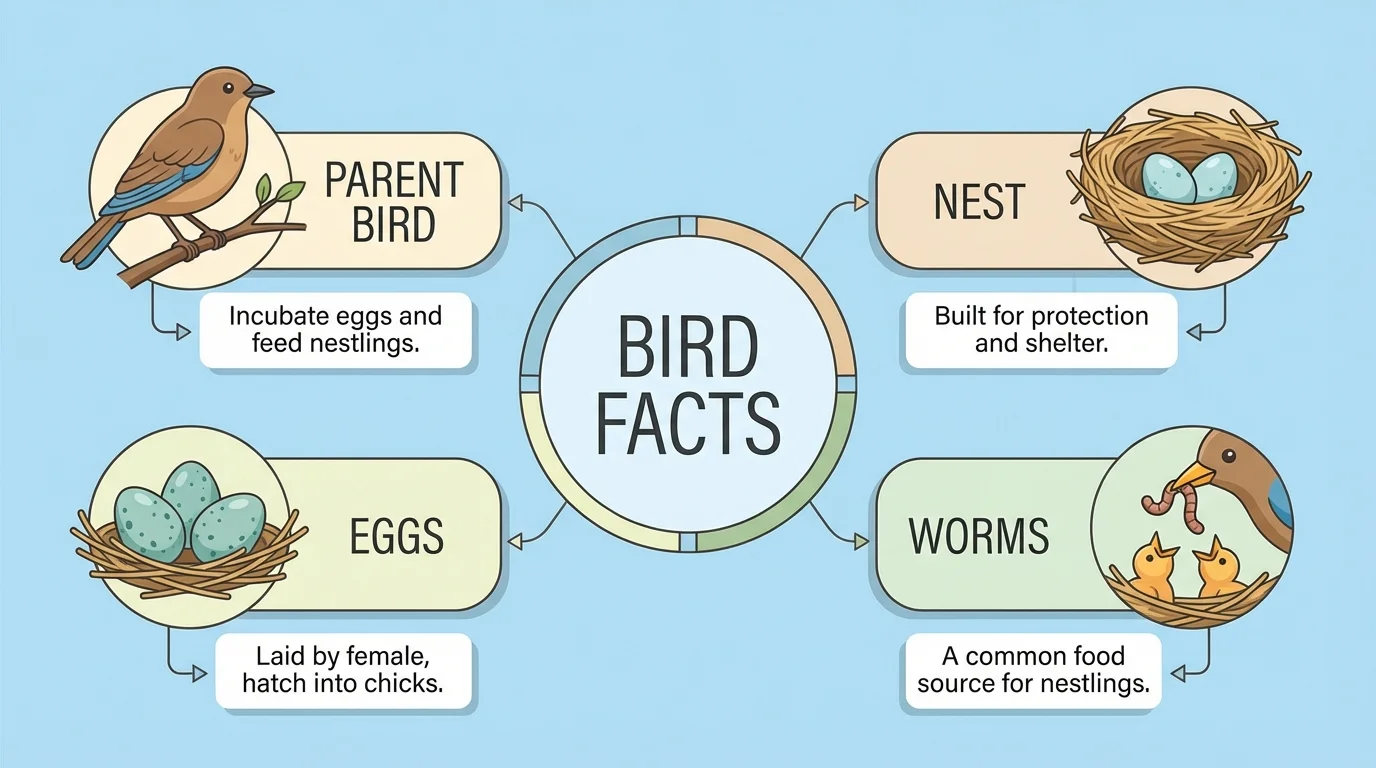
A text can also connect an idea and pieces of information. An idea is a big thought. Information is a fact we learn. In a book about birds, the idea may be that birds care for their young. Facts in the text might tell that birds build nests, lay eggs, and bring food. These facts fit together around one idea.
[Figure 3] Sometimes two facts connect because they are about the same thing. "Whales are mammals. Whales breathe air." These pieces of information connect because both tell us important facts about whales. Sometimes two ideas connect because they are alike or different. "Frogs live near water. Lizards like dry, warm places." These ideas connect because they tell how two animals live in different ways.
We can group information in our minds. If a text says, "Apples grow on trees. Apples can be red or green. Apples have seeds," all of those details connect because they are all about apples. If a text says, "The sun gives light. Plants need light to grow," those facts connect because the sun helps plants.
Some books for young readers give lots of tiny facts. Strong readers do more than collect the facts—they notice which facts belong together.
The bird facts in [Figure 3] help us see that many details can point to one main idea. That is how informational texts teach us clearly.
Texts often use clue words. These words help us hear the connection. Words like because and so can show cause. Words like first, next, and then can show order. Words like both, same, and different can help us compare.
If a sentence says, "The child wore a coat because it was cold," the word because helps us connect the coat and the cold weather. If a sentence says, "First the caterpillar eats. Next it forms a chrysalis," the words first and next show the order of events.
| Clue word | What it can show |
|---|---|
| because | why something happens |
| so | what happens because of something |
| first | what happens at the beginning |
| next | what happens after |
| both | how two things are alike |
| different | how two things are not the same |
Table 1. Clue words that help readers describe connections in a text.
It helps to use simple sentence frames. You might say, "These are connected because..." or "This happens after..." or "Both are about..." With prompting and support, young readers can use these frames to share their thinking.
Example: Talking about information in a text
Text: "Beavers build dams. Dams slow the water."
Step 1: Name the two pieces of information.
Beavers build dams. Dams slow the water.
Step 2: Ask how they go together.
The dam is something the beaver builds.
Step 3: Say the connection.
The pieces of information are connected because beavers build dams, and the dams change the water.
You do not need long, fancy words. Clear words are best. "The baby and mother are connected because the mother feeds the baby." "The rain and puddles are connected because rain makes puddles." "The facts are connected because they are all about bears." These are strong answers.
When we notice connections, the text makes more sense. We understand who is helping whom, what happened first, why something happened, and which facts belong together. That helps us remember what we read.
Good readers do more than hear words. They think about how the parts of a text fit together to make meaning.
Informational texts teach us about the world. They may tell us about animals, weather, plants, helpers, or places. When we describe the connection between two individuals, events, ideas, or pieces of information, we show that we truly understand the text.
