Have you ever felt stuck because you did not know where to put your backpack, what page to open, or how to start a game? A question can be like a little key that helps open understanding. When children ask and answer questions, they learn, solve problems, and help other people too.
A question is something we say when we want to know more. We ask questions to get help, get information, or understand something better. If a direction is confusing, asking a question helps us know what to do next.
Sometimes we ask, "Where do I put this?" Sometimes we ask, "What does that word mean?" Sometimes we ask, "Can you help me?" These are all good questions because they help us learn.
Ask means to say something because you want help or information. Answer means to respond to a question. Clarify means to make something easier to understand.
Questions are important at school, at home, and when playing with friends. If we stay quiet when we are confused, we may keep feeling unsure. If we ask, someone can help us.
[Figure 1] There are many ways to ask for help. A child can raise a hand, look at the teacher, and speak clearly. Helpful question starters are who, what, where, when, why, and how.
Here are some simple ways to ask: "What do I do next?" "Where is the glue?" "Who is my partner?" "How do I clean this up?" "Can you help me, please?" These questions are short, clear, and easy to understand.
It is also important to use a polite voice. A polite voice sounds calm and respectful. Words like please, thank you, and excuse me help make speaking kind.
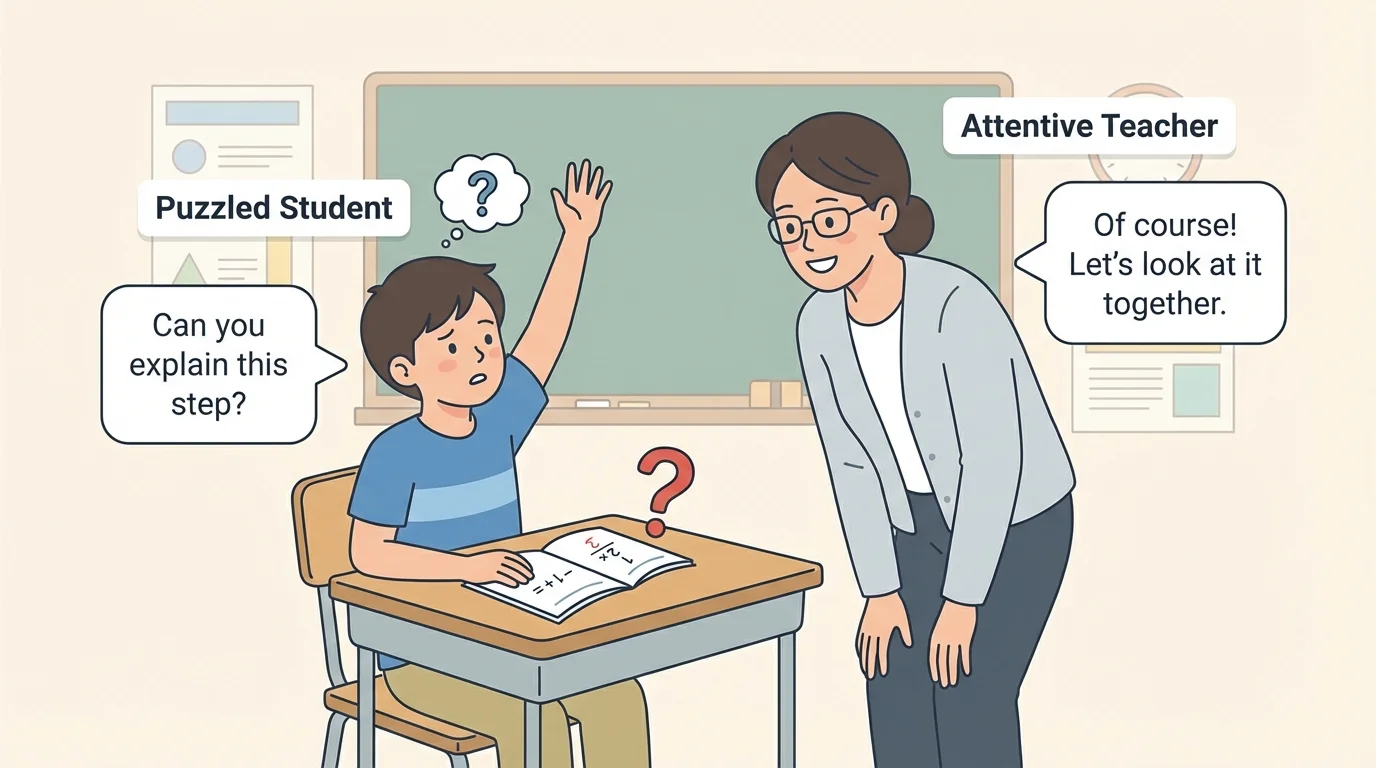
If you need help right away, you can say, "I need help, please," or "I do not know what to do." That tells the other person what you need. A clear question helps the listener give a clear answer.
Children learn more when they ask questions out loud. A good question helps the speaker and can also help other children who were wondering the same thing.
You can ask questions with words, and you can also use your body. Raising a hand, looking at the speaker, and facing the person show that you are ready to talk and listen.
[Figure 2] When someone answers, we must listen carefully. Communication is not only words. Nonverbal language means messages we send without speaking, and eyes, faces, hands, and body movement can help us understand. A nod can mean yes. A pointed finger can show where something is.
If a teacher says, "Put your folder over there," and points to a basket, the pointing helps explain the words. If a friend smiles and nods, that can show the friend understands. Looking, listening, and thinking all work together.
A good listener keeps a quiet body, watches the speaker, and waits for the answer. This helps the listener remember the information. It also shows respect.
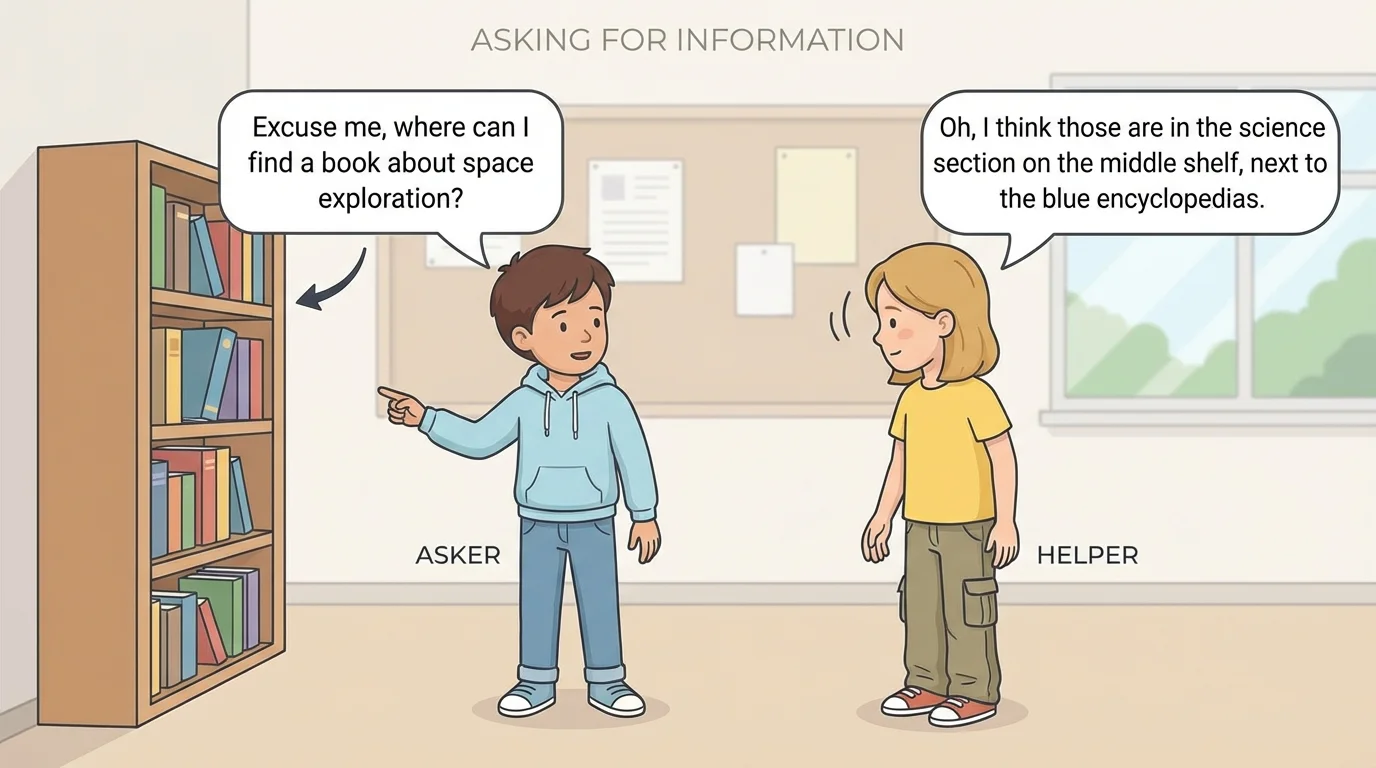
Sometimes the answer is given with both words and actions. A parent might say, "Your shoes go here," while touching the shoe shelf. Just as in [Figure 2], the body clue helps make the message clear.
[Figure 3] Sometimes we hear the answer, but we still do not understand. That is when we clarify. Clarifying means asking again so the message is clearer.
It is okay to say, "Can you say it again?" "Can you show me?" "I do not understand." "What does that mean?" These are brave and helpful words. They tell the speaker that more explanation is needed.
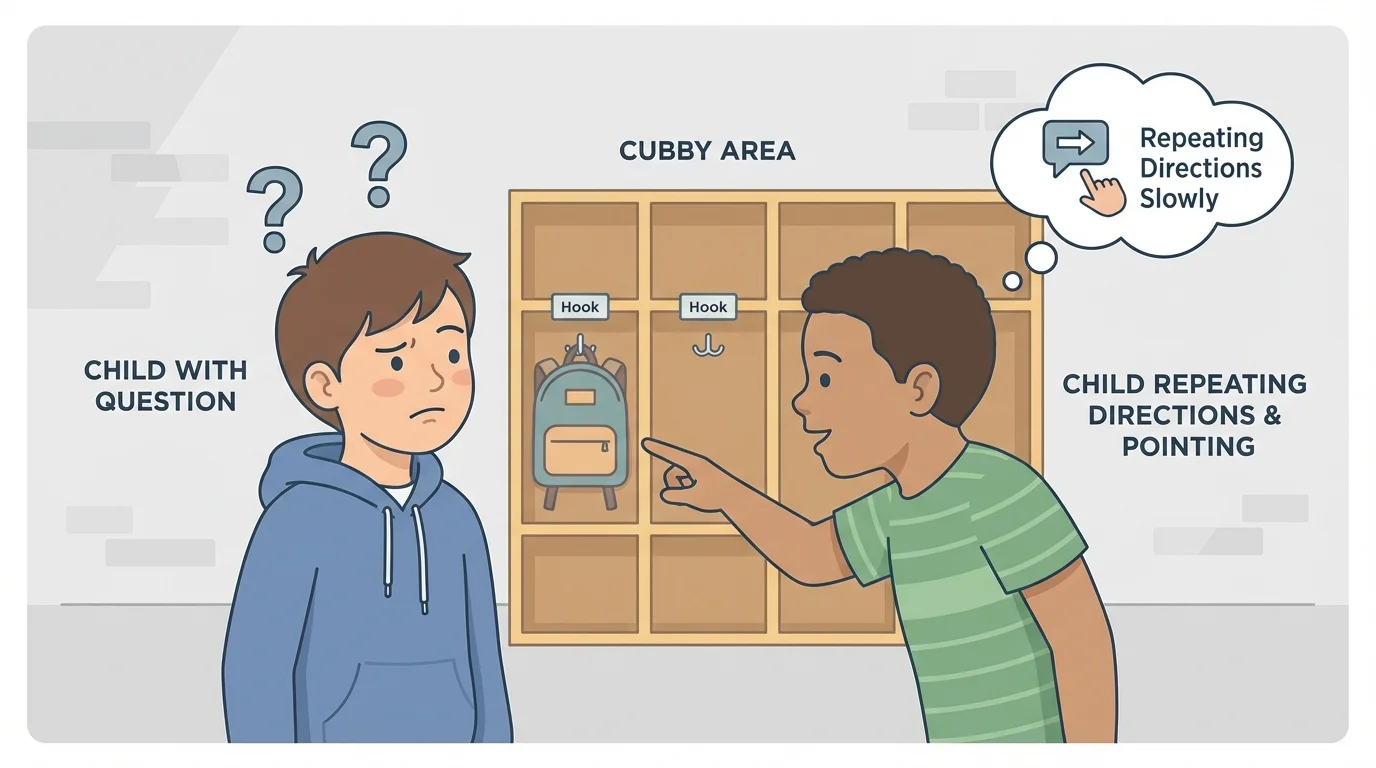
Sometimes seeing helps more than hearing. You can ask, "Can you point to it?" or "Can you show me how?" A demonstration can make directions easier to follow.
Everyday clarification example
Mila hears, "Put your paper in the tray," but she does not know which tray.
Step 1: Mila says, "Which tray?"
Step 2: The teacher points and says, "The blue tray."
Step 3: Mila understands and puts the paper in the right place.
Asking a small question helps Mila do the job correctly.
Later, when children have new directions, they can remember the idea from [Figure 3]: if something is not clear, ask again kindly.
Asking questions is important, and answering them is important too. When someone asks us something, we should try to give a kind and clear answer. We can use simple words and a helpful tone.
If a friend asks, "Where do markers go?" a kind answer might be, "They go in the art box." If a classmate asks, "Can you help me zip my coat?" a helpful answer might be, "Yes, I can help." If you do not know the answer, you can say, "I do not know. Let's ask the teacher."
Good communication uses words and body clues together. A clear voice, listening ears, calm face, and helpful gestures all work together. When children speak kindly and listen carefully, messages are easier to understand.
It is also important not to interrupt. Let the person finish the question. Then answer. Taking turns helps everyone feel heard.
Children use questions all day long. At school, they ask where to sit, what to do, or how to use materials. At home, they ask for help tying shoes, opening a container, or finding a toy. On the playground, they may ask, "Can I play too?" or "What are the rules?"
During stories, children can ask about words they do not know. During art, they can ask where supplies belong. During clean-up, they can ask what comes first. Questions help children join in and do tasks the right way.
When a child asks clearly, listens closely, and asks again if needed, that child is learning how to communicate well. These skills help with learning, friendships, and daily routines.
"Good questions help us learn, and good listening helps us understand."
Not every question needs to be long. Sometimes the best question is very short: "Why?" "Where?" "Help?" What matters is asking in a respectful way and being ready to listen to the answer.
