Have you ever opened a little book and felt like you were solving a tiny mystery? Each page gives you clues. The picture helps. The words help. Your brain helps. When you put them together, you are not just saying words—you are reading to understand.
Reading is not only looking at letters. Reading has a job. Sometimes we read to enjoy a story. Sometimes we read to learn about animals, weather, or plants. Sometimes we read to find out what happens next. A reader thinks, "Why am I reading this?" That is called reading with purpose.
When you read a simple book, you can ask yourself easy questions: "Is this a story?" "Am I learning facts?" "What is happening?" These questions help your mind stay with the book.
Purpose means the reason you are doing something. In reading, purpose is why you are reading the book.
Understand means to get the meaning. When you understand a text, it makes sense to you.
A storybook and an informational book are both important, but we read them a little differently. In a story, we pay attention to who is in it and what happens. In an informational book, we pay attention to the true things we learn.
Emergent-reader texts are books made for children who are just starting to read. They often have big pictures, short sentences, and words that show up again and again. On these pages, the picture and the words work together, as shown in [Figure 1]. That helps a new reader build meaning.
Many of these books have a pattern. A pattern means the sentence starts the same way on many pages. For example: "I see a dog." "I see a cat." "I see a bird." The repeating part helps your brain get ready for the next words.
The words in these books are often familiar, and the print is clear. A reader can point to each word and say it. This is called one-to-one matching. It means one spoken word matches one written word.
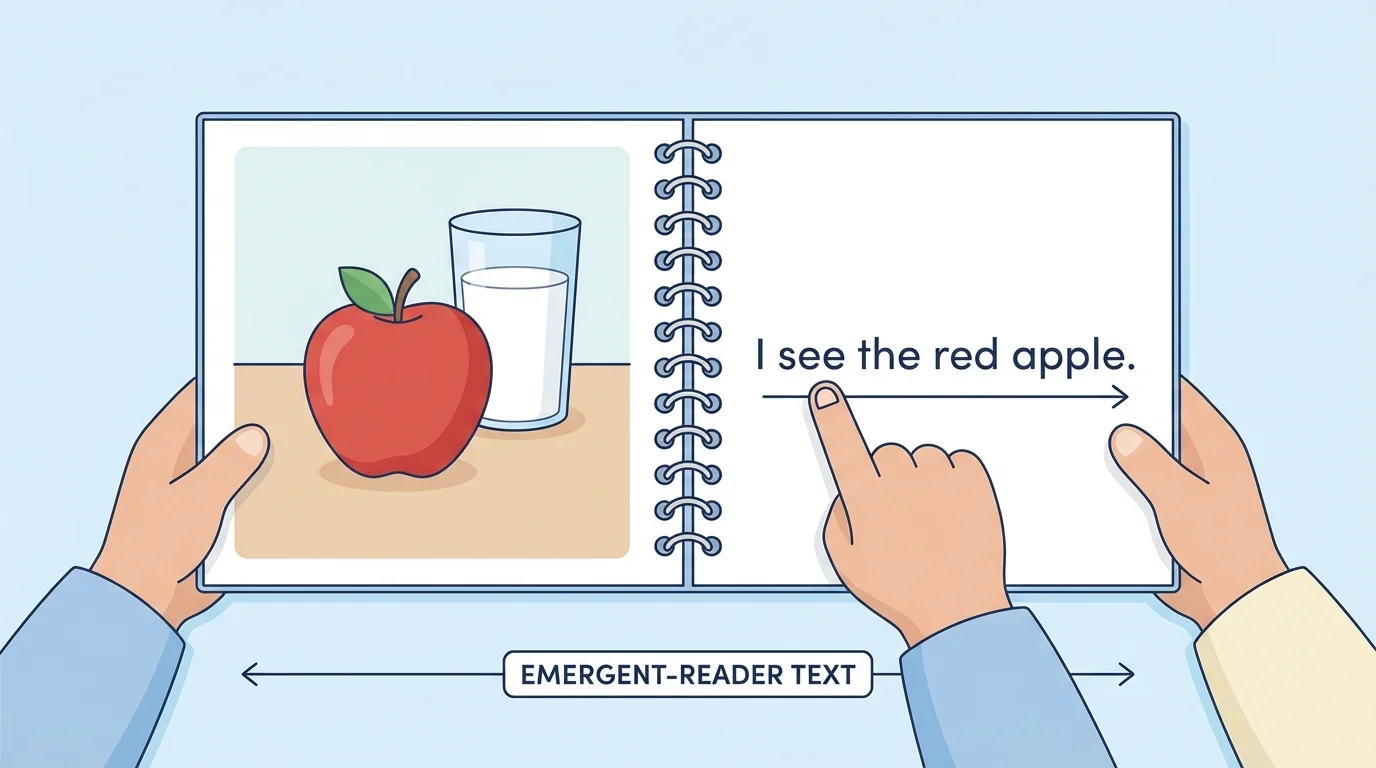
When you read this way, you begin to notice that print carries the message. The picture helps, but the words tell the exact message. Good readers look carefully at both.
Some beginning books repeat the same sentence pattern on many pages because repetition helps readers feel successful and notice new words more easily.
Readers also move through the page in order. In English, we read from left to right and from top to bottom. That helps the words make sense in the right order.
When children read, they use more than one clue. They look at the picture. They look at the first letter in a word. They listen to how the sentence sounds. They also think about what they already know. All of these clues help build meaning.
If a page shows a boy eating and the sentence starts with "I eat...," the picture gives support. If the last word begins with the letter a and the picture shows an apple, "apple" makes sense. The picture, the letter, and your thinking all work together.
Putting clues together is an important reading habit. A reader does not guess wildly. A reader checks the picture, checks the words, and checks whether the sentence makes sense.
This is why understanding matters more than saying words without meaning. If the page shows a cat sleeping and a reader says "The dog runs," the words do not match the page. Good readers try to make the reading make sense.
Stories happen in order. There is a beginning, a middle, and an end, and [Figure 2] shows how events move step by step. When you read a story, you think about characters, where the story happens, and what changes.
A character is a person or animal in a story. The setting is where the story happens. In a simple emergent-reader story, the setting might be a house, a park, or a classroom.
You can understand a story better when you notice the important events in order. For example: a girl finds a seed, plants the seed, waters it, and later sees a flower. If we mix up the order, the story stops making sense.
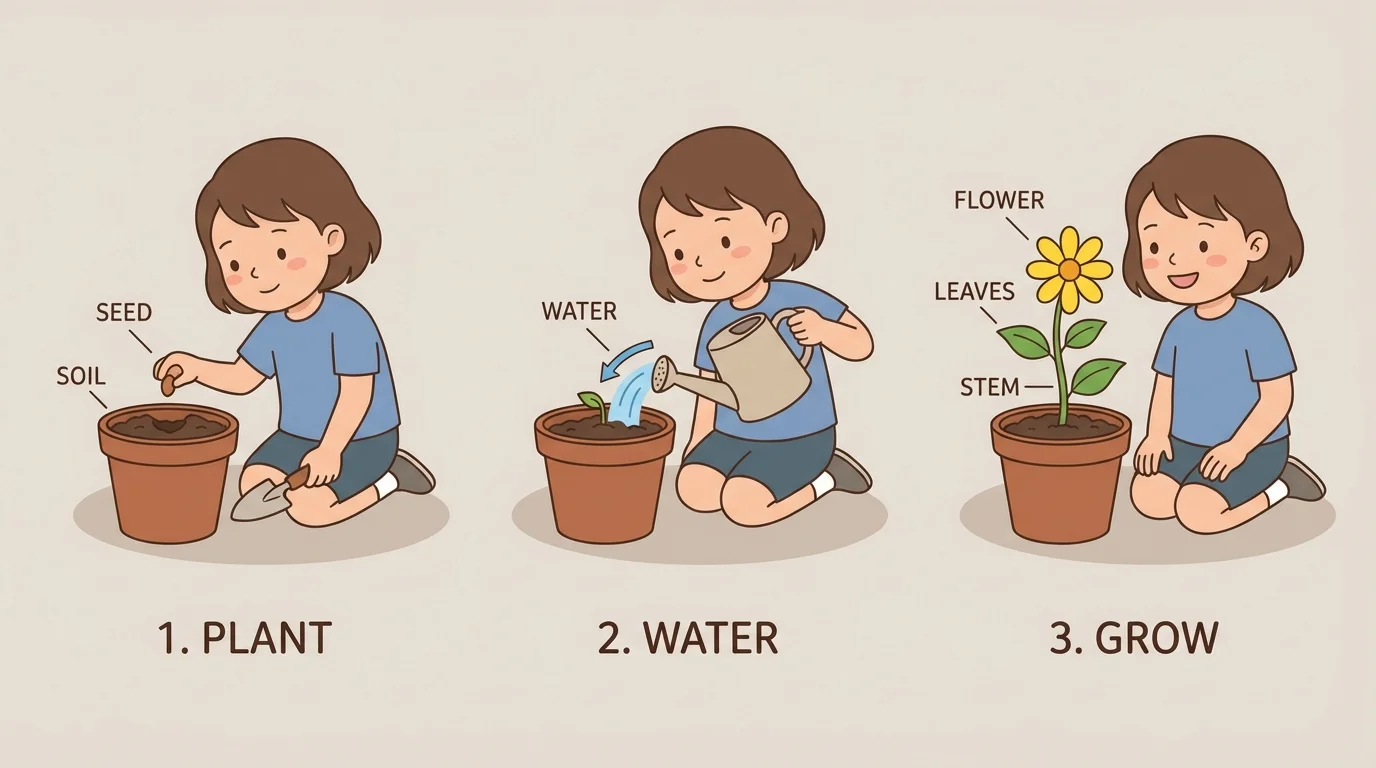
Retelling helps show understanding. A child who says, "First she planted the seed. Next she gave it water. Then the flower grew," is showing that the story was understood, not just read aloud.
Later, when you think back to the story sequence, you can see why order matters so much. The flower cannot grow before the seed is planted.
Story understanding example
Listen to this tiny story: "Max lost his hat. He looked under the bed. He found it."
Step 1: Name the problem.
Max lost his hat.
Step 2: Tell what happened next.
He looked under the bed.
Step 3: Tell the ending.
He found the hat.
This shows the story in the right order.
As stories get a little longer, readers keep asking, "Who is this about?" and "What happened?" Those questions help the story stay clear in the mind.
Not every little book is a story. Some books teach true facts. These are often called informational texts. A reader looks for key facts in them, and [Figure 3] illustrates how a page can organize facts with a heading and picture.
In a simple fact book, the pages might teach about frogs, weather, trucks, or teeth. The reader thinks, "What is this page teaching me?" That helps the reader focus on the most important idea.
If a page says, "A frog starts as an egg," the reader learns one fact. If the next page says, "Then it becomes a tadpole," the reader gathers another fact. Reading with understanding means holding on to those facts.
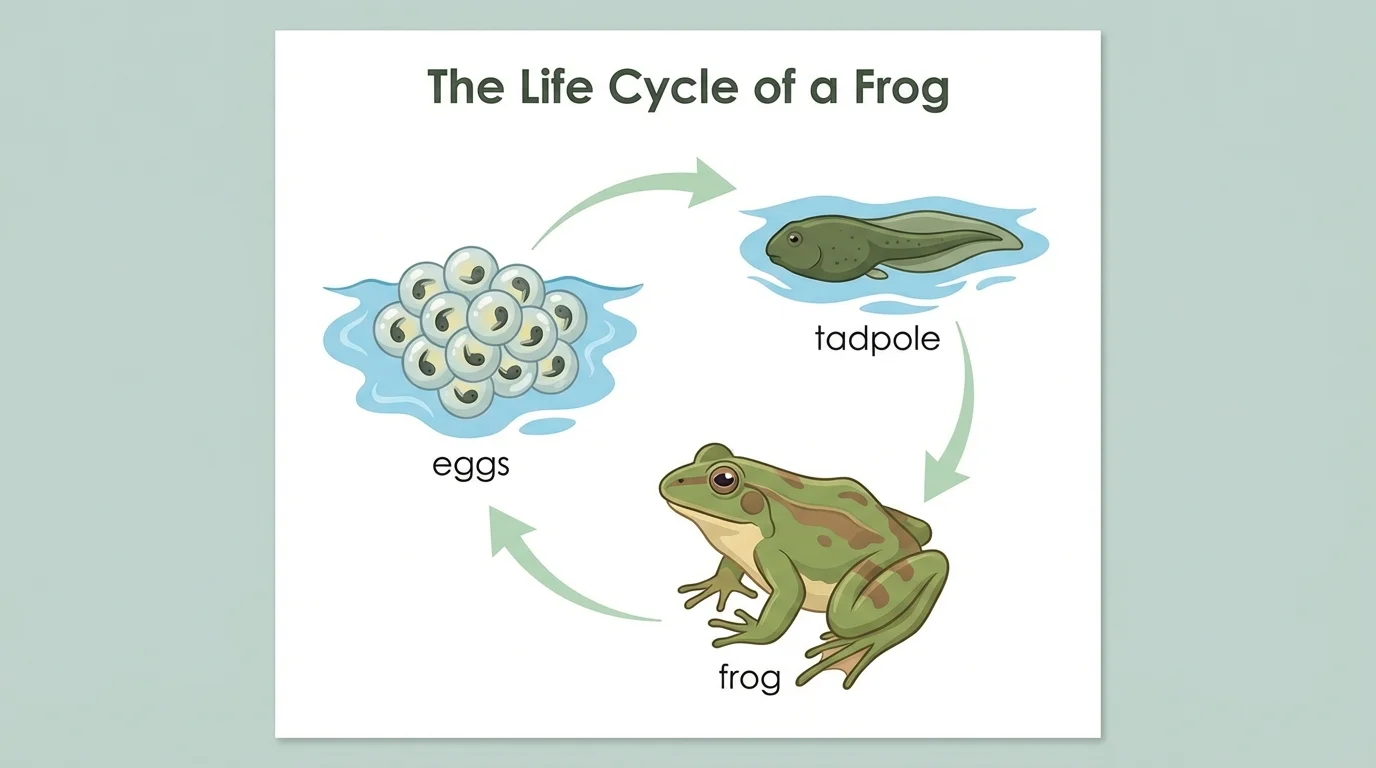
Headings, labels, and pictures are helpful in fact books. They are not just decorations. They support understanding by showing what the page is mostly about.
When readers return to the nonfiction page, they can use the picture labels to remember the important facts in order.
You already know that books have a front, pages, and words. Now you are using those book skills to get meaning from the text, not just turn pages.
Reading facts carefully helps children learn about the world. A small book can teach something big.
Sometimes a reader says the words, but the sentence does not make sense. Strong readers notice that. They stop and try again. This is called checking for meaning.
If a page says, "The sun is hot," but a child reads, "The sun is hat," the sentence sounds wrong. The reader can go back, look again, and fix it. That is what good readers do.
Monitoring understanding means paying attention to whether the reading makes sense. If it does not make sense, a reader can reread, look at the picture, check the first letter, and try again.
Rereading is powerful. The second time through, the words often sound smoother and the meaning becomes clearer. Good readers are not expected to be perfect right away. They are expected to keep thinking.
As children become more comfortable with emergent-reader books, they begin to read more smoothly. They can point to words, turn pages in order, and use their voices to match meaning. A happy part sounds happy. A question sounds like a question.
Reading smoothly does not mean rushing. It means reading in a way that shows understanding. When a child reads, "Look! I can jump!" with excitement, the voice matches the meaning of the sentence.
"Good readers think while they read."
The more children read simple texts with support, the more they learn how texts work. They begin to trust themselves as readers. They know that pictures, words, and thinking all work together.
