Have you ever heard a silly line like "The cat wore a hat"? It sounds fun because the words cat and hat have matching ending sounds. Those happy, bouncy sound matches are called rhymes. Rhymes help our ears notice sounds in words, and that is an important part of learning to read.
A rhyme happens when two words have the same ending sound. The beginning of the words can be different, but the ending sounds match. For example, dog and log rhyme. Bee and tree rhyme. cake and snake rhyme.
Rhyming words are words that end with the same sound. Examples are cat and hat, or bug and rug.
When we listen for rhymes, we pay close attention to what we hear at the end of each word. We are listening to sounds, not just looking at letters. Some rhymes are short, like pig and wig. Some are longer, like yellow and fellow.
Our ears can help us hear rhymes. A ending sound is the part we hear at the end of a word. In cat and hat, the ending sound is the same. As [Figure 1] shows, when we compare picture words, we can group together the ones that sound the same at the end.
Say these pairs out loud: sun, fun; ball, wall; fish, dish. Each pair has matching ending sounds. That is why they rhyme. Now listen to book and ball. They do not rhyme because the ending sounds are different.
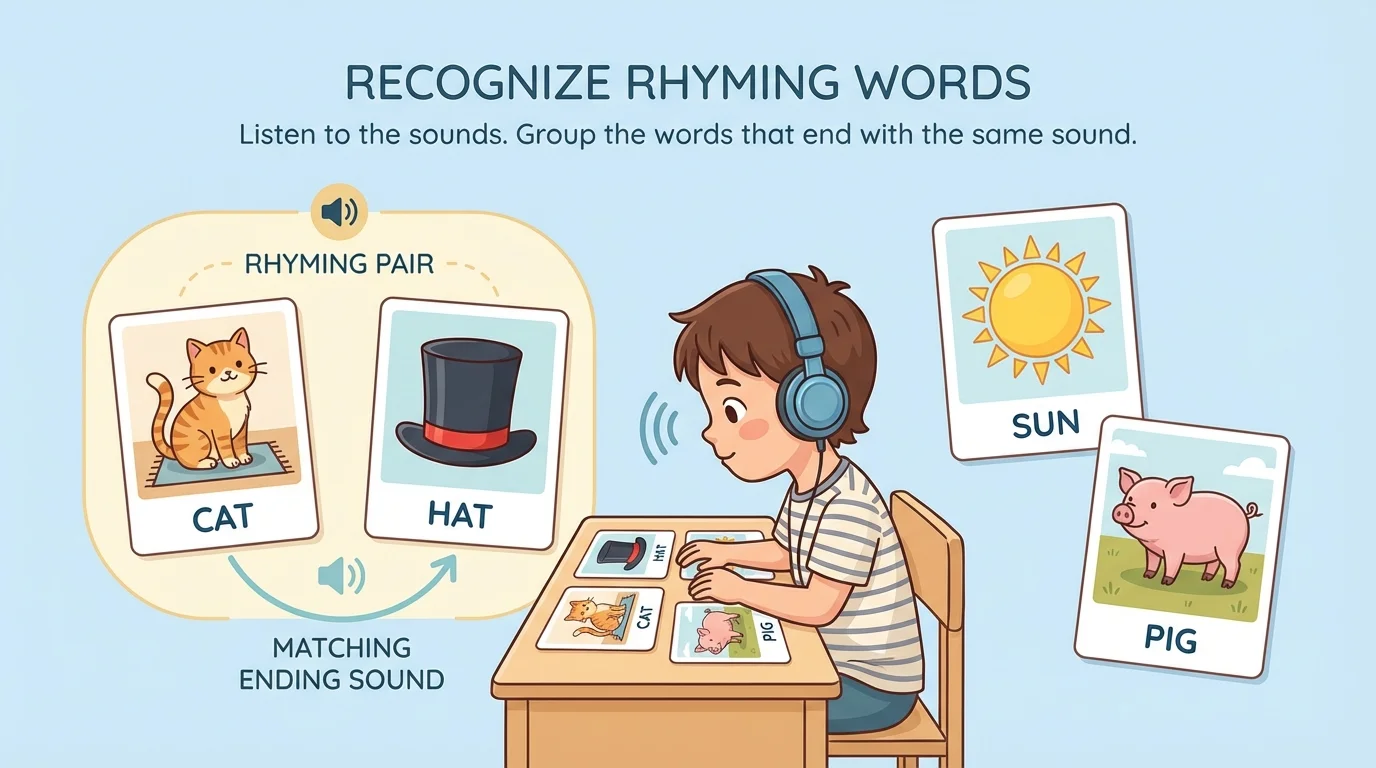
Sometimes it helps to stretch the end of a word a little as you say it. You might say caaat and haaat to notice the matching part. This helps you hear the rhyme more clearly.
Many nursery rhymes and songs use rhyming words because matching sounds are easy to remember and fun to say.
When children hear rhymes often, they become better at noticing small sounds in words. This helps with reading because words are made of sounds we can hear and put together.
Some words sound alike at the end, and some do not. Rhyme means the ending sounds match. Hen and pen rhyme. Car and star rhyme. But car and cup do not rhyme.
It is important to listen all the way to the end of the word. Two words might start the same and still not rhyme. Sun and soap both begin with the sound /s/, but they do not rhyme. Rhyming words usually start differently and end the same.
Same end, different beginning
Many rhyming words keep the same last part and change the first sound. In cat, hat, and bat, the beginning changes, but the ending sound stays the same. That matching ending is what makes them rhyme.
You can also hear when words are close but not a true rhyme. Home and cone rhyme. Home and ham do not. Good readers and listeners learn to hear the exact ending sound.
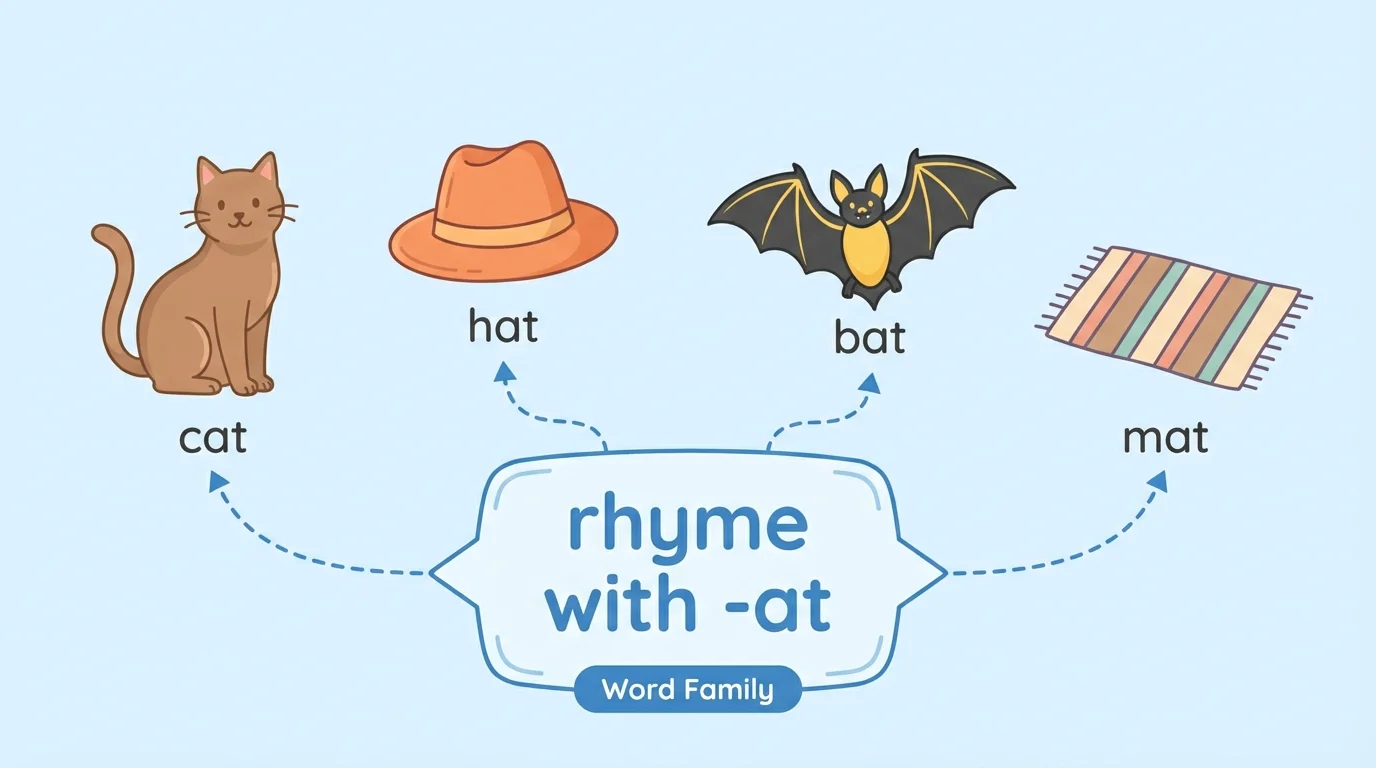
We can also use word family patterns to help us make rhymes. A word family is a group of words with the same ending sound, like -at in cat, hat, and mat. As [Figure 2] illustrates, we can keep the ending part the same and change the first sound to make new rhyming words.
If the word is cake, we can think of lake, bake, and rake. If the word is bell, we can say fell, shell, and well. We are making new rhymes by changing the beginning sound.
Here are more rhyming sets: bug, hug, rug; seed, feed, need; light, kite, night. The ending sound stays the same in each set.
Listening and making rhymes
Step 1: Start with the word map.
Step 2: Listen to the ending sound, -ap.
Step 3: Change the beginning sound to make new words: cap, nap, tap.
These words rhyme because they all end with the same sound.
The picture family in [Figure 2] helps us see that rhyming words can belong together in a sound group. This makes it easier to think of more than one rhyme.
Rhymes are all around us. They are in songs, poems, chants, and storybooks. When a book says, "I see a fox in a box," the rhyme makes the words catchy and easy to remember.
People use rhymes because they sound playful and smooth. Rhymes can help us remember lines, join in with songs, and notice patterns in language. That is one reason many books for young children use lots of rhyming words.
You already know that words are made of sounds. Rhymes help you focus on the sounds at the ends of words, which is one part of hearing how words work.
When you hear rhymes again and again, you become better at listening closely. That listening skill supports reading, speaking, and enjoying language.
Rhyming is about sound, not just how words look. Some words may have letters that look alike but do not rhyme when we say them. We always use our ears to check.
Also, words do not need to be the same size to rhyme. A short word can rhyme with a longer word if the ending sound matches. Day and play rhyme. me and honey do not rhyme, even though both words have the letter e.
When you listen carefully, you can hear whether two words match at the end. That is the big idea behind rhyming words.
