Have you ever noticed that some words feel quick, like cat, and some words feel bouncy, like ba-na-na? When we talk, words are made of parts we can hear. Those parts help us listen, speak, and get ready to read. Learning to hear these parts is like becoming a word detective.
A word can be short or long, but every spoken word has beats or parts. These parts are called syllables. When we listen carefully, we can hear one beat in dog, two beats in apple, and three beats in banana.
We listen to spoken words. We do not count letters to find syllables. We use our ears and our voices. The word fox has one syllable. The word ti-ger has two syllables. The word el-e-phant has three syllables.
Syllable means one beat or part in a spoken word. A word may have one syllable or many syllables.
Blend means to put spoken parts together to make a whole word.
Segment means to break a whole spoken word into parts.
When you say a word slowly, your mouth moves in little beats. Each beat in a word matches one syllable. That is why ba-na-na has three syllables and sun has one.
[Figure 1] A syllable is one chunk we hear in a word. Sometimes children feel syllables by placing a hand under the chin. Each time the chin drops, that often matches one syllable. We can also clap or tap for each syllable we hear.
Listen to these examples: cup has one syllable. pen-cil has two syllables. but-ter-fly has three syllables. al-li-ga-tor has four syllables. We say the word in parts, but it is still one whole word.
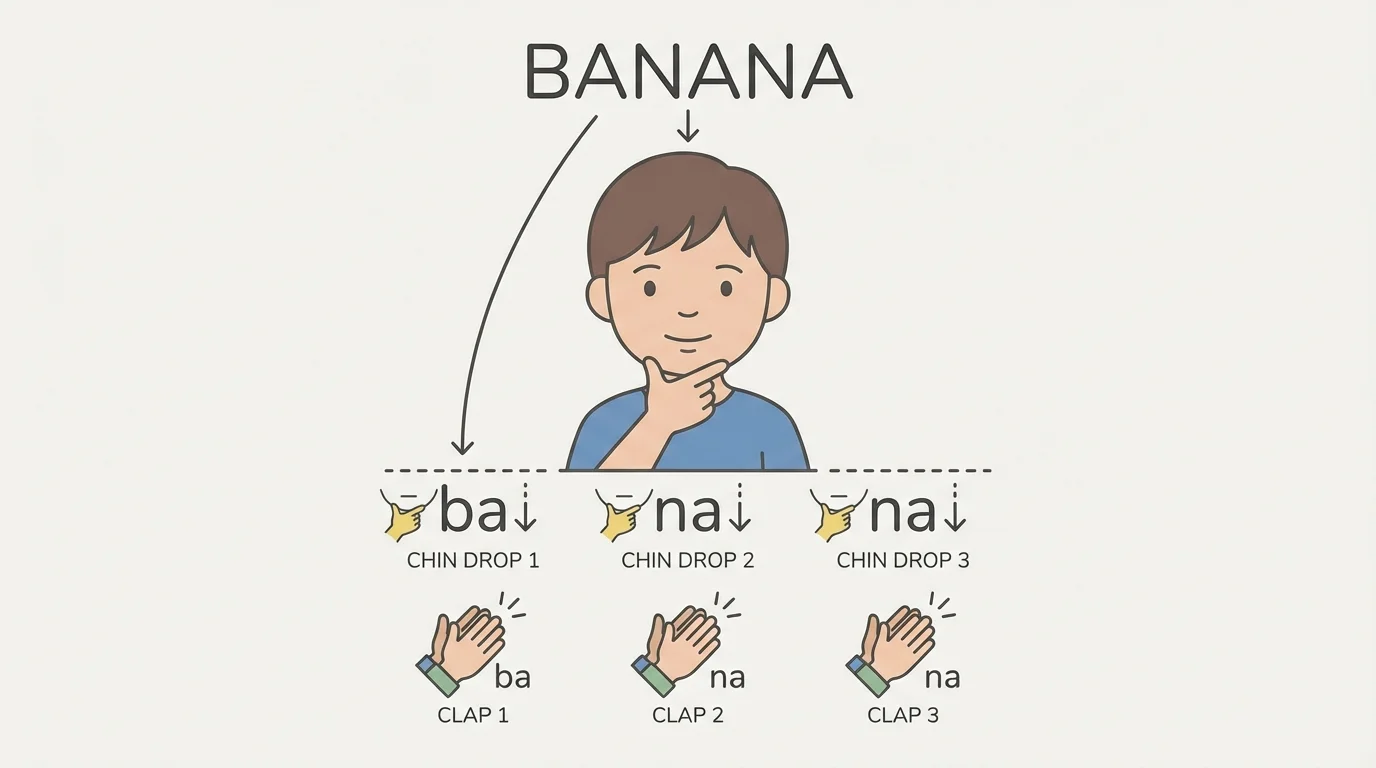
Sometimes a word has many letters but only one syllable, like scrap. Sometimes a word has fewer letters but more than one syllable, like baby. This is why listening matters so much.
To count syllables, say the word slowly and listen for the parts. You can clap once for each part. For ta-ble, clap two times. For oc-to-pus, clap three times. For book, clap one time.
You can also tap your hand on your leg. Tap for rain-bow: two taps. Tap for he-li-cop-ter: four taps. Tap for fish: one tap. The number of claps or taps tells the number of syllables.
Counting syllables in words
Step 1: Say the word slowly.
apple
Step 2: Listen for the beats.
ap-ple
Step 3: Count the parts.
There are two parts, so apple has two syllables.
Here are more words to notice: car has one syllable. kit-ten has two syllables. po-ta-to has three syllables. wa-ter-mel-on has four syllables.
| Word | Said in Parts | Number of Syllables |
|---|---|---|
| dog | dog | 1 |
| rabbit | rab-bit | 2 |
| banana | ba-na-na | 3 |
| alligator | al-li-ga-tor | 4 |
Table 1. Examples of words broken into spoken syllable parts.
When we pronounce syllables, we say each part clearly and smoothly. We do not mumble the word. We can stretch it just enough to hear each part: ti-ger, win-dow, um-brel-la. Then we can say the whole word in a normal voice.
Clear pronunciation helps us hear the parts inside a word. If we say computer too fast, the parts may be hard to hear. If we slow down and say com-pu-ter, the syllables become easier to notice.
Your voice, ears, and mouth all work together when you listen for syllables. That is one reason singing, chanting, and rhyming can help children hear word parts more clearly.
Names have syllables too. Jack has one syllable. Lily has two syllables: Li-ly. Isabel has three syllables: Is-a-bel. Listening to names is a great way to notice syllable beats in everyday life.
When we blend syllables, we put the spoken parts together to make one word. The separate parts slide together to make a whole word. If we hear sun and shine, we can blend them to say sunshine.
[Figure 2] Here are more blending examples: ta + ble becomes table. ro + bot becomes robot. pen + cil becomes pencil. We listen to the parts, then say them smoothly together.
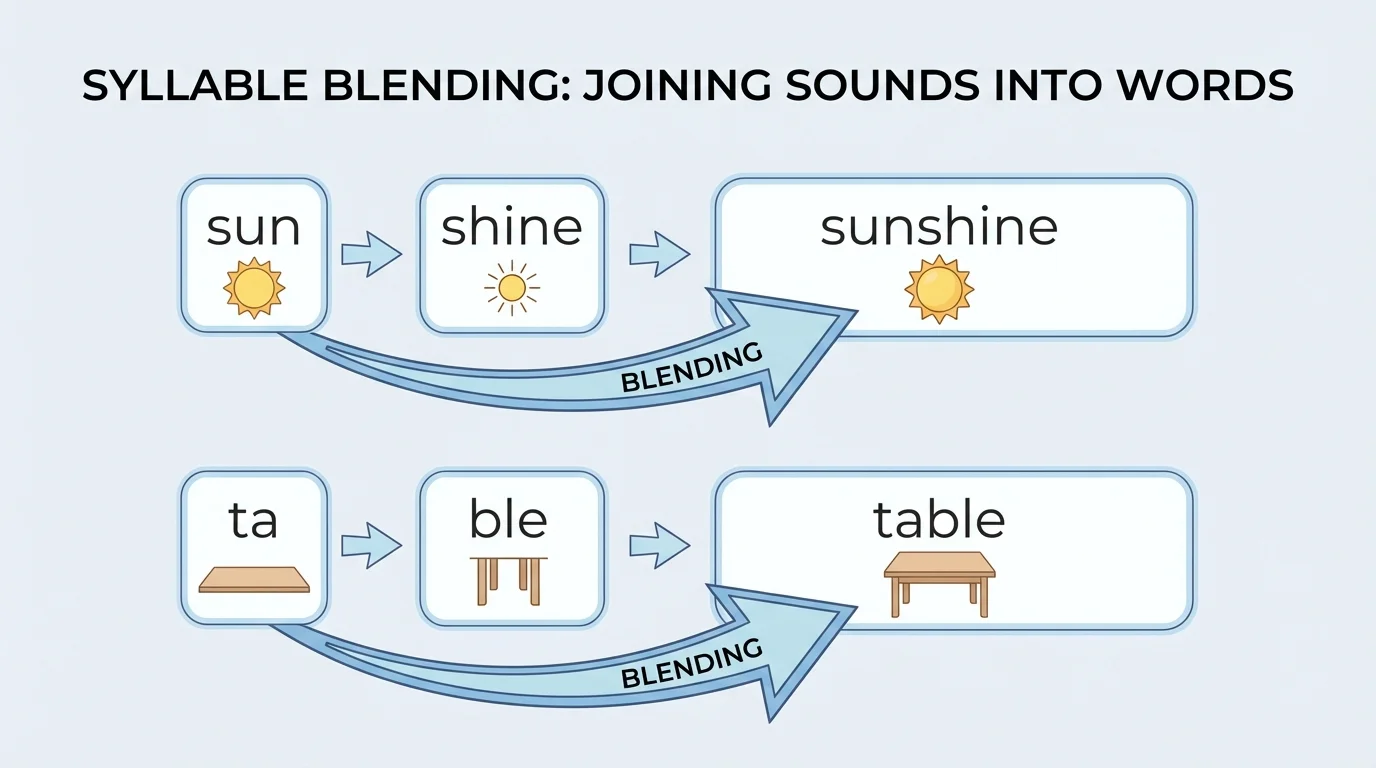
Blending helps children connect what they hear into a whole word. If someone says cup-cake slowly, you can blend the parts and know the word is cupcake. If someone says rain-bow, you can blend it into rainbow.
Putting parts together means your brain holds the first syllable, listens to the next syllable, and joins them. This is an important listening skill for reading because words are made of parts we can hear and say.
Some blended words are compound words. A compound word is made from two smaller words, like sunshine, cupcake, or rainbow. These still have syllables we can hear. As we saw in [Figure 2], the parts join to make one whole spoken word.
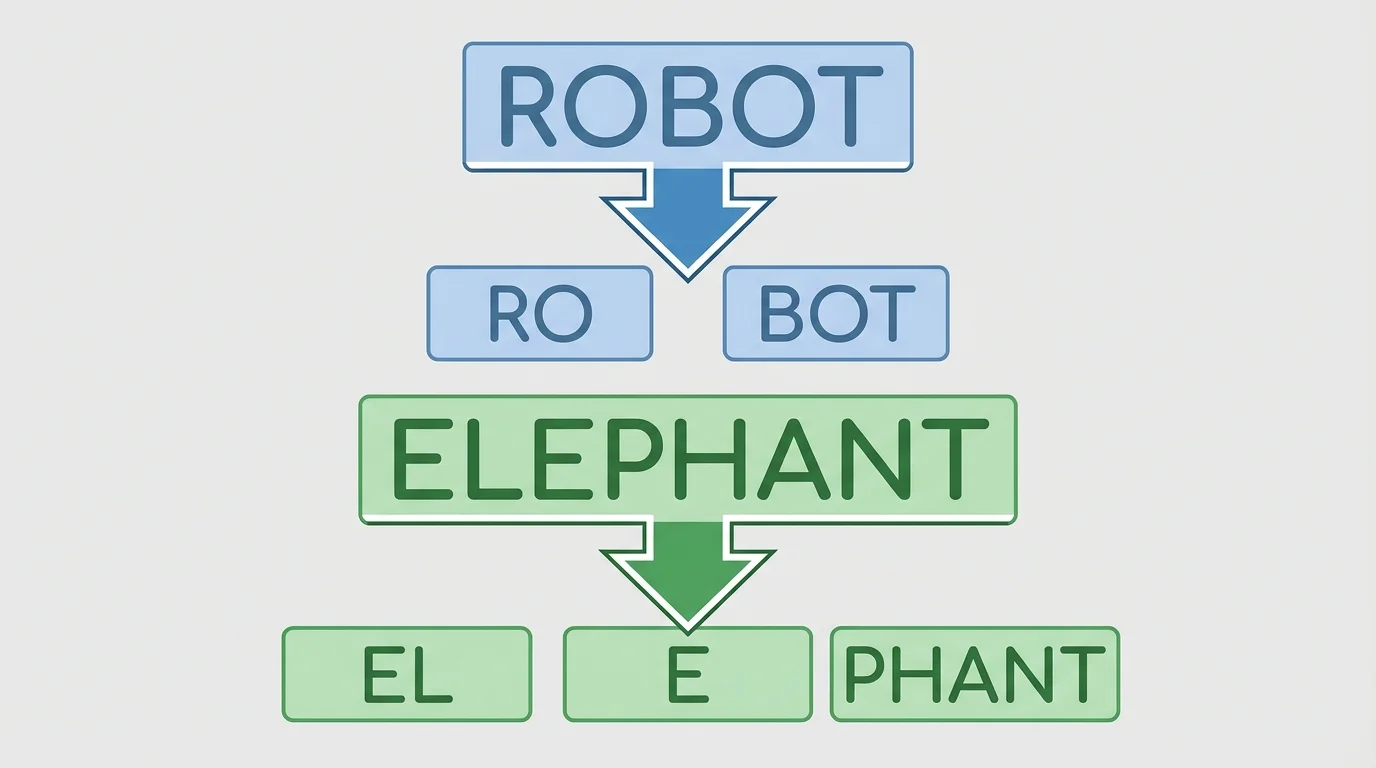
When we segment a word, we break the whole word into syllable parts. One whole word splits into smaller spoken parts. If we hear robot, we can segment it into ro-bot.
[Figure 3] Segmenting is the opposite of blending. Blending puts parts together. Segmenting takes a whole word apart. If we hear basket, we can say bas-ket. If we hear banana, we can say ba-na-na.
Segmenting a spoken word
Step 1: Listen to the whole word.
elephant
Step 2: Say it slowly.
el-e-phant
Step 3: Count the parts you hear.
There are three parts, so elephant has three syllables.
We can segment many kinds of words. Paper becomes pa-per. Tomato becomes to-ma-to. Helicopter becomes hel-i-cop-ter. Looking back at [Figure 3], the arrows help show how one word can break into smaller sound parts.
Some words have one syllable: jump, frog, star. Some have two: mon-key, ta-co, pa-per. Some have three: an-i-mal, beau-ti-ful, po-ta-to. Some have four: ca-ter-pil-lar, wa-ter-mel-on, he-li-cop-ter.
It is also helpful to know that every word does not sound the same in every place. Some people may say a word a little differently. Even so, we still listen carefully for the syllable beats in the way the word is spoken.
You already know that sentences are made of words. Now you are learning that words are made of smaller spoken parts called syllables.
Syllables are important in songs, poems, names, and regular conversation. When children chant, clap, and say words slowly, they become stronger listeners. Strong listening helps with speaking and early reading.
The most important thing to remember is that syllables are in spoken words. We hear them. We say them. We can count them, pronounce them, blend them, and segment them.
If you can hear that kit-ten has two syllables, blend kit and ten into kitten, and segment kitten back into kit-ten, you are doing important word work. These listening skills help build a strong path toward reading.
