When you say a short word like cat or dog, your mouth makes one small sound, then another, then another. Those sounds help us read and spell. If we can hear the sounds in a word, we can start to match sounds to letters and develop reading skills.
A phoneme is one small sound in a word. When we talk about CVC words, we mean short words with three sounds in this order: consonant, vowel, consonant. Words like map, sit, pen, dog, and tub are CVC words.
In a CVC word, we listen for three parts. We hear the initial sound at the start, the medial vowel in the middle, and the final sound at the end. Each part matters because changing one sound can make a whole new word.
CVC word means a word with three phonemes in a consonant-vowel-consonant pattern, such as cat or pig. The middle sound is a vowel sound.
For this skill, we use simple CVC words that do not end with /l/, /r/, or /x/. So we can use cat and bed, but we do not use words like car, bell, or fox in this lesson.
Every CVC word has a first sound, a middle sound, and a last sound. [Figure 1] helps us notice that the word is like three sound spots in a row. In map, the beginning sound is /m/, the middle sound is /a/, and the ending sound is /p/.
Listen to these examples: sun has /s/ at the beginning, /u/ in the middle, and /n/ at the end. pig has /p/, /i/, /g/. bed has /b/, /e/, /d/. We are listening for spoken sounds, not saying letter names.
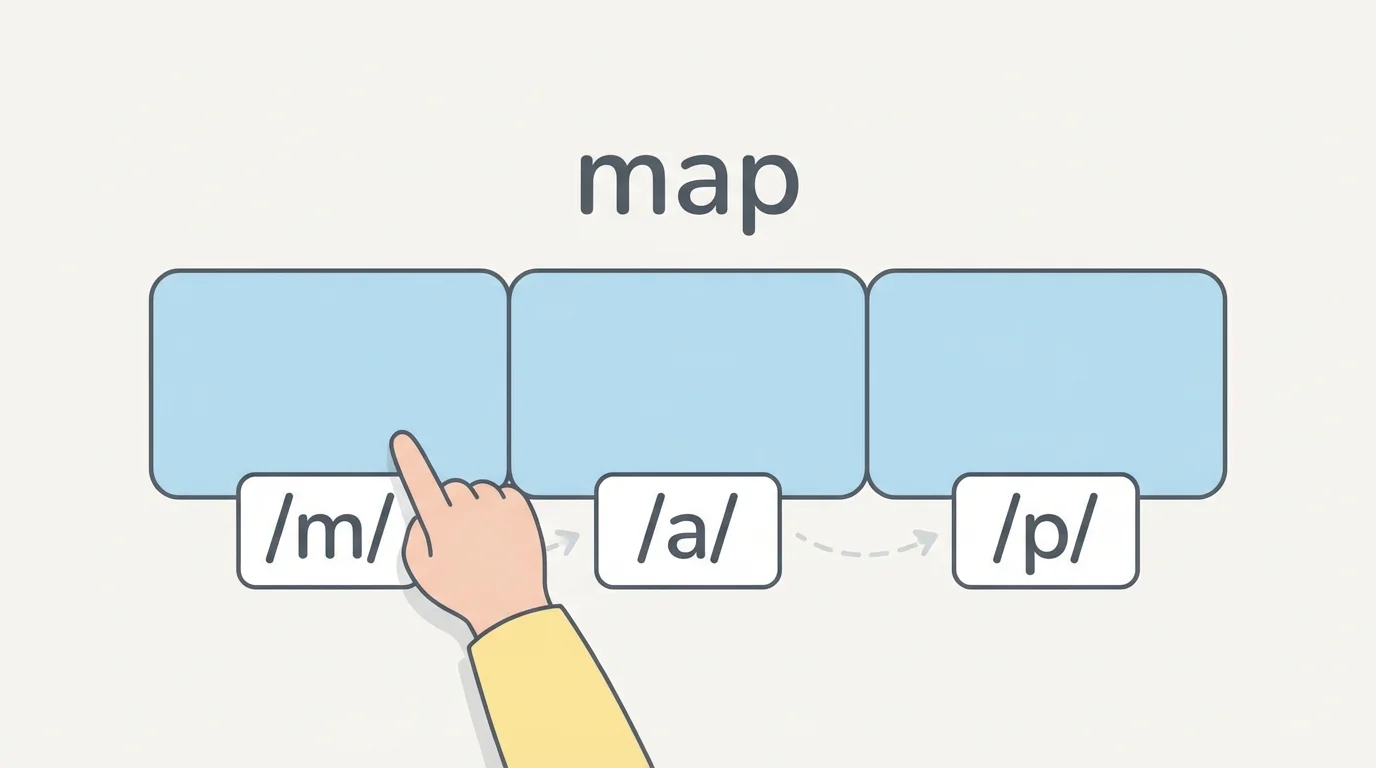
If the beginning sound changes, the word changes. map and tap have the same middle and ending sounds, but the first sound is different. If the ending sound changes, the word changes too. map and man start with the same sound and have the same middle vowel, but they end differently.
This is why careful listening is so important. As we saw with the three sound spots in [Figure 1], each sound has its own place in the word.
One helpful way to hear sounds is to say the word slowly. Figure 2 shows how a word can be stretched so each sound stands out. When you stretch sun, you can hear /s/ ... /u/ ... /n/.
Stretching does not change the word. It just helps your ears notice each phoneme. You can say sit slowly: /s/ ... /i/ ... /t/. You can say dog slowly: /d/ ... /o/ ... /g/. Then you can tell which sound comes first, which sound is in the middle, and which sound comes last.
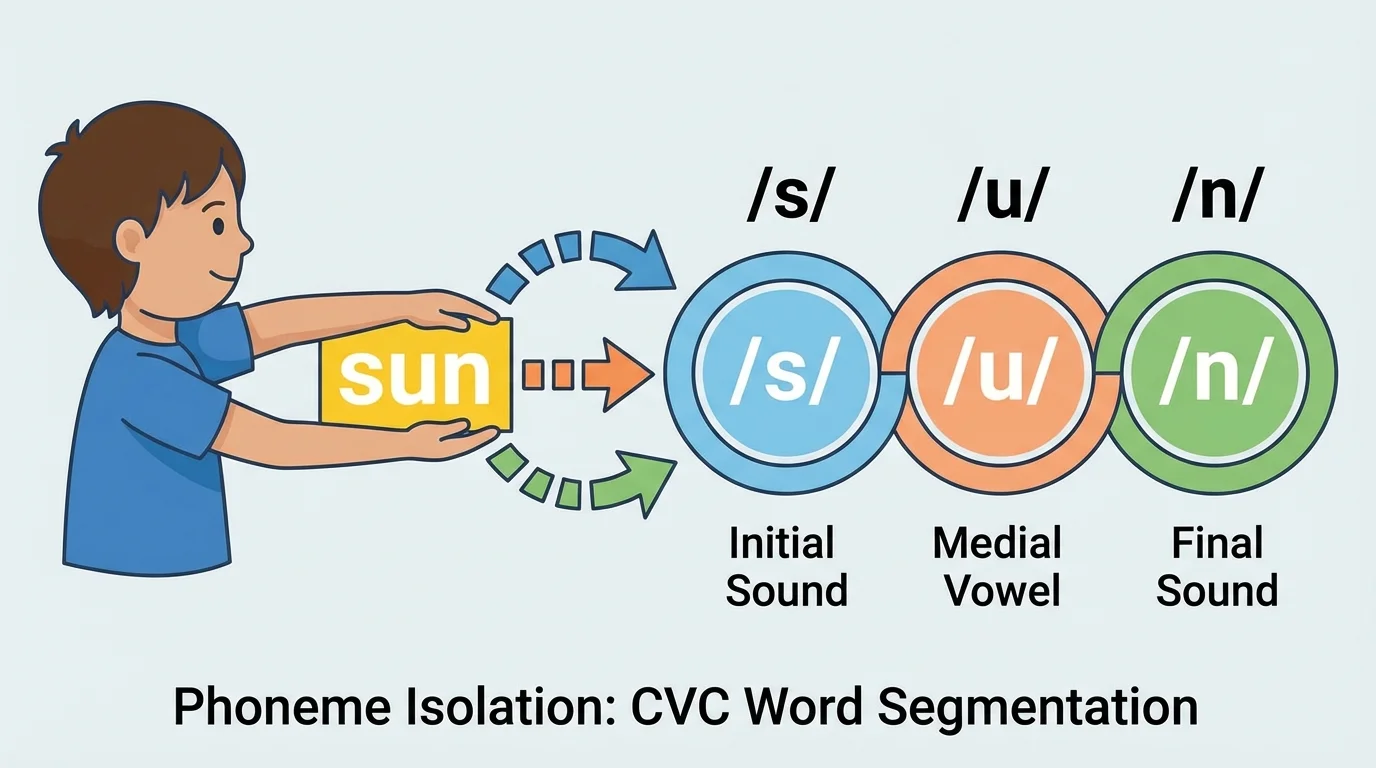
Listening from left to right
When we isolate sounds in a CVC word, we listen in order: first sound, middle vowel sound, last sound. This order helps us connect spoken words to printed words later when we read and write.
Try listening to the word net. First comes /n/. In the middle is /e/. Last comes /t/. In cup, first is /k/, middle is /u/, and last is /p/. Even when the letters are different, our job is to hear the sounds in order.
The middle sound in these short words is a vowel sound. Figure 3 shows that the middle sound changes from word to word. In cat, the middle sound is short /a/. In bed, it is short /e/. In pig, it is short /i/. In dog, it is short /o/. In tub, it is short /u/.
The middle vowel is often the trickiest sound to hear, so we listen very carefully. Compare bag and bug. They start with /b/ and end with /g/, but the middle vowel changes the whole word. Compare sit and sat. The first and last sounds stay the same, but the middle vowel is different.
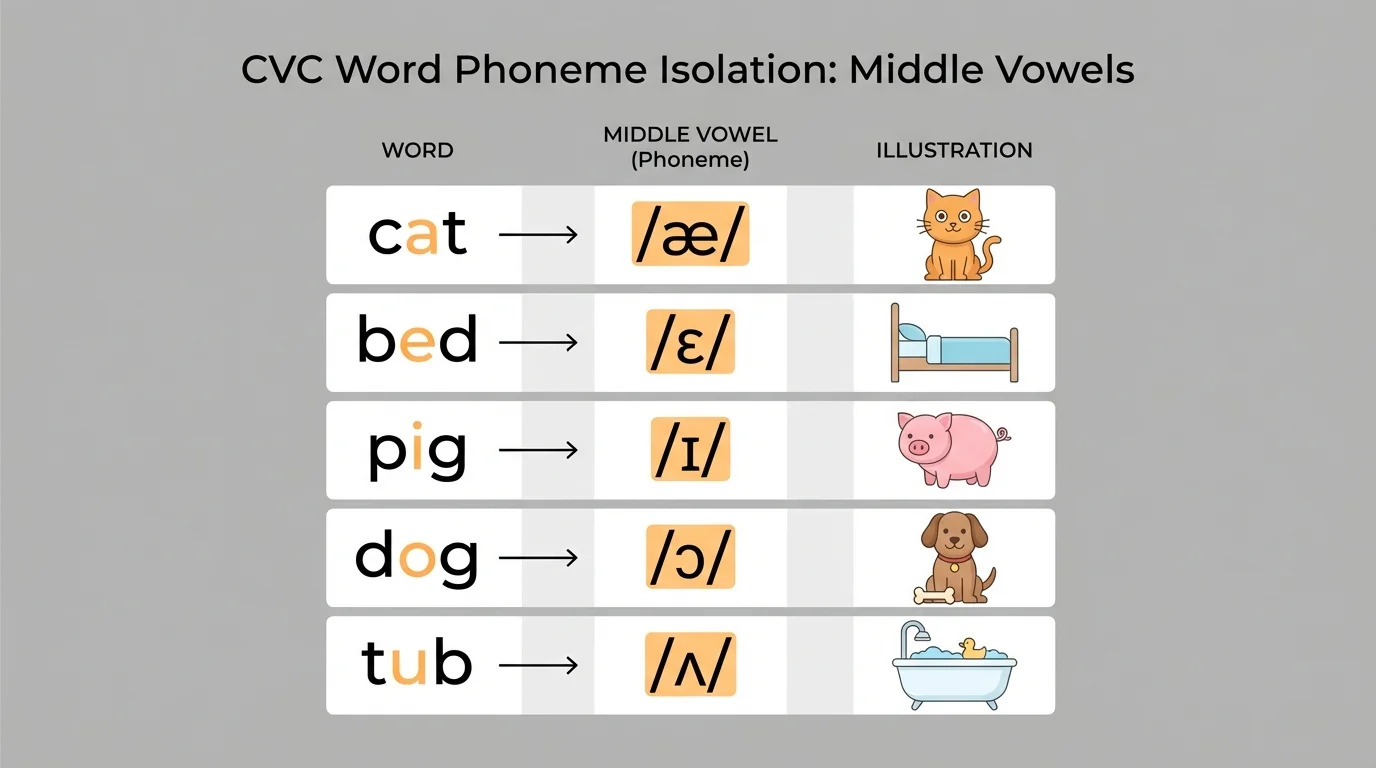
When readers can hear the medial vowel clearly, they can tell similar words apart. That is why the middle sound in [Figure 3] is so important.
Some words are only one sound apart. For example, pin and pan differ only in the middle vowel sound, but they mean different things.
We choose words that are easy to separate into three clear sounds. Good examples are cat, pen, sit, mop, bug, net, cap, and mud.
We do not use CVC words ending with /l/, /r/, or /x/ in this lesson because those ending sounds can make the listening job harder for beginners. So words like car, bell, and fox are left out here. Later, students can learn to hear and read those too.
Let us isolate sounds in several words. In cap, the initial sound is /k/, the medial vowel is /a/, and the final sound is /p/. In hen, the sounds are /h/, /e/, /n/. In pig, the sounds are /p/, /i/, /g/.
Sound examples
Step 1: Say mad slowly.
Hear /m/ at the beginning, /a/ in the middle, and /d/ at the end.
Step 2: Say top slowly.
Hear /t/ at the beginning, /o/ in the middle, and /p/ at the end.
Step 3: Say fin slowly.
Hear /f/ at the beginning, /i/ in the middle, and /n/ at the end.
Here are more examples. bug: /b/ /u/ /g/. sad: /s/ /a/ /d/. hot: /h/ /o/ /t/. jet: /j/ /e/ /t/. The word may be short, but every sound has a job.
When children speak clearly and listen closely, they begin to notice patterns. Words with the same beginning sound, such as pan, pet, and pig, all start with /p/. Words with the same ending sound, such as cap, mop, and cup, all end with /p/. Words with the same medial vowel, such as bag, cat, and map, all have short /a/ in the middle.
Hearing phonemes helps children become strong readers. If you can hear /m/ /a/ /p/, it is easier to connect those sounds to the letters in map. If you can hear that sit ends with /t/, it is easier to spell the word.
This skill is used every day. Children use it when they listen to a teacher read, when they try to sound out a new word in a book, and when they write a simple word on paper. Reading starts with hearing. Before eyes read the letters, ears and mouth can help break the word into parts.
Letters are symbols we see, but phonemes are sounds we hear and say. Good readers connect the sounds in spoken words to the letters in printed words.
As children continue learning, they become faster at hearing the first, middle, and last sounds. What starts as careful listening with words like cat and pen grows into confident reading and writing.
